Celebration of life ideas that tell their story.
The best celebration of life ideas share one thing. They let the person speak for themselves. Practical ideas for Mum, Dad or anyone, and what makes them work.
On 6 December 1989, two months after Graham Chapman of Monty Python died of cancer, his friends gathered in the Great Hall of St Bartholomew’s Hospital in London to remember him. John Cleese began his eulogy by announcing that Graham Chapman, co-author of the Parrot Sketch, was no more, and went on to call him a freeloader he hoped would fry. Then he explained why. Chapman, he said, would never have forgiven him for passing up the chance to shock a room full of mourners, and would have wanted him to be the first person at a British memorial service to swear. The service ended with the surviving Pythons and the congregation singing “Always Look on the Bright Side of Life”.
It is one of the most quoted funeral speeches of the last century, and almost nothing about it was conventional. Yet it worked for a simple reason: everyone in the room recognised the man being described. The joke was his kind of joke. The irreverence was his irreverence. For the length of the service, Chapman was present.
That is what people searching for celebration of life ideas are really looking for. Not a theme or a venue, but a way to make the person feel present one more time. This piece offers practical ideas, for a mother, a father or anyone else, and an argument about which ones actually achieve that.
What is a celebration of life, and why has it become so common?
A celebration of life is a gathering that focuses on the life someone lived rather than on the fact of their death. It may replace a funeral or follow one. It is often less formal, less religious and more personal: a favourite pub instead of a chapel, stories instead of liturgy, colour instead of black.
Part of the reason for the shift is practical. In the United States, the National Funeral Directors Association projected in 2025 that about 63 per cent of deaths that year would end in cremation, against about 32 per cent in burial, and expects cremation to reach more than 80 per cent by 2045. A burial sets a deadline: the service has to happen within days. Cremation removes it. Families can gather weeks or months later, when relatives have travelled and the shock has eased, and that kind of gathering naturally feels less like a funeral and more like a reunion.
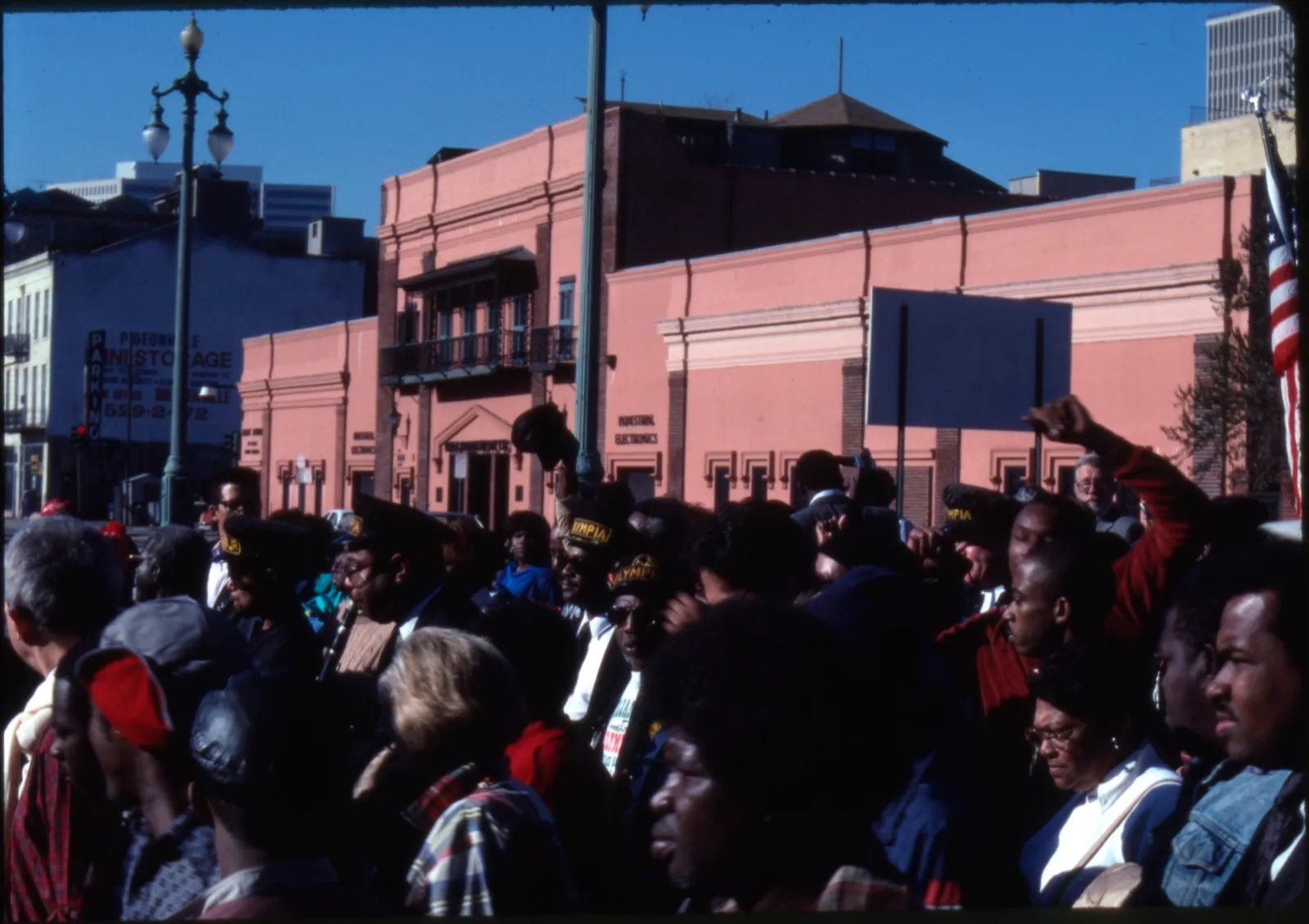
The other reason is older. Many cultures never separated mourning from celebration in the first place. The Irish wake mixed grief with drink, music and storytelling. In New Orleans, a jazz funeral traditionally walks to the cemetery to slow hymns and dirges, then, once the body has been laid to rest, the band breaks into upbeat music and the crowd that follows, the “second line”, dances its way back. In Ghana, carpenters in the Ga community around Accra build coffins shaped like fish, aeroplanes, cocoa pods or cars, chosen to reflect the dead person’s work or passions. (The tradition is usually credited to a Teshie carpenter named Seth Kane Kwei in the 1950s, though some anthropologists dispute that origin story.)
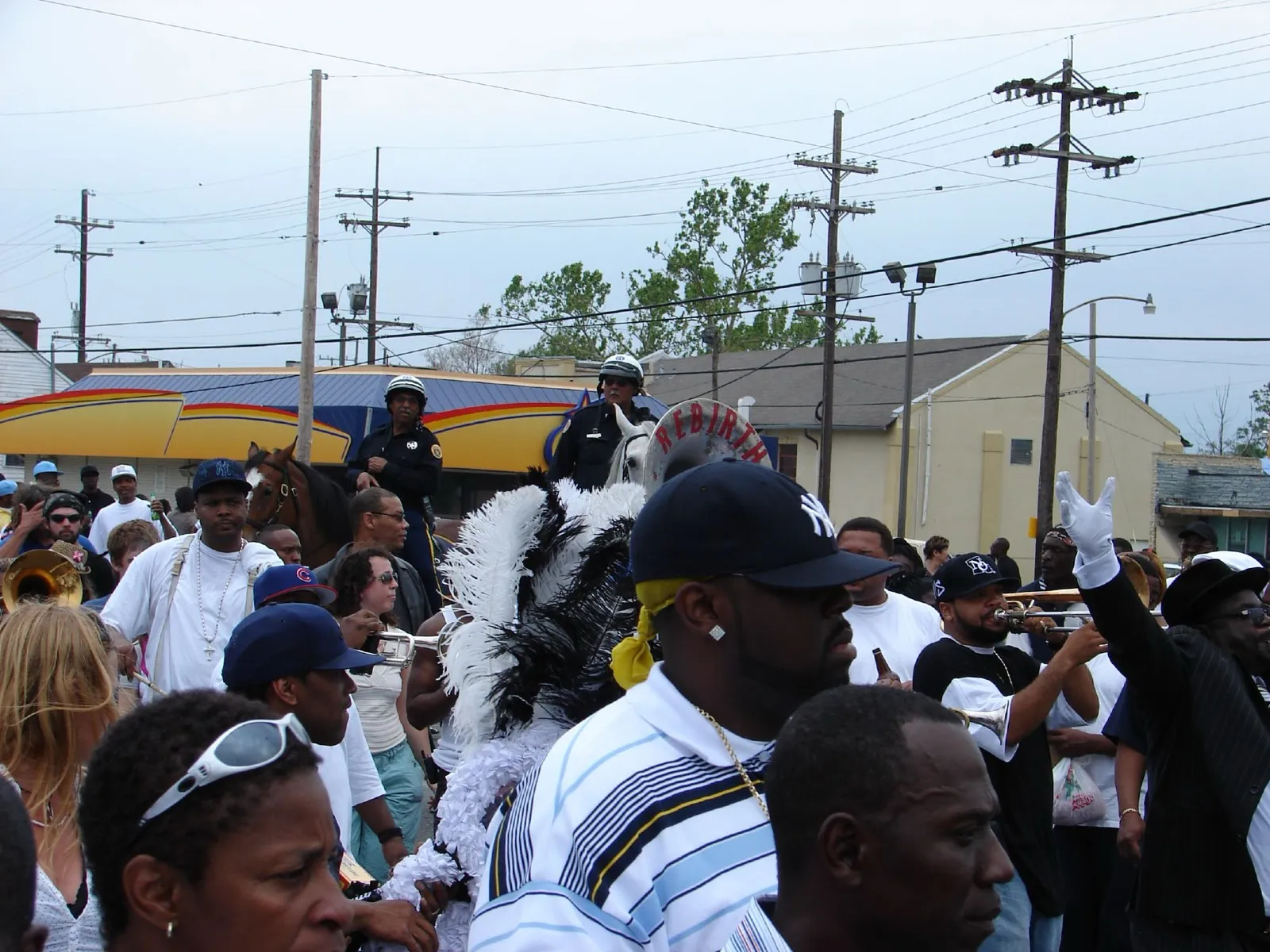 A jazz funeral on Claiborne Avenue, New Orleans, March 2006, with the Rebirth Brass Band. Photo by Mark Gstohl. CC BY 2.0.
What these traditions share is a belief that the right response to a life is to show what it was like. A fish-shaped coffin tells you the person was a fisherman. A second line tells you the person belonged to a community that dances. Each one is a story told in an object or a ritual.
Why do some celebrations of life feel empty?
Many modern celebrations of life borrow the cheerful format without the substance. There is a slideshow of photographs, a playlist, a table of flowers, a request that guests wear bright colours. All of it is well meant, and much of it is generic. You could swap the photographs and the playlist and hold the same event for almost anyone.
The problem is a shortage of material. The people organising the event usually knew the person for only part of their life, and mostly the later part. As I argued in the piece on how to write a eulogy, the first half of a parent’s life reaches their children second-hand, if at all. So the event fills the gap with things that are easy to gather: photographs, objects, songs. Those are surface. A photograph shows what someone looked like at a wedding in 1974. It cannot tell you what they were thinking, how they met the person beside them, or what they found funny about the day.
A celebration of life succeeds when it does what the Chapman memorial did: when guests leave feeling they spent time with the person, not just near their pictures.
Celebration of life ideas that tell their story
The ideas below are ordered roughly from the simplest to the most personal. Most cost little. All of them work better when they carry the person’s own voice.
- Hold it somewhere that meant something to them. A garden they planted, a beach they swam at, the club where they played bowls. A place carries stories by itself, and guests will tell them unprompted.
- Serve their food. Cook their signature dishes from their own recipes, and print the recipe cards for guests to take home. Taste is one of the strongest prompts for memory there is.
- A memory table with captions. Instead of objects alone, put a short handwritten card beside each one: where the hat came from, why they kept the ticket stub. An object with a story is a relic. Without one, it is clutter.
- A story-sharing round. Ask guests in advance to bring one specific story, not a tribute. “The time she…” is better than “She was always…”. Open the floor, or collect them on cards to be read aloud and kept.
- Their music, with the reasons. A playlist is common. What makes it personal is knowing why each song mattered: the song from the first dance, the record they played every Sunday morning.
- Letters to the person. Give guests paper and envelopes and invite them to write what they never said. Some families bind the letters into a book.
- A memorial video, built around them speaking. This is the idea most families reach for, and the one with the widest gap between average and excellent. A montage of photographs set to music is moving for three minutes. A video in which the person themselves appears, laughing at a story, explaining a decision, giving advice, is something else. It is the closest thing to having them in the room.
- Play a recording of their voice at the end. Some families close the gathering with a short clip of the person speaking, so that the last word belongs to them.
For a celebration of life for a mum or a dad, the same principle holds. The ideas that land are the ones grounded in specifics: her phrases, his terrible puns, the advice they repeated until you could recite it.
What makes a memorial video work?
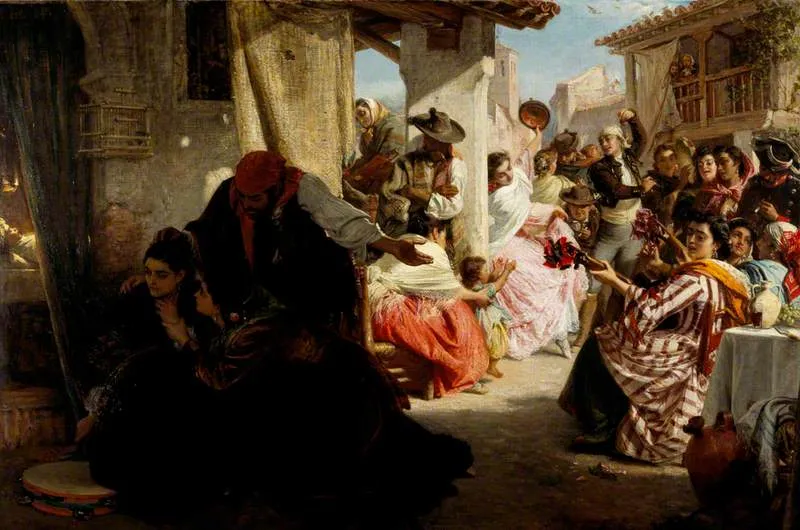 “La Gloria: A Spanish Wake” by John Phillip, 1864. National Galleries of Scotland. Public domain.
John Phillip, a Scottish painter who travelled in Spain, painted La Gloria as a wake for a young child. In the custom it depicts, it was believed that a child who died went straight to heaven, la gloria, and so the death was marked with music and dancing. The painting is unsettling because it holds both things at once: celebration in the sunlight, grief in the shadow on the left. A good memorial video does the same. It should make people laugh and it will make them cry, and it should do both through the person rather than about them.
In practice, that means a few things:
- Lead with their voice, not with captions. Thirty seconds of a person telling a story in their own words does more than ten slides of text.
- Choose stories over milestones. Birth, marriage and retirement are the skeleton. The stories in between are what people remember.
- Keep it short. Five to ten minutes is plenty for a gathering. The full recordings can be shared afterwards for anyone who wants more.
- Include the flaws and the jokes. As with a eulogy, affectionate honesty is what makes the portrait believable.
The obvious difficulty is that most families do not have this footage. They have photographs, perhaps a few seconds of video from a birthday party, perhaps a voicemail. As I wrote in the piece on hearing a loved one’s voice after they have died, many people keep a single voicemail from a parent for years, because it is all that remains of how that person actually sounded.
The celebration you can prepare while they are here
Since 2020 I have filmed more than a hundred life stories, including Holocaust survivors and members of my own family. I have four hours of my grandmother telling me about her life. She has since passed, and those recordings are now what the family turns to when we want to remember her as she was: her voice, her expressions, the way she told a story.
That is the uncomfortable logic behind every celebration of life. It happens after the person dies, but its best material can only be gathered while they are alive. The finest memorial video is not edited in the week after a death. It is recorded years before, in an ordinary afternoon, by someone who thought to ask.
Recording a parent’s or grandparent’s story does not need to be framed as preparation for their funeral, and it is better if it is not. It is simply a way of getting to know them properly while they can still answer. A phone, a quiet room and a list of good questions are enough; Everyone, the app we built for this, guides you through it one question at a time and keeps the videos together for the family.
When the day eventually comes, the celebration will not have to rely on photographs and guesswork. The person will be able to tell their own story, in their own face and voice, one more time.