Interview your grandparents about their childhood, with example answers.
Questions to interview your grandparents about their childhood, with example answers that show the difference between a thin reply and a story worth keeping.
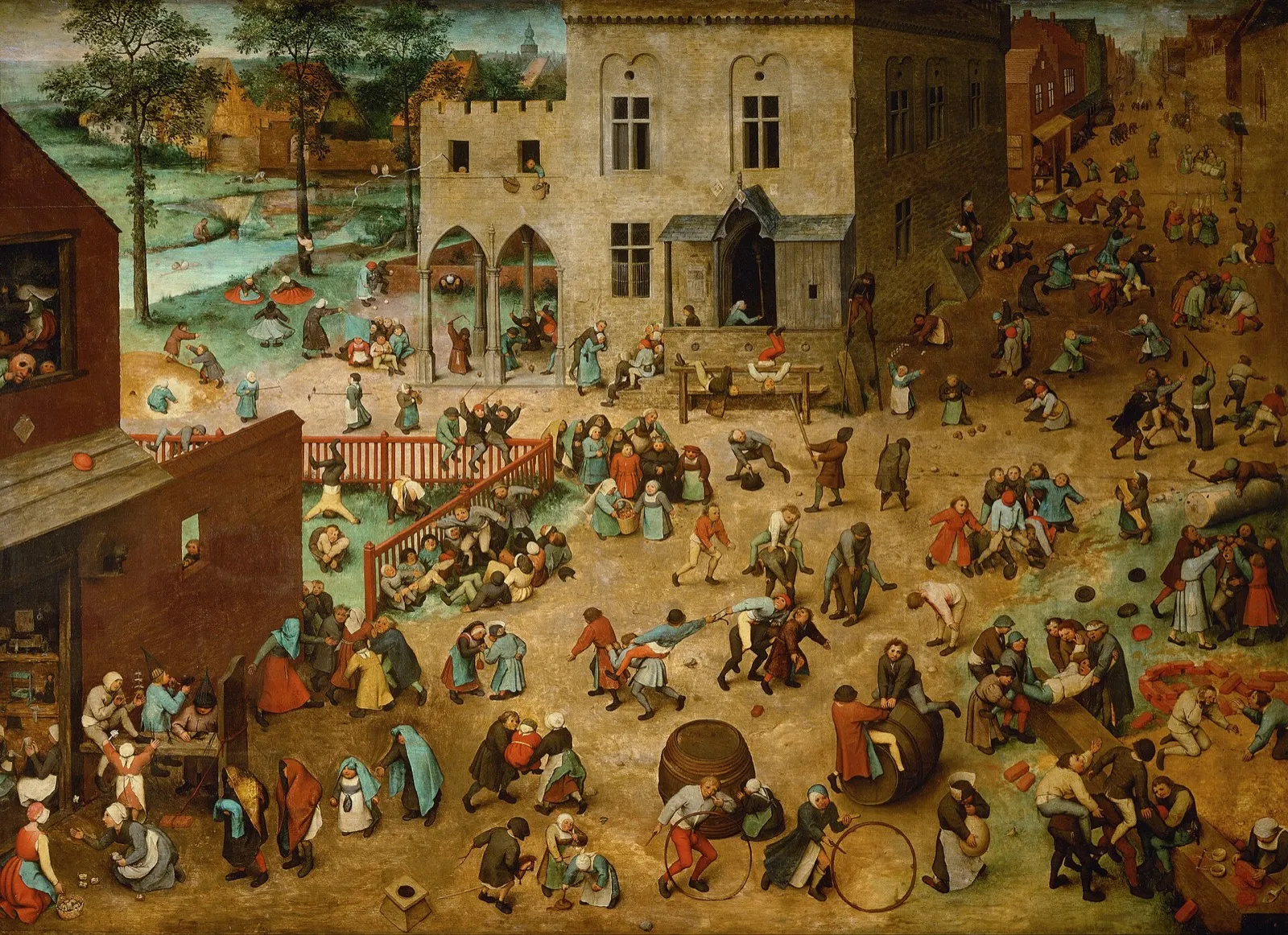
In 1959 two British folklorists, Iona and Peter Opie, published The Lore and Language of Schoolchildren. It was built from contributions by about five thousand children at seventy state schools: their rhymes, jokes, superstitions, nicknames, truce words and rules for deciding who was “it”. The Opies made a deliberate choice that is easy to miss. They collected this material from children aged six to fourteen, not from adults remembering their own childhoods. Adults, they had found, tidy things up.
The book revealed something odd about childhood. It is a culture with its own laws and its own oral tradition, passed from one child to the next, and almost none of it is ever written down by the people who live it. By the time a child is old enough to record it, they have left it behind.
That is why a school assignment to interview your grandparents about their childhood is more interesting than it looks. You are asking someone to open a world that closed sixty years ago and was never documented. This post gives you the questions, and example answers that show what a good answer looks like, so you know when to keep asking.
Why ask grandparents about their childhood first?
There are three good reasons to start a family interview with childhood rather than with the big events of adult life.
The first is that it is safe. Questions about school, games and food rarely touch on grief or old arguments, so they are a gentle way into a conversation. Trust builds as the interview goes on, and harder questions are easier to ask later.
The second is that childhood memories, from about the age of five onwards, tend to be vivid and concrete. Almost nobody remembers their first two or three years, a pattern psychologists call childhood amnesia. But the house someone grew up in, the walk to school or the smell of a grandmother’s kitchen are often remembered in sharp detail, and they come with stories attached.
The third is that this is the part of their life you know least about. You may know where your grandparents worked or how they met. You almost certainly do not know what they were frightened of at eight, or what they ate on an ordinary Tuesday. Those details disappear first, because when they were happening nobody thought them worth recording.
What makes a good answer?
Teachers who set this assignment often ask for example answers, and the request makes sense. Most students do not struggle to find questions. They struggle because the answers they get back are short, and they do not know how to make them longer.
The difference between a thin answer and a rich one is almost never the grandparent. It is the follow-up. A first answer is usually a summary: “School was fine.” The story sits underneath it, and it comes out only when someone asks for a particular day, a particular person or a particular feeling. (The reason open questions work better than closed ones is explained in how to interview someone.)
The examples below show this. They are invented, written to illustrate the kind of detail to listen for. They are not real people, and your grandparent’s answers will be different, which is the point. Do not copy them into an assignment. Use them to recognise when an answer is still a summary and needs another question.
Interview your grandparents about their childhood: questions with example answers
1. What was the house you grew up in like?
Thin answer: “It was small. We had two bedrooms.”
Follow-up: Walk me through it. What did you see when you came in the front door?
Richer answer: “You came straight into the kitchen, because that was where everyone lived. There was a wood stove, and my mother kept the kettle on it all day. I shared a bed with my sister until I was ten, and we drew a line down the middle with our fingers. If her foot came over the line, there was trouble.”
2. What did you eat on a normal day?
Thin answer: “Just normal food. Meat and vegetables.”
Follow-up: What was dinner on a weeknight? Was there anything you hated?
Richer answer: “Monday was always leftovers from Sunday’s roast. We were not allowed to leave the table until our plates were empty, and I used to hide peas in my sock. My father pretended not to see.”
3. What was school like?
Thin answer: “It was strict.”
Follow-up: Can you remember a teacher? What happened if you misbehaved?
Richer answer: “We sat in rows and stood up when the teacher came in. Mrs Hall had a ruler she tapped on the desk, and the sound alone was enough to make the whole class go quiet. I was good at spelling and terrible at sums, and I still count on my fingers when nobody is looking.”
4. What games did you play, and where?
Thin answer: “We played outside a lot.”
Follow-up: What was the best game? What were the rules?
Richer answer: “Mostly in the street, because hardly anyone had a car. We played cricket with a rubbish bin for the wicket, and if you hit the ball into Mr Taylor’s garden you were out and you had to go and ask for it back. Nobody wanted to knock on that door.”
This is exactly the kind of answer the Opies collected: a rule that existed in one street, among one group of children, and nowhere else.
5. What were you afraid of?
Thin answer: “The dark, I suppose.”
Follow-up: Where in the house did it frighten you most?
Richer answer: “The toilet was outside, at the bottom of the yard. At night I would make my brother stand at the back door with a torch, and he would switch it off halfway just to hear me scream.”
6. What did you do for fun at home?
Thin answer: “We listened to the radio.”
Follow-up: Which programme? Who sat where?
Richer answer: “There was one radio, and my father chose what we listened to. On Sunday nights we all sat around it for a serial, and nobody was allowed to talk. When we finally got a television, the neighbours came over to watch it with us.”
7. What did your parents expect of you?
Thin answer: “To behave and work hard.”
Follow-up: Was there a rule you broke? Did they ever find out?
Richer answer: “We had to be home before the streetlights came on. One night I lost track of time at the creek and came home in the dark, wet to the knees. My mother did not shout. She just looked at me, and that was worse.”
8. What is something from your childhood that does not exist any more?
This is one of the best questions to ask, because the grandparent has to explain it, and the explanation is the history. Listen for objects, jobs and habits: a milkman, a party line telephone, a shop that sold broken biscuits by the bag, a game whose rules nobody remembers.
9. If you could go back to one day of your childhood, which would it be?
This question often produces the most honest answer of the interview, and it is a good one to end on. Let them think before they answer. Do not fill the silence.
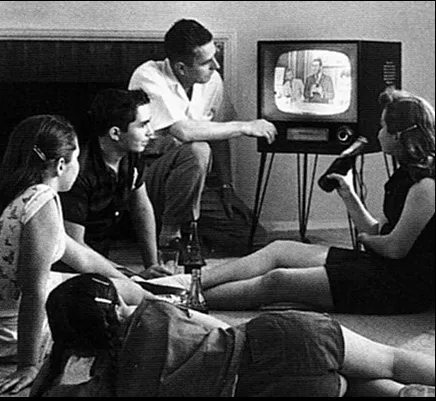 A family watching television, around 1958. U.S. National Archives. Public domain.
How do you turn a short answer into a long one?
Look again at the examples above. In every case the richer answer came from a follow-up that asked for something specific: a room, a person, a rule, a single day. That is the whole method. A few follow-ups work for almost any answer:
- Can you describe it?
- What happened next?
- Who else was there?
- How did you feel?
- Why do you think it was like that?
Two other habits help. Bring a photograph or an object, and ask “Tell me about this.” Objects unlock memories that questions cannot reach. And do not correct your grandparent if a date sounds wrong. You are recording how they remember their childhood, not checking it against a textbook.
For more questions arranged by age, see interview questions for kids to ask their grandparents. If you want to go beyond childhood, the list of questions to ask your grandparents covers the rest of a life.
How should you write it up for school?
If the interview is for an assignment, a simple structure works well:
- Introduce your grandparent. Their name, when and where they were born, and how you are related.
- Describe the setting. The house, the town and the family they grew up in.
- Choose two or three stories. The best answers from the interview, told in their words where you can.
- Compare. What was different from your own childhood, and what was surprisingly the same?
- Reflect. What did you learn that you did not know before?
Direct quotes make a write-up come alive. That is a practical reason to record the interview: you will not catch everything in your notes, and you will want their exact words.
Why film the interview?
A written assignment is handed in and forgotten. The interview behind it does not have to be.
In more than a hundred life stories I have filmed since 2020, childhood is where people relax, laugh and start to tell stories rather than answer questions. It is also the part their families most often say they never knew. I have four hours of my grandmother talking about her life. She has since passed away, and the parts I return to most are the small ones: the way she described a room, or a game, or her own grandmother.
So prop a phone at eye level, choose a quiet room indoors, turn off the television and press record. (The details are in how to film an interview at home.) The Everyone app is designed for this, showing one question at a time so you can ask and listen without juggling a list.
The Opies spent decades collecting the lore of children because they understood it would otherwise vanish with each generation that grew up. Your grandparents’ childhood is one small piece of that lost world, and for now, you can still ask about it.