What is an ethical will? Leaving values, not property.
For 3,000 years parents have written down what they believed, not what they owned. Why most ethical wills are forgotten, and how to write one that lasts.
When the Yiddish writer Sholem Aleichem died in New York in May 1916, his will was printed in The New York Times and, by most accounts, read into the Congressional Record. It is an odd document for a will. Alongside instructions about his estate, it asks that each year on the anniversary of his death his family and friends gather and read some of his stories aloud, choosing the cheerful ones, in whatever language they understand best.
They still do. More than a century later, his descendants and strangers who love his work meet each year in New York to read him. Very few legal wills from 1916 are still being read by anyone. This one is, because it was never really about property.
Sholem Aleichem was writing in an old tradition: the ethical will, a document in which a person passes on not their possessions but their values. The tradition is about three thousand years old, and most of what it has produced has been forgotten. The interesting question is why a few ethical wills survive and most do not, because the answer tells you how to write one that will be read.
What is an ethical will?
An ethical will is a letter, usually written late in life, addressed to children, grandchildren or anyone who will come after. It says what the writer believed, what they learnt, what they hope for the people they leave behind, and sometimes what they regret. It has no legal force. In Hebrew it is called a tzava’ah, a word that simply means instruction or command.
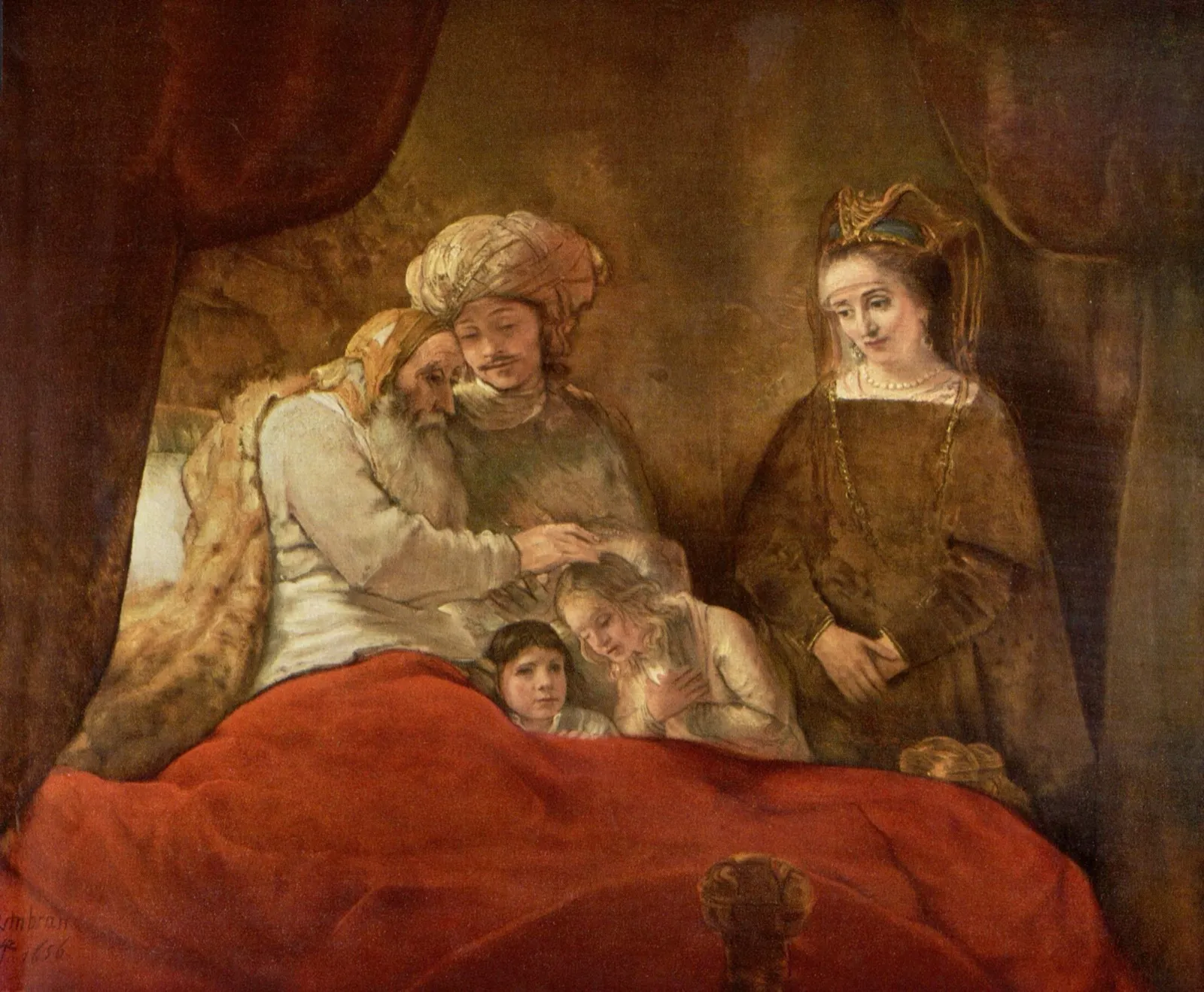
Jewish tradition traces the form to Genesis. In chapter 48 the dying Jacob blesses his grandsons Ephraim and Manasseh, the scene Rembrandt painted at the top of this page; in chapter 49 he gathers his sons around his bed and speaks to each in turn. A later text, the Testaments of the Twelve Patriarchs, probably compiled in the last centuries before the Common Era, imagines each of those sons giving his own deathbed speech to his children, and turns the scene into a genre.
The instinct is older than the Bible. One of the oldest pieces of literature that survives anywhere, the Sumerian Instructions of Shuruppak, known from tablets written in the middle of the third millennium BCE, is framed as a father’s advice to his son. Wherever writing appears, parents soon use it to tell their children how to live.
Which ethical wills are still read?
Medieval Jewish communities produced hundreds of ethical wills, and in the twentieth century scholars collected them. Israel Abrahams published two volumes of translations, Hebrew Ethical Wills, in 1926. A great many consist of sound, sincere advice that could have been written by anyone: study, give charity, be honest in business, honour your mother, avoid bad company.
The ones that remain alive are different. The best known is the letter the physician and translator Judah ibn Tibbon wrote to his son Samuel in Provence, in the second half of the twelfth century. Judah had fled Muslim Spain and built a career translating Jewish works of philosophy from Arabic into Hebrew, and he had assembled a large library. His will is full of specific, slightly exasperated detail. He scolds Samuel for neglecting his studies and his handwriting. He tells him how to look after the books, how to lend them and how to keep track of them. And in its most quoted line, usually translated as “make your books your companions”, he asks his son to treat his bookcases as gardens.
Eight hundred years later people still quote it, and they quote it because it is a portrait. You can see the father: anxious, proud, a little controlling, and in love with books. The values come through precisely because they are attached to a particular person and a particular room full of shelves.
The second example is even clearer. In 1690, after the death of her husband Chaim, a businesswoman in Hamburg named Glückel of Hameln began writing for her children. She intended something like an ethical will, and there is moral instruction in it. But she could not stop telling stories: her marriage at fourteen, trade fairs, debts, plague, the false messiah Sabbatai Zevi, the deaths and weddings of her twelve surviving children. She wrote seven books in Yiddish and kept going, on and off, for nearly thirty years. Today Glückel is read as one of the most important memoirs of early modern European Jewish life, and almost nobody reads it for the sermons.
Why do values without stories disappear?
There is a pattern here. The parts of an ethical will that the writer considered most important, the stated principles, are the parts readers forget. The parts the writer might have considered incidental, the stories, are the parts that survive.
The reason, I think, is that a value is a compression. “Be honest” is the summary of a hundred experiences: the time you were tempted, the time you were cheated, the person you admired and why. The summary is useful to the person who lived those experiences, because it points back to them. To anyone else it is just a sentence, and it is the same sentence everyone else’s parents wrote. A reader cannot decompress it, so it slides off.
A story does the reverse. It carries the value inside a situation the reader can enter. Psychologists who study what they call narrative transportation have found that people who become absorbed in a story are more likely to adopt the beliefs it implies, and less likely to argue with them. Dan McAdams, whose work on the life story interview shaped much of the modern psychology of identity, argues that people do not understand their own values as a list at all. They understand them as a story about how they became who they are.
So the paradox of the ethical will is that the more directly it tries to state values, the less effectively it transmits them. Sholem Aleichem, a professional storyteller, seems to have understood this. He did not ask his family to read his opinions on his yahrzeit. He asked them to read his stories, and to laugh.
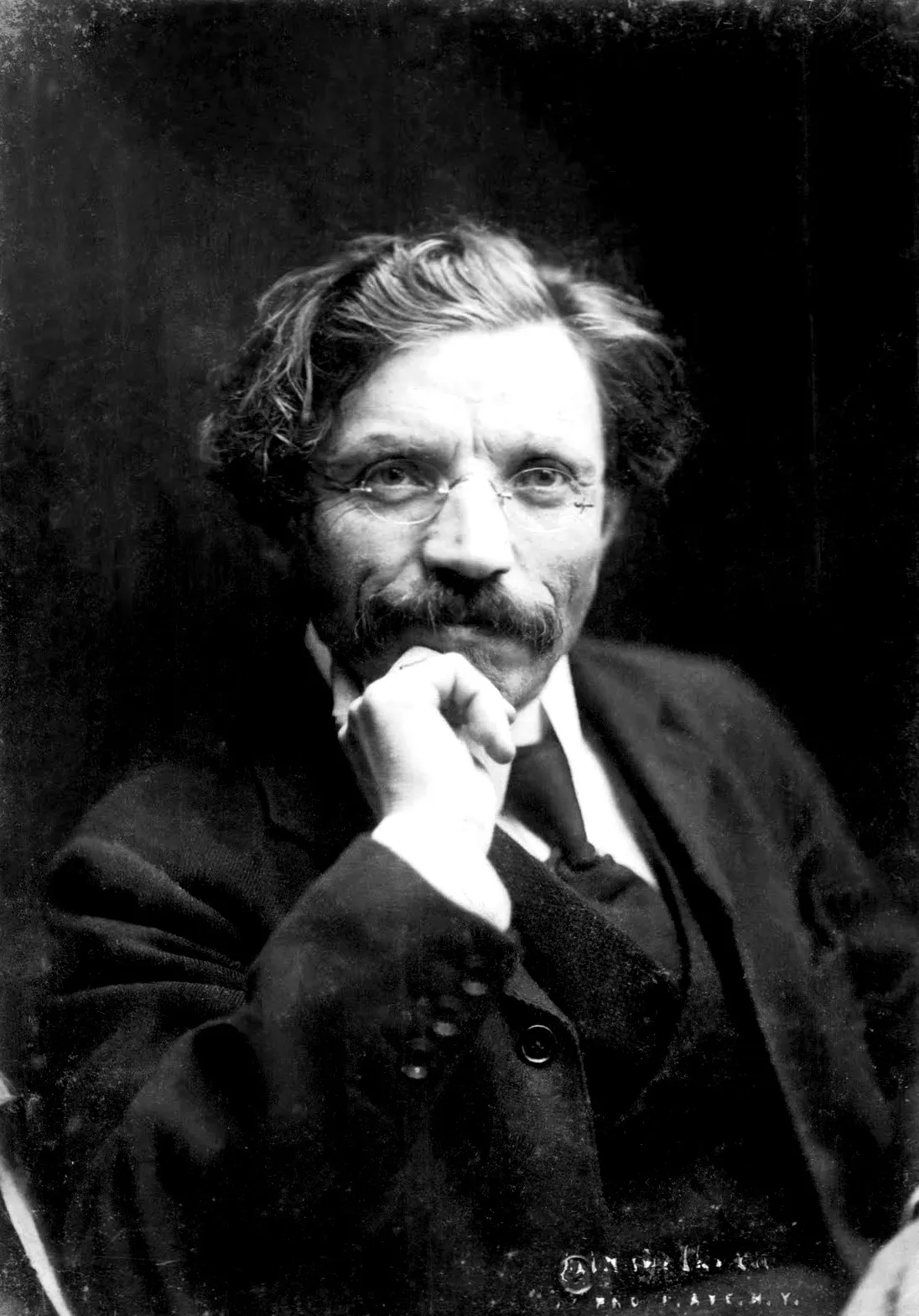 Sholem Aleichem in New York, 1907. Photographer unknown. Public domain.
Why did ethical wills come back?
For most of the twentieth century the form was a curiosity, known mainly to historians. It returned for two reasons.
The first was a book. In the 1980s two rabbis, Jack Riemer and Nathaniel Stampfer, collected modern ethical wills written by ordinary American Jews. They described receiving one as being like reading a love letter from beyond the grave, and they were candid that writing one is hard, because it forces you to confront yourself.
The second was the hospice. Barry Baines, a hospice physician in Minnesota, began helping dying patients write ethical wills after his own father became terminally ill, and in 2002 published Ethical Wills: Putting Your Values on Paper. He reports working with thousands of patients. The practice spread through palliative care well beyond its Jewish origins, because it answers a need that is universal: people near the end of life want to know that what they learnt will not simply vanish with them.
The hospice model has a cost, though. Ethical wills written in the last weeks of a life are written by people who are exhausted and often in pain: poor conditions for remembering stories, and exactly the conditions in which summaries come easily.
How to write an ethical will people will actually read
If the argument above is right, the method follows from it. Start with stories, and let the values emerge from them.
- List the moments that changed you. Not achievements: turning points. A decision, a failure, a loss, a person who saw something in you.
- For each moment, tell the story first. Where you were, who was there, what was said. Specific detail is what lets a reader enter it.
- Only then say what you took from it. One or two sentences. The story has already done the work.
- Include a mistake. The wills that are read with affection are the ones in which the writer admits to being wrong. A list of virtues reads like a eulogy written by its subject.
- Address people by name. Judah ibn Tibbon wrote to one son, about that son’s habits. General advice to “my descendants” is advice to no one.
- Say what you hope, not only what you expect. Hopes date better than instructions.
- Do it while you are well. You will remember more, and you can revise it as your life continues.
If you would rather say it than write it, the prompts in legacy video questions cover the same ground. And it is worth being clear about what an ethical will is not: it does not replace a legal will, which in most places still has to be written, signed and witnessed (see can I do a video will?).
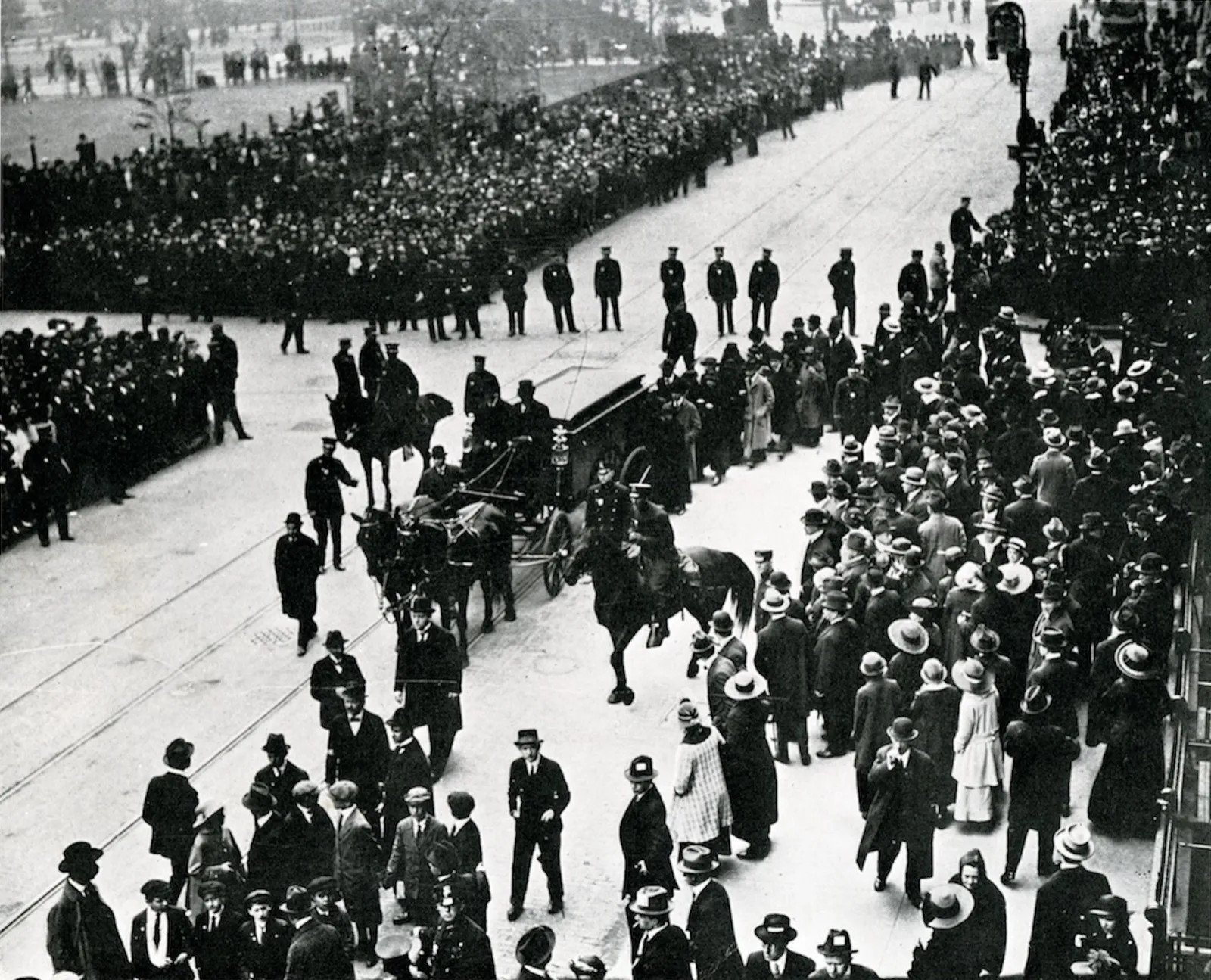 The funeral of Sholem Aleichem, New York, May 1916. Contemporary newspaper reports put the crowd at more than 100,000. Photographer unknown. Public domain.
Why should an ethical will be filmed?
The ethical will has always been a written form because, until very recently, writing was the only way to send anything to people you would never meet. That constraint shaped it. Writing rewards summary and abstraction, which is exactly what the tradition’s best examples avoid.
Sholem Aleichem’s request points at something else. He did not want his stories read silently. He wanted them read aloud, by people, in a room, with laughter. The meaning was partly in the performance.
In more than a hundred life story interviews filmed since 2020, I have found that what a person believed is rarely clearest when they set out to state it. It is clearest in the way they tell a story about it: where their voice drops, what makes them laugh, the point at which they stop and look away. A transcript keeps the words. A video keeps the person saying them, which is the part a descendant actually wants. I have four hours of my grandmother telling me about her life, and I would not trade them for any letter of advice she could have written.
An ethical will on video does not need to be long or polished. It needs a handful of true stories, told by you, to someone you love. Apps like Everyone are built around that idea, one question at a time, but a phone propped on a pile of books will do. What matters is that it happens while you can still tell the stories well, rather than in the last weeks, when only the summaries are left.