
Most of the people who ever lived left no record at all.
Ordinary people in history rarely left a record of their own. Why most lives vanish, how historians recover a few, and why the fix is asking someone now.
In the early fourteenth century a French bishop named Jacques Fournier began interrogating the villagers of Montaillou, a small mountain community in the Pyrenees, on suspicion of heresy. His clerks wrote down what was said. The register that resulted runs to hundreds of pages and contains shepherds talking about their marriages, their quarrels, their food, their fears and their children. In 1975 the historian Emmanuel Le Roy Ladurie turned it into Montaillou, one of the best-selling works of medieval history ever published.
The remarkable thing is not what the villagers said. It is why we know it. Shepherds and farmers of that period appear in the written record very rarely, and when they do, it is usually because something has gone wrong: a court case, a tax dispute, an accusation. The inquisition produced a detailed portrait of ordinary people in history because it was an instrument for interrogating them. Without the bishop’s suspicion, Montaillou would be a name on a map.
That raises a question that most of us never think to ask. If this is how the few were captured, what happened to everyone else?
Who gets recorded, and who does not?
The simplest answer is that records are made by people who have reasons to make them, and those reasons rarely include the lives of the poor. A king commissions a survey because he wants to know what he can tax. William the Conqueror’s Domesday Book of 1086 is the most famous example. It is an astonishing document, but it describes most of its people by their status and their landlord, and names few of them. It was not trying to tell us who they were.
A monastery keeps annals because it wants to record its abbots and its benefactors. A government keeps files because it wants to govern. A family with money commissions a portrait, builds a tomb or writes a will. Each of these is a decision to record something, and each is made by someone with the means to pay for it.
The result is a sampling problem. The historical record is not a random sample of the human past. It is a sample of the people who owned the pens, the parchment, the printing presses and the stone. For most of history that meant a small fraction of the population: rulers, clergy, merchants, landowners, and the men who worked for them.
Could ordinary people write their own history?
Often they could not, and the reason is mundane. Writing was a skill that took years to learn, and the materials were expensive. In most pre-modern societies most people did not read, and fewer still wrote. Where a peasant did leave a mark, it was frequently a signature or a cross at the bottom of someone else’s document.
The exceptions are instructive precisely because they are so exciting. At Vindolanda, a Roman fort near Hadrian’s Wall in the north of England, excavators have since the 1970s recovered hundreds of thin wooden writing tablets dating from around the year 100. They are the everyday paperwork of a frontier garrison: requests for supplies, complaints, a birthday invitation from one officer’s wife to another that is often described as the earliest surviving writing in Latin by a woman. Historians prize them because they show what the people on the frontier were actually thinking about, and what they were thinking about was mostly socks, beer and the weather.
The tablets survive only because the damp, airless soil on the site stopped the wood from rotting. Nearly everything else of that kind has been lost. The lesson is not that ordinary Romans were silent. It is that they were not silent, and that we have only the faintest trace of what they said.
Did historians ever try to correct this?
They did, and the effort has a name: history from below. In the preface to The Making of the English Working Class in 1963, the British historian E. P. Thompson said he wanted to rescue weavers, labourers and artisans from what he called “the enormous condescension of posterity”. The argument was not sentimental. It was that you cannot understand a society, its revolutions, its economy or its beliefs, by looking only at the people who ran it.
Two things make that agenda harder than it sounds. The first is source material. A historian who wants to write about people who left no letters has to reconstruct them from what other people wrote about them, or from what they happened to leave behind: court records, parish registers, inventories of goods at death, the bones in a graveyard. These are indirect and often hostile witnesses. The second is the problem of voice. Even when a poor person is described in detail, the description is usually someone else’s.
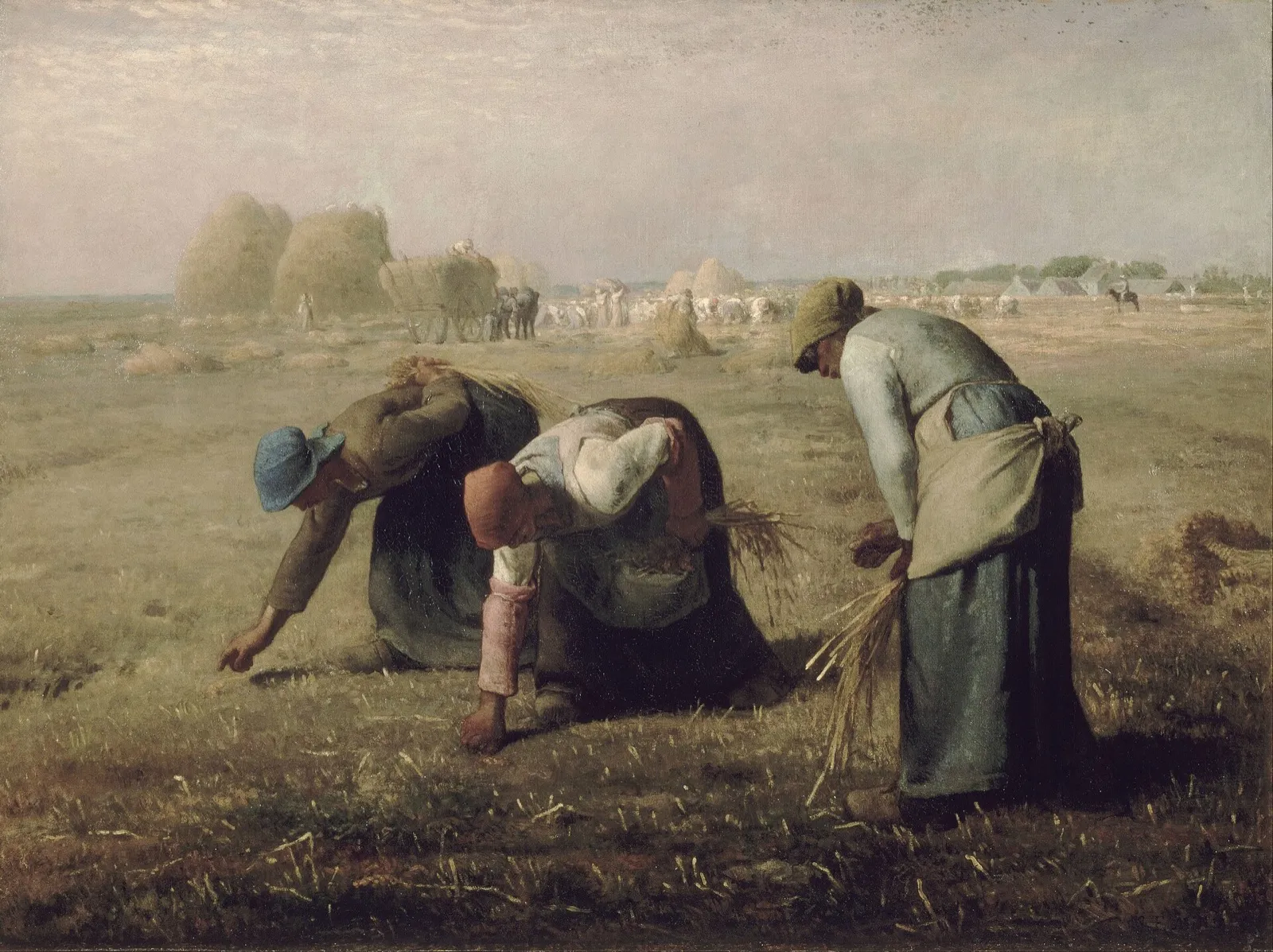
The painters of the period show the same pattern. Louis Le Nain’s peasant interiors from the 1640s and Jean-François Millet’s The Gleaners of 1857 are among the most memorable depictions of rural life in European art. They are also pictures made by someone else, for an audience that was not the people in them. Millet’s gleaners, who gathered what the harvesters left behind, are painted with great dignity. We do not know their names or what they would have said about it.
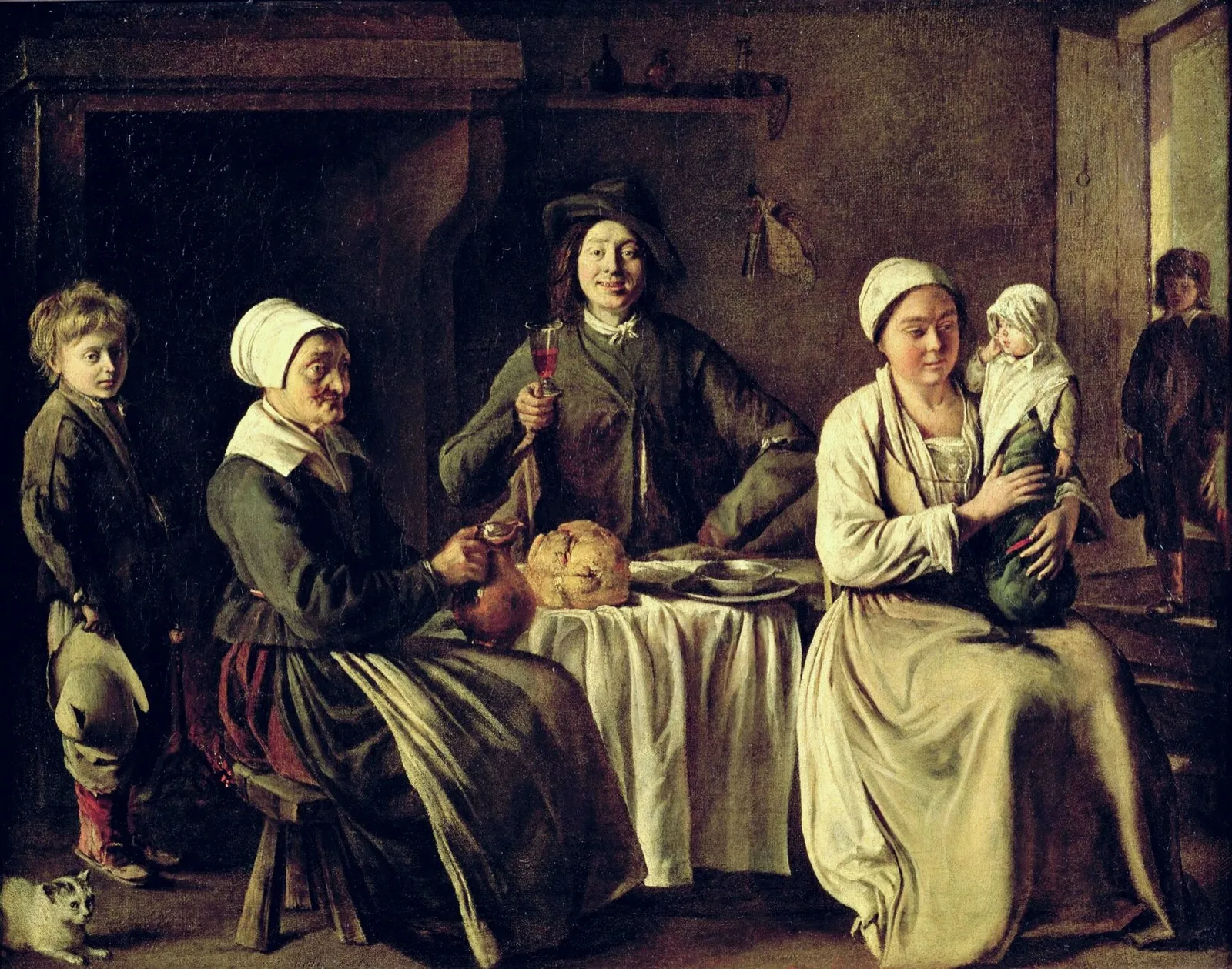 “The Happy Family”, attributed to Louis Le Nain, 1642. Musée du Louvre, Paris. Public domain.
When did ordinary people start being asked?
Very recently. In the 1930s, the Federal Writers’ Project, a Depression-era programme in the United States, sent interviewers to record the accounts of people who had been enslaved. The Library of Congress holds more than 2,300 of these first-person narratives, collected between 1936 and 1938, along with hundreds of photographs. For historians of American slavery they are an extraordinary resource precisely because they are rare: the testimony of the people to whom the system was done, rather than of the people who ran it.
They also show the limits of the method. The interviewers were mostly white, the interviewees were elderly and wary of what they said and to whom, and the questions shaped the answers. This is a useful corrective to romanticising testimony. A recording is not a window. It is a conversation, with all the distortions a conversation has. But the alternative was silence, and that is the more distorting condition of the two.
Later in the century the tape recorder made the same thing possible on a wider scale, and oral history became a discipline. I wrote about what that tradition has produced in why life stories matter to everyone.
What is actually lost when a life goes unrecorded?
Three things, and they are different in kind.
The first is information: the facts of a particular life, who they were married to, where they worked, what they saw. This is the loss we usually think of.
The second is texture. A record of a harvest tells you how much grain was gathered. It does not tell you what the work felt like, what people said while they did it, or what they thought of the man who owned the field. Texture is what turns a past population into past people.
The third is the loss of the counter-example. Official history tends to explain events by the decisions of the powerful. Testimony from below often shows what those decisions looked like from underneath, which is frequently different. I made a related argument about how first-hand accounts carry lessons forward in learning from the mistakes of history.
Is this still happening?
It is, and the reason is the same as in the fourteenth century. We record what someone has a reason to record. Today more is recorded than ever before, but the volume is deceptive. The photographs on a phone, the messages and the posts are fragments, held in formats and accounts that may not survive the person who made them. The unrecorded part is still the part that matters most: what a person thought, and why, in their own words.
I have filmed more than a hundred life stories through The Archive since 2020, and the pattern is consistent. The people who agree to be filmed rarely think their lives are worth recording. They say they did nothing special. Then they talk for an hour and describe a town that no longer exists, a job that has been automated away, a decision that changed the family. I am fairly sure that the four hours I filmed of my grandmother’s story are the only place her account of her own life exists. She has since passed. If I had not asked, there would be a gap exactly where she was.
That is the whole mechanism in one family. Nobody was trying to erase her. Nothing in her circumstances gave anyone a reason to write her down.
What is the cheap fix?
For most of history the fix would have been expensive and unavailable. Preserving a life took a scribe, a printer or a stonemason. Now it takes a phone and a willing relative. The Everyone app exists to make the asking easier, but the app is not the point. The point is that the cost of the thing that was impossible for Montaillou’s shepherds is now close to zero, and the only remaining constraint is that someone has to decide a person is worth the attention.
Most of the people who ever lived have left nothing behind. That cannot be fixed. The people alive today, and the people we are closest to, are a different matter.


