Questions to ask your dad, before the lecture becomes the only version.
Most fathers pass on their stories as lessons, or not at all. The best questions to ask your dad about his life, and why his side so often goes missing.

In November 1919, Franz Kafka wrote one of the longest letters of his life. It was addressed to his father, Hermann, and it opens by recalling a question Hermann had put to him: “You asked me recently why I maintain that I am afraid of you.” The answer runs to dozens of pages. According to Kafka’s friend and executor Max Brod, Franz gave the letter to his mother, Julie, to pass on. She never delivered it, and handed it back to her son. Hermann never saw it.
The letter was published after both men had died, and it is now one of the most famous documents about fathers ever written. What is strange about it, once you notice, is how lopsided it is. We know in great detail what the son felt. We know almost nothing of what the father would have said in reply. Hermann Kafka had grown up in extreme poverty in the Bohemian village of Osek, the son of a kosher butcher, and according to the Kafka scholar Ritchie Robertson he was pushing a pedlar’s barrow through the villages at the age of seven. He told his children about those years constantly. They found the stories tiresome, and in the letter they appear as a source of guilt rather than of connection. His own account of his life survives mainly as his son’s complaint about having to hear it.
That is the problem with most fathers’ stories, and it is why a list of questions to ask your dad is worth more than it looks. A father’s past tends to reach his children in one of two forms: the lecture or the silence. Good questions produce a third.
Why do fathers tell their stories as lessons?
Consider what fatherhood involved for the generation now in its sixties, seventies and eighties. Pew Research Center, drawing on American time-use surveys, reports that fathers in 2016 spent about eight hours a week on child care, roughly three times as much as fathers in 1965. The figures are American, and long-run data for other countries is patchier, but the direction of change appears to have been similar elsewhere. Many of today’s grandfathers were raised by men who were present at dinner, at discipline and on the weekend, and absent for most of the rest. They learnt what a father was from that example, and many repeated it.
When contact is that limited, stories change function. A father who sees his children for an hour in the evening does not use that hour to describe his feelings about his first job. He uses it to make a point. “When I was your age, we had nothing” is not a story at all. It is a moral with the story removed, and children, reasonably, hear only the moral. Hermann Kafka’s barrow was a real barrow, pushed by a real seven-year-old, but by the time it reached his son it had become a reproach.
The consequence is that many adults know the lessons of their father’s life and almost none of its scenes. They know he worked hard. They do not know what the work smelt like, who he ate lunch with, or what he was afraid of on his first morning.
Who does your dad actually talk to?
The second form is silence, and it has a structural cause too. In 2021 the Survey Center on American Life asked a large sample of American adults about their friendships. Fifteen per cent of men said they had no close friends at all, up from three per cent in a comparable survey in 1990. The share of men with six or more close friends had halved.
The implication for family history is uncomfortable. For a large number of men, the private version of their life, the one with doubt and failure and love in it, has never been told to anyone. Not because it was secret, but because there was no one in the habit of asking. A mother, as I wrote in questions to ask your mum, is often the family’s keeper of other people’s stories. A father is often the keeper of his own, and only his own.
There is also the matter of time. In Australia, life expectancy at birth for the period 2022 to 2024 was 85.1 years for women and 81.1 for men, according to the Australian Bureau of Statistics. In many families, the father is the first parent to die, and his story the first to go.
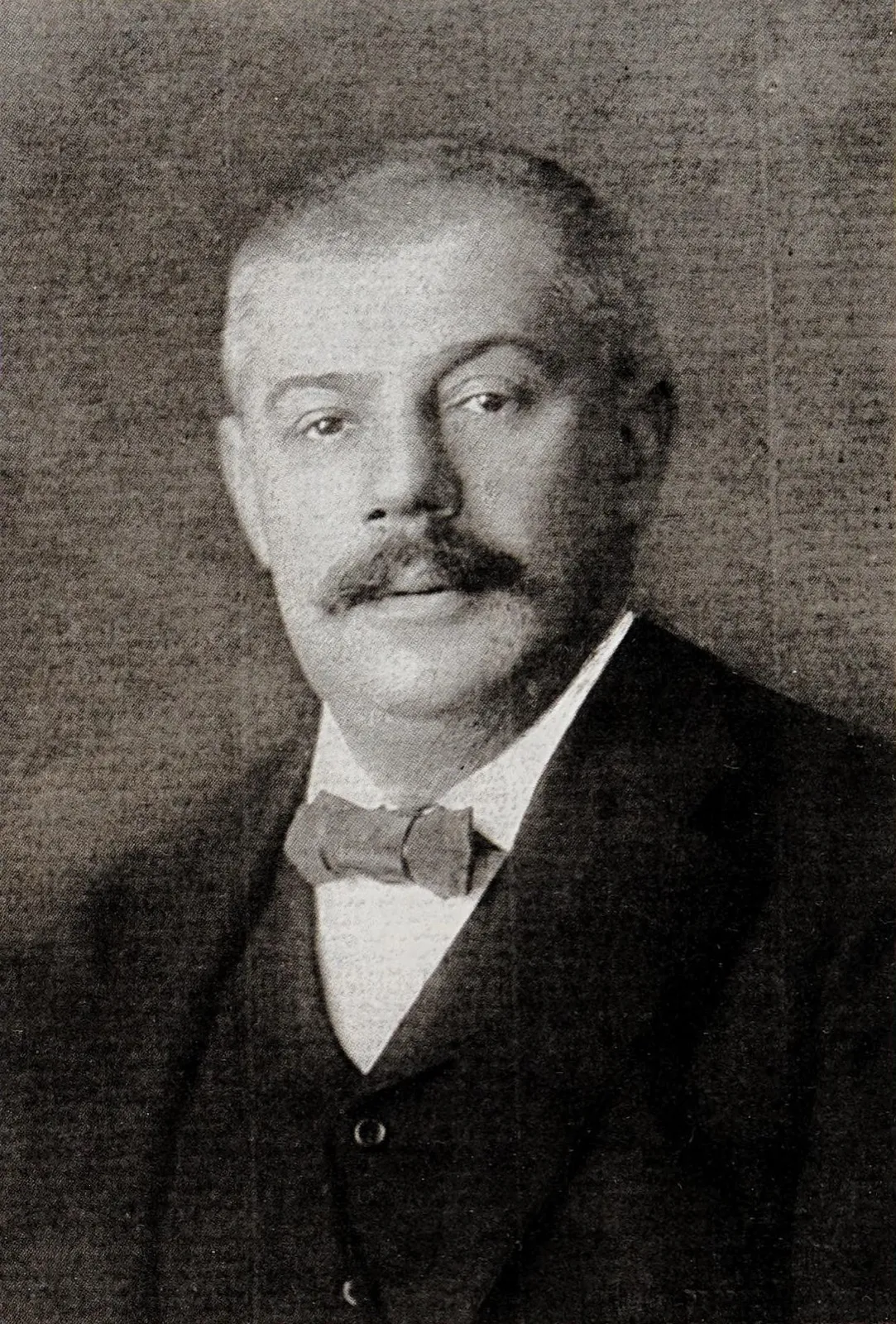 Hermann Kafka at fifty-eight, photographed by the Atelier Schlosser & Wenisch, Prague, 1910. Public domain.
What questions should you ask your dad?
The general principle from questions to ask your parents about their life holds: the smaller the question, the bigger the answer. With a father there are two further rules. Ask about the boy before the father, because the boy is the person you never met. And when he offers a lesson, ask for the scene behind it.
Before he was Dad
- What did he want to be at fifteen, and what happened to that plan?
- Who was his best friend, and what did they get up to?
- What was the first thing he did that his own father would not have approved of?
- When did he first feel like a man rather than a boy? Was there a particular day?
His own father
This is the section that reaches furthest back, and the one most likely to vanish.
- What was his father like at work, and at home?
- What did his father teach him, deliberately or not?
- Did they ever talk properly? About what?
- What does he know about his grandfather? Where did that side of the family come from?
- What did he decide he would do differently, and did he manage it?
Work
For many men, work is where most of their adult waking life went, and it is usually reported to the family as a job title.
- What was his first job, and what did he do with the first pay packet?
- Describe an ordinary day at the job he held longest: the commute, the people, the smell of the place.
- Who was the best boss he ever had, and the worst?
- Was there a moment he nearly gave it all up?
- What part of the work is he proudest of that nobody at home ever saw?
Becoming a father
- What did he think when he found out he was going to be a father?
- What was the day you were born like, from his side?
- What was he most worried about in those early years, and did he tell anyone?
- What is something he is proud of as a father, and something he would do differently?
The things he did not say
These are best kept for a later sitting, once he is used to the camera.
- What is he afraid of now?
- Is there someone he never thanked, or never apologised to?
- What did he want to say to you at some point, and did not?
- How would he like his grandchildren to think of him?
The ordinary things
Fathers often hold practical knowledge that is never written down, and it is easiest to capture by asking him to show you.
- How do you fix the thing he always fixed? Can he walk you through it while you film?
- What did he sing in the car?
- What is the story he always tells at parties, and what is the true version?
End the way I end every interview: ask whether there is anything he would like to talk about that nobody has asked.
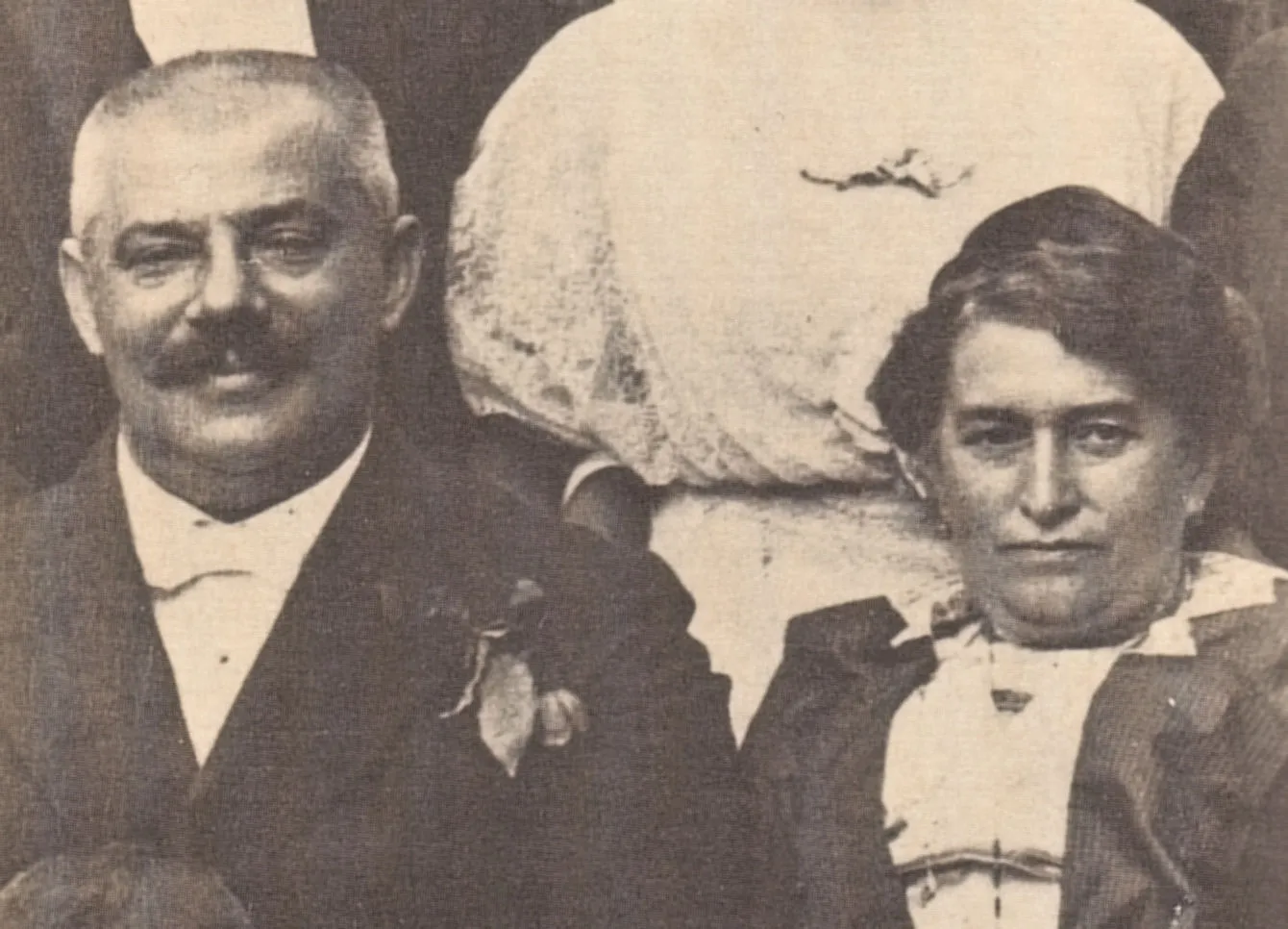 Hermann and Julie Kafka, about 1913. Unknown photographer. Public domain.
How do you get your dad to open up?
Expect him to start with the lecture. That is fine. The lecture is the compressed version, and your job is to decompress it. When he says “we had nothing”, ask what was in the cupboard that week. When he says “I worked hard”, ask him to describe the hardest day. A moral is a summary, and a summary can usually be unpacked into the scene it came from, if someone asks for the scene and is patient enough to wait for it.
Many fathers are more comfortable doing something than being interviewed. A drive, a walk, a job in the shed or a box of old photographs gives the conversation somewhere to rest when it gets difficult. Begin with something he enjoys talking about, keep the first session short, and stop when you said you would. For a father who says there is nothing to tell, the approaches in how to get a parent to talk about their past work well, in particular asking for his help rather than his life story, and naming the grandchild the recording is for.
Why film it instead of writing it down?
Return to Kafka for a moment. The letter is a masterpiece, and it is also a closed system: one man describing another, with no right of reply. Hermann outlived his son by seven years. He died in 1931, and as far as we know he never told his own side to anyone who wrote it down. The record of his life is, almost entirely, someone else’s account of him.
Every family runs a version of this risk. When a father dies without being asked, what survives is what his children remember of him, filtered through their own grievances and affections, and shrinking with each retelling. A recording lets him speak in his own voice, about his own life, to people who were not there.
Video does this better than writing for a simple reason. I have four hours of my grandmother telling me her life story, and she has since passed away. What I value most in it is not the information. It is her face while she decided whether to tell me something, and the way she laughed at her own jokes a moment before the end of them. A transcript keeps the facts and loses the person.
What should you do this week?
Choose five questions from the lists above, including one you would find difficult to ask. Pick a time when he is relaxed, prop up a phone, and start with the easy ones. If you would like a structure, Everyone presents questions one at a time and keeps each answer as its own short video, so you can watch him rather than your notes.
Kafka’s letter was never delivered, and the reply was never written. Most of us are in a better position than either of them. The father is still there, the question is still open, and the cost of recording the answer is now an afternoon.