
Why one ordinary life matters to everyone else.
History is mostly the record of those who left records. The importance of oral history is that it lets ordinary lives into the evidence, while they can speak.
In 1927, a folklorist and novelist named Zora Neale Hurston travelled to Plateau, Alabama, to interview a man in his mid-eighties called Cudjo Lewis. He had been born in West Africa, and in 1860 he was taken aboard the Clotilda, a ship that smuggled captives into the United States decades after the Atlantic slave trade had been outlawed. He was, as far as anyone knew, the last survivor of that trade. Hurston sat with him over several months and wrote down what he said.
She finished the manuscript around 1931. Publishers, by most accounts, would take it only if she rewrote his words in standard English, and she refused. The book, Barracoon, did not appear until 2018, more than ninety years after the interviews and long after Lewis had died, in 1935.
I think about that delay often, because it contains the whole case for the importance of oral history. The last eyewitness to a major event in human history was sitting in a small Alabama town, willing to talk, and the only reason we can still hear him is that one person asked and refused to give up the record. Almost every other person in his position was never asked.
Whose lives does history actually record?
The honest answer is: the lives of people who left records, and for most of history that was a small group.
Writing was invented around 5,000 years ago, and for most of the time since, only a few people could use it. One widely cited estimate, built on work for the OECD and republished by Our World in Data, puts the global literacy rate in 1820 at around 12 per cent. These long-run figures are rough, and early surveys often counted something as thin as the ability to sign your name, but the scale is clear. For most of recorded history, the majority of people could not write their own account of anything.
Literacy is only the first filter. Writing material was expensive. Paper had to be kept dry and kept somewhere. Someone had to want to preserve what you wrote and have the means to do it. The people who met all of those conditions were rulers, clerics, merchants, soldiers with a grievance and, later, professional writers. What they wrote down was what mattered to them: wars, laws, taxes, property and their own reputations.
The result is a distortion that is easy to miss, because it is built into the evidence. We do not see the past through a window. We see it through the small number of things that someone chose, or could afford, to keep. The picture we form is a picture of the few. (I traced how this began in a short history of storytelling.)
What is lost when ordinary lives are missing?
Facts, first. An archive of royal decrees tells you what the king ordered, and almost nothing about whether anyone obeyed. It does not tell you what a meal cost a family, how a trade was learnt, what people sang while they worked, or what it felt like to live through a famine or a plague. These are not trivia. They are most of what human life consisted of.
But the deeper loss is a kind of knowledge that does not survive being summarised. A statistic can tell you that unemployment in the United States reached roughly a quarter of the workforce in the early 1930s. It cannot tell you what a father said to his children the evening he lost his job.
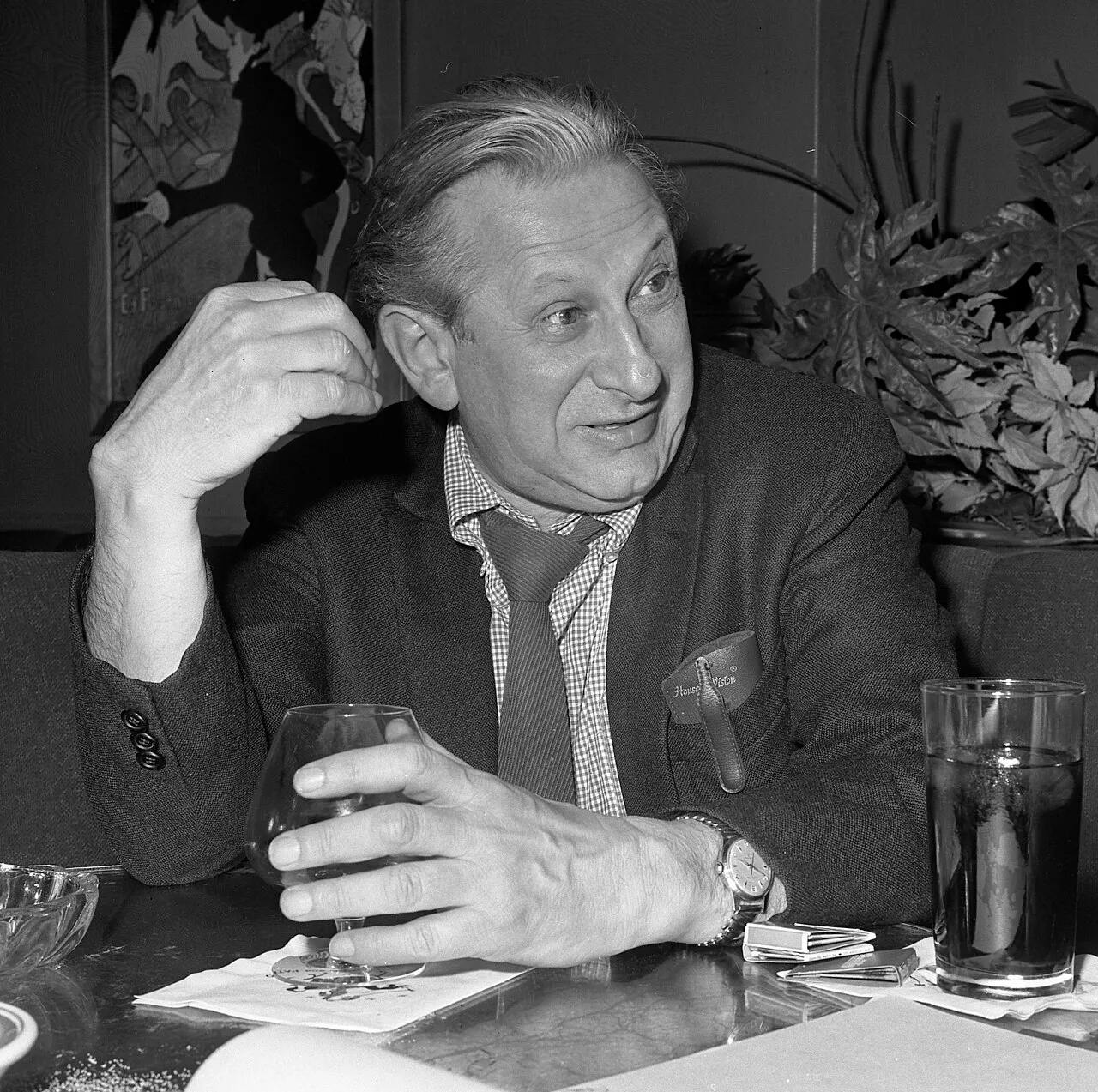
That gap is what the Chicago broadcaster Studs Terkel set out to fill. In Hard Times (1970) he gathered the memories of people who had lived through the Great Depression, and in Working (1974) he interviewed people about what they did all day and how they felt about it. His subjects were mostly not the people who ran the institutions. They were the steelworker, the waitress, the clerk. His books are still in print because they contain something no economic history can supply: how it felt from the inside, in the speaker’s own words and rhythms. He later won a Pulitzer Prize for another oral history, The Good War (1984), about the Second World War.
Does oral history change what we think we know?
It does, and sometimes substantially.
Between 1936 and 1938, the Federal Writers’ Project, part of the American government’s work relief programme, sent fieldworkers to interview people who had been enslaved. The Library of Congress holds more than 2,300 of these first-person accounts, along with photographs of the people who gave them. The collection has real limitations: the interviewers were mostly white, the speakers were elderly and had been children under slavery, and the accounts were shaped by who was asking. Historians read them with care. But before they existed, the written record of slavery was largely the record of slaveholders, ship captains and legislators. These interviews put the voices of the enslaved into the evidence, and the history of slavery has not been the same since.
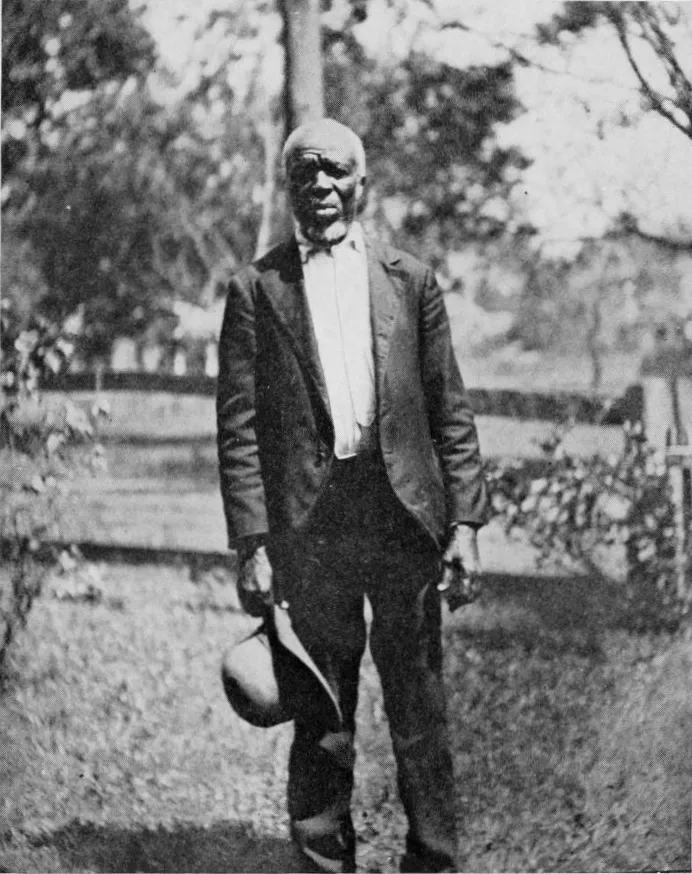 Cudjo Lewis (Kossula), photographed in 1914 by Emma Langdon Roche. Public domain.
The same pattern holds in smaller ways, on every scale. When people are interviewed about a neighbourhood, a factory, a migration or a war, they regularly mention things that the paperwork omits: who really ran the place, what was never written down because everyone knew it, which official explanation nobody believed. The documents give the outline. The people give the reasons.
Why can’t this wait?
Because the source is perishable in a way that documents are not. A letter can sit in a drawer for a century and be read. A memory cannot. When a person dies, everything they knew but never told is gone, and it is gone completely.
The urgency is clearest in cases where the group of witnesses is small and ageing. The USC Shoah Foundation, founded in 1994 after Steven Spielberg made Schindler’s List, recorded about 55,000 video testimonies from survivors and other witnesses of the Holocaust. The survivors were already elderly, and every year the pool of first-hand witnesses shrank. The testimonies exist because someone treated the window as closing, and filmed the people instead of intending to.
I have seen the same thing at the scale of a single family. Through The Archive I have filmed more than a hundred life stories since 2020, including Holocaust survivors, and I filmed four hours of my grandmother’s story before she died. I did not appreciate at the time how rare that was. Most families have nothing like it. They have a few photographs, a few documents and a vague sense that someone once knew the stories.
Does a single life really matter to anyone outside the family?
It is a fair question, and the honest answer is that most individual life stories will be watched by a handful of people. That is not a failure. For a family, those few viewers are the point: the great-grandchild who learns where the family came from, and from whom.
The case for humanity as a whole is a statistical one. No single life changes the record. But millions of them, held in many places, change it in the way a large sample changes a conclusion. The historians of the future will be better able to understand ordinary people in the twenty-first century if some of them recorded themselves talking, in their own words, about their work, their marriages, their fears and the things they got wrong. The more varied the sample, the less it depends on the lucky survival of a few voices.
There is also a quieter argument. A civilisation that records only its powerful will tend to remember itself as a story about the powerful. Adding the rest does not just fill gaps. It changes what the story is about, and who is understood to have been in it.
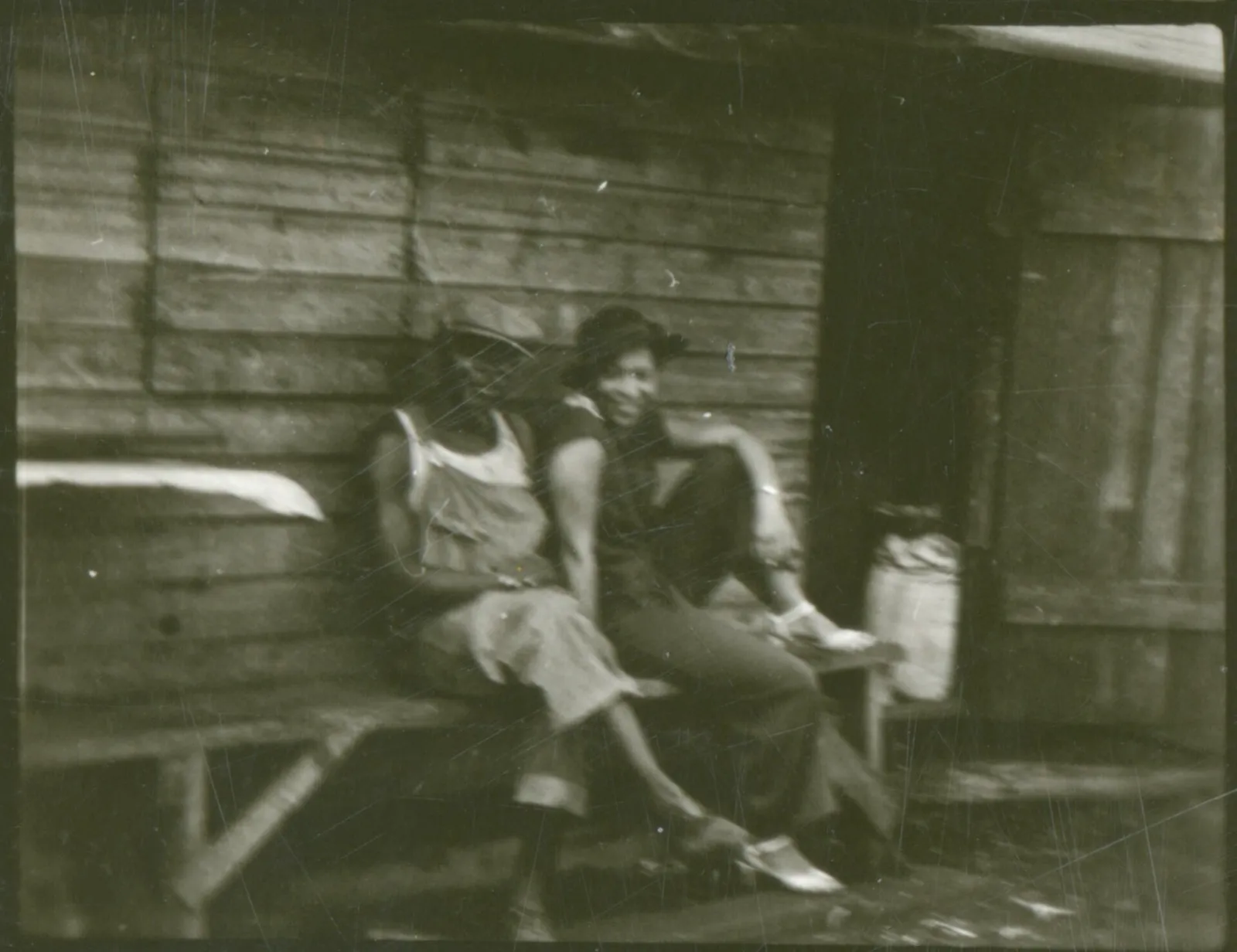 Zora Neale Hurston at a probable recording site in Belle Glade, Florida, 1935. Library of Congress. Public domain.
What has changed?
For nearly all of history, preserving a life took a scribe, a printing press or a recording studio. Hurston needed a train ticket and a notebook. Terkel needed a heavy tape recorder and a publisher. The Shoah Foundation needed an organisation and a large budget.
Today the equipment is in your pocket. A phone films in high definition, stores hours of footage and copies it anywhere for almost nothing. For the first time, the main obstacle to recording an ordinary life is not cost or skill. It is that nobody asks. If you want to do it well, I have written a practical guide to conducting an oral history interview, and a case for why video captures more than writing does.
The great-great-grandparents of most people alive today left their names, at best, in a parish or civil register (I wrote about this in You Have 16 Great-Great-Grandparents. Can You Name Them?). Those of the next generation need not be so thin. If the Everyone app helps, by asking the questions one at a time, that is useful, but a phone and a willing relative are enough.
Cudjo Lewis waited ninety years to be heard by the public, and he was lucky. Most people in his position are not waiting at all. They are just not recorded.
If you are wondering whether any of this changes what societies actually do, I looked at the evidence in learning from the mistakes of history. For why the record is so thin in the first place, see ordinary people in history.


