Can ordinary lives teach us not to repeat the past?
Learning from the mistakes of history is harder than the slogan suggests. The evidence says lessons survive when someone's own words carry them, and fade when they do not.

In 1905 the philosopher George Santayana wrote the sentence that has since been printed on museum walls and school posters: “Those who cannot remember the past are condemned to repeat it.” Most people who quote it assume it is simply true. Decades earlier, Hegel had offered the opposite view, and a bleaker one: that what experience and history teach is that peoples and governments have never learned anything from history.
Both cannot be right, and the evidence points to a third position. People do learn from the past, but only under particular conditions, and those conditions are mostly about how a lesson is carried from one generation to the next. This matters for anyone interested in learning from the mistakes of history, because it suggests that the usual remedy (more history, taught better) is not quite the one that works.
Why does history so often fail to teach?
Consider the 1918 influenza pandemic. Estimates of the death toll vary widely, from under 20 million to 100 million, with 50 million the figure most often cited. On any reading it killed more people than the First World War. Yet the historian Alfred Crosby, who wrote one of the first serious American studies of it in 1976, later reissued the book under the title America’s Forgotten Pandemic. It had left a thin trace in memorials, novels and public memory compared with the war that ran alongside it.
The reason is not that the facts were hidden. The facts were in the records. The reason is that nothing carried them forward. A pandemic has no battlefield to visit and no anniversary built into the national calendar. The people who lived through it mostly returned to their lives and, as far as the record shows, talked about it rarely. When the next pandemic arrived a century later, the lessons were in the archives and almost nowhere else.
This is the first condition. A fact stored in an archive is not a lesson. For something to change what people do, someone has to be telling it, to someone who is listening, in a form they can use.
What does a lesson that survives look like?
The clearest example I know comes from the north-east coast of Japan. Along the Sanriku coast, communities hit by tsunamis in 1896 and 1933 put up stone markers carrying warnings to later generations. One of them, in the village of Aneyoshi, is reported to say, in rough translation, to remember the calamity of the great tsunamis and not to build homes below that point.
In March 2011, according to reporting at the time, the water stopped roughly ninety metres below the stone, and the village’s houses, which stood above it, were not damaged. (Much of the English-language account comes from a single widely syndicated report, and the age and wording of the stone are described differently in different places, so I would treat the details loosely.) The point survives the uncertainty. The warning worked because it was short, concrete, local and addressed to the people who would actually be choosing where to build.
It also worked against the odds. The same reporting noted that elsewhere on that coast such warnings had been forgotten or ignored. The tsunami researcher Fumihiko Imamura has been quoted as saying that memory of a disaster tends to fade after about three generations. That is roughly the time it takes for the last person who remembers it first-hand to die.
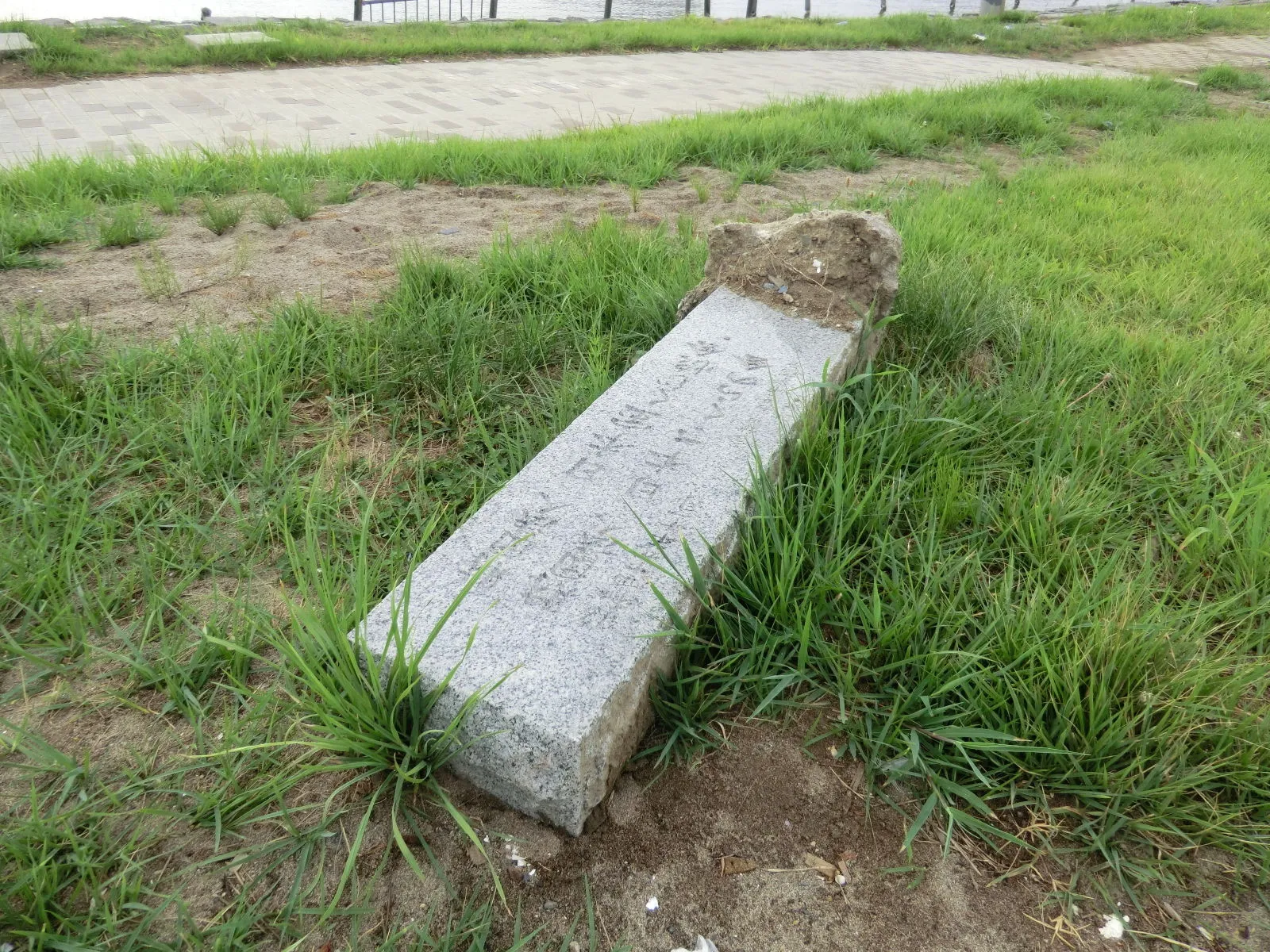 A stone monument in Ishinomaki, Japan, built in 1970 and knocked down by the tsunami of 11 March 2011. Photo by くーさん, 18 August 2011. CC BY 2.0.
Do people actually change when they live through something?
They do, and there is good evidence for it from an unexpected field. In a well-known 2011 paper in the Quarterly Journal of Economics, the economists Ulrike Malmendier and Stefan Nagel studied American households across several decades. They found that people who had lived through poor stock market returns reported less willingness to take financial risk, were less likely to own shares and were more pessimistic about future returns. The effect was strongest for recent experience, but early-life experience still counted decades later. The “Depression babies” of the title is the popular version of the finding: a generation that saw the worst of the 1930s tended to carry caution with it for life.
This is learning from history in its most reliable form. It is not learning from a textbook. It is learning from having been there. And it has the same flaw as the tsunami warnings. When the people who were there die, the caution goes with them. The generation that follows inherits the statistics but not the feeling, and it is the feeling that governed behaviour.
Why does a statistic teach less than a person?
A number describes a consequence. A person describes a decision, and what came of it.
When a survey tells you that unemployment reached about a quarter of the American workforce in the early 1930s, you learn that something bad happened. When a man in his eighties tells you what he said to his children the evening he lost his job, and what they did without that winter, you learn what the bad thing was like, which is what you need in order to recognise it coming. The first is information. The second is closer to experience at one remove.
This is the argument for ordinary testimony, as opposed to official history. Official records are written by the people who made the decisions, and they tend to describe the decisions. The people who bore the consequences left much less. Yet the consequences are exactly what a later generation most needs to hear. I made the wider case for this in why life stories matter to everyone: the record of the powerful is not a neutral sample of what happened. I look at who gets left out in ordinary people in history.
Does hearing the testimony really change anything?
Only partly, and I would not claim more. There are three honest limits.
First, memory is fallible. People reshape their stories over time, and a vivid account can be wrong in its details. Testimony has to be read as evidence, not as a verdict.
Second, hearing a lesson is not the same as acting on it. Plenty of people who heard the warnings did nothing. The Japanese stones were present on the coast in 2011 and many were ignored.
Third, the effect of fading is real even for the best-documented events. A 2020 survey commissioned by the Claims Conference in the United States found that 63 per cent of respondents aged 18 to 39 did not know that six million Jews were murdered in the Holocaust, and 48 per cent of all respondents could not name a single camp or ghetto. This is among the most thoroughly documented crimes in history, and the people who lived through it are the subject of one of the largest testimony archives ever assembled. Documentation alone did not carry the knowledge.
That last point cuts in two directions. It shows the limit of archives, and it is also the reason the testimony matters. The USC Shoah Foundation recorded about 55,000 video testimonies because it recognised that the people were the carriers, and that the carriers were ageing.
What would a better habit look like?
If the argument above is right, the useful question is not “how do we teach more history?” but “how do we keep the first-hand account in circulation for longer?”
I think the answer is unglamorous. It is to make the telling normal, inside families, long before it is an emergency. A grandparent who has described the year the factory closed, or the year of the flood, or what the war did to the street, has put a piece of experience into the family’s memory that no textbook holds. It need not be dramatic. Most of what is worth knowing is not.
It helps to hear it in a person’s own voice. Watching someone say what happened carries something that a transcript loses: hesitation, emphasis, the place where they stop. I wrote about why that difference is real in why video beats writing for recording a life story.
The scale is also different from before. For most of history, preserving an account took a scribe or a studio. Now it takes a phone and a willing relative. If the Everyone app is useful, it is in asking the questions one at a time. But the real bottleneck remains where it always was: nobody asks.
Santayana and Hegel may both be partly right. Societies forget, and they do repeat. But the evidence from the Japanese coast and from the Depression generation suggests that forgetting is not inevitable. It depends on whether, in each generation, someone who was there gets the chance to say what it was like, and someone else gets the chance to hear it.