Questions to ask a Vietnam veteran, and the homecoming nobody asked about.
Questions to ask a Vietnam veteran about service, the long silence and the homecoming, with what not to ask and how to record it while there is time.
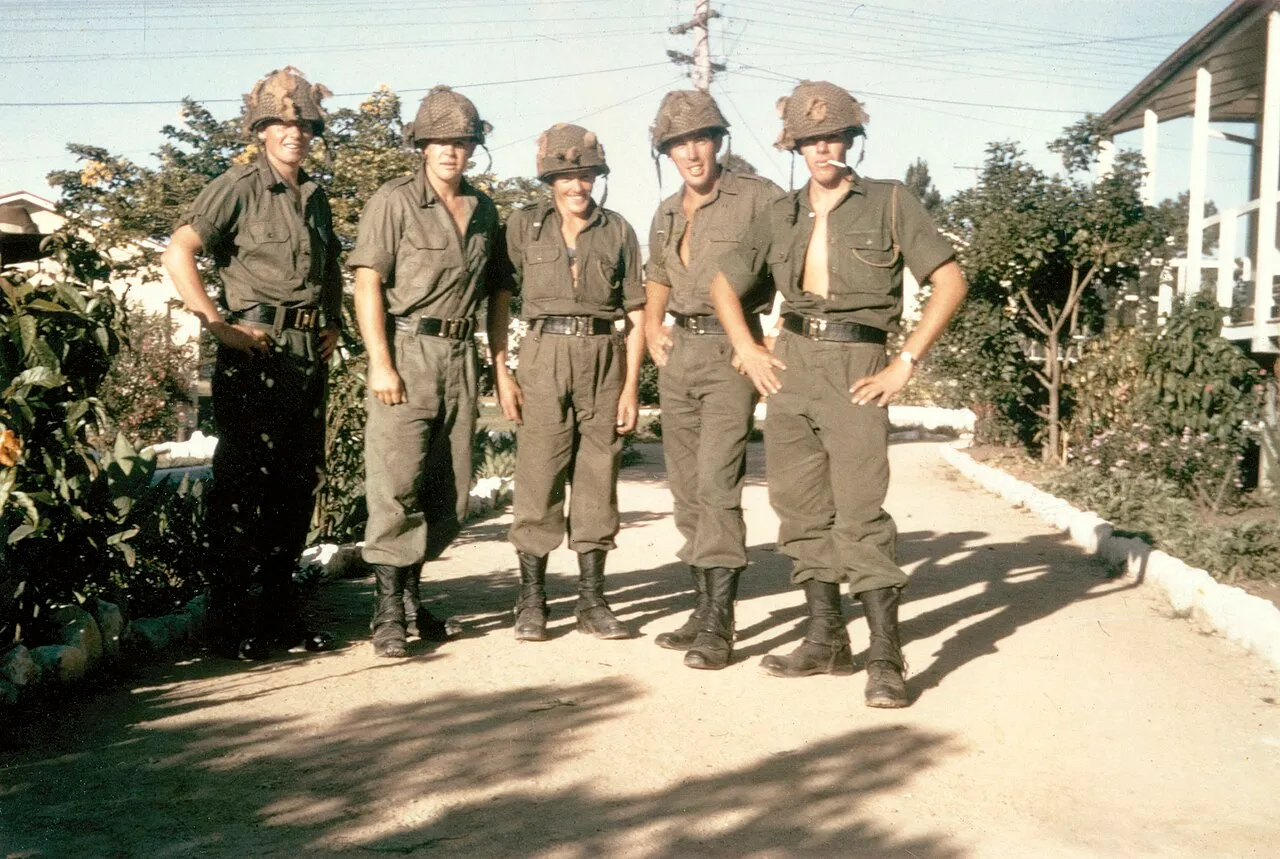
On 3 October 1987, about twenty-two thousand Vietnam veterans marched through Sydney, according to the Australian War Memorial, while the RSL puts the crowd at more than a hundred thousand. The parade was called a Welcome Home. Australia’s involvement in the war had ended in 1973, so the welcome arrived roughly fourteen years late.
That gap explains much of what follows. If you are looking for questions to ask a Vietnam veteran, the first thing to understand is that many of them came home to a country that did not know what to say to them, and then stopped saying anything themselves. The questions that work best are the ones that were never asked at the time, and the veterans who are still here are now mostly in their seventies and eighties.
Why is it different to ask a Vietnam veteran?
Because of what happened after the service rather than during it. Many veterans felt they had been denied a proper welcome, and that is why a committee of veterans organised the 1987 parade themselves. Vietnam had been a divisive war at home. Soldiers returned to protests, indifference or silence, and a good number learnt that the simplest thing was not to raise it.
The result is a pattern most families will recognise. A father or grandfather who served says very little, the family takes the silence as a rule, and the rule is passed on to the children without anyone deciding it. The silence is rarely a sign that there is nothing to say. It is closer to a habit formed in 1970 and never revisited, because nobody offered a reason to revisit it.
The second difference is how people came to serve. About 60,000 Australians served in Vietnam, and 521 died. Around 15,000 of those who went were national servicemen, called up by a ballot of birth dates, so the veterans you meet include career soldiers and ordinary twenty-year-olds who were chosen by a draw. The two groups often tell very different stories about why they were there, and it is a mistake to assume you know which kind you are speaking to.
What should you not ask a Vietnam veteran?
The guidance from veterans’ organisations is consistent, and the reasons are useful for every other question you ask. The detailed list is in the post on questions to ask a veteran about their service, but three cautions matter most here.
- “Did you kill anyone?” Many did not, and for those who did it is not a question for a first conversation or, often, any conversation.
- “Was it worth it?” It demands a political verdict on a war that is still argued about, from a man who was twenty when he was sent.
- “Why didn’t you ever talk about it?” It sounds like a reasonable question, but it frames the silence as a failing. A better version is to ask what it was like when he first came home, and let the answer explain the silence.
A good rule is to avoid any question that forces the veteran to defend something. Ask for scenes, objects and people instead, and let them decide how far to go.
What are the best questions to ask a Vietnam veteran?
Follow the order of a life, not the order of a war. Start well before the war and finish well after it.
Before the call-up
- Where did you grow up, and what were you doing at nineteen or twenty?
- Did you volunteer, or did your birthday come up in the ballot? Where were you when you found out?
- What did you think of the war then, and what did your family say?
The ballot question matters. A man who learnt that a marble with his birth date on it had been drawn, and that he would shortly be in uniform, has a story that is not about soldiering at all.
Training and the journey
- What do you remember of your first week in uniform?
- Who did you meet in training whom you still think about?
- What was it like to leave, and who saw you off?
Day to day in Vietnam
This is the part that history books compress into a sentence and families most want.
- What did an ordinary day look like?
- What did you eat, and what did you do when nothing was happening?
- How did you get news from home, and what did you write back?
- Was there anything you carried that you would not give up?
Most of a soldier’s time is not spent in battle. It is spent waiting, working, digging, patrolling and being bored, and those details are rarely recorded anywhere else.
The people
- Who did you serve with, and who do you still think about?
- What made a good officer or sergeant?
- Who did you lose touch with, and do you wish you hadn’t?
Many veterans will talk about their mates long before they will talk about events, and the people are often what they most want remembered.
Coming home
- How did you get home, and what was the first day like?
- What did people say to you, and what did they not say?
- When did you first talk about it, and with whom?
- What did you do for work, and how long before it felt like normal life?
This is the chapter that has been missed for most of fifty years, and a patient question here can be the one that opens everything else.
The years since
- Do you remember the Welcome Home parade in 1987? Did you march?
- What does Vietnam Veterans’ Day on 18 August mean to you?
- What do you want your grandchildren to know about it?
- What have I never thought to ask?
Vietnam Veterans’ Day falls on the anniversary of the Battle of Long Tan in 1966. It began as Long Tan Day and was given its present name after the 1987 parade.
How do you ask so that it does not feel like an interrogation?
The general advice in how to interview older family members applies, with some additions.
Say plainly that they are in charge. Tell them they can skip any question, stop at any time, and that nothing will be shared without their agreement. People who spent years following orders tend to notice, and appreciate, the offer.
Begin with an object. A photograph, a slouch hat, a letter or a set of dog tags is easier to talk about than a memory. “Who is in this picture?” is a question anyone can answer, and it often leads to the rest.
Do not argue about the war. You will meet strong views, from men who believe it was necessary and others who think they were used. Neither needs correcting. A recording that holds an honest opinion is worth more than one that holds a polite one.
Be ready for silence. If the veteran stops, wait. Offer to pause or move on, and mention that they can come back to it another day. If the conversation turns heavy, Open Arms, the Veterans and Families Counselling service, offers free and confidential support on 1800 011 046.
Why does it matter to record it now?
Because of simple arithmetic. A man called up at twenty in the ballot years was born in the 1940s or early 1950s, and the youngest of them are well into their seventies. Many of the regular soldiers, nurses and airmen are older still. Within a decade or so, this generation’s own accounts will exist only as whatever was recorded.
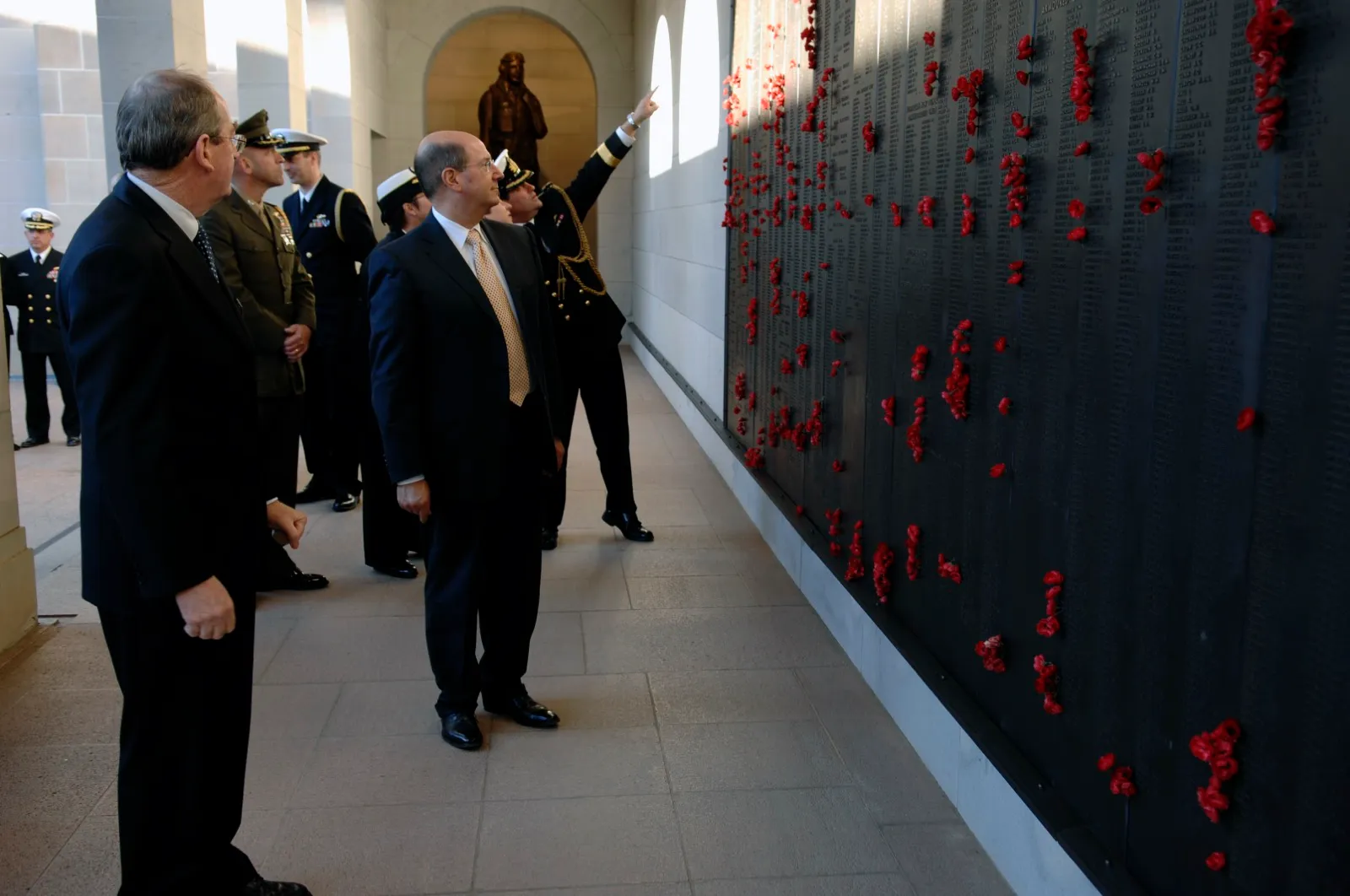 The Roll of Honour at the Australian War Memorial, Canberra, 2007. U.S. Navy photo by Shawn P. Eklund. Public domain.
The official record is good at names. The Roll of Honour lists the 521 who did not return, and unit diaries record where each battalion was on each day. What none of it holds is how one person remembers the days in between: the smell of a place, a joke that only made sense there, the name of a friend. A video keeps the voice, the pauses and the way someone looks when a name comes up. I have filmed more than a hundred life stories since 2020, and what families treasure afterwards is rarely the main event. It is the small, unrepeatable detail that only the person could give.
There is also something owed. The 1987 parade was an attempt to say what had not been said in 1973, and a recorded conversation is a smaller version of the same thing: someone sitting down, switching on a camera and saying that this chapter counts. If you want a practical guide, see how to record your grandparents’ stories on your phone, and for a wartime childhood rather than service, the questions to ask grandparents about WW2.
Ask permission before filming, explain who will see it, and give them a copy. If they ask you to stop, stop.
Where should you start?
With the first question in the list, not the last. Ask where he grew up and what he wanted to do at twenty. The war can wait until it comes up on its own, and the homecoming, which is where most of the unspoken story lives, comes later still.
Most families have been waiting for the other person to raise it. A veteran may be waiting for someone to ask, and the question is easier than it feels. If you would like prompts to hand, the Everyone app can offer one question at a time, though a phone and a quiet room are all you need. The generation that went to Vietnam was welcomed home late. It would be a good thing to ask them about it before it is later still.