Questions to ask a veteran about their service, and the ones to leave unasked.
How to ask a veteran about their service, with questions for before, during and after, what not to ask, and why the ordinary parts of a life in uniform matter.
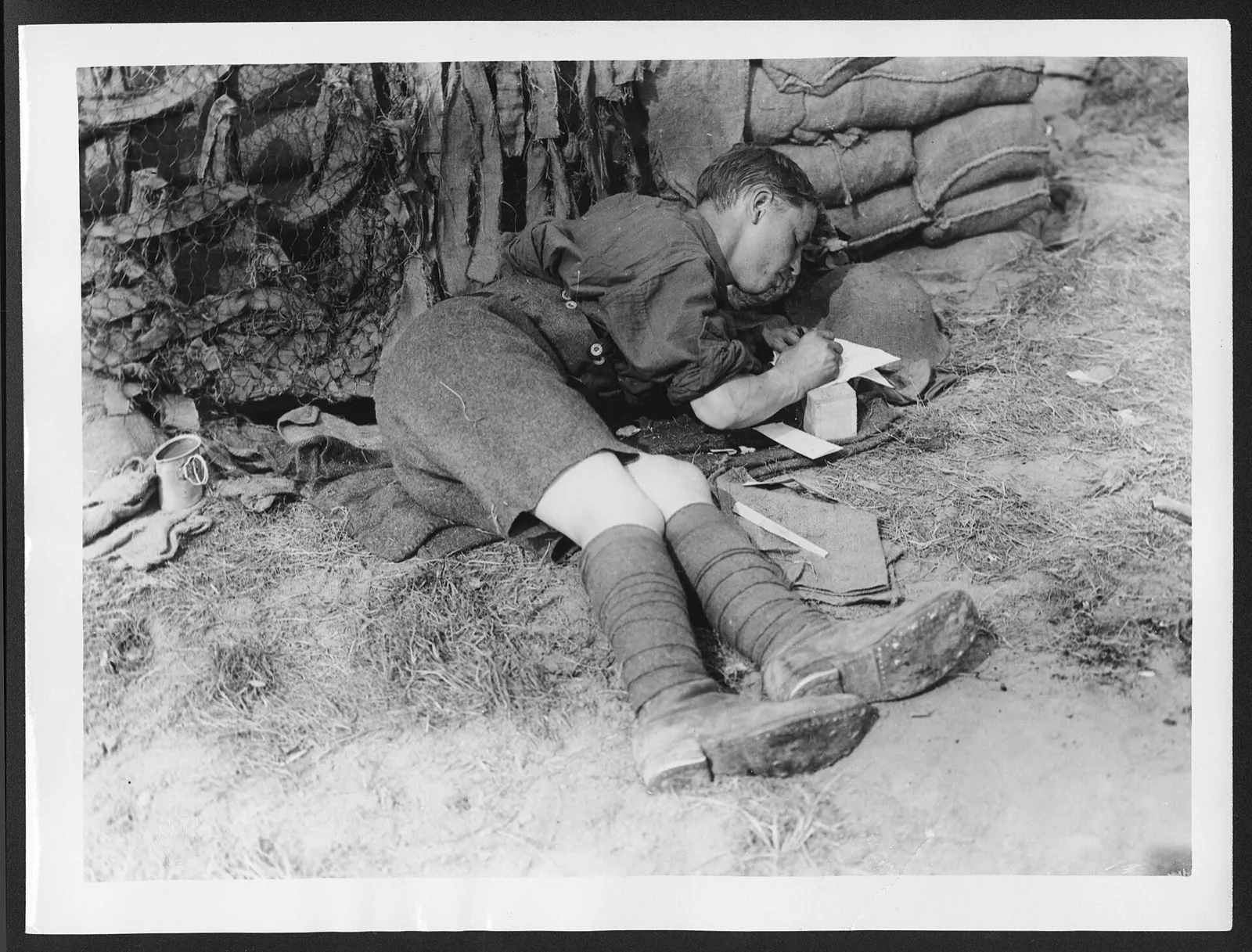
Alec Campbell was sixteen when he told a recruiting officer he was eighteen and joined the Australian Imperial Force in 1915. He landed at Anzac Cove in early November, carried ammunition, water and stores, was lightly wounded, and was sent home after about two months. He was discharged in August 1916, a Gallipoli veteran at seventeen.
He then lived for another eighty-six years. He worked as a jackaroo, a carpenter and a railway carriage builder, became a union official in Tasmania, built boats, raced in the Sydney to Hobart, and finished an economics degree at about fifty. When he died in Hobart on 16 May 2002, aged 103, he was the last survivor of the Gallipoli campaign, and the obituaries opened with the two months in 1915.
If you are looking for questions to ask a veteran about their service, Campbell is a useful warning. A veteran is usually asked about the one part of their life that the rest of us find interesting, and that part may be small, painful, or not what they would choose to talk about. The best questions treat service as one chapter in a whole life, and they leave the veteran in charge of how far into it they go.
Why is it hard to know what to ask a veteran?
Two things pull in opposite directions.
The first is reverence. Most of us were taught that a veteran has done something serious on our behalf, and that makes us careful, sometimes so careful that we say “thank you for your service” and then say nothing else. The second is curiosity, which tends to run straight to the most dramatic question available, the one we have seen asked in films.
Both miss how service is lived. The 2021 Census counted roughly half a million former Australian Defence Force members, plus about 85,000 serving, according to the then Minister for Veterans’ Affairs. These are very different people: a nurse from the Second World War, a national serviceman of the 1960s, a peacekeeper in Timor, a mechanic who never left Australia. In modern armies most people in uniform do support jobs, such as cooking, clerking, signals, repairs, driving, medicine and logistics. A great many veterans never fired a weapon at anyone.
That is why the first rule is not to assume. Ask what they did before you ask what they saw.
What should you not ask a veteran?
Military and veterans’ organisations are consistent on a handful of questions to avoid, and the reasons are worth knowing, because they explain a good deal about how to ask everything else.
- “Did you kill anyone?” It is presumptuous, because many veterans have not, and it is intrusive for those who have. Nobody would put that question to a stranger in any other setting.
- “What was the worst thing you saw?” It asks the veteran to relive the most painful moment on request, for your benefit.
- “Do you have PTSD?” A diagnosis is private. If a veteran wants to tell you about it, they will.
The common thread is that each question forces the veteran to answer for something. A better approach is to ask for scenes and details that they can choose to enlarge. Alec Campbell, for his part, said he had joined “for adventure”, and he is reported to have told people late in life not to glorify Gallipoli. A question that assumed the heroic version would have been answered politely and not truthfully.
If a veteran does start talking about something hard, you do not need to fix it, or to say something clever. Stay quiet, let them finish, and ask whether they would like to carry on or stop.
What are the best questions to ask a veteran?
Ask in the order of a life rather than the order of a war. For a wartime childhood rather than service, see the questions to ask grandparents about WW2. It is gentler, it is more complete, and it gets you the part that nobody else asks about.
Before they served
- Where did you grow up, and what were you doing before you joined?
- Why did you join, or what happened that meant you had to?
- Who did you tell first, and what did they say?
Joining up and training
- What do you remember about your first day?
- What was the hardest part of training, and who got you through it?
- What did your job turn out to be, and was it what you expected?
Day to day
This is the part that history books skip and families most want.
- What did an ordinary day look like?
- What did you eat, and what did you do when you had nothing to do?
- What did you carry, and was there one thing you would not part with?
- How did you get news from home, and how did you write back?
The people
- Who did you serve with, and which of them do you still think about?
- Who was the best leader you had, and what made them good?
- Who did you lose touch with, and do you wish you hadn’t?
Many veterans say the people were what mattered most, and they will often talk about their mates when they will not talk about the events.
The end of it
- How did your service end?
- What was it like coming home, and what did people say to you?
- What did you find hardest about being a civilian again?
- Did you talk about it with your family, or not?
The last of these can be very revealing. In many families, the veteran did not talk, and the family took the silence as a rule. Asking about the silence itself is sometimes what finally ends it.
Looking back
- What did you learn from service that you would not have learnt otherwise?
- What are you proudest of, and what would you do differently?
- What would you want a young person today to understand?
- What would you like the family to know that we have never asked?
How do you ask without it feeling like an interrogation?
The advice in how to interview older family members applies here, with a few additions.
Let them choose the pace. Say at the start that they can skip any question, stop at any time, and that nothing will be shared without their say-so. Veterans are used to being told what to do. Being told that they are in charge of this conversation is unusual and often welcome.
Start with an object. A medal, a photograph, a uniform, a letter or a cigarette case is easier to talk about than a memory. “Where was this taken?” takes a moment to answer, and that moment is how longer accounts start.
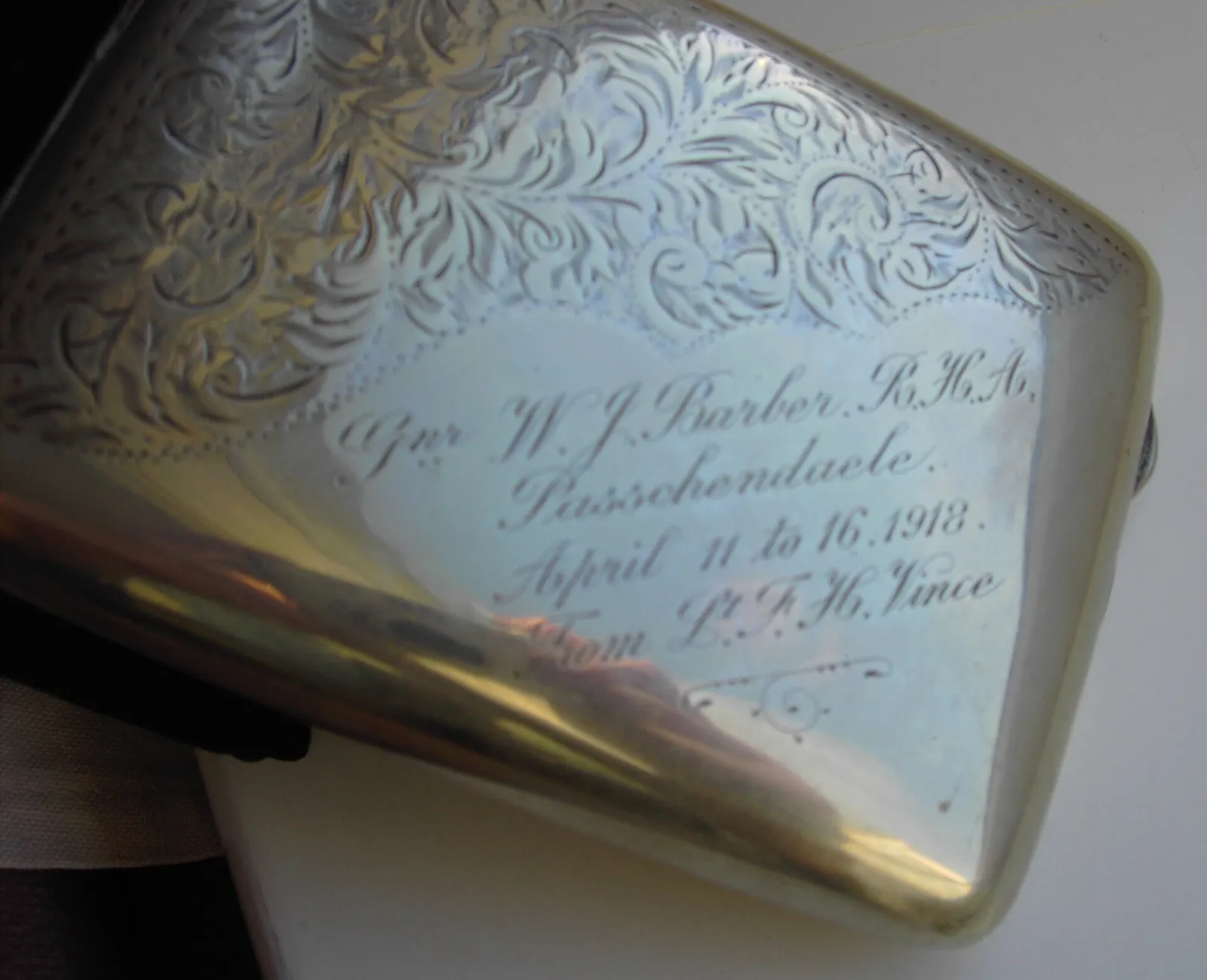 A silver cigarette case engraved to Gunner W. J. Barber, Royal Horse Artillery, “Passchendaele, April 11 to 16, 1918”, from a Lieutenant F. H. Vince, contributed by his grandchild to the Europeana 1914–1918 collection. Photo by a Europeana staff photographer, 2014. Public domain.
Ask side by side. Many people of that generation find it easier to talk while doing something together than while being looked at across a table. The same advice appears in the post on questions to ask your grandpa.
Do not correct the details. A veteran may get a date or a place wrong. Write it down, check it later, and leave the story alone. How a person remembers a thing is as much a part of the record as the thing itself, a point developed in is oral history reliable?
Why does it matter to record it?
Because the state records the service, and nobody records the person. A veteran’s name is on a nominal roll, a unit diary or a memorial. In Canberra, the Australian War Memorial’s Roll of Honour holds the names of Australians who died in war. It does not say what any of them were like.
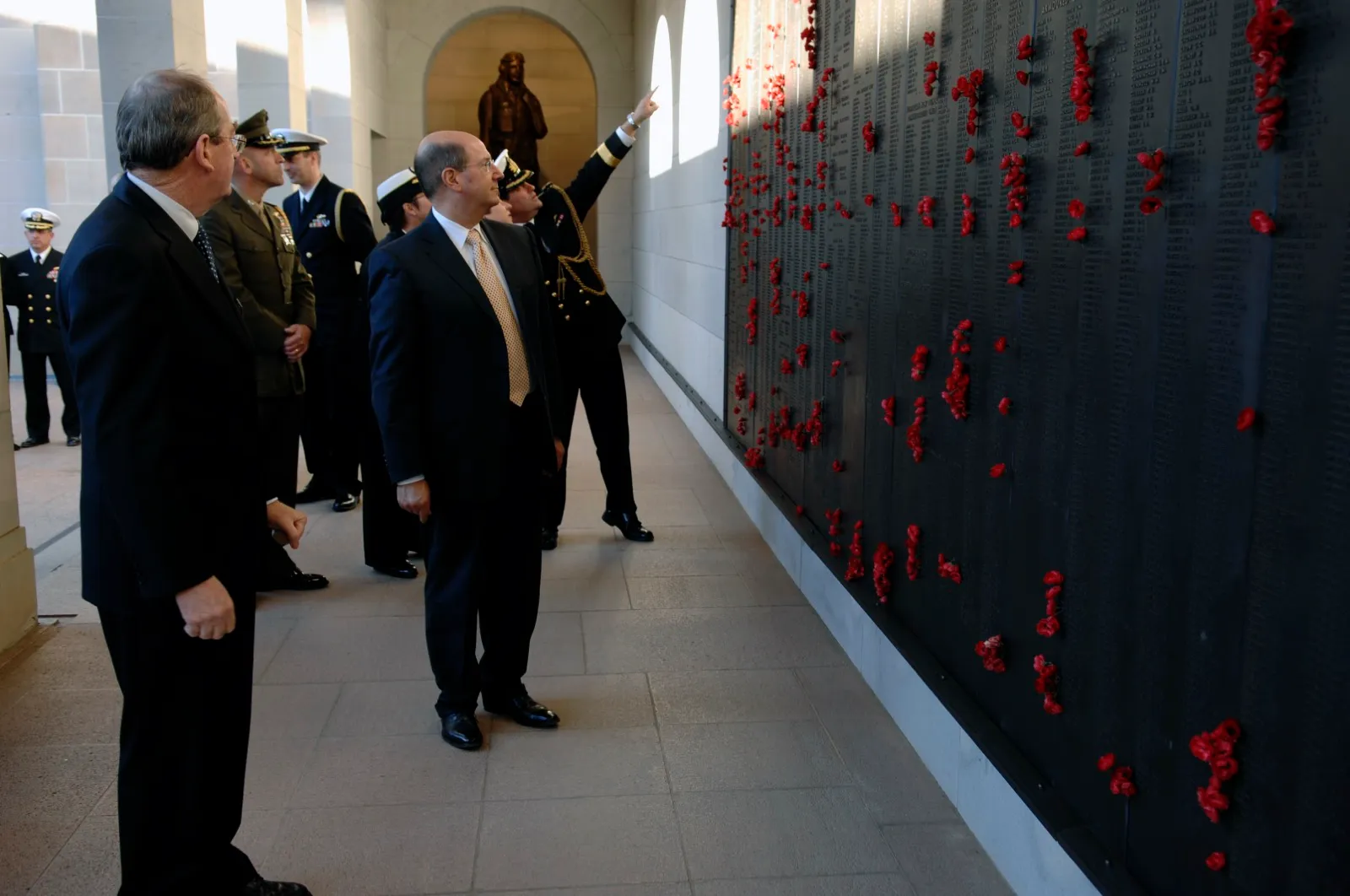 The Roll of Honour at the Australian War Memorial, Canberra, 2007. U.S. Navy photo by Shawn P. Eklund. Public domain.
The same gap applies to the living. In 2000 the United States Congress created the Veterans History Project at the Library of Congress, which collects the recorded accounts of anyone who served since the First World War, including people who never saw combat, such as cooks and clerks, whom far fewer people have asked.
I have filmed more than a hundred life stories since 2020, including some with Holocaust survivors, and what stays with me is what a transcript cannot carry: the pause before a name, or the way someone laughs at something that was not funny at the time. That is what a grandchild will want in thirty years, and it is very hard to reconstruct later. If you want a practical guide, see how to record your grandparents’ stories on your phone.
Ask permission before you film, tell them who will see it, and give them a copy. If at any point they ask you to stop recording, stop. Some of what a veteran tells you will be for you and not for the camera, and that is theirs to decide.
Where should you start?
Not with the war. Ask where they grew up, what job they wanted, and who they were before they joined. Then ask what the first day was like. By the time you reach the harder parts, you will have shown that you are interested in the whole person, and they will be able to tell you as much or as little as they like.
There are fewer chances to ask than we assume. Alec Campbell was asked about two months of his life for most of the century he lived, and the other eighty-odd years went largely unrecorded. The next time you are with a veteran, ask about those years too. If you would like a prompt on hand, the Everyone app can offer one question at a time, though a phone and a quiet room are all you need. A veteran’s service is part of the story, but it is not the whole of it, and the rest is usually waiting for someone to ask.