How to record stories for your grandchildren, for the adults they will become.
Darwin wished he had his grandfather’s life in his own words. How to record stories for your grandchildren that they will still want when they are grown.
In May 1876, at the age of sixty-seven, Charles Darwin began writing an account of his own life. He worked on it for nearly an hour on most afternoons, and he explained in the first paragraph who it was for. The attempt, he wrote, might “possibly interest my children or their children.” Then he gave his reason. It would have interested him greatly, he said, to read “even so short and dull a sketch of the mind of my grandfather, written by himself, and what he thought and did, and how he worked.”
The grandfather was Erasmus Darwin, physician, inventor and poet, and one of the most famous men in eighteenth-century England. He died in 1802, seven years before Charles was born. He had left behind long books on medicine and botany, a large body of verse and a great many letters. Few grandchildren have ever had more material about a grandparent. Charles later wrote a biographical sketch of him, published in 1879, drawing on family letters and papers. And still, at the end of his own life, what he wished for was something Erasmus had never written: an account of who he was, in his own words, addressed to his family.
That wish is the best guide I know to how to record stories for your grandchildren. Achievements, possessions and public records survive reasonably well. What goes missing is the person, and the person is what grandchildren eventually come looking for.
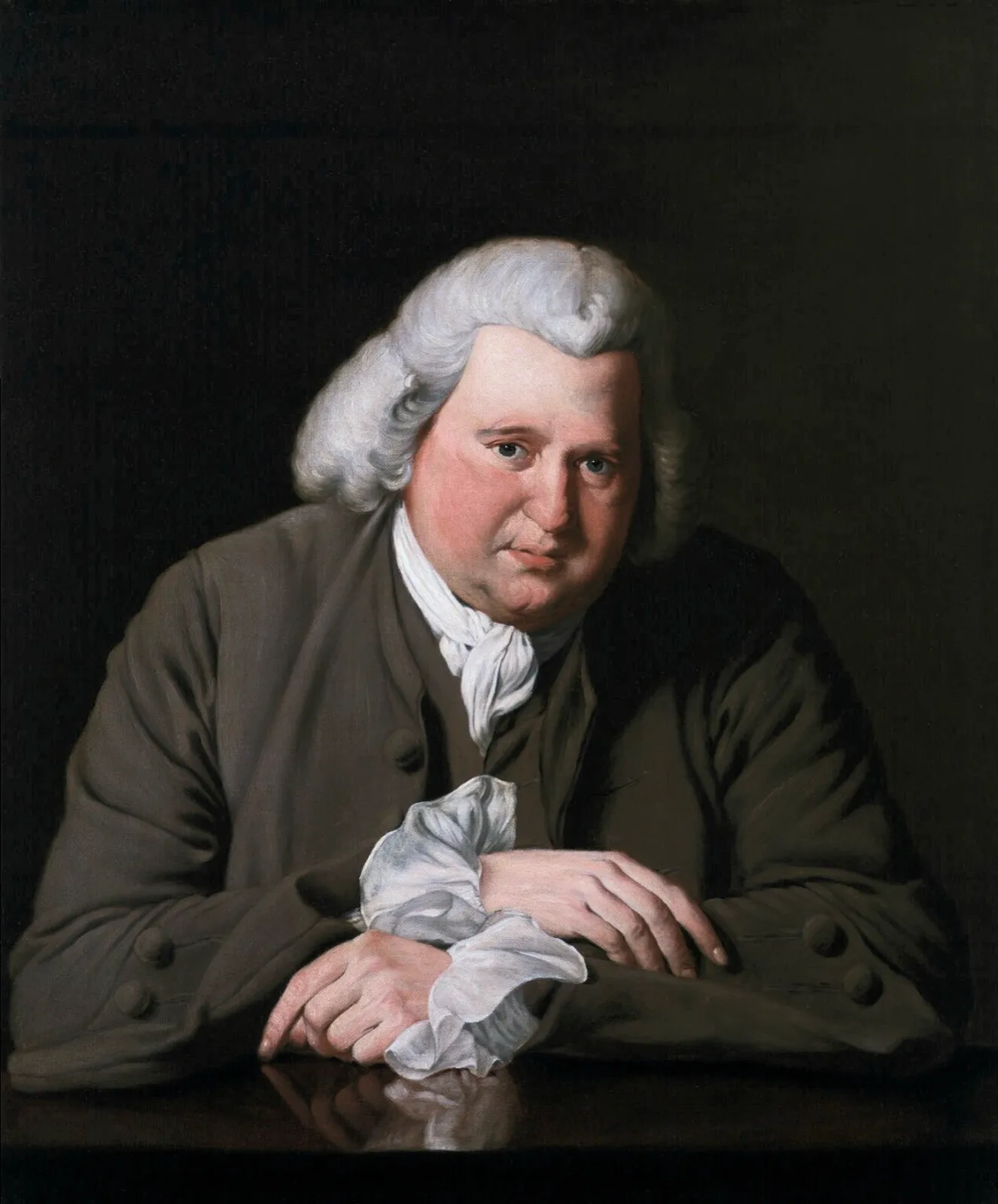 Erasmus Darwin, after Joseph Wright of Derby, probably 1770s. National Portrait Gallery, London. Public domain.
Why do grandchildren know so little about their grandparents?
The obvious answer is that grandparents die before their grandchildren grow up. For most of history that was true. The demographer Peter Uhlenberg estimated that under the mortality conditions of 1900 in the United States, only about one in five thirty-year-olds would still have had a living grandparent. By 2000 the figure was more than three in four.
So today the overlap is longer than it has ever been, and yet the problem persists. The reason is that the overlap falls in the wrong part of the grandchild’s life. A grandchild knows you best between the ages of about four and fourteen, when they are absorbed in their own world and have no idea what to ask. Curiosity about family tends to arrive much later: when they leave home, when they have children of their own, when they first notice their own face changing into a family face. By then you may be gone, or your memory may no longer reach as far back as it once did.
In filming more than a hundred life stories through The Archive since 2020, I have seen this gap from both sides. Grandparents assume the grandchildren are not interested, because at twelve they were not. Adult grandchildren wish they had asked, and assume it is too late. Both are describing the same mismatch of timing.
Recording stories for your grandchildren is a way around it. It lets you answer questions now that they will only think to ask in twenty years.
Who are you really recording for?
This is the point most people miss. You are recording for two audiences who happen to share a name.
The first is the child in front of you: the six-year-old who wants a story about the time you got lost, or the dog you had as a boy. The second is the adult that child will become, who wants what Darwin wanted: what you thought, what you did and how you lived.
Sir Walter Scott wrote for the first audience and ended up reaching the second. In 1827 he decided to write a history of Scotland addressed to his six-year-old grandson, John Hugh Lockhart, a frail child whom he nicknamed Hugh Littlejohn. Tales of a Grandfather appeared in instalments between 1828 and 1830, dedicated to “Hugh Littlejohn, Esq.” It was written in a grandfather’s speaking voice, full of asides to the boy, and it was a popular success, reprinted for generations of children who had never met either of them.
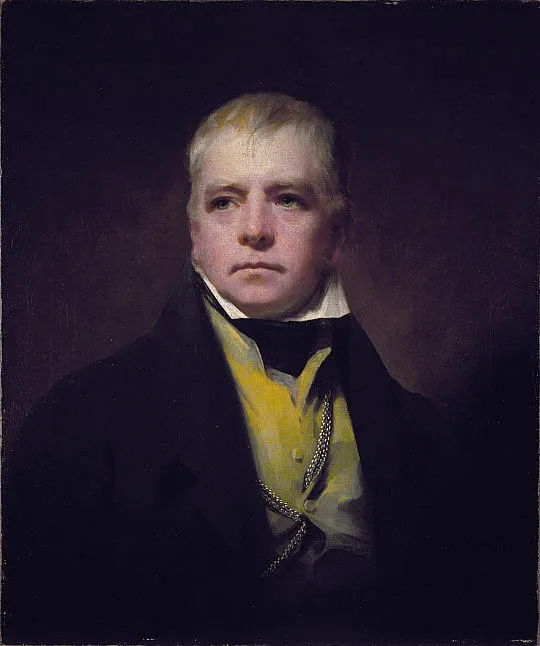 Sir Walter Scott by Henry Raeburn, 1822. National Galleries of Scotland. Public domain.
Hugh himself did not grow up to read it as an adult. He died in December 1831, aged ten. That is the hard fact underneath this whole subject: you cannot know which of your grandchildren will be there to watch, or when. What Scott’s book shows is that a story told warmly to one particular child can carry far beyond that child. Speaking to someone specific is what gives it life.
Which stories should you record for your grandchildren?
If you are recording for both audiences, you need two kinds of material.
For the child now
- A favourite picture book, read aloud, exactly as you read it at bedtime.
- The story they always ask for, told the way you usually tell it.
- What you were like at their age: your school, your friends, the trouble you got into.
- Their parent as a child. No one else alive remembers it as you do.
For the adult later
- Where your family came from, and the names of the people in the old photographs.
- A decision that changed the course of your life, and how you made it.
- What the world was like when you were young, in ordinary detail: prices, chores, what a Sunday looked like.
- Something you failed at, and what happened afterwards.
- What you believe, and how you came to believe it.
- What you would want them to know at particular moments: leaving home, a wedding, the birth of a child.
The child’s list matters more than it seems. A recording of you reading their book becomes, years later, one of the few records of your voice in its most ordinary register. The adult’s list follows the logic of legacy video questions: mostly life, a little advice, because advice ages faster than stories do.
How to record stories for your grandchildren
The principles are the same as for any life story interview, adjusted for an audience that will watch over decades.
- Use video. Darwin had his grandfather’s books and letters. He did not have his face, his voice or his manner, and no document could give him those. A video does.
- Record in short pieces. One story per recording, three to ten minutes long. A child will watch a five-minute story many times. Nobody, child or adult, watches a two-hour recording more than once.
- Speak to a named grandchild. Begin with “Hugh, this is the story of…” or its equivalent. It changes how you talk. If you have several grandchildren, take turns.
- Let a grandchild ask the questions. Children ask blunter questions than adults (“Were you poor?”, “Did you ever get in a fight?”), and the answers are often better for it. They also tend to remember the afternoon itself.
- Film indoors, somewhere quiet. Background noise ruins more home recordings than poor picture quality. Sit facing a window, with the phone at eye level, and have something of yours in the frame: a bookshelf, a photograph, a favourite chair. There is more detail in how to film an interview at home.
- Hold up the objects. A medal, a recipe card, a photograph of your parents. Say aloud who is in it and when it was taken, because you are often the last person who knows.
- Say the date at the start. Your grandchildren will want to know how old you were.
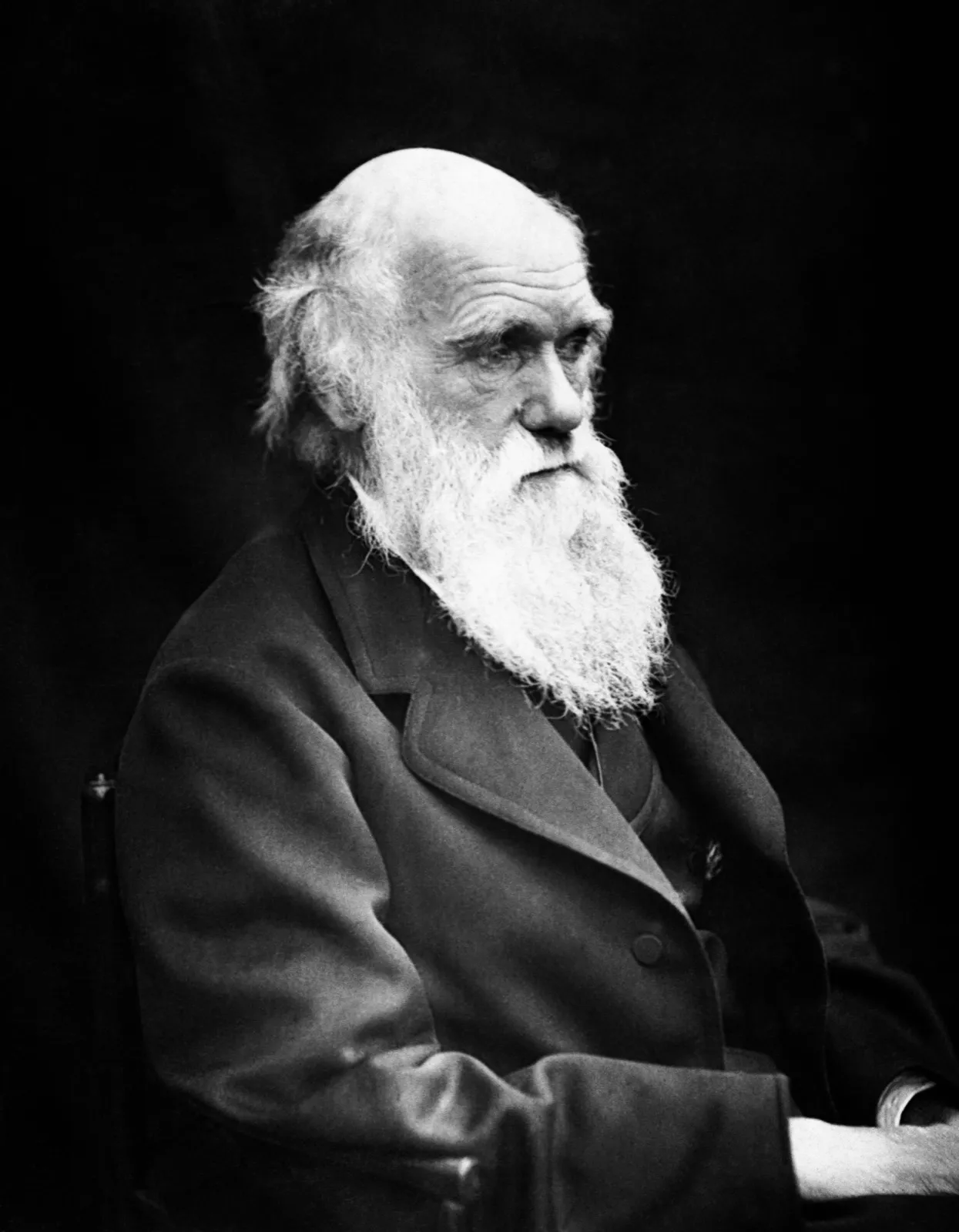 Charles Darwin, photographed by Julia Margaret Cameron, 1868. Public domain.
Should you leave out the difficult parts?
Darwin’s account was first published in 1887, five years after his death, in an edition prepared by his son Francis. Several passages were cut, most notably his reflections on religion, which some of the family, his widow Emma among them, felt should not appear in print. For seventy years readers had the edited version.
In 1958 the full text was published by Nora Barlow, who restored nearly six thousand words that had been removed. She was Darwin’s granddaughter. The generation closest to him had wanted to protect his reputation. The generation after wanted to know what he had actually thought.
That pattern is worth remembering when you decide what to say. Your children may prefer the tidy version of you. Your grandchildren, at a greater distance and with less to defend, are more likely to want the real one: your doubts, your mistakes and the opinions you never said aloud at dinner. You do not have to tell them everything. But the stories you are tempted to leave out are often the ones they will most want to hear. (If you have living grandparents yourself, the same applies in reverse; see questions to ask your grandparents.)
What will they have?
I have four hours of my grandmother telling me the story of her life. She has since passed away. When I watch it now, I am not listening for dates. I am watching how she told it: the pauses, the asides, the moment she decided to tell me something she had not planned to. It is the closest thing I have to what Darwin wanted, a sketch of her mind, in her own words.
Erasmus Darwin was famous, prolific and well documented, and his grandson still had to imagine him. Most of us will leave far less behind. The difference is that we can now leave the one thing he could not. The Everyone app was built for this: it asks one question at a time and keeps each answer as its own short video, so the stories can be recorded over weeks, in whatever order they come. But a phone and a quiet afternoon are enough to begin. The only real requirement is to start while the grandchildren are still too young to know what they will one day want to ask.