How to talk to ageing parents, about the past as well as the future.
Most advice on talking to ageing parents is about care, money and wills. The conversation people regret skipping is about their life. How to have both.
In 2018 The Conversation Project, an American campaign started by the journalist Ellen Goodman after her mother’s death, surveyed a thousand adults about end-of-life care. Ninety-two per cent said it was important to talk about their wishes. Thirty-two per cent had actually done it. Most people agree the conversation matters, and most people never have it.
If you search for how to talk to ageing parents, almost everything you find is about closing that gap: wills, powers of attorney, driving, moving house, who pays for care. Those conversations matter, and they are hard. But they are only half of what goes unsaid between adult children and their parents, and in my experience they are not the half people regret most. When someone tells me what they wish they had talked about with a parent who has died, they rarely mention the will. They mention the parent’s life: where they grew up, what they were like at twenty, why they made the choices they did.
This piece argues that the two conversations are connected, and that the easier one is the way into the harder one.
Why is it so hard to talk to ageing parents?
The difficulty is not mainly about information. Most of the facts are simple. It is about what the conversation implies.
A conversation about care is a conversation about decline. To raise it, the child has to say, in effect, I have noticed you are getting older, and I am planning for when you cannot manage. For the parent, that is a double threat. It names a loss of independence they may not be ready to admit, and it reverses the oldest relationship they have, in which they were the one who did the worrying. Many parents respond the way anyone responds to a threat to their autonomy: they change the subject, make a joke of it, or say there is plenty of time.
Children, meanwhile, avoid it for the mirror-image reason. Raising it feels like hastening the thing it plans for, and nobody wants to be the one who brought up death at Sunday lunch. The result is a conversation that both sides think is important and neither starts, which is exactly what the survey found. And even when it does start, it treats the parent as a problem to be solved, the subject of a plan, which nobody enjoys, least of all someone who has spent fifty years running their own life.
What do most guides on talking to ageing parents leave out?
They leave out the past, and the past is where the parent is strongest.
In 1963 the American psychiatrist Robert Butler, who later became the first director of the US National Institute on Aging, published a short paper called “The Life Review”. At the time, an older person’s habit of returning to old memories was widely treated as a sign of decline, a wandering mind living in the past. Butler argued the opposite. Reviewing one’s life, he said, is a normal and often healthy process in old age, prompted by an awareness that time is running out, through which people make sense of what they did and come to terms with what they did not. Later researchers qualified the idea (some reminiscence is simply storytelling), but the paper founded a whole field of reminiscence research.
If Butler was right, an ageing parent is often already doing this work, quietly, alone. A child who asks about the past is not dragging them backwards. They are joining a conversation the parent is having with themselves anyway.
This changes the balance of the relationship. In a conversation about care, the parent is the subject and the child is in charge. In a conversation about the past, the parent is the only expert in the room. No one else knows what the kitchen smelt like in 1958, or why they turned down the job in Sydney. Being asked about that is the opposite of being managed. It is being taken seriously.
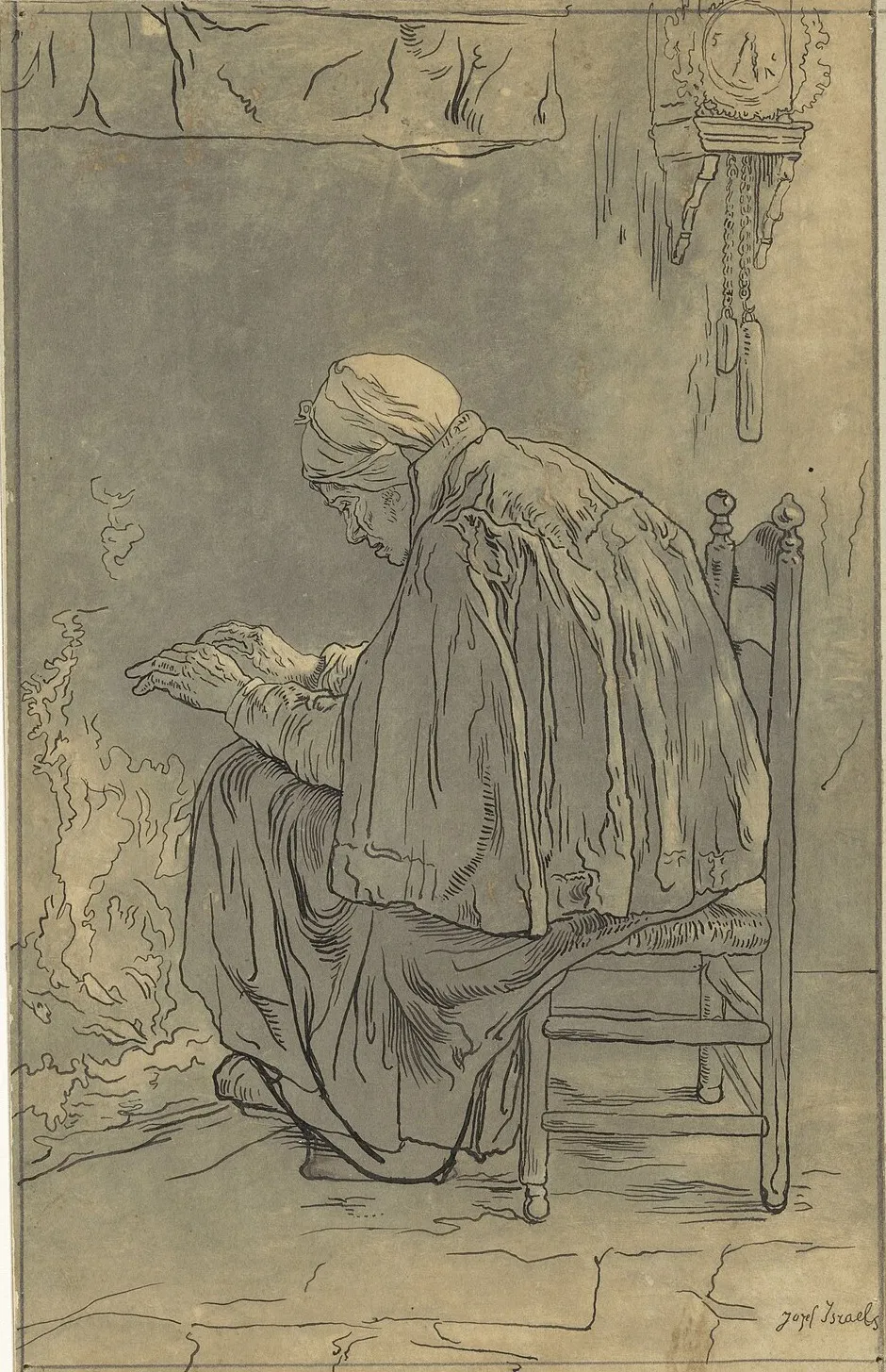 “When One Grows Old” (Als men oud wordt), drawing by Jozef Israëls, before 1911. Rijksmuseum, Amsterdam. CC0.
How does the past lead to the future?
The practical case for starting with the past is that it builds the trust the harder conversation needs, and often leads straight to it.
Consider a few questions that sit on the border between the two:
- How did your parents grow old? Who looked after them?
- What was it like when your mother had to leave her house?
- What do you think they got right, and what would you have done differently?
These are questions about history. But a parent answering them is also telling you, often without noticing, what they fear and what they want. A father who describes his own father’s last years in a nursing home with obvious distress has said more about his wishes than a form would. A mother who says “Nana would have hated to be a burden, so she never told anyone she was ill” has explained something about the way she handles her own health. The follow-up question almost asks itself: Would you want it to be like that for you?
This is the gentlest route into wills and care that I know of, because the parent is speaking from their own experience rather than being asked to imagine their own decline. If a parent is already seriously ill, the questions change and the need becomes more urgent; I have written about that separately in questions to ask a dying parent.
What should you talk about with elderly parents?
A useful conversation with an ageing parent covers four areas. They need not all happen at once, and most should not.
Their early life
- Describe the house you grew up in. Which room do you remember best?
- What were your parents like when you were small?
- What did you want to be when you were young?
- Who was your closest friend at school, and what happened to them?
The decisions that shaped them
- What was the hardest decision you ever made?
- Was there a road you nearly took?
- What were you most afraid of at my age?
How they want the years ahead to go
- What would a good week look like for you now?
- What would you most hate to give up?
- If you could not manage on your own, what would matter most to you?
- Who would you want to make decisions for you if you could not, and do they know?
What they want to pass on
- What do you want the grandchildren to know about this family?
- Is there anything you have never told me that you would like me to know?
The first two groups make the last two possible. For longer lists in each area, see questions to ask your parents about their life, and for the harder questions about fears, mistakes and what was never said, deep questions to ask your parents.
How do you actually start the conversation?
A few things make it easier, most of them learnt from filming more than a hundred life stories since 2020.
Side by side, not face to face. Many people find it easier to talk about hard things while doing something else: driving, walking, cooking, sorting photographs. Eye contact across a table can feel like an interview. Two people looking at the same old photograph feel like they are sharing something.
Ask for a scene, not a summary. “What was your childhood like?” invites a one-line answer. “Tell me about Christmas when you were eight” invites a story, and stories carry the feelings that summaries leave out.
Make it small. One question per visit is enough. A parent who knows the conversation will end after twenty minutes is more willing to begin it. If a parent refuses outright, there are ways round that too; see how to get a parent to talk about their past.
Do not fix anything. When a parent says they are worried about the stairs, the instinct is to solve it on the spot. Wait, and ask what worries them. A parent who feels heard about the stairs is more likely to accept help with them later. Once you understand what they want, the legal documents are a job for a lawyer and an afternoon, not a confrontation.
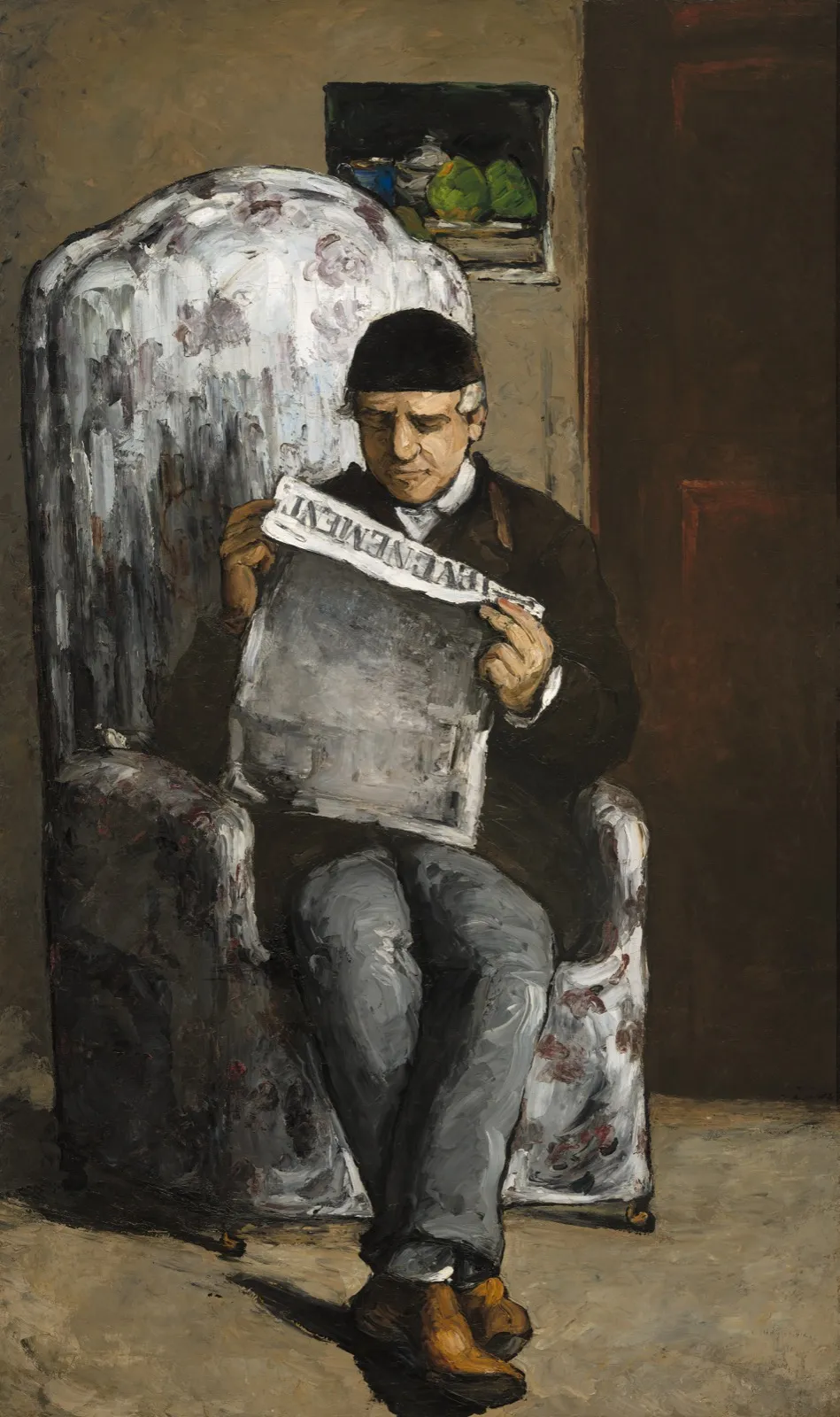 “The Artist’s Father, Reading L’Événement” by Paul Cézanne, 1866. National Gallery of Art, Washington. CC0.
How much time is there?
Less than it feels like. In a widely shared 2015 essay called “The Tail End”, the writer Tim Urban estimated that by the time he finished school he had already spent around 90 per cent of all the time in person with his parents that he would ever have. The exact figure depends on the family, and the calculation is rough, but its logic is hard to argue with. Once children leave home, most see their parents a few dozen times a year. A parent in their seventies may have a decade or two left; at a few dozen visits a year, the number of conversations remaining is in the hundreds, not the thousands.
That is not a reason for panic. It is a reason to spend some of those visits differently. Most of them will be about the ordinary business of a family, as they should be. A handful, spent asking about a life, will be the ones you remember.
Why keep a record?
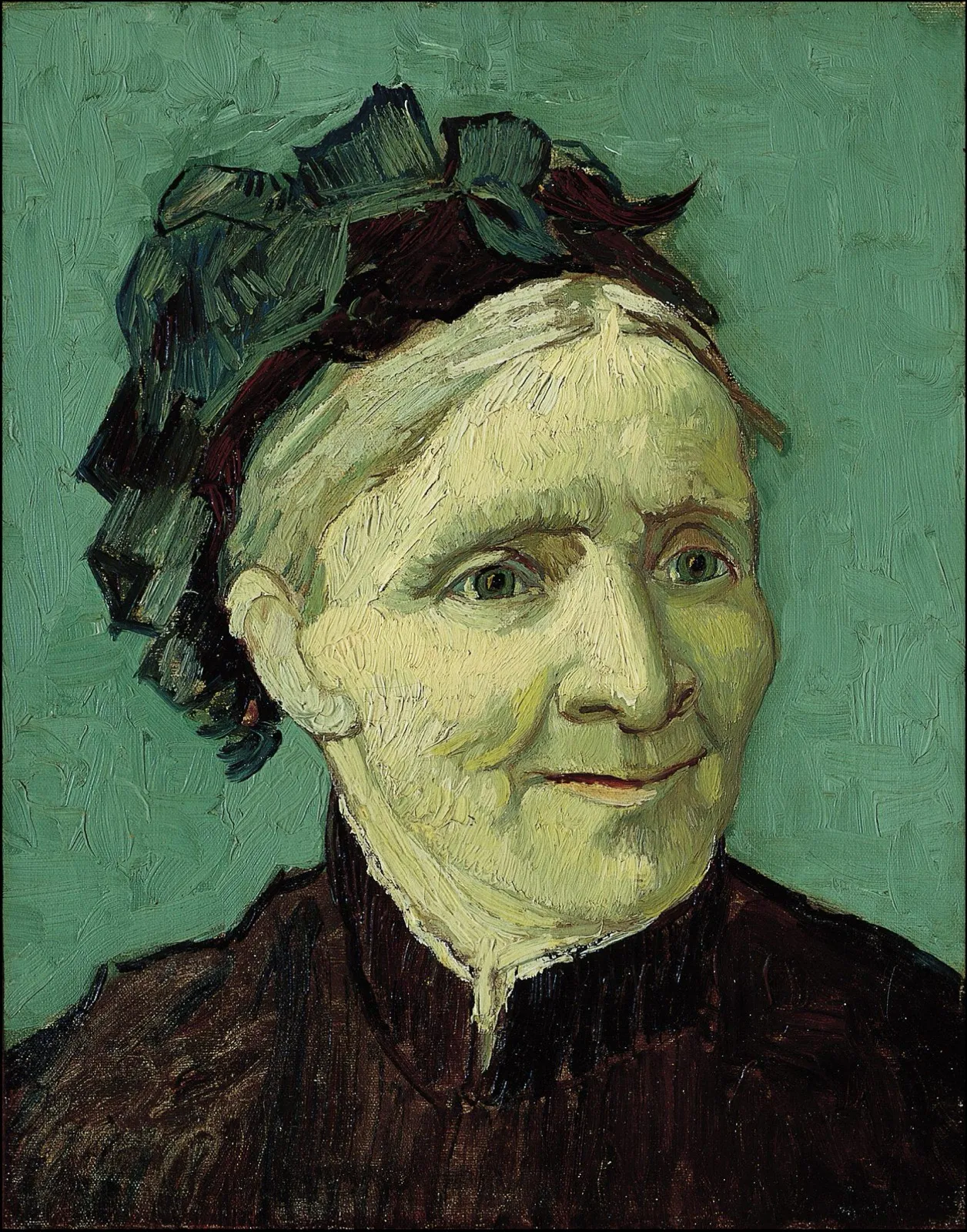
In October 1888, living in Arles, Vincent van Gogh painted the portrait at the top of this page. His mother was in the Netherlands, and he had only a black-and-white photograph to work from. In a letter to his brother Theo he explained that he was painting her because the photograph made him impatient; he wanted her in colour, as he remembered her. He was trying to put back what the record had left out.
Most of us will be in a similar position one day, holding a few photographs and trying to remember a voice. The questions in this piece are worth asking whether or not anyone films the answers. But a parent telling the story of their own life, in their own words, with their own face, is worth more than a hundred photographs, and recording it now takes nothing more than a phone propped on a table. Everyone was built for this, one question at a time, but the tool matters far less than the asking. The paperwork can be done in an afternoon. The life story can only be told by them, and only while they are here to tell it.