
Questions to ask your parents, and how to ask them.
The best questions to ask your parents or grandparents about their life, why some questions unlock real stories while others get a shrug, and how to ask them.
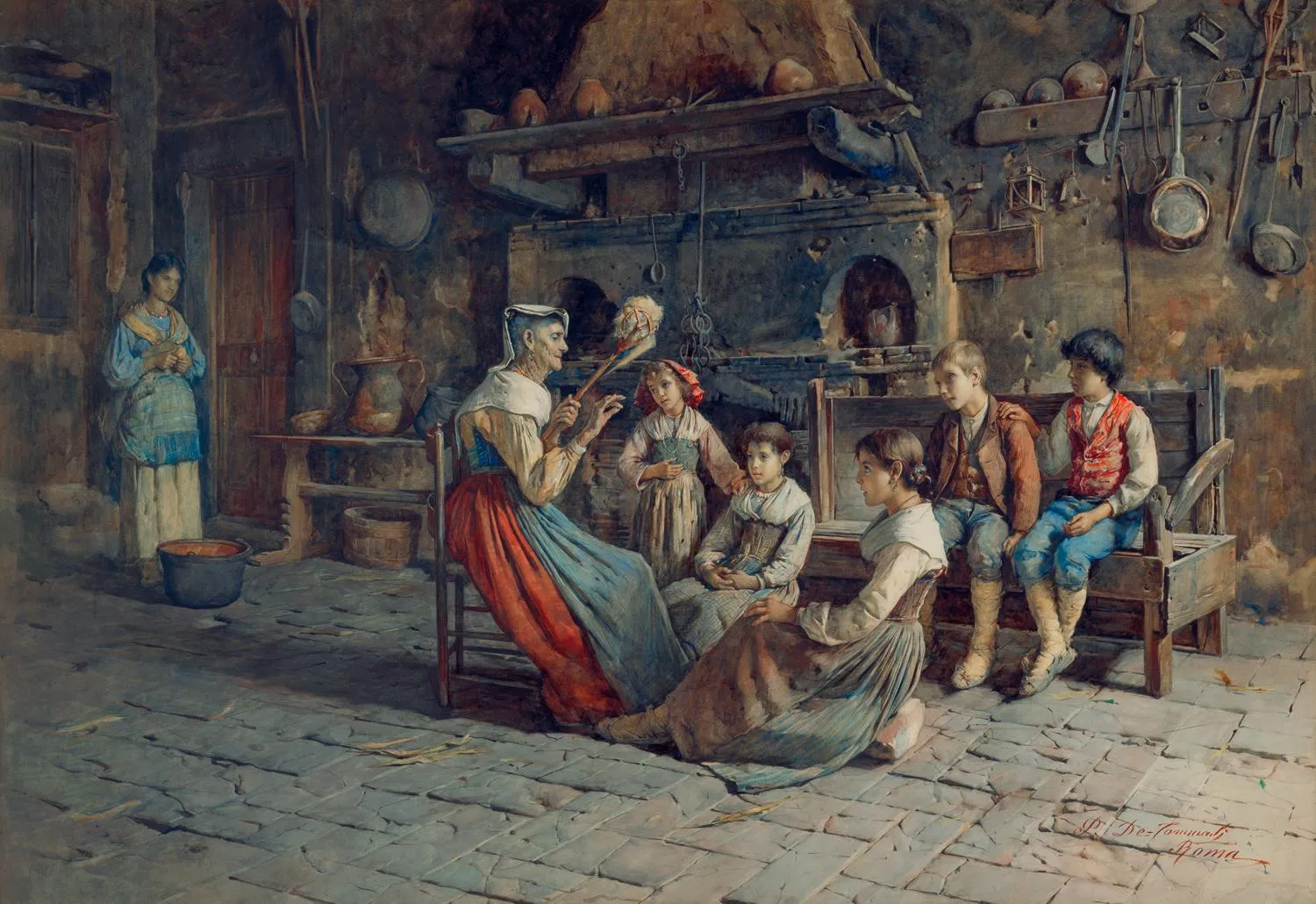
In 2001, two psychologists at Emory University, Marshall Duke and Robyn Fivush, began asking children a list of twenty simple yes-or-no questions. Do you know how your parents met? Do you know where your mother grew up? Do you know some of the lessons your parents learnt from good or bad experiences? They called it the “Do You Know?” scale. The children who could answer more of the questions tended to report higher self-esteem, a stronger sense of control over their lives and lower anxiety.
The researchers’ explanation was not that facts about grandparents are magically therapeutic. It was that knowing these stories requires a family in which the stories are told. A child who knows how their parents met has, at some point, been told. Somebody asked, and somebody answered.
Most of us are not much better informed than those children. We know the outline of our parents’ lives and very little of the inside. After filming more than a hundred life stories, I have come to believe that the quality of an interview depends less on the person being interviewed than on the questions they are asked. Below is why certain questions succeed, followed by the questions to ask your parents (or grandparents) that consistently produce the best answers. (For questions written specifically for grandparents, see questions to ask your grandparents.)
Why do some questions work better than others?
Ask your mother “What was your childhood like?” and the most common answer is a variation of “It was fine. We didn’t have much.” Ask the same person “What did you get in trouble for as a child?” and you may hear a story no one in the family has heard before.
The difference is not luck. It follows from how memory works. People do not carry around a pre-written account of their childhood. They carry thousands of specific episodes, and those episodes are retrieved by specific cues.
A broad question asks the person to generate a summary on the spot, which is difficult, so they give a short and general answer. A narrow question points to a particular kind of episode, which is easy to find. This produces a counterintuitive rule: the smaller the question, the bigger the story.
Several practical principles follow.
Ask for scenes, not summaries
“Where did you grow up?” retrieves a fact. “Describe the kitchen in the house you grew up in” retrieves a scene, and scenes contain people, conflicts and feelings. Openings such as “Tell me about a time when…” and “Describe the day…” are reliably productive. (Why open questions retrieve so much more than closed ones is explained in how to interview someone.)
Follow up
The first answer is usually the most rehearsed. The interesting material tends to come from the second and third questions: What happened next? How did you feel about it at the time? Do you see it differently now?
Allow silence
When someone stops speaking, they have often not finished. They are deciding whether to continue. Waiting a few seconds before the next question signals that you want to hear more, and the most candid parts of an interview frequently follow a pause.
Sequence deliberately
Begin with easy, factual questions. Move to happier memories, then to harder ones, and finish with reflection. Trust builds over the course of a conversation, and the order of the questions should respect that.
Concentrate on early adulthood
Older adults recall a disproportionate share of their most vivid memories from roughly the ages of ten to thirty, a pattern psychologists call the reminiscence bump. It is the period of first jobs, first loves and first independence. Questions aimed at those years tend to yield the richest answers. (Psychologists who study how people narrate their lives use a similar approach: see the life story interview.)
What are the best questions to ask your parents?
The questions below are grouped by period of life, in roughly the order they are best asked. There is no need to use all of them. Five good questions, properly followed up, will produce more than fifty asked in a hurry.
Childhood
- What is your earliest memory?
- Describe the house you grew up in. What did it smell like?
- What did you get in trouble for as a child?
- What did your parents never find out about you?
- Who was your closest friend, and what did you do together?
- What did you want to be when you grew up?
Family
Several of these overlap with the Duke and Fivush scale, which is no accident. They are the questions whose answers children turn out to need.
- How did you meet Dad (or Mum)? Describe the day.
- What were your own parents like when you were young?
- What do you know about your grandparents’ lives, and where did they grow up?
- Why was I given my name?
- Which piece of family history should never be lost?
- Is there a family recipe, saying or tradition that began with you?
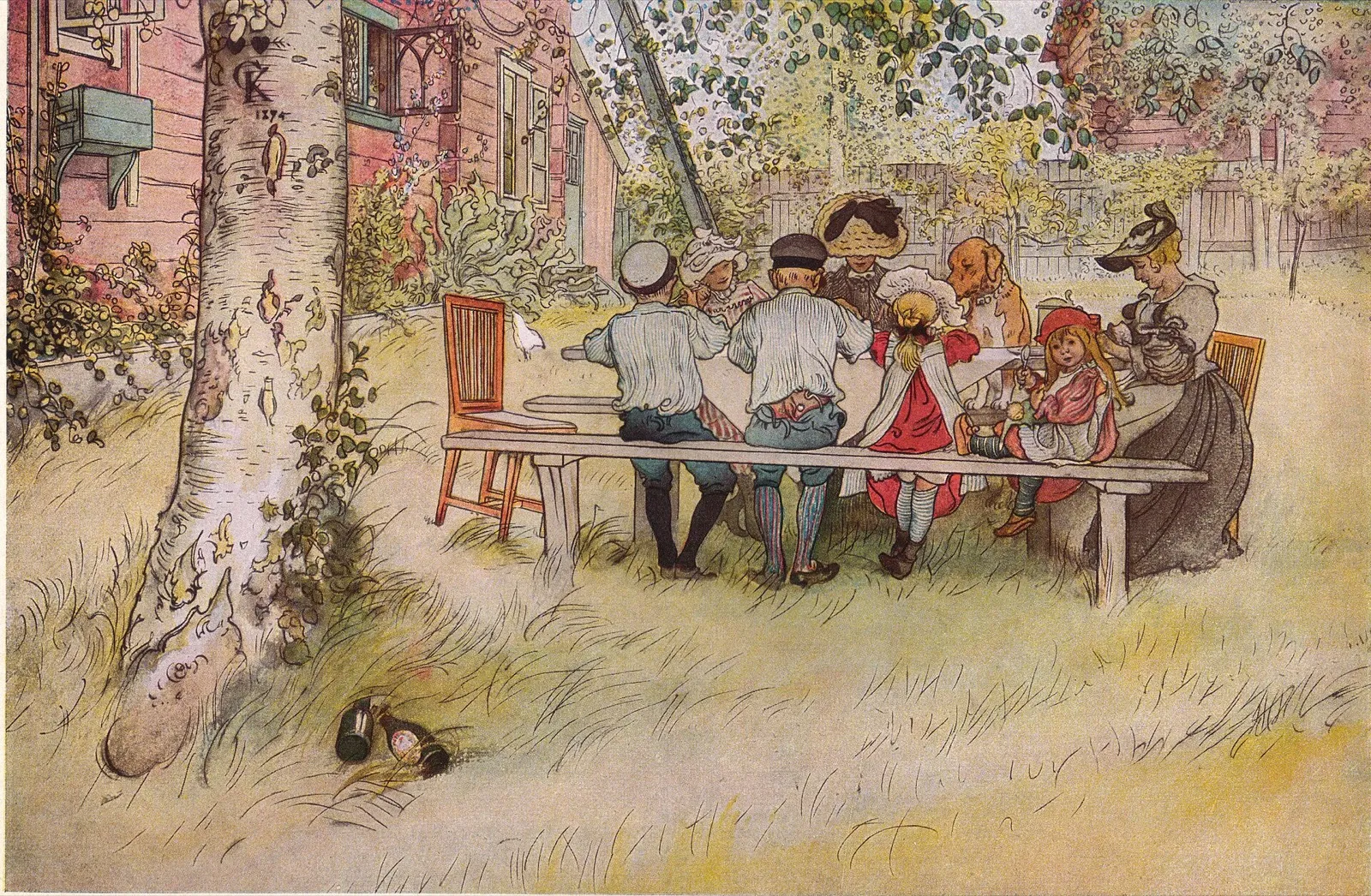 “Breakfast under the Big Birch” by Carl Larsson, 1896. Public domain.
Love
- Who was your first love, and what happened?
- When did you know your partner was the one?
- What has kept your relationship going, or what would you do differently?
Work and decisions
- What was your first job, and what did you spend your first pay on?
- What is a risk you are glad you took?
- Which decision changed the course of your life?
- What seemingly minor decision turned out to have enormous consequences?
- What did you want to do before circumstances intervened?
Hardship
These should be asked gently, and only once the person is comfortable. It is always worth saying explicitly that they do not have to answer.
- What was the hardest goodbye of your life?
- What is the most difficult thing you have been through, and what helped you through it?
- Who did you have to forgive, and were you able to?
- What is the kindest thing a stranger has ever done for you?
Duke has argued that the most helpful family stories are not the triumphant ones. He describes the healthiest kind of family narrative as an “oscillating” one: the family had good times and bad times, and it held together through both. A child who hears only success learns little about what to do when things go wrong. The hard questions are where that knowledge lives.
Reflection
These are the answers families tend to return to most often.
- When did you first feel like an adult?
- What is the most important thing you have changed your mind about?
- What are you most proud of?
- What would you tell your younger self?
- If you could give one piece of advice to everyone alive, what would it be?
- How do you want to be remembered?
Is there a good final question?
There is one worth ending every interview with: “Is there anything I haven’t asked that you would like to talk about?”
It is the least specific question on this page, which makes it an exception to everything above. It works for a different reason. Many people carry a story they have been waiting for someone to ask about, and no list of questions, however good, can anticipate it. This question gives them permission to tell it. Because it arrives at the end, when trust is highest and the person has spent an hour inside their own memories, it is often answered more fully than anything that came before.
Why record the answers?
The answers to these questions could be written down. But a transcript loses most of what makes them worth keeping: the expression that precedes a punchline, the change in someone’s face when they speak about a parent, the moment their voice catches. I have four hours of my grandmother telling me about her life. She has since passed away, and what I return to is rarely the information. It is the way she told it.
There is also the matter of who the answers are for. The children in the Emory studies benefited from stories they had heard in passing, at dinner tables and on car trips. Your own children and grandchildren may not have that chance, unless someone keeps the stories somewhere they can be found. Families have always passed on stories this way, which is why most of us know almost nothing about our great-great-grandparents; what has changed is that we can now keep them, as I argue in a short history of storytelling.
Psychologists who study the regrets of the dying find that, over a lifetime, we regret what we failed to do far more than what we did. Choose five questions from this list and ask them this week. Prop up a phone, press record, and start with the first. If you would rather not plan the conversation yourself, Everyone provides question packs and presents one question at a time, so your attention can stay on listening. For practical advice on light, sound and setting up, see how to capture someone’s life story. If the person you are interviewing is your mother, she has her own set of questions in questions to ask your mum, and your father has his in questions to ask your dad. And if a parent refuses to be interviewed at all, how to get a parent to talk about their past explains why, and what tends to change their mind.


