
Why you should record a life story on video, not on paper or tape.
Writing keeps the facts, audio keeps the voice, video keeps the person. Why video is the best way to record a life story, and where it falls short.
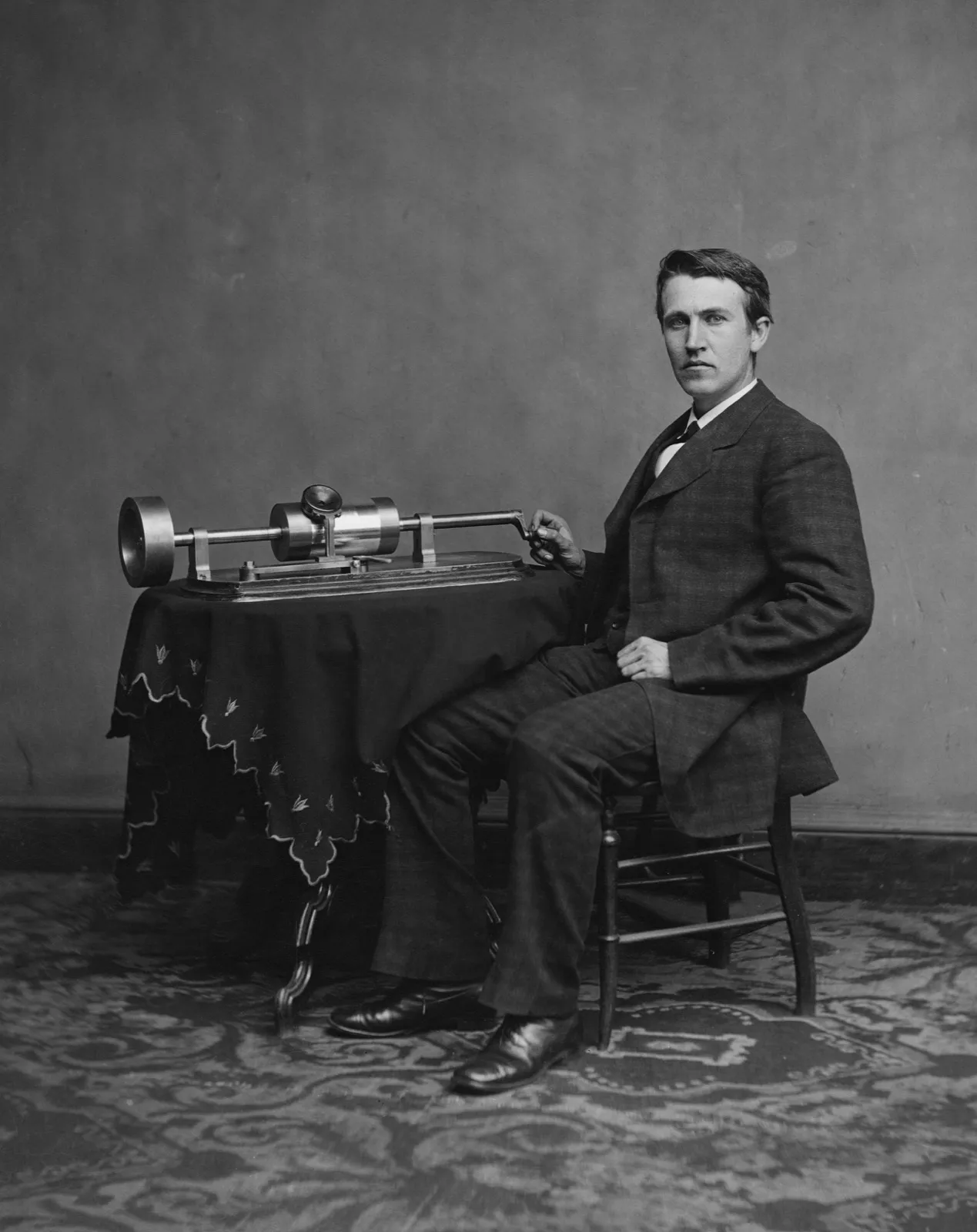
In 1890 the poet Alfred Tennyson, then in his eighties and the most celebrated writer in Britain, recited “The Charge of the Light Brigade” into an Edison phonograph. The wax cylinder survives. You can hear a voice that was born in 1809, hesitant in places, rolling through lines that millions of people had read in silence. It is among the oldest recordings of a famous Englishman, and it is strangely moving.
It is also strangely incomplete. We have his poems, in full, in his own hand. We have his voice. What we do not have is the face that went with the voice: how he held his head, where his eyes went when he reached a line he liked, whether he smiled at the end. The technology that could have captured those things did not exist yet. Today it fits in a pocket, and that is the subject of this essay. If you want to record a life story, there are three ordinary ways to do it, and they preserve very different amounts of a person.
What does writing preserve, and what does it lose?
Writing preserves content. A memoir or a set of typed notes will tell a reader what happened, in what order, and to whom. For dates, names, places and chains of cause it remains unbeaten, and it is the cheapest format to store and the easiest to search.
But writing strips out nearly everything that makes a person recognisable. The pace of speech, the dialect, the jokes that depend on timing and the long pauses are all lost on the way to the page. Worse, writing is filtered twice: once by the person deciding what is worth telling, and again by whoever puts it into sentences.
The best-known large collection of oral life stories in the United States shows the second filter at work. Between 1936 and 1938 the Federal Writers’ Project, a Depression-era government programme, interviewed thousands of formerly enslaved people, and the transcripts are now held by the Library of Congress. They are priceless. They are also, as historians have long pointed out, shaped by the interviewers, who often wrote the speakers’ words in a phonetic dialect of their own choosing. A reader today cannot always tell which features belong to the speaker and which to the person holding the pencil.
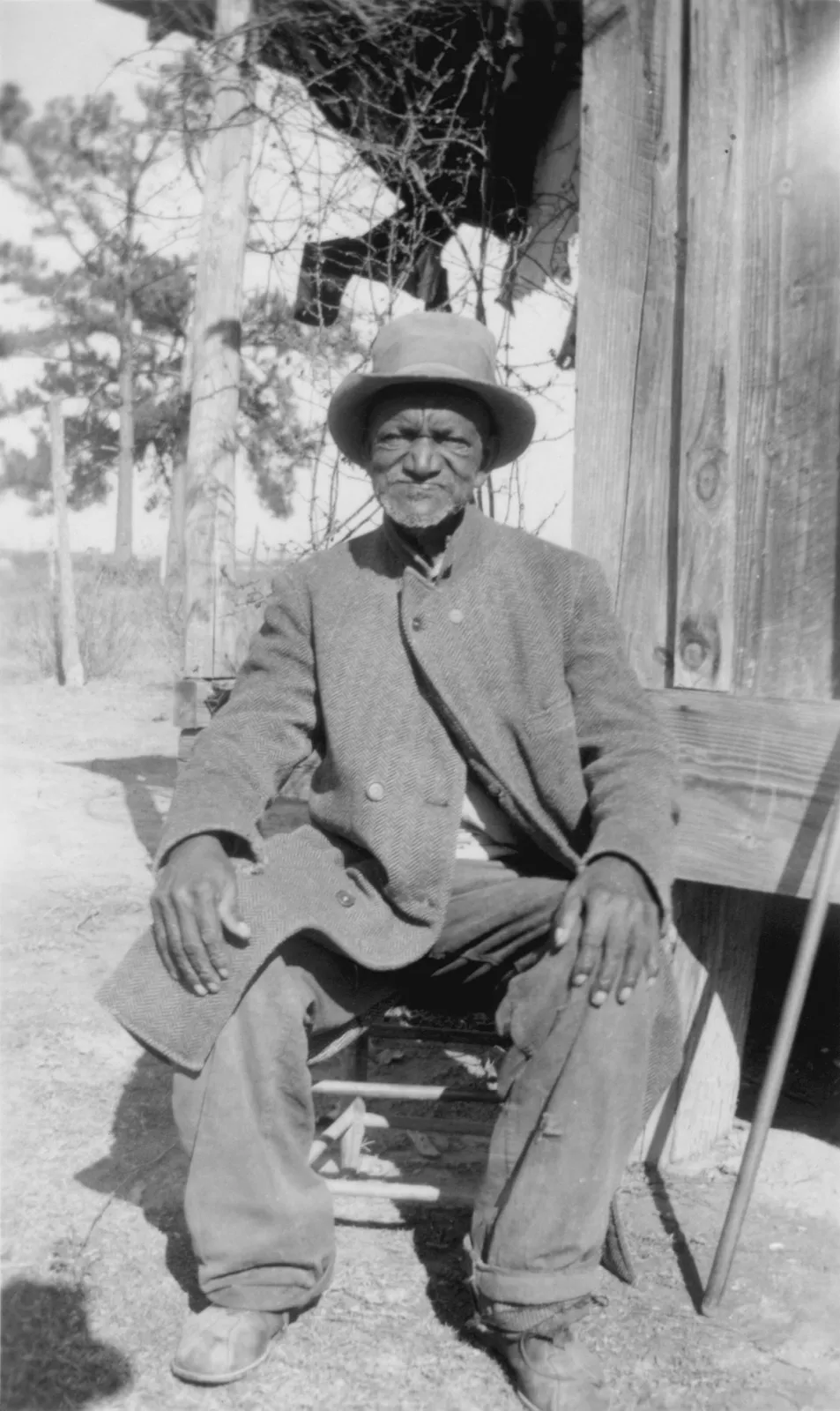 Wes Brady, photographed in Marshall, Texas, in 1937 for the Federal Writers’ Project. Library of Congress. Public domain.
That is the basic weakness of the page. It records what someone said as heard by someone else.
There is a second, less obvious problem. Very few people will write a memoir. The task is large, the audience is imagined, and the writer has to be both subject and editor. Most people never begin, and those who do rarely finish. Talking to a person who is listening is a far lower bar.
What does audio add?
Audio fixes the problem of the filter. A recording keeps the actual voice, with its accent, rhythm and breaks. Anyone who has listened to a dead relative on an old answering-machine tape knows how much a voice carries: it can bring a person into the room with a speed that photographs and letters cannot.
For several decades it was also the practical choice. A cassette recorder was cheap, unobtrusive and easy for an older person to ignore, which suits an interview. Professional oral historians, who developed much of the craft that families can borrow (see how to conduct an oral history interview), relied on tape for exactly these reasons.
What audio cannot keep is everything seen. A hand that moves while its owner talks about her mother. A glance at the ceiling before an answer. A grin that tells you a sentence is a joke. A great deal of meaning in conversation travels by face and gesture, and it arrives as a weaker signal, or not at all, when only the sound survives. A few years from now, a grandchild listening to a tape will hear a voice and have to imagine everyone else in the room.
What does video keep that the others do not?
Video keeps the whole person at once: the voice, the face, the hands, the clothes, the room behind them, the way they look at the person asking. It is the nearest thing we have to a visit.
I should be careful about the claim. It is sometimes said that only seven per cent of communication is words, and that the rest is tone and body language. That figure comes from two small experiments in the 1960s by the psychologist Albert Mehrabian, which dealt with how people judge feelings from ambiguous single words, and Mehrabian himself has said it should not be generalised. The honest version is more modest and, to my mind, more interesting. Words carry the information. The face and voice carry the person: whether they mean it, how they feel about it, and who they are when they say it.
For a family archive that is the whole point. Your great-grandchildren can read the facts from any source. What they cannot get anywhere else is the sense of who you were. Over a hundred life stories filmed through The Archive since 2020, the moments that stay with the families are rarely the dates. They are a laugh, a pause before a name, a gesture a grandfather has always made, the particular way someone says “anyway”. My grandmother’s interview runs to four hours. She has since passed away, and what I value is not any single fact she gave me. It is the experience of watching her decide, mid-sentence, how much to tell.
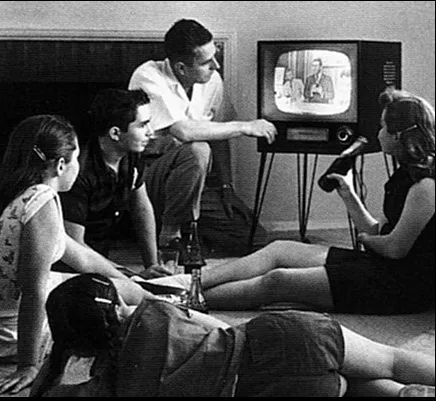 A family watching television, around 1958. U.S. National Archives. Public domain.
There is a reason video feels more present, and it is not only sentiment. People recognise faces and voices more readily than almost anything else, and we have spent our whole evolutionary history reading them. A moving face gives the viewer a great deal of information about trust, mood and character without asking them to work it out. The viewer simply sees it.
Is video really the best format, then?
Not in every respect, and a fair comparison should say so.
- Video is harder to search. You cannot skim an hour of footage the way you can skim a page. Titles, short chapters and a few written notes solve most of this, which is one reason short answers to single questions work better than one long recording.
- Video can make people self-conscious. A lens can stiffen a modest person who would talk freely over a cup of tea. A small, steady camera, a familiar room and a short first session reduce the effect. I wrote about the practical side in how to get a parent to talk about their past.
- Video is more fragile than it looks. Files sit on phones that get lost, in formats and services that change. The Library of Congress concluded in 2013 that about seventy per cent of American silent feature films had been lost, mostly through neglect rather than any catastrophe. A recording nobody has copied or labelled is closer to those films than most people assume. I looked at what that means for photos and videos in what happens to your photos and videos when you die.
The most sensible answer is not to choose. Write down the names and dates, keep a tape if that is all you have, and film the person talking, because that is the only version of the three that shows who they were.
Why did this become possible so recently?
Every earlier format came with a barrier. Writing needed literacy and time. Edison’s phonograph, patented in 1878, needed a machine and a technician. Film arrived in 1895, when the Lumière brothers held their first public screening in Paris, but for most of the twentieth century a camera and a projector were expensive, and videotape was awkward and short-lived. For a hundred years the recorded lives were those of the famous, because recording was costly.
That has reversed, quietly and completely. Almost everyone now carries a camera that films in high definition, records clear sound and uploads to storage that costs next to nothing. I traced the long arc of this in a short history of storytelling: each new medium has widened the circle of people whose voices survive. Video is the first that can reach almost everyone, and for the first time the limiting factor is no longer cost or skill.
It is a different thing now. The bottleneck is no longer technology but something simpler: someone has to ask, and someone has to press record.
How should you start?
Keep it small. Pick one person, one question and ten minutes. Sit them near a window, put the phone at eye level, and ask something that calls for a scene rather than a fact. If it goes well, ask another next week. How to capture someone’s life story on video sets out the full method, step by step. If you are tempted to write the whole thing as a book instead, why most memoirs go unread is worth reading first.
If you would rather not start from a blank screen, the Everyone app asks one question at a time and keeps each answer as a short video, which suits the strengths of the format. But the tool matters much less than the decision. Tennyson’s voice survives because someone set up a machine in front of him in 1890. Whoever you have in mind will be remembered more fully if you do the equivalent now.


