The Up series and what it means to film a life every seven years.
The Up series filmed fourteen children every seven years from 1964 to 2026. What it shows about class, memory and who gets to tell the story of a life.
In the summer of 2023, Nick Hitchon knew he was dying. He had been a farmer’s son in the Yorkshire Dales, then a physicist, then for decades a professor of electrical engineering at the University of Wisconsin–Madison. He had been filmed every seven years since he was seven. So he contacted the producer of the series and asked to record one last interview. He died in July 2023, at sixty-five, and that interview became part of 70 Up, the final film, broadcast on ITV in September 2026.
The Up series is the longest-running experiment of its kind: fourteen ordinary British children, filmed in 1964 and then again at fourteen, twenty-one, twenty-eight and every seven years after, until the survivors were seventy. It was made to answer a question about class. Over sixty-two years it ended up answering a different one, about what happens when you record a life at intervals instead of all at once, and about who should hold the camera.
What was the Up series trying to prove?
Seven Up! was first broadcast on 5 May 1964. Granada Television made it as a one-off episode of its current affairs programme World in Action, directed by the Canadian filmmaker Paul Almond. A young researcher named Michael Apted helped find the children. They were chosen from deliberately contrasting backgrounds: boys from a London pre-prep school, children from a charity-run children’s home, working-class kids from the East End, a farmer’s son, a Liverpool schoolboy.
The film’s premise came from a saying traditionally attributed to the Jesuits: “Give me the child until he is seven and I will show you the man.” The bet was that the British class system was so rigid you could read a person’s future from their accent and school at seven.
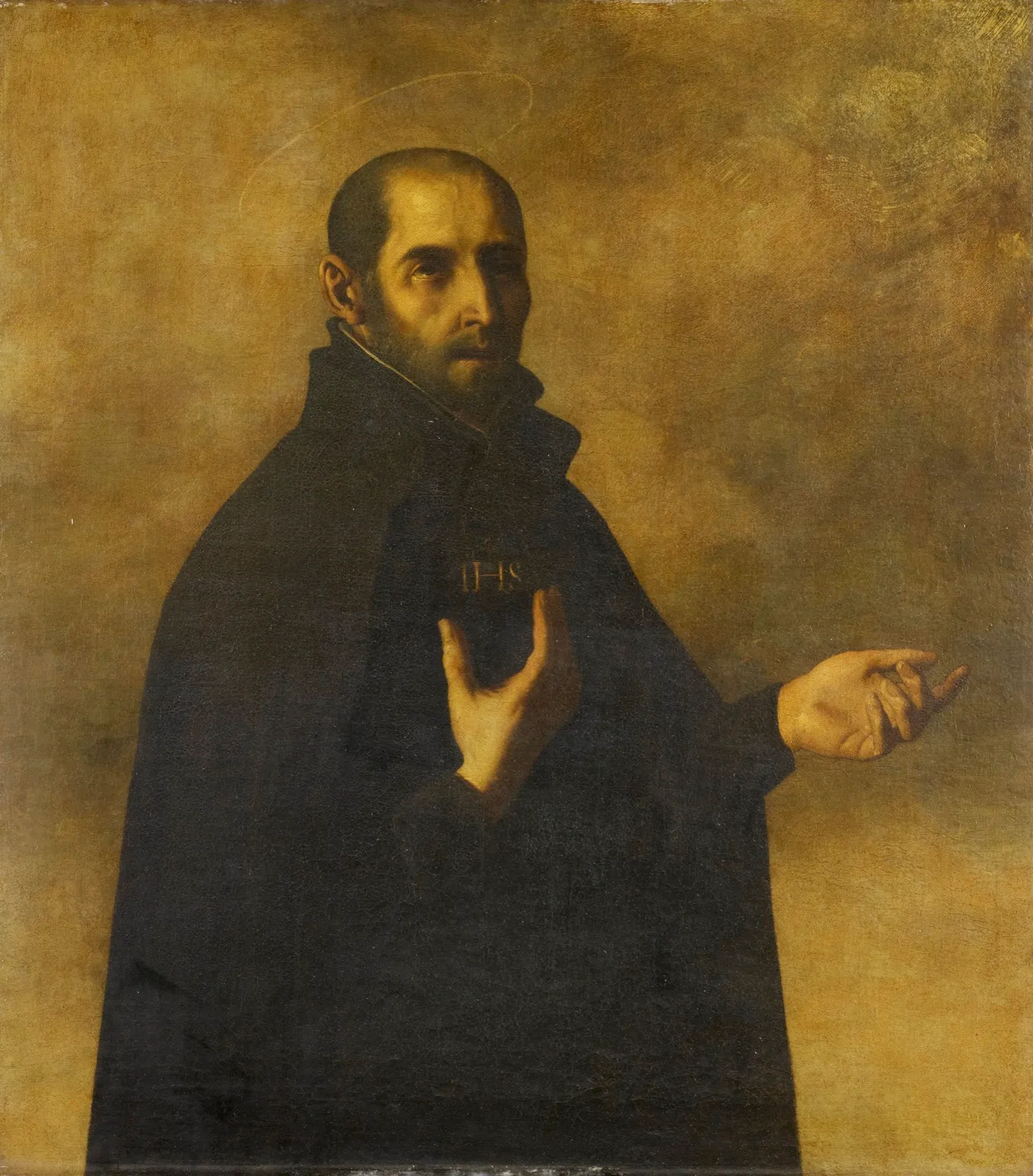 Ignatius of Loyola, founder of the Jesuits, painted by Francisco de Zurbarán, 17th century. Public domain.
The original film was meant to be a single programme. Apted went back when the children were fourteen, in 7 Plus Seven (1970), and kept going. He directed every instalment up to 63 Up (2019) and died in January 2021. Asif Kapadia, best known for his documentaries about Ayrton Senna and Amy Winehouse, made the last one.
Did the Jesuit maxim turn out to be true?
Partly, and the parts where it failed are the interesting ones.
At seven, the prep school boys could already describe the schools and universities they expected to attend, and in broad outline many of their lives followed the track laid down for them. Most viewers who watched the series over decades came away feeling that the class prediction had held up uncomfortably well.
But the people the series is remembered for are the exceptions. Nick, from a small school in the Dales, went to Oxford and became a professor in America. Neil, a bright Liverpool schoolboy who hoped to go to Oxford, was homeless at twenty-one and again at twenty-eight, struggling with his mental health. He later became a local councillor. Tony, who at seven wanted to be a jockey, rode in a handful of races, then became a London cab driver. Paul, from the children’s home, emigrated with his family to Australia soon after the first film and built a life as a bricklayer near Melbourne.
None of these trajectories could have been read off the seven-year-old. What the films could do was show the seven-year-old next to the twenty-eight-year-old next to the sixty-three-year-old, and let the viewer search the earlier faces for what came later. That act of comparison is the series’ real achievement, and it depends entirely on the earlier footage having been made before anyone knew how things would turn out.
Why can’t we just remember what we were like?
Because memory is a poor archive of our former selves. Psychologists have shown again and again that each time we recall an event we rebuild it, and the rebuilt version drifts toward the story we now tell about our lives (I went through the evidence in how to record your life story while you are living it). Before about the age of three or four, we remember almost nothing at all, a phenomenon known as childhood amnesia.
A sixty-three-year-old asked what he was like at seven will give an answer. It will be a reasonable answer. But it will be assembled from family anecdotes, a few photographs and the shape of the adult life since. The Up participants are almost the only people in history who can check that answer against film of the child himself, speaking in his own words, on a particular afternoon in 1964.
That is the first lesson of the series, and it applies to anyone: a record made at intervals contains something that no single retrospective account can. Each recording is a witness who does not yet know the ending.
Who gets to tell the story?
The second lesson is less comfortable, and the participants themselves taught it.
Over the decades, several of them came to resent the films. Peter dropped out after 28 Up, following a tabloid campaign against him for criticising Margaret Thatcher’s government on camera; he returned only in 56 Up, partly to promote his band. Charles left after 21 Up and never appeared on camera again. Suzy said she felt picked on. John described the series as a poison pill he had to swallow every seven years, while acknowledging its value. Jackie, in 49 Up, confronted Apted directly, accusing him of having underestimated her and the other women for decades. Ahead of 70 Up, Neil said that viewers “didn’t see the real me.”
Apted was candid about some of this. He later said that including only four girls had been a mistake, and he was critical of his younger self’s habit of playing God with the participants’ lives in his interviews. He had, after all, begun with a thesis about class, and a thesis shapes which questions get asked and which answers survive the edit.
What the participants objected to was not, for the most part, being recorded. It was being edited. Each film compressed seven years of a life into a few minutes, chosen by someone else, cut to fit a story about Britain. The footage was theirs; the narrative was not.
A better design for recording a life
Put those two lessons together and a clear design emerges for anyone who wants to record a life, their own or a parent’s.
- Record at intervals, not once. A single interview at seventy is valuable, but it is one witness. A few short recordings made over years let later viewers see change, which is what makes the Up films unforgettable. A birthday is a natural moment to do it.
- Ask open questions without a thesis. The best life story interviews ask people to describe scenes and explain their choices, and then get out of the way. The difference between open and closed questions is covered in how to interview someone.
- Let people keep their own words. The resentment in the Up series came from the edit. Short, unedited answers to single questions keep the authorship with the person speaking.
- Start before you know what the story is. The seven-year-olds of 1964 are valuable precisely because nobody knew who they would become. The same is true of a recording of your children now, or of yourself at thirty-five.
In my own work, filming more than a hundred life stories through The Archive since 2020, I have found that people talk most freely when they are asked to tell their story rather than to illustrate someone else’s idea about it. That is not a scientific finding. But it is consistent with everything the Up participants said about what went wrong.
What the series leaves behind
Lynn Johnson, one of the East End girls, who grew up to work as a children’s librarian, was the first of the group to die, in 2013. Nick followed in 2023. For both of them, there is something almost no one else born in the 1950s has: film of the same face at seven, fourteen, twenty-one and on through middle age, each recorded at the time. Their grandchildren and great-grandchildren will be able to meet them at every age.
That used to require a television company and a sixty-year commitment. It no longer does. The phone in your pocket can do what Granada did in 1964, and you can do it without a director deciding what your life meant. This is part of why I think the future of storytelling is video: it keeps the face and voice of each age, not just the conclusions drawn later.
The Everyone app was built around the same idea, one question at a time, each answer kept as its own short video, with the option to seal some recordings until a date in the future. But the method matters more than the tool. Film the people you love more than once. Let them say it their own way. And start before anyone knows how the story ends.