How to record your life story while you are still living it.
Memory rewrites your past within a few years. Why the best time to record your life story is while it is happening, and how to do it in short videos.
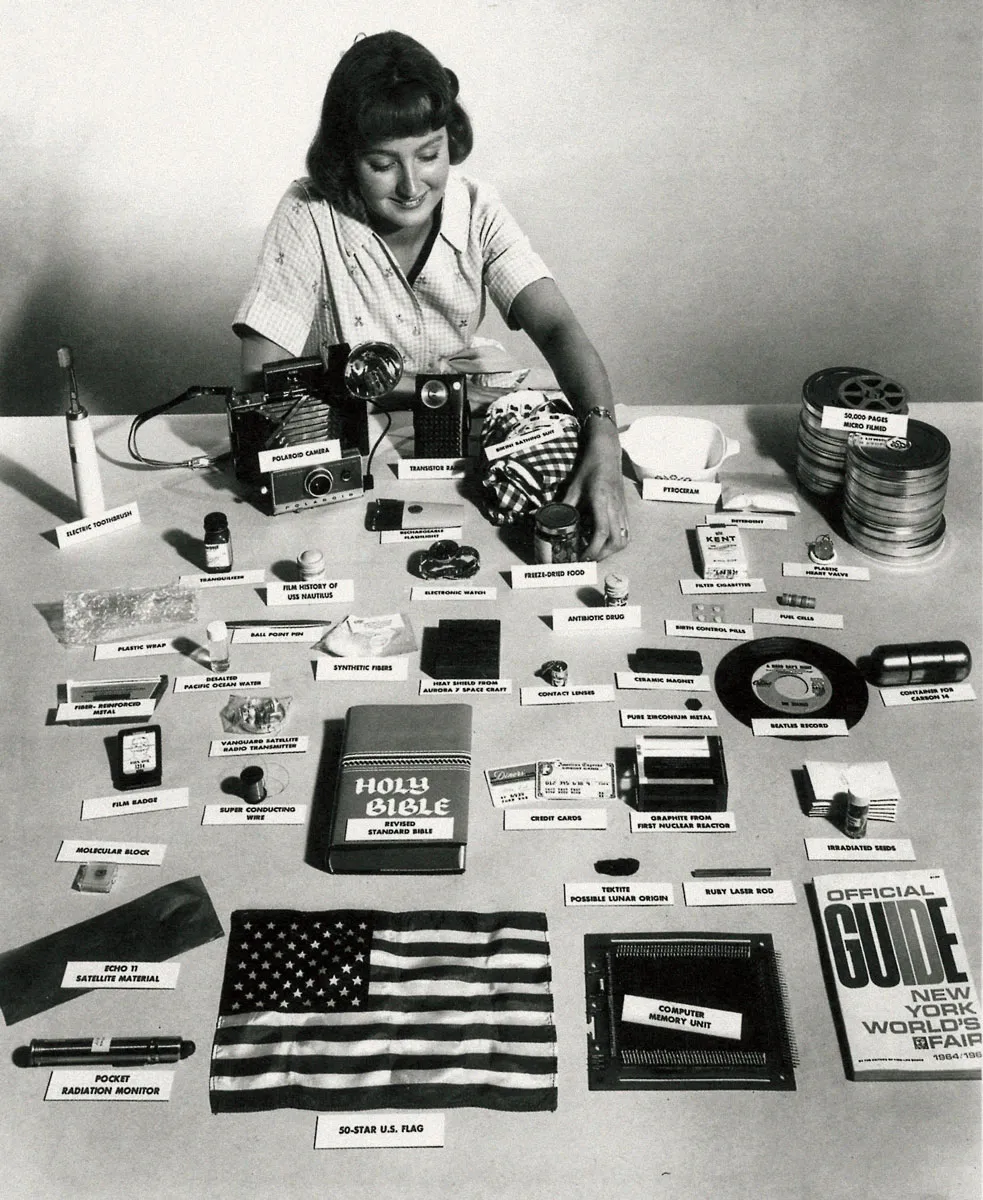
On 28 January 1986, the space shuttle Challenger broke apart seventy-three seconds after launch. The next morning, the psychologist Ulric Neisser asked the students in an introductory psychology class at Emory University to write down how they had heard the news: where they were, what they were doing, who told them. About two and a half years later, he and his colleague Nicole Harsch tracked down forty-four of those students and asked them the same questions again.
The second accounts were vivid, detailed and confident. Many of them were also wrong. Scored for accuracy against what they had written the day after, on a scale of seven, the students averaged a little under three. Some who had first written that they heard the news from another person now remembered seeing it on television. When they were shown their original answers, in their own handwriting, some still held on to the later memory.
That study is the best argument I know for a simple idea: if you want to know how to record your life story, the most important decision is not what to say but when to say it. Most people plan to tell their story once, near the end, looking back. By then the person telling it is not quite a reliable witness.
Why does memory rewrite your life story?
Because remembering is not playback. It is reconstruction.
The British psychologist Frederic Bartlett showed this in experiments he described in his book Remembering (1932). He gave Cambridge students an unfamiliar Native American folk tale, “The War of the Ghosts”, and asked them to retell it at intervals. With each retelling the story grew shorter, more conventional and more like the stories the students already knew. Details that made no sense to them dropped out or were quietly replaced with ones that did. Nobody was lying. Each retelling was assembled from the last one, plus expectation.
A life is retold in the same way. Every time you tell the story of how you met your partner, or why you left a job, you are not retrieving the original. You are retrieving the last telling. Over decades the stories become smoother, the causes clearer and the protagonist wiser. The parts that did not fit the eventual shape of the life fall away.
In filming more than a hundred life stories through The Archive since 2020, I have seen how polished some of these accounts are by the time they reach the camera. That polish is not worthless. It shows what a person has made of their life. But it is a different thing from what the life was like while it was being lived.
Will you be the same person who remembers it?
There is a second problem, and it is less obvious than faulty memory. The person who eventually tells your story will have different values, tastes and beliefs from the person living it now, and you probably underestimate how different.
In 2013 the psychologists Jordi Quoidbach, Daniel Gilbert and Timothy Wilson published a study in Science based on more than 19,000 people aged eighteen to sixty-eight. Participants of every age reported that they had changed a great deal over the previous ten years, and predicted that they would change much less over the next ten. The authors called it the “end of history illusion”: at every age, people treat the present as the moment they finally became who they are.
The implication for a life story is uncomfortable. The seventy-year-old who sits down to tell it will be looking back at the thirty-five-year-old you are now and explaining you, perhaps fondly, perhaps with embarrassment, but always from the outside. Daniel Kahneman made a related distinction in Thinking, Fast and Slow (2011) between the “experiencing self”, who lives each moment, and the “remembering self”, who keeps score and writes the story afterwards. Almost every life story we have is told by the remembering self. The experiencing self rarely gets a word in.
What does a life recorded as it happens look like?
The best-known answer in English is Samuel Pepys.
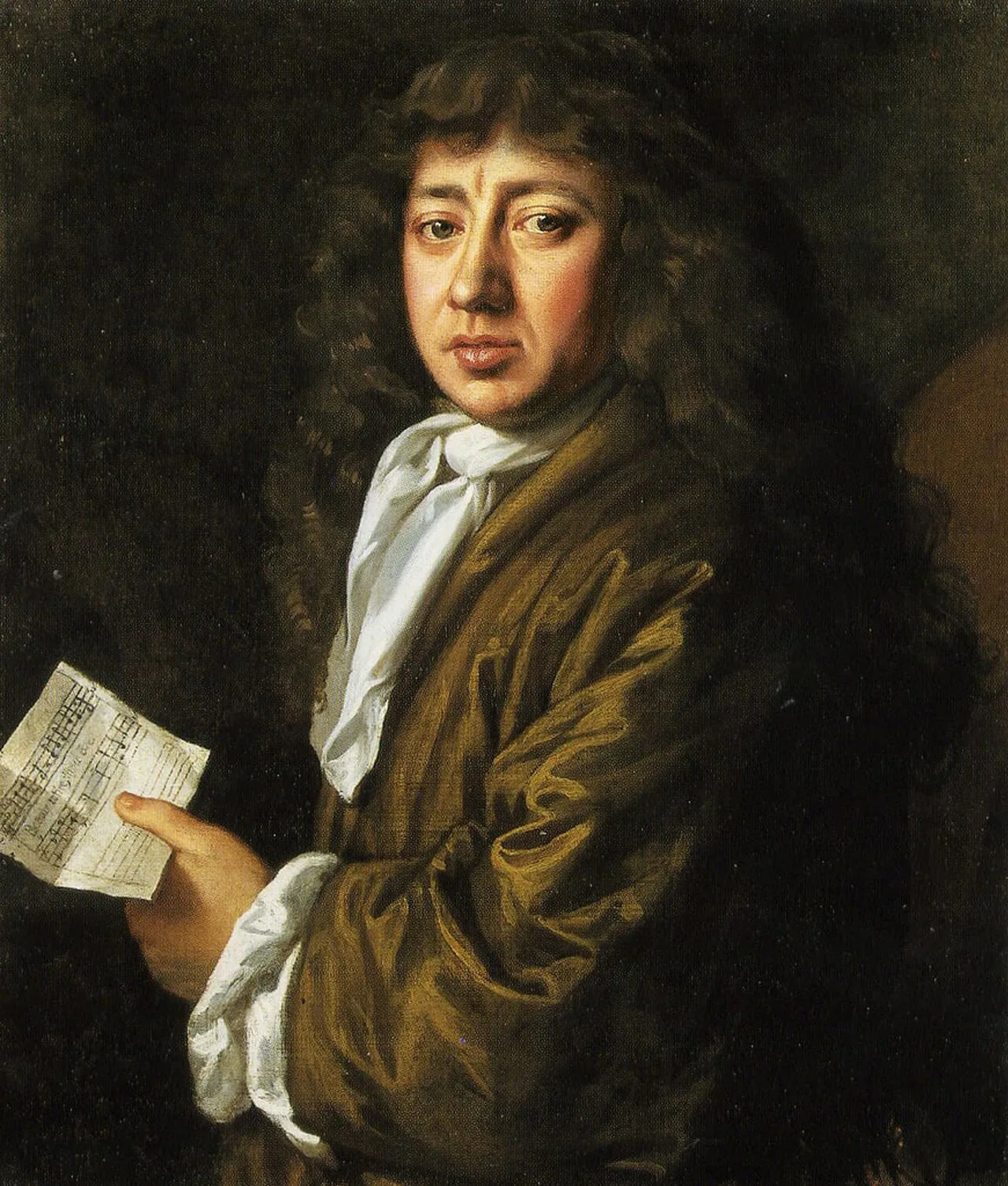 Samuel Pepys by John Hayls, 1666. National Portrait Gallery, London. Public domain.
Pepys began a diary on 1 January 1660 and kept it until 31 May 1669, when he stopped because he feared his eyesight was failing. He wrote it in a shorthand system devised by Thomas Shelton, and it runs to more than a million words. It was not deciphered and published until 1825, and even then only in part. The full text did not appear until much later.
What makes the diary extraordinary is not that Pepys lived through great events, although he did: the Restoration of Charles II, the plague of 1665, the Great Fire of London in 1666. It is that he recorded them before he knew how they would end. On 4 September 1666, with the fire still advancing, he and his neighbour Sir William Penn dug a pit in the garden and buried their wine, and Pepys added his parmesan cheese. No one writing a memoir thirty years later would have kept the cheese. It is too small, too undignified and too true.
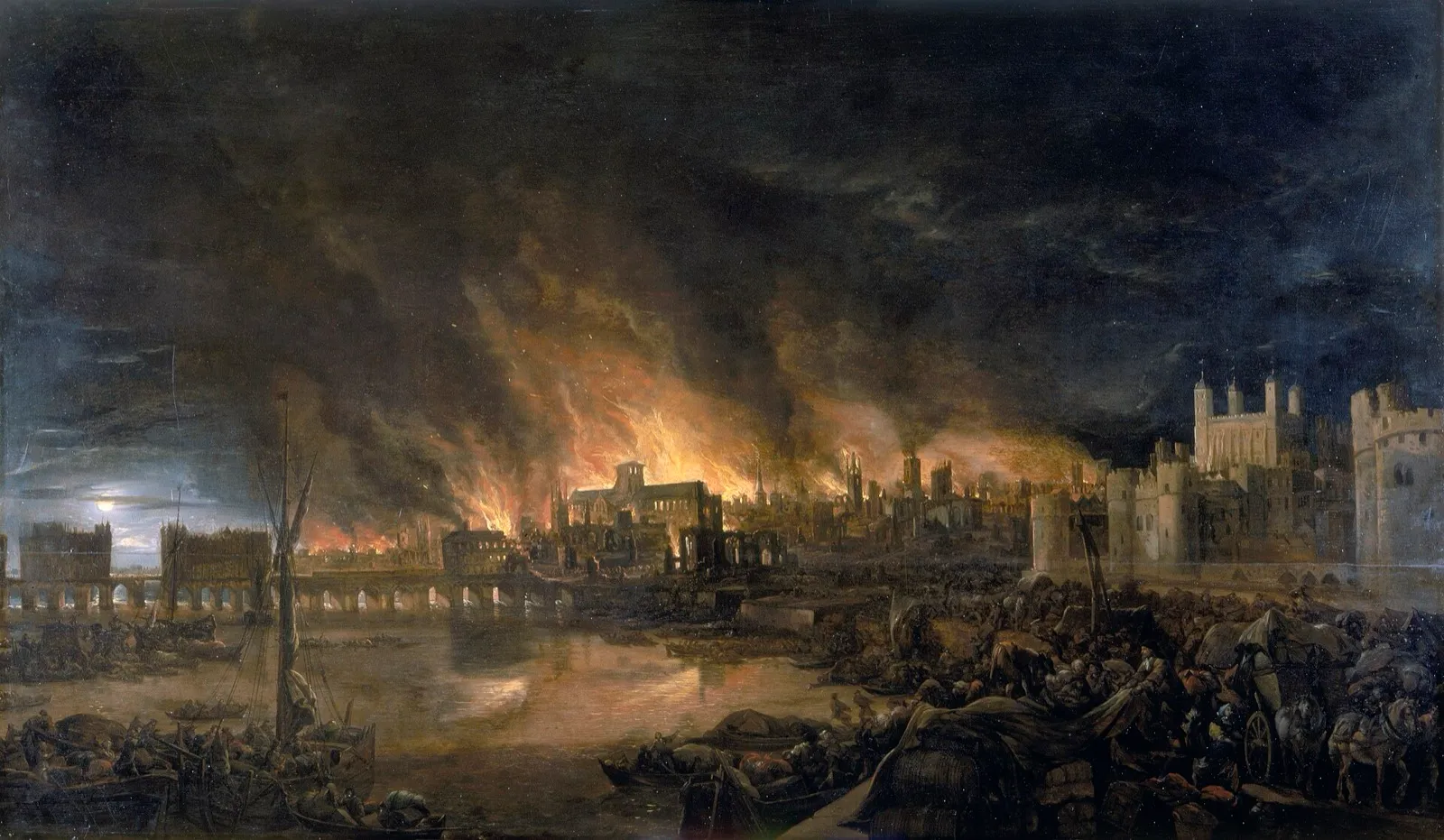 “The Great Fire of London” by an unknown artist, about 1675. Museum of London. Public domain.
The diary also preserves things Pepys would later have edited out of himself: his vanity, his jealousy, his affairs, his anxieties about money and status. It is the experiencing self, unsupervised. That is why it is still read, while most of the official accounts of the period are consulted only by historians.
What happens when you go back and revise?
Anne Frank’s diary is an example of both kinds of record, and of the moment one turns into the other.
On 28 March 1944, Gerrit Bolkestein, a minister in the Dutch government in exile, appealed on Radio Oranje for ordinary people to keep their diaries and letters, so that a record of the occupation could be collected after the war. Anne heard the broadcast in the Secret Annex. She decided to turn her diary into a book, and in the months that followed she rewrote much of it on loose sheets of paper, cutting passages, adding others and giving the people in it new names.
Scholars now call the original diary version A and her rewrite version B. Both survive, and the critical edition prints them side by side. The rewrite is more shaped and more deliberate, the work of a writer thinking about readers. The original is more immediate. Anne was fourteen and fifteen; the distance between the two versions was a matter of months. The same thing happens to all of us over decades, without the benefit of the first draft surviving.
How to record your life story as it happens
You do not need to keep a diary for nine years in shorthand. The aim is narrower: to leave some record of your life told by the experiencing self, before the remembering self takes over. A few principles make that realistic.
- Record short pieces, often. One story or one reflection per recording, a few minutes long. Pepys wrote most days. A few minutes a month is enough to change what your descendants will have.
- Record the ordinary. What a normal Tuesday looks like, what you cook, what you worry about, what things cost. These are the details memory discards first, because they never seem important at the time.
- Record decisions before you know how they turn out. Why you are taking the job, moving city, having the child, ending the relationship. Once the outcome is known, the reasoning is always rewritten to fit it.
- Record what you believe now. Your opinions on politics, faith, work and family will probably change, and the end of history illusion says you will not see it coming. A record of what you thought at thirty is something your sixty-year-old self cannot reconstruct.
- Ask yourself the same questions every year. A birthday is a natural moment. Asked year after year, the same five questions turn into a record of change.
- Use video. A diary records what you thought. A video also records how you looked and sounded while you thought it: your face at that age, your voice, your hesitations. I made the case for this in why recording a life story on video beats writing.
- Say the date, and keep copies. The future viewer will want to know exactly how old you were. And a single file on a single phone is not an archive.
If you are filming yourself, the practical rules are the same as for any interview: a quiet room indoors, light from a window in front of you, the phone at eye level, and something of yours in the background. There is more on that in how to film an interview at home.
Does the later telling still matter?
Yes. None of this is an argument against the life story told at the end. I have four hours of my grandmother telling me hers, and she has since passed away. Those recordings show what she made of her life, which stories she chose and how she wanted to be understood. Psychologists who study life stories argue that the shape we give our lives is itself part of who we are, which I explored in what psychologists learnt from the life story interview.
The point is that the later telling should not be the only one. A life recorded in two voices, the one living it and the one looking back, is much richer than either alone. Where they disagree, the disagreement is itself the story: what you feared that never happened, what you dismissed that turned out to matter.
Most of us will be remembered, if at all, by what the remembering self chose to say near the end. Recording your life story as it happens is a way of letting the other self speak. The Everyone app was built to make that easy, with one question at a time and each answer kept as its own short video. But any phone will do. The only requirement is to begin before you are sure what the story means.