The future of storytelling is video.
In 1878 Edison predicted families would record each other’s stories. It took 150 years. Why the future of storytelling is video, and what changed.
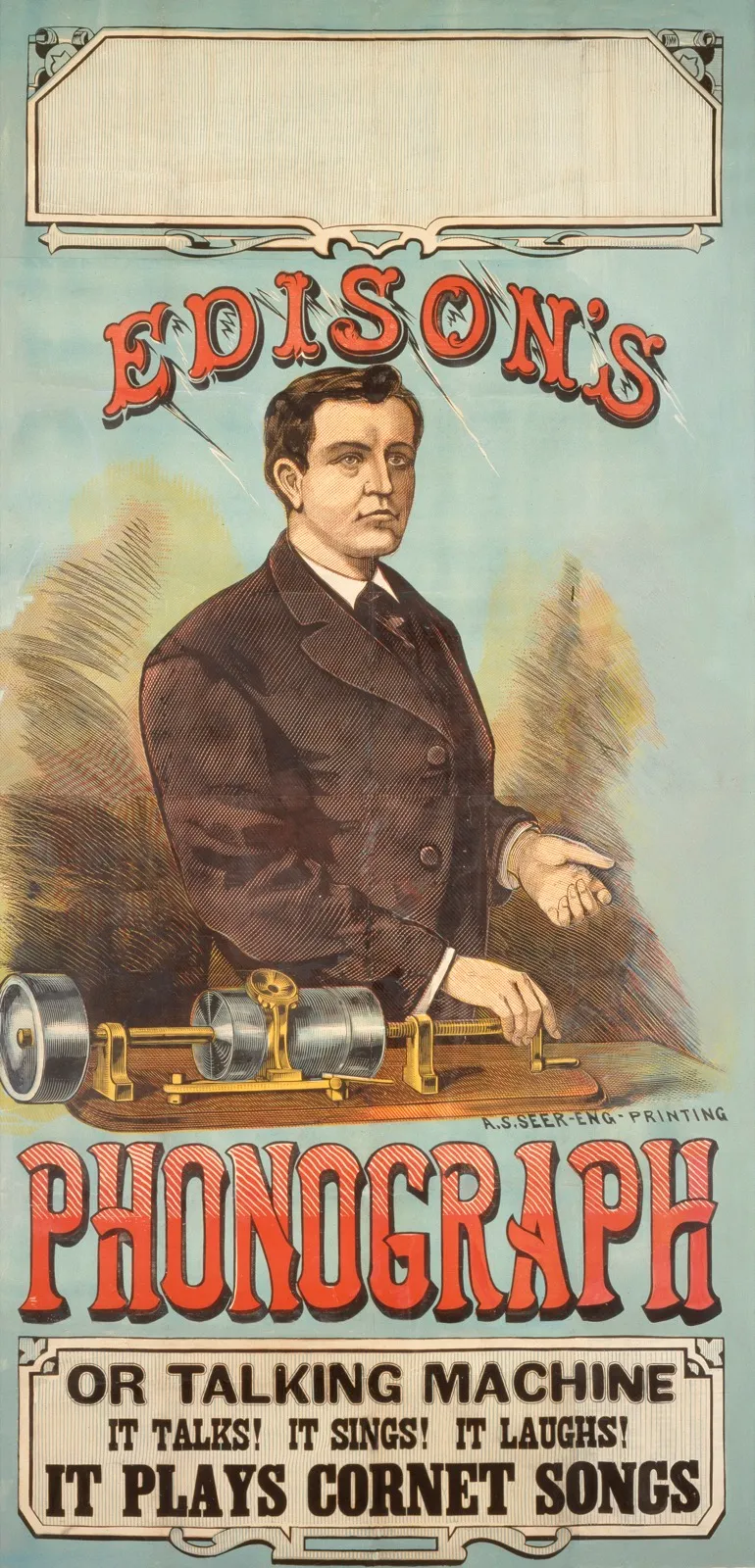
In June 1878, a few months after he patented the phonograph, Thomas Edison published an essay in the North American Review listing what he expected his invention to be used for. Letter-writing and dictation came first, then books for the blind, music, talking clocks and toys. Fifth on the list was something he called the “Family Record”: a registry of sayings and reminiscences by members of a family “in their own voices, and of the last words of dying persons.”
Edison was right about the desire and wrong about the timing. Families did not, on the whole, record one another’s reminiscences. Sound recording became an industry for music, and photography became the way ordinary people kept a record of each other. It took roughly a century and a half for the family record to become practical, and when it finally arrived it came in a form Edison did not describe: a moving picture with sound, made on a device nearly everyone carries in a pocket.
That is the argument of this essay. Predictions about the future of storytelling tend to focus on exotic formats: virtual reality, interactive films, stories written by machines. The more important change is plainer and already well under way. Video has become the default way people communicate, and the weaknesses that once made it a poor medium for preserving a life (cost, convenience and searchability) are being removed one at a time. The future of storytelling, at least the kind that matters to families, is a real person on video telling their own story.
Why did Edison’s family record take so long?
Because every part of it was expensive. An early phonograph cylinder held a couple of minutes of sound, and the recording wore down a little with each playing. Home movie film, when it arrived in the twentieth century, was costly per minute, had to be sent away to be developed, and for most of its history carried no sound at all; sound cartridges for Super 8 only appeared in the 1970s.
The result is familiar to anyone who has watched their grandparents’ home movies: a few minutes of silent people waving at the camera at a wedding or on a beach. The footage is moving, and it says almost nothing. Nobody in it explains who they are, where they came from or what they were thinking.
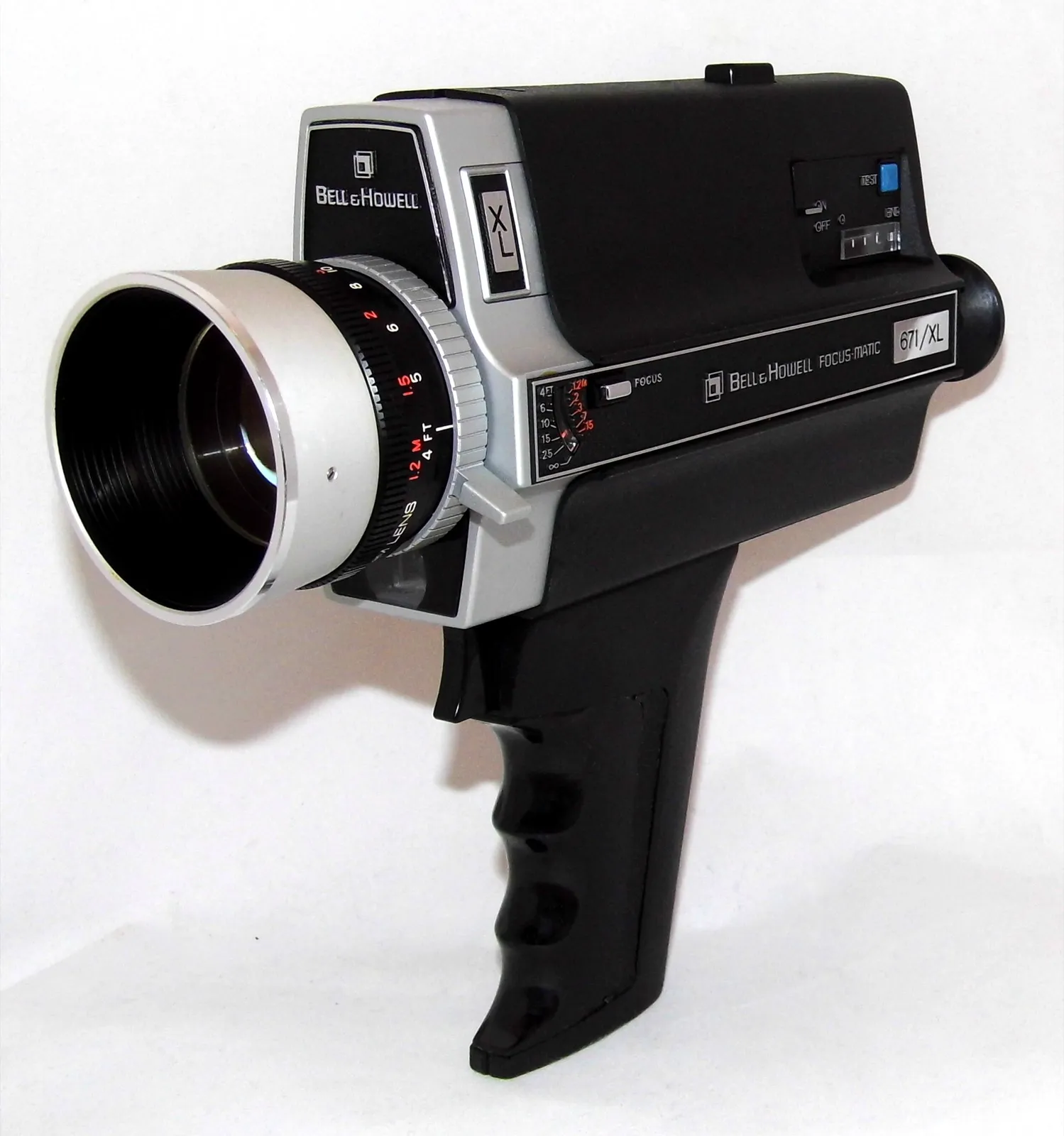 Bell & Howell Focus-Matic 671 XL Super 8 movie camera, c. 1973. Photo by Joe Haupt, CC BY 2.0.
Each new technology removed one barrier and left others in place. Video cassettes made sound and long recordings cheap, but the camera was bulky and the tapes degrade with age (a problem that has not entirely gone away; see what happens to your photos and videos when you die). The smartphone removed the rest. For the first time in history, the cost of recording an hour of someone talking, in colour and with sound, is effectively zero.
What is the future of storytelling, if not something new?
There is a pattern in the history of storytelling: a culture tends to be remembered in the medium it used to talk. Oral cultures were remembered through verse and recitation, because that was how knowledge moved between people. The eighteenth and nineteenth centuries are unusually well documented at the level of ordinary families because letters were how people spoke across distance, and letters could be kept in a drawer.
By that logic, the medium of our own era is not in doubt. Sandvine, a network analysis company, estimated that video made up about 65 per cent of all internet traffic in 2022. YouTube said in 2019 that more than 500 hours of video were being uploaded to the site every minute. Families separated by distance now see each other on video calls rather than writing to each other. A generation that talks through cameras will be remembered through cameras.
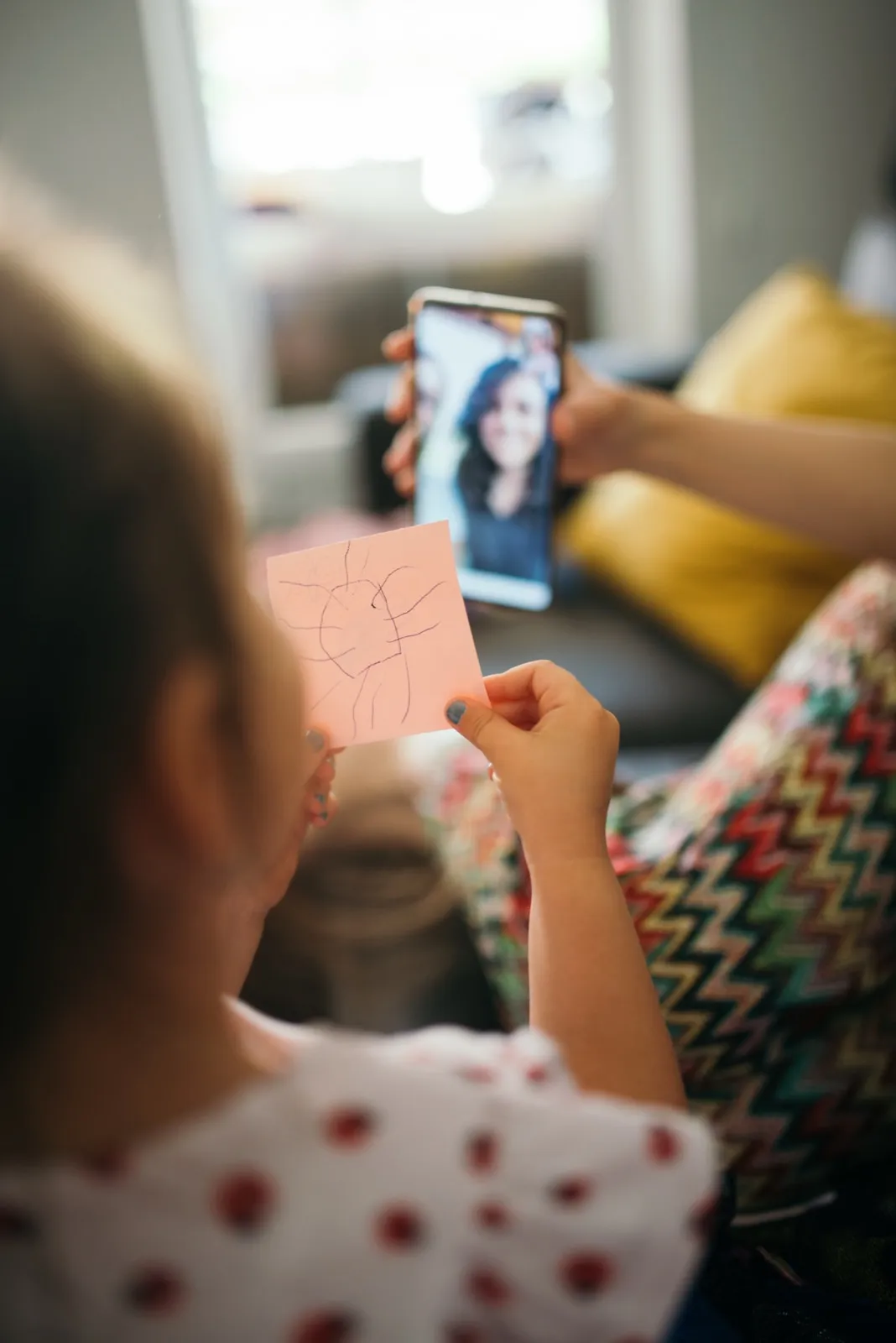 A child shows a drawing to a family member on a video call, 2021. Photo by Shixart1985, CC BY 2.0.
So the real question is not whether video will be the medium of family memory. It already is. The question is whether the recordings that matter will be made. Most of the video we produce is incidental: birthdays, holidays, a dog doing something funny. It repeats the problem of the silent home movie at a far larger scale. A child born today may well have more footage of themselves by the age of ten than their great-grandparents had in their entire lives, and still have no recording of a grandparent explaining where the family came from.
Why was writing better for so long?
The strongest case for writing a life story rather than filming it was never emotional. It was practical. Text can be skimmed, searched, quoted and translated. A forty-page memoir can be read in an evening and searched in seconds. A long video cannot be skimmed in the same way. I have four hours of my grandmother telling me her life story, and for years the only way to find a particular moment in it was to remember roughly where it came and scrub back and forth until I found it.
That limitation is disappearing. In September 2022, OpenAI released Whisper, a freely available speech-recognition system trained on about 680,000 hours of audio in many languages. Tools like it can turn a long interview into a time-stamped transcript, and translate it, at almost no cost. Accuracy still varies with accents, elderly voices and background noise, so the results need checking. But the direction is clear: a video now carries its own text. Finding the moment your grandmother talks about her wedding becomes as easy as searching a document.
This reverses an old trade-off. You used to choose between the richness of video and the usability of text. Recording on video now gives you both, because the transcript can always be produced later. The reverse is not true: no technology can turn a written memoir back into the face and voice of the person who wrote it. (For what each format keeps and loses, see why video beats writing for recording a life story.) Translation matters more than it might seem. In migrant families, it is common for great-grandchildren not to speak the language their ancestors did. Subtitles can bridge that gap; a lost voice cannot be recovered.
What happens when anyone can fake a video?
Generative AI can now produce convincing video of people saying things they never said. It would be reasonable to expect this to make video less trustworthy, and in public life it probably will. For family storytelling, the effect runs the other way.
When fabricated footage is cheap, the scarce thing is a genuine recording: a real person, filmed by someone who knew them, saying what they actually remembered. Its value lies in its provenance. A video of your grandfather recorded by your mother at his kitchen table, and kept by the family ever since, carries a chain of trust that no generated clip can.
There is a related temptation to recreate the dead from fragments, with chatbots or avatars trained on a person’s messages and photographs. These are a different kind of object. They speak for a person rather than letting the person speak, and wherever the original material runs out, they invent.
What does the most ambitious version look like?
The most serious attempt so far to imagine the future of recorded testimony shows where the value really lies. In the 2010s, the USC Shoah Foundation began a project called Dimensions in Testimony. One of the first participants was Pinchas Gutter, who survived the Warsaw Ghetto, Majdanek and a death march as a boy. He spent five days in a filming rig surrounded by dozens of cameras, answering many hundreds of questions about his life. Visitors to museums, the Illinois Holocaust Museum among the first, can now ask a question aloud, and the system finds and plays the recorded answer that best fits.
It feels like a conversation, but every word is his. The interface is new; the content is old-fashioned testimony, captured while he was alive to give it.
That is the general lesson. Whatever form storytelling takes next (interactive, searchable, translated into any language, or something nobody has thought of yet), it can be applied to recordings after they are made. It cannot be applied to someone who was never recorded. The technology of playback will keep improving. The window for capture closes with each life.
What should families do with this?
Recording is the only irreversible step. Transcribing, translating, editing, searching and whatever interfaces come next can all happen later, by people who have not been born yet. What cannot happen later is the conversation itself.
In practice this means three things:
- Film deliberately, not just incidentally. A clip of a birthday is not a life story. Sit down with someone and ask them about their life.
- Ask open questions, one at a time. “Tell me about the house you grew up in” produces a story; “Where did you grow up?” produces an address.
- Keep the recordings somewhere they will be found. A video no one can locate in thirty years is no better than one that was never made.
Since 2020 I have filmed more than a hundred life stories, including Holocaust survivors and my own grandmother, who has since passed away. The equipment was never the hard part. The hard part was deciding to ask. Everyone, the free app we built for this, presents one question at a time and records each answer as a short video, so that a life story accumulates over weeks rather than demanding one long sitting.
Edison imagined families keeping the voices of their members, and the last words of the dying, in their own homes. It took a century and a half, but the family record he described now exists, and it is better than he imagined: it has a face. What remains is for someone in each family to press record.