
From campfire to camera: a short history of storytelling.
The history of storytelling is a history of preservation, from words to voice to face. Now the technology is free, yet family stories are still being lost.
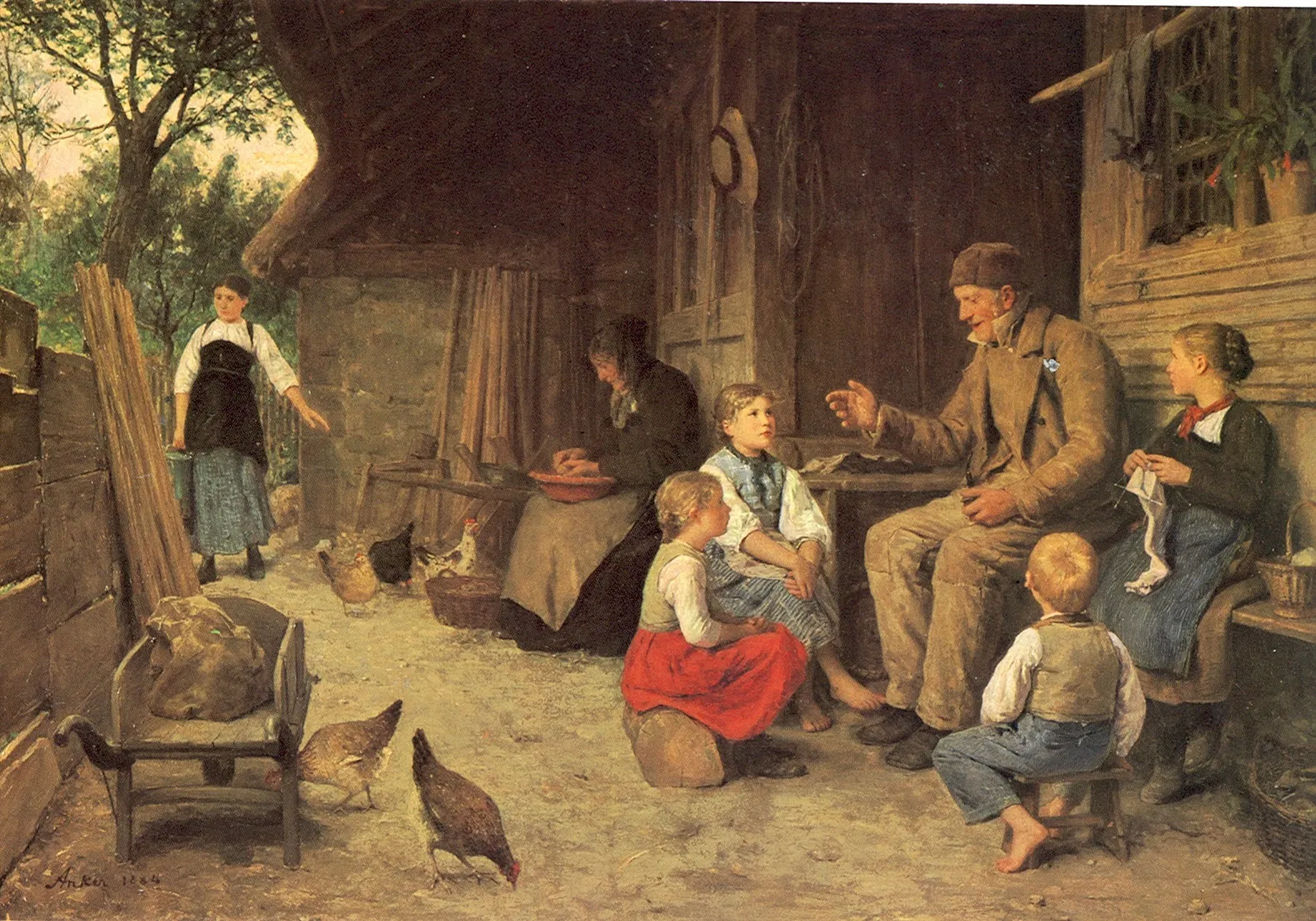
Every one of your ancestors told stories. Your great-great-grandparents did, and so did theirs, in an unbroken line back to people sitting around fires tens of thousands of years ago.
Almost none of those stories survive. This is not because they were unremarkable. It is because, for nearly all of human history, the only place a story could exist was inside a living person’s memory.
The history of storytelling is usually told as a history of art forms: myth, epic, novel, film. It can also be told as a history of preservation. Each new technology captured one more layer of the person telling the story. Seen that way, the story has a clear direction, and a strange ending.
How did stories survive without writing?
For most of our existence, storytelling meant one person speaking and others listening.
That sounds fragile, and in one sense it was: a story held only in memory could vanish within a generation. But oral traditions can also be remarkably durable. In Australia, researchers have argued that some Aboriginal stories describe coastlines that were submerged by rising seas more than 7,000 years ago, transmitted by word of mouth across hundreds of generations.
Durability on that scale is not an accident. Oral stories are engineered to be remembered. They rely on rhythm, repetition and song. They are anchored to features of the landscape. They are retold constantly, and the community corrects the teller when the details drift.
The Homeric epics worked on similar principles. The Iliad and the Odyssey were composed and performed aloud long before they were written down, and their recurring phrases, such as “rosy-fingered Dawn”, functioned partly as aids for performers working from memory.
Oral tradition preserved the story, the voice and the performance. It lost everything the moment the chain of tellers was broken.
What do the oldest pictures tell us?
At some point, people began telling stories visually as well.
In 2024, researchers dated a cave painting on the Indonesian island of Sulawesi to at least 51,200 years ago. It shows human-like figures interacting with a wild pig, and it is the oldest known image that appears to depict a narrative rather than simply an animal.
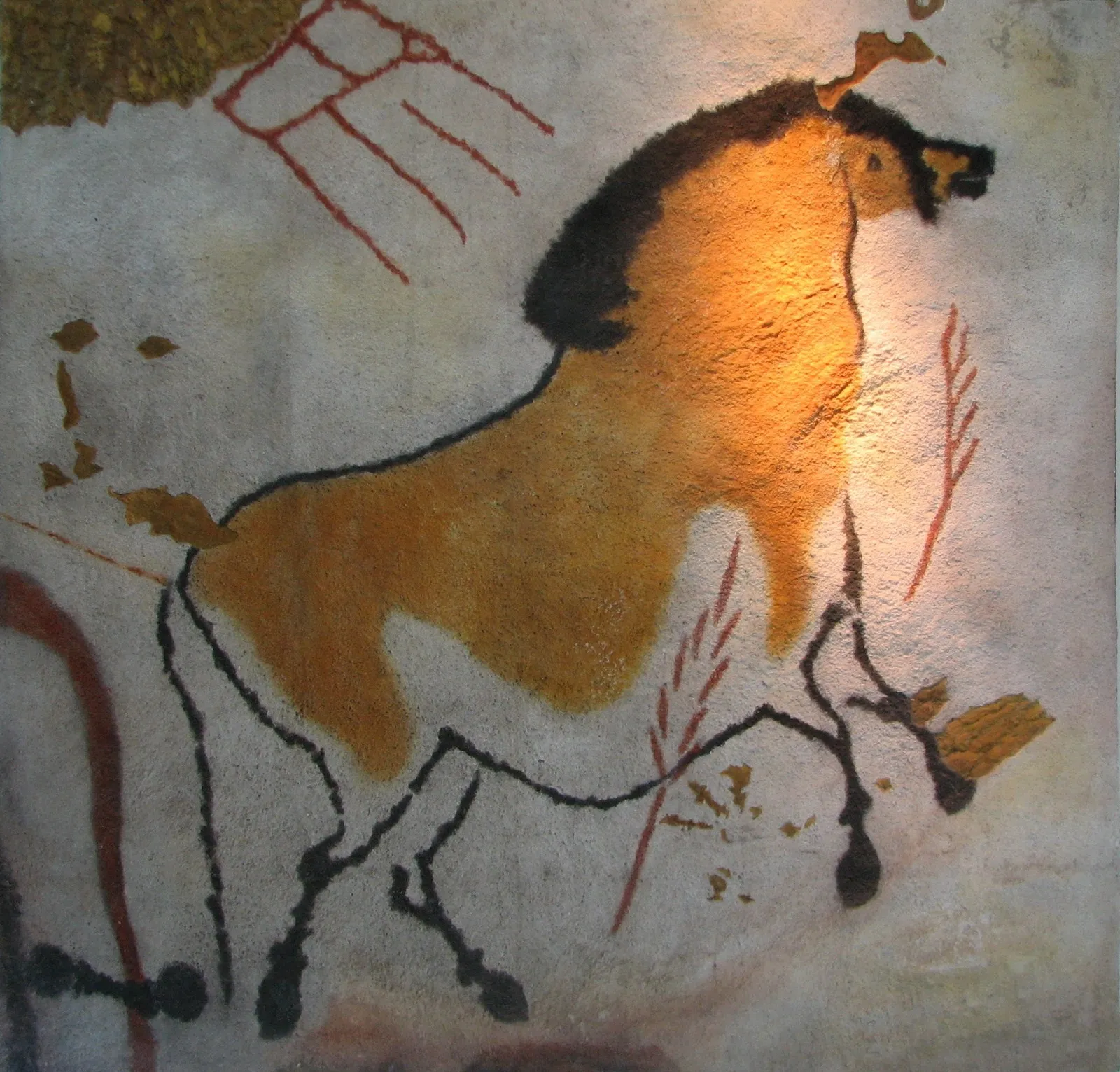 A horse from the Lascaux cave in France, painted around 17,000 years ago. Pictured: a museum replica. Public domain.
The paintings at Lascaux in France are much younger, at around 17,000 years old, and far better known. They illustrate the central limitation of images. We can still see what was painted. We have almost no idea what it meant. The pictures survived; the stories that accompanied them did not. The same is true of the hand stencils left on cave walls across the world, which say little more than “someone was here”.
What did writing preserve, and what did it lose?
Writing emerged in Mesopotamia around 5,000 years ago. Its first use was not literature but bookkeeping: records of grain, livestock and debts.
Stories followed. The Epic of Gilgamesh, parts of which are roughly 4,000 years old, concerns a king who sets out to find a way to live forever. He fails. The text about him has done considerably better. (I have written separately about the oldest stories in the world and the strange luck that preserved them.)
Writing was not universally welcomed. In Plato’s Phaedrus, Socrates argues that it will weaken memory, because people will rely on external marks rather than on what they have internalised. The objection is preserved, of course, only because Plato wrote it down.
The printing press, developed by Johannes Gutenberg in the 1450s, transformed the economics of the written word. Books went from rare, hand-copied objects to something ordinary people could own.
Writing preserved words with near-perfect fidelity over millennia. What it could not preserve was the speaker. We have nearly every play Shakespeare wrote, and no idea what his voice sounded like.
When did we first capture a voice?
Until the nineteenth century, every human voice disappeared the instant it was spoken. In 1877, Thomas Edison recited “Mary Had a Little Lamb” into his newly invented phonograph and played it back.
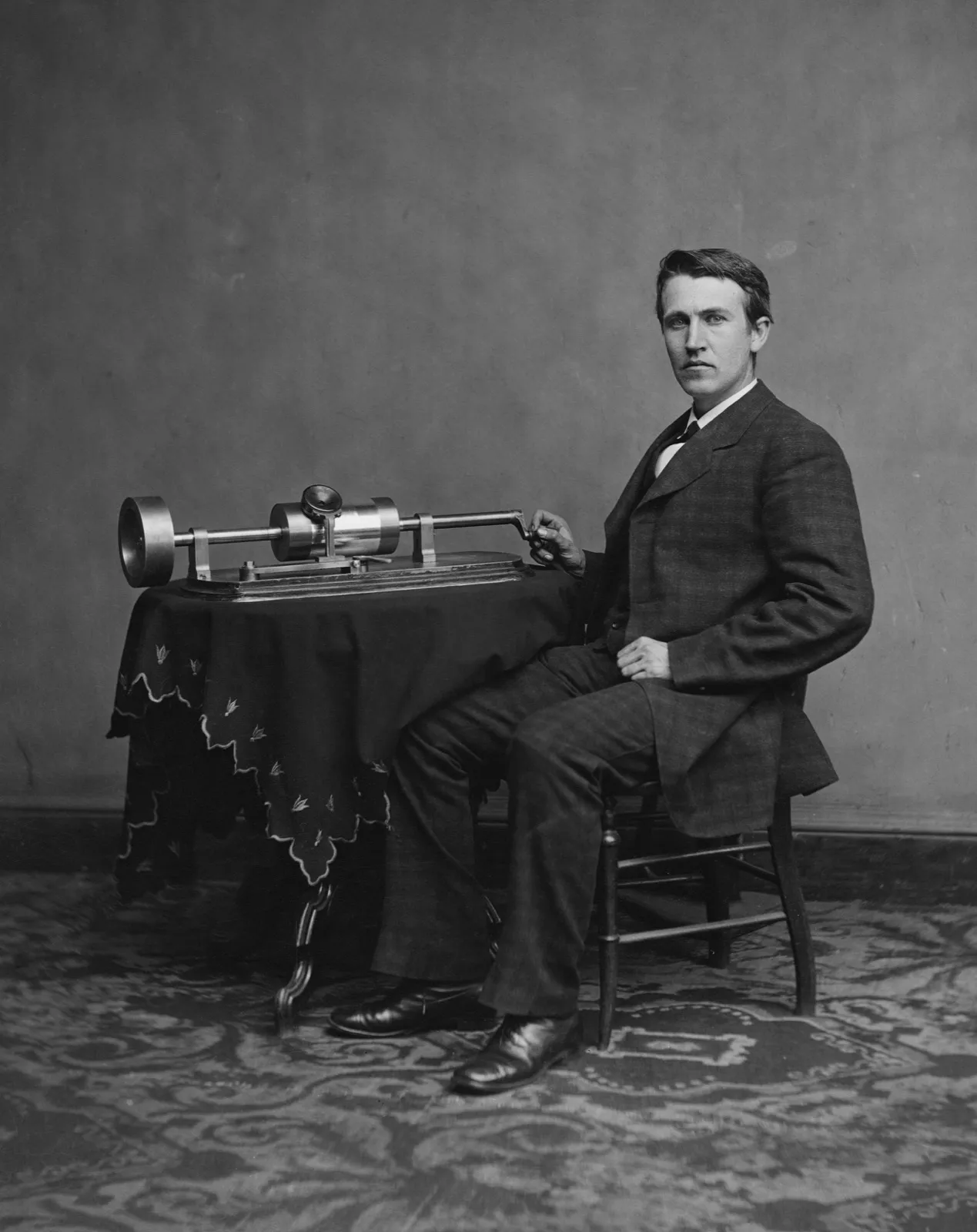 Thomas Edison with his phonograph, around 1878. Public domain.
For the first time, a person’s actual voice could outlast them. Within a few generations, families could hear relatives who had died. But the record was still incomplete: you could hear a person without seeing them. Recording was also rare and expensive, which is why the oral history interviews of formerly enslaved Americans in the 1930s were mostly written down rather than recorded.
How did video change things?
In 1895, the Lumière brothers screened short films to a paying audience in Paris. By the 1930s, home-movie cameras allowed wealthier families to film birthdays and holidays, usually without sound. By the 1950s, television had made the screen the centre of the household.
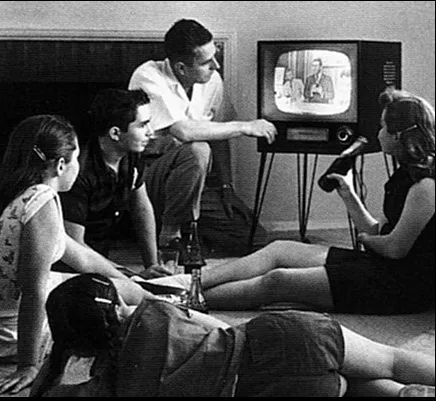 A family watching television, around 1958. U.S. National Archives. Public domain.
Camcorders arrived in the 1980s and smartphones in the 2000s. Today, most people carry a high-quality video camera at all times.
Video completes the sequence. It preserves the words, the voice, the face, the gestures and the hesitations, which is to say, most of what we mean when we talk about knowing a person.
What does the history of storytelling add up to?
Laid out in sequence, the pattern is hard to miss. Each technology preserved something the previous one could not:
- Oral tradition kept the story alive, but only as long as the chain of tellers held.
- Pictures kept an image, but lost the meaning.
- Writing kept the words, but lost the speaker.
- Sound recording kept the voice, but lost the face.
- Video keeps the words, the voice and the face together.
There is a second pattern underneath the first. Each step was initially expensive and available to very few. Scribes wrote for kings and temples. The first recordings were made by inventors and record companies. Early film was the preserve of studios, and home movies of the well-off. Over time, each technology became cheap enough for ordinary people, and the circle of those who could be remembered widened.
Video is the last step of that sequence so far, and the first in which the most complete form of preservation is also the cheapest and most widely available.
Why are stories still being lost?
Here is the paradox. The cost of preserving a person’s story has fallen from a fortune to effectively nothing. Yet most families today will still lose most of their stories within a few generations.
The reason is that technology was never the only bottleneck. Consider the videos on a typical phone: birthday candles, a pet, thirty seconds of a concert. We record moments constantly. We almost never record stories. Few people have a single video of a parent or grandparent simply describing their own life.
For fifty thousand years, stories were lost because there was no way to keep them. Now they are lost because no one sits down and asks. The constraint has moved from technology to attention.
I have seen this from both sides. Since 2020, I have filmed more than a hundred life stories through The Archive, including those of Holocaust survivors. I also recorded four hours of my grandmother telling the story of her life. She has since passed away. The recording took one afternoon to arrange and a few hours to film. The obstacle was never the equipment. It was deciding to do it before it was too late.
That is the problem Everyone was built to address: it provides the questions, one at a time, so that recording a life becomes a conversation rather than a project. The campfire has not disappeared. It has simply become portable, and it still depends on someone being willing to ask. If you are not sure what to ask, start with these questions to ask your parents about their life. And for why the stories of ordinary people matter to history as a whole, read the importance of oral history, and for whether remembering the past actually helps us avoid its mistakes, learning from the mistakes of history.


