How cultures remember the dead, and when they let them go.
From Mexico's ofrendas to Japan's 33rd-year rites, cultures remember their dead in very different ways. Almost all of them stop at the same point.
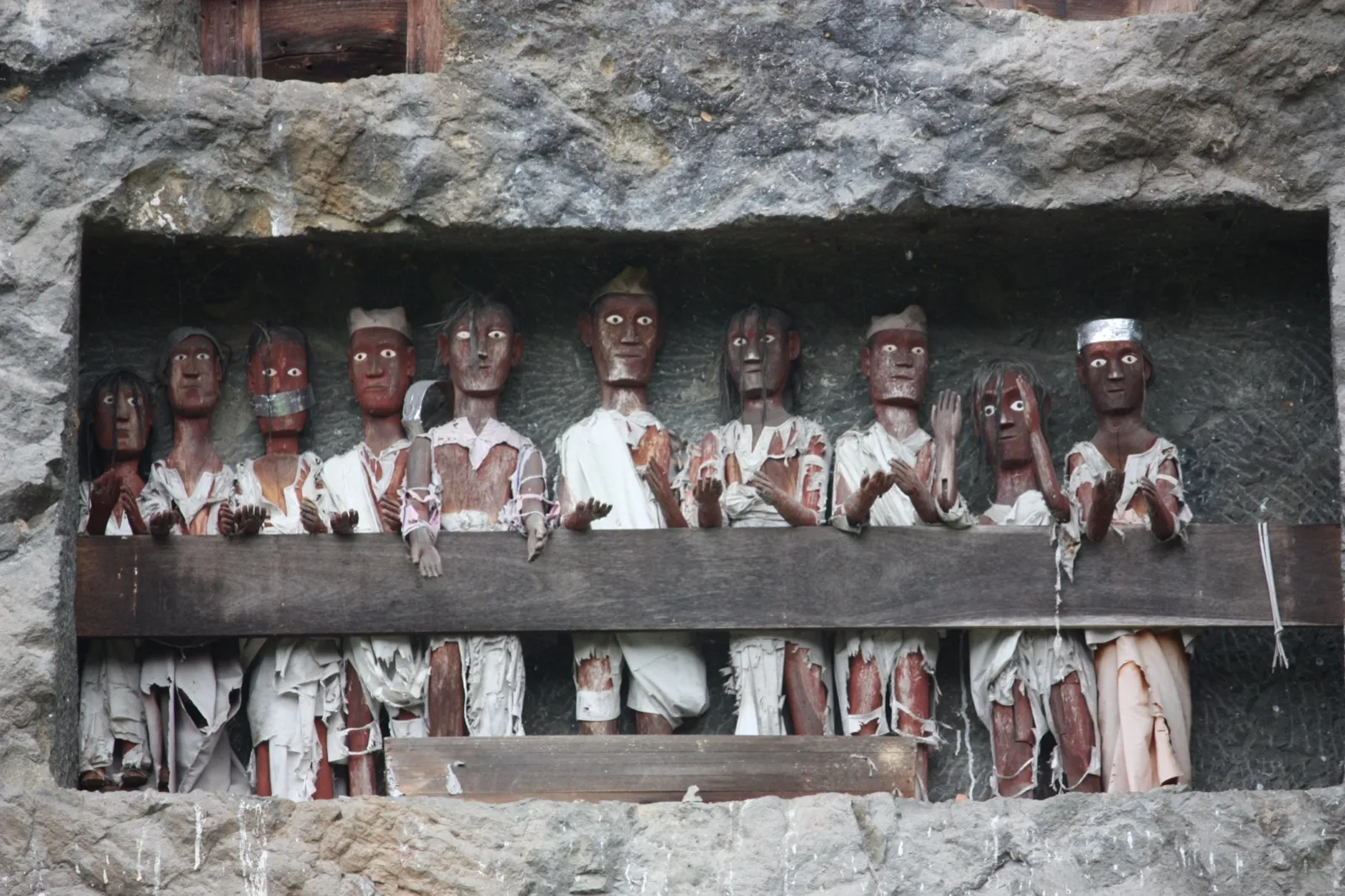
In the highlands of Sulawesi, in Indonesia, the Toraja people keep their dead in graves cut into limestone cliffs. In front of some of these graves, on balconies carved into the rock, stand rows of wooden figures called tau tau. Each is an effigy of a particular person who died, dressed in real clothes and staring out over the valley. At Lemo, the most photographed of these sites, the figures look like an audience waiting for something to begin.
Every few years, in many Toraja villages, families go further. In a ceremony called Ma’nene, they open the graves, lift out the bodies of their relatives, clean them, dress them in new clothes, and spend time with them before returning them to the tomb.
To an outsider this looks extreme. But if you set it beside how cultures remember the dead elsewhere, a pattern emerges that is more interesting than any single custom. Cultures disagree about almost everything to do with the dead: whether to keep the body or burn it, whether to say the name or avoid it, whether the dead visit once a year or never leave. Yet nearly all of them agree, in practice, about one thing. Personal remembrance has a time limit, and it is roughly the length of living memory.
How do different cultures remember the dead?
A short tour shows how wide the range is.
Mexico. On the Día de Muertos, at the start of November, families build ofrendas: altars covered in orange marigolds, candles, food, drink and, crucially, photographs of particular people who have died. The belief is that the dead return for a visit, and the altar is both a welcome and a way of telling them they have not been forgotten. UNESCO added the festival to its list of the world’s intangible cultural heritage in 2008.
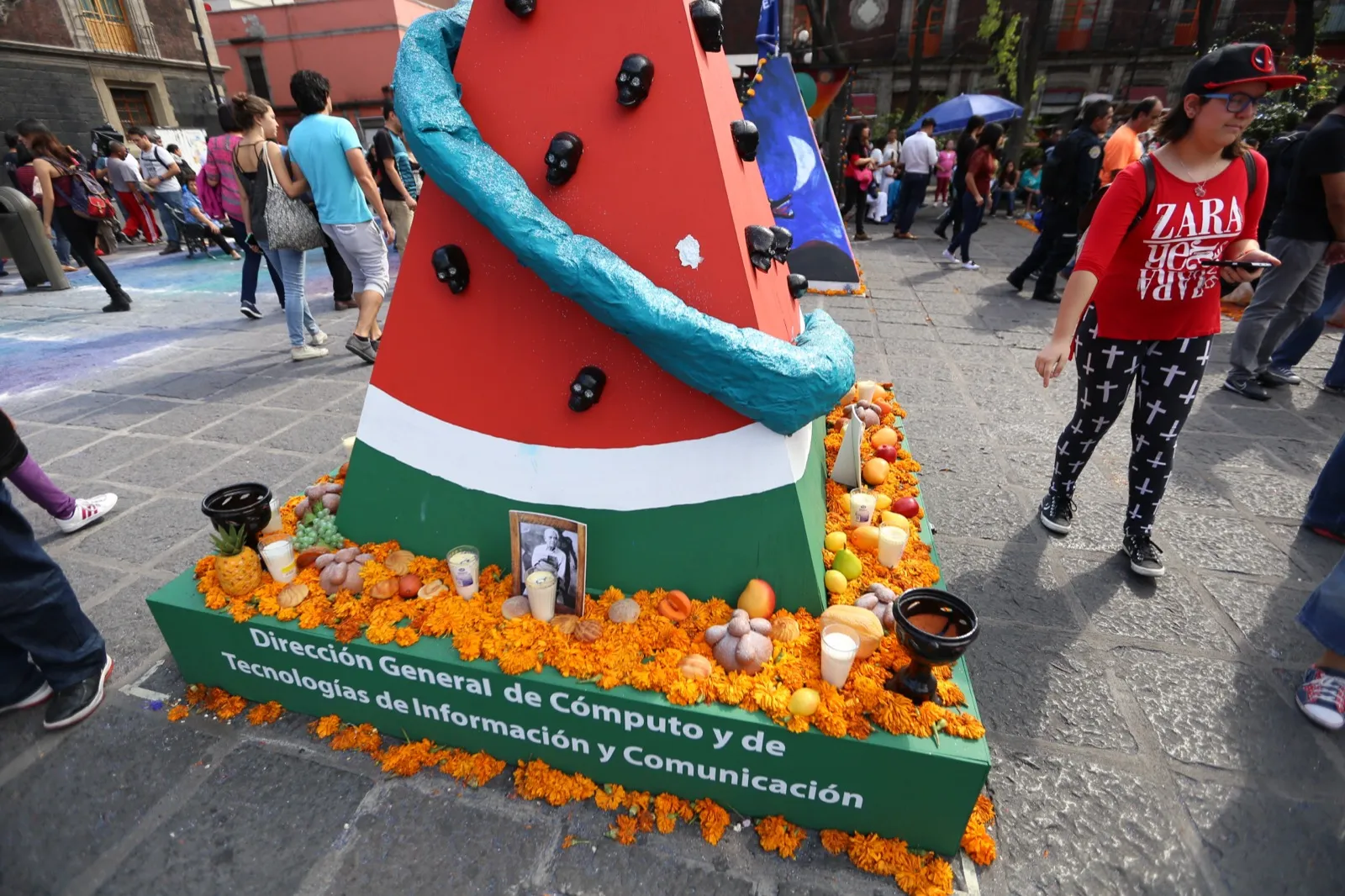 An ofrenda in Plaza Santo Domingo, Mexico City, on the Día de Muertos, 2 November 2016. Photo by Gobierno CDMX. CC0.
China. Each spring, at the Qingming festival, families sweep and tend their ancestors’ graves, make offerings and burn paper money and goods for use in the afterlife. At home, many families keep ancestral tablets bearing the names of the dead, before which offerings are made.
Japan. During Obon, usually in mid-August, the spirits of ancestors are believed to return home. Families clean graves and light lanterns to guide them, and at the end of the festival, in some places, floating lanterns are set on rivers to send the spirits back.
Madagascar. Among the Merina and Betsileo peoples, a ceremony called famadihana, the turning of the bones, involves taking the remains of relatives from the family tomb every several years, wrapping them in fresh silk shrouds, and dancing with them before returning them.
Jewish tradition. A child mourning a parent recites the Kaddish prayer for eleven months, and the anniversary of the death, the yahrzeit, is marked every year with a memorial candle. Visitors to a grave leave a small stone on it as evidence that someone came.
Aboriginal Australia. Many Aboriginal and Torres Strait Islander communities do the opposite of most of the cultures above. After a death, the person’s name is often not spoken for a period, sometimes for years. In parts of Central Australia, someone who shares a name with the dead person is called by a substitute, Kumanjayi, for a time. This is why Australian broadcasters warn viewers that a programme may contain the images or voices of people who have died.
Why do so many cultures bring the dead back once a year?
The differences are obvious. What is less obvious is how much of this machinery is designed around the same problem: memory fades unless someone actively maintains it.
Almost every practice on that list is a ritual that has to be repeated. The ofrenda is rebuilt every November. The graves are swept every spring. The lanterns are lit every August. The candle burns on the anniversary every year. None of these cultures trusted that the dead would simply stay remembered. They built a calendar to make remembering happen, because they understood something that modern societies have partly forgotten: memory of a person is not a possession, it is an activity.
The Egyptians had the starkest version of this idea. They believed a person could die twice, the second time when their name was no longer spoken, which is why their tombs addressed passers-by and asked them to say the name aloud. I have written about the Egyptian idea of the second death before. The neuroscientist David Eagleman put a modern version of it in his 2009 book Sum: the final death is the moment, somewhere in the future, when your name is spoken for the last time. The Pixar film Coco (2017), set during the Día de Muertos, turned the same idea into a plot.
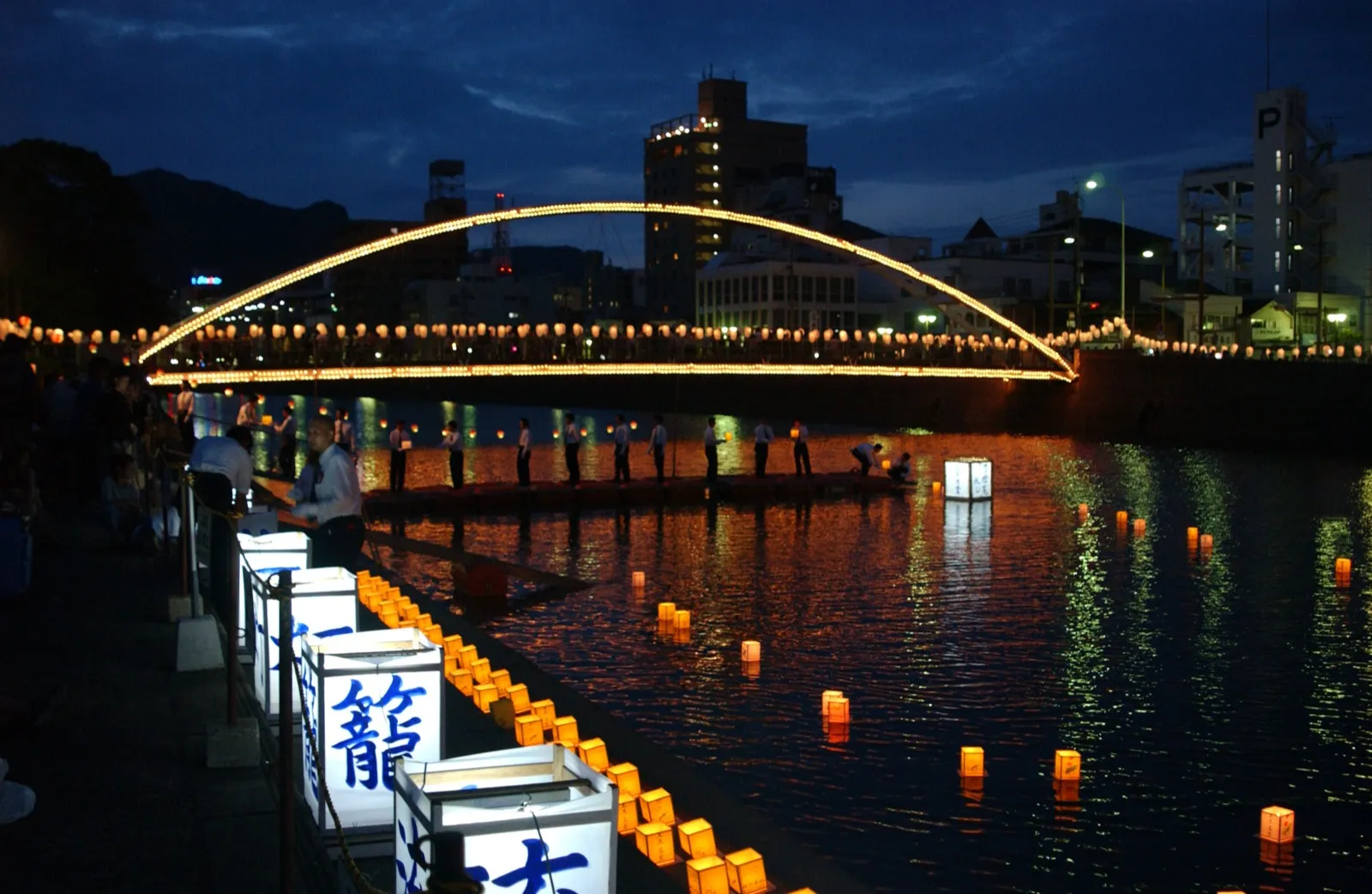 Lanterns floated on the Sasebo River during the Obon festival, Japan, 17 August 2003. U.S. Navy photo by Jonathan R. Kulp. Public domain.
When do the dead stop being individuals?
Most accounts of these customs leave out one detail. Many of the traditions that honour the dead most devotedly also have a point at which they stop honouring them as individuals.
In Japan, Buddhist memorial services for a particular person are held at set intervals after death, and in many families the 33rd anniversary is treated as the final one. After it, the dead person is understood to have joined the ancestors in general. Some regional traditions describe the series of rites as gradually wearing away the spirit’s individuality until it merges into the collective. In Shinto practice, the last rite often falls in the 50th year.
In China, the neo-Confucian scholar Zhu Xi, whose Family Rituals became the main guide to ancestral rites in late imperial China, accepted that ordinary families should make offerings to four generations: back to the great-great-grandfather and no further. Older ancestors were not erased, but they stopped being people you addressed by name and became part of the lineage.
Even the Toraja figures make the point in their own way. The tau tau were traditionally carved only for people of high status. Everyone else lay in the cliffs without a face.
Thirty-three years. Fifty years. Four generations. These numbers are remarkably close to one another, and close to something scholars of memory have measured independently. The Egyptologist Jan Assmann, with Aleida Assmann, distinguished between cultural memory, the long-lived memory carried by texts, monuments and institutions, and communicative memory, the memory a society carries through everyday conversation. Communicative memory, Assmann argued, typically reaches back only about 80 to 100 years: three or four generations, or roughly as far as the oldest living person can remember being told about.
Why does living memory run out after three or four generations?
The mechanism is simple once it is stated. Personal memory of a dead person is held by the people who knew them, and then, more faintly, by the people who were told about them by the people who knew them. Each step loses detail. A grandmother remembers her own mother as a whole person, with a voice, habits and opinions. Her grandchildren know a name, a photograph and two or three stories. Their children know the name, if they know anything.
The rituals I described above do not stop this process. They slow it. The ofrenda keeps a photograph and a favourite food in view; the yahrzeit keeps a date and a name in use. But the ritual can only preserve what the living still hold, and what the living hold thins with every generation. At some point the honest thing for a culture to do is to acknowledge that the individual is gone and to fold them into the ancestors. The 33rd-year rite and the four-generation rule are, in a sense, a formal recognition of what communicative memory was already doing.
This is also why most people cannot name their sixteen great-great-grandparents, and why the few who can usually know nothing else about them. That boundary is not a failure of particular families. It is the natural range of human memory without help.
Should everyone be remembered forever?
The Aboriginal practice of avoiding the names and images of the dead is a useful corrective here, because it shows that remembering is not always the only value at stake. In those communities, avoiding the name is itself a form of respect and of grief, and families decide when it is right to speak or show the person again. Some cultures want the dead close, some want them at a respectful distance, and some want them to rest. Any honest discussion of preserving people has to begin with the fact that the decision belongs to the family and, where possible, to the person themselves.
But for the many families who do want to remember, something has changed that none of these traditions could have anticipated. Every memorial practice in history ran into the same ceiling because the only thing that could carry a person forward in detail was another person’s memory. A photograph on an altar preserves a face. A tablet preserves a name. Neither preserves a voice, a way of laughing, an opinion, or the stories someone told about their own life.
What would the ancestors have kept, if they could?
Since 2020 I have filmed more than a hundred life stories through The Archive, several of them with Holocaust survivors. When my grandmother died, I had four hours of her on video, telling her story in her own words. Her great-grandchildren, and theirs, will be able to see and hear her long after the 33rd year, the fourth generation and the limit of anyone’s memory.
That is the real difference between our position and that of every culture on this list. The rituals were built to slow forgetting because forgetting could not be prevented. Now, for the first time, it can be, at least in part, and it costs almost nothing: a phone, a quiet room and someone willing to ask. If you want to try, start with how to capture someone’s life story. An app like Everyone can help by giving you the questions and keeping the videos in one place for the family.
The dead will still pass out of living memory. But they no longer have to pass out of sight.