Questions to ask a 100-year-old, and the century they carry.
The best questions to ask a 100-year-old: how to ask about a century of change, which years hold the sharpest memories, and how to film the answers well.
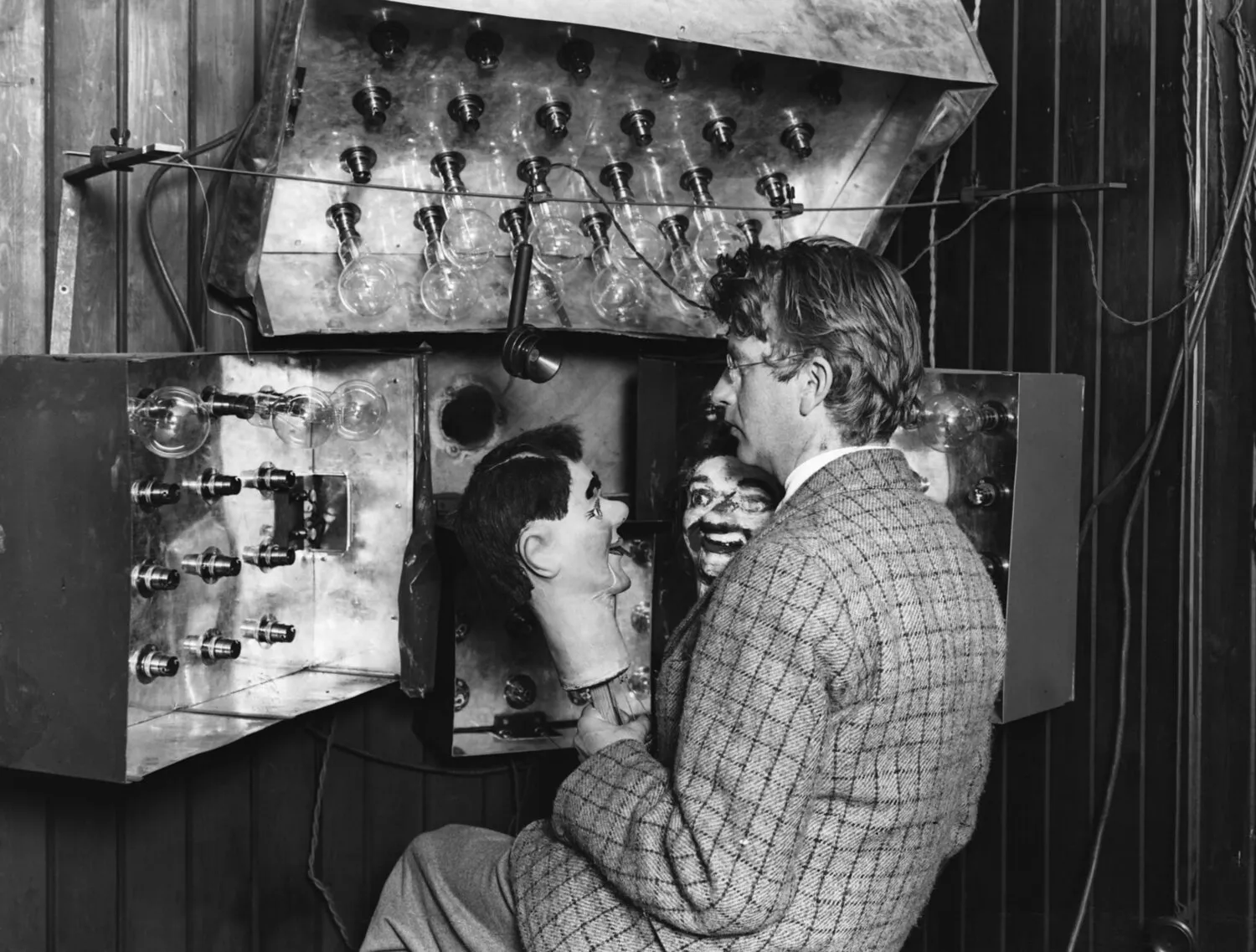
In January 1926, in an attic room in Soho, a Scottish inventor named John Logie Baird showed members of the Royal Institution the first working demonstration of television. The picture was a flickering smudge, and the face in it belonged to a ventriloquist’s dummy. Anyone born that year, and still alive today, is turning 100.
That person has watched television arrive, become the centre of the living room, and then shrink into a phone. If you are looking for questions to ask a 100-year-old, it helps to start with the scale of what they have seen, because it changes which questions are worth asking.
The United Nations estimated that there were about 722,000 centenarians in the world in 2024, according to an analysis by the Pew Research Center, and projections suggest the number could approach four million by 2054. A hundredth birthday used to be a rarity. It is becoming something many families will meet. Few of us have thought about what to ask when we do.
Why ask a 100-year-old different questions?
The standard advice for interviewing an older relative assumes a life of seventy or eighty years. A life of a hundred has some distinct features, and each one changes the interview.
The first is that almost everyone from their childhood is gone. Their parents, siblings and friends are dead, and often their spouse and some of their children. For a 100-year-old, you may be the only person left who can ask about those people, and they may be the only person left who can answer. A name that appears in no document anywhere survives in one memory.
The second is that they stand on a bridge into a much older world. A person born in 1926 probably knew grandparents born in the 1850s or 1860s, and heard their stories as a child. Through that chain, the memory in one living head can reach back well over a century and a half. It will be secondhand at its far end, but that is how most family history has always travelled: aloud, from one generation to the next.
The third is the sheer pace of change. When the Wright brothers flew in 1903, a person born in 1926 was still twenty-three years from existing. In July 1969, at the age of forty-three, they could watch two men walk on the Moon. Few lifetimes in history have spanned so much change.
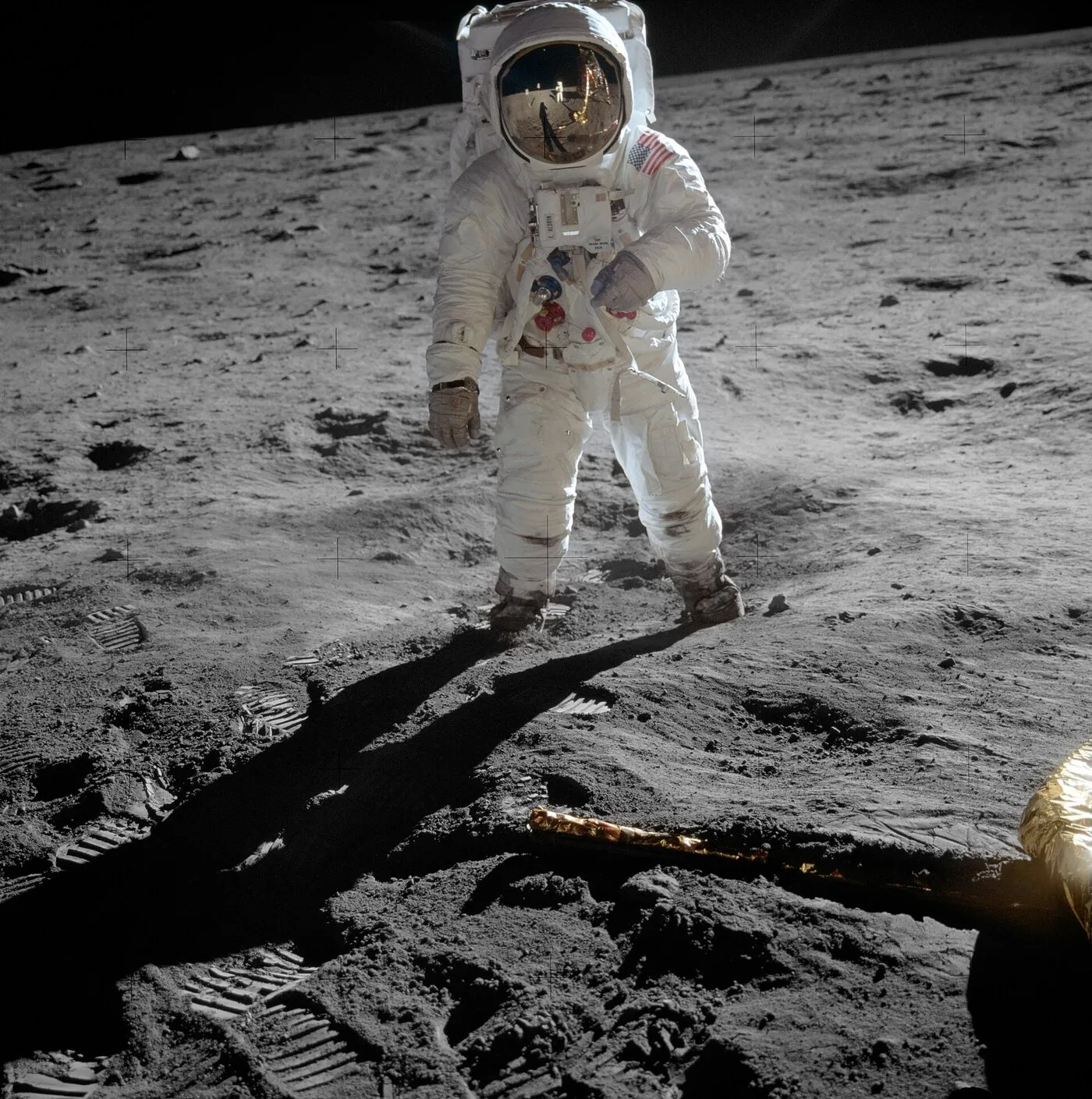 “Buzz Aldrin on the Moon”, photographed by Neil Armstrong, NASA, Apollo 11, July 1969. Public domain.
The fourth is practical, and it is the one that shapes everything else: energy. A 100-year-old may tire quickly, may hear less well than they once did, and may sometimes lose a word or a name. The interview has to be built around that.
Which years will they remember best?
Memory is not evenly spread across a life. Psychologists who ask older adults to recall events from any period consistently find a “reminiscence bump”: people remember a disproportionate share of their lives from roughly ages ten to thirty. The effect was described in a 1986 study by David Rubin, Scott Wetzler and Robert Nebes, and it has been found in many studies since. The usual explanation is that those years contain many first experiences, and first experiences are remembered better than repeated ones.
For someone born in 1926, the bump covers roughly 1936 to 1956: the end of the Depression, the Second World War and the years of rebuilding afterwards. A 100-year-old who cannot remember what they had for breakfast may be able to describe the kitchen of their childhood home, the name of their first employer and the song that was playing at their wedding.
That is a practical guide to where to spend your time. Most of the interview should live in those years. Questions about the last decade, which feel natural to ask a very old person, tend to be the hardest for them and the least interesting for the people who will watch the video later.
What should you ask a 100-year-old?
Ask about specific moments and places, not summaries. “What was your childhood like?” invites a sentence. “Describe the house you grew up in, room by room” invites ten minutes. Here are questions arranged by theme.
The first world they remember
- What is your earliest memory?
- Describe the home you grew up in. Who slept where? What did it smell like?
- How did your family get light, heat and water in those days?
- What did your mother cook, and who taught her?
- What did you do for fun when you were small, and with whom?
- Who were your grandparents, and what do you remember about them?
The years that shaped them
- What was school like, and when did it end for you?
- What was your first job, and what did it pay?
- What do you remember of the war years, at home or away from it?
- Where were you when you heard the war had ended?
- Who did you want to be at twenty, and who did you become?
Love, family and loss
- How did you meet your husband or wife? What did you notice first?
- What do you remember of the day your first child was born?
- Who is the person you have missed most, and what would you say to them now?
- What was the hardest year of your life, and what got you through it?
A century of change
- What is the first thing you remember being told was impossible that later happened?
- When did you first see a television? A telephone? A computer?
- Which change do you think was most for the better, and which was most for the worse?
- What has stayed the same from your childhood to now?
What they know
- What do you wish you had known at thirty?
- What do you think people today worry about too much?
- What would you like your great-grandchildren to understand about the world you grew up in?
- How would you like to be remembered?
More questions suited to a longer life are in our list of questions to ask an elderly person, and the questions to ask your grandparents will suit most families. If your relative is a great-grandparent, see also questions to ask your great-grandparents.
How do you make the conversation easy for them?
Technique matters more with a 100-year-old than with anyone else. These adjustments help.
Keep sessions short. Forty-five minutes is a sensible limit, and thirty is often better. Two or three short sessions on different days will produce more than one long one, because the first session makes the next one easier.
Choose the time of day carefully. Most people at that age have a best part of the day. Ask their family or carers, and film then.
Make hearing easy. Sit close, at the same level, with your face lit so they can see your lips. Speak clearly rather than loudly, and put the camera beside you so they can look at you rather than the lens.
Use objects. Photographs, a medal, a wedding ring or a favourite recipe card will draw out stories that no question can. Ask, “Tell me about this,” and wait.
Let them wander. A 100-year-old will follow their own route through a story. Resist correcting dates and names. A slightly wrong date in a vivid story is worth far more than a right date in a flat one, and family members can fix the facts afterwards.
Be ready for silence. There is often a long pause before a memory arrives from sixty or seventy years back. Do not fill it. I explain why in how to interview older family members.
If the person has dementia, the approach changes again, and the guidance in questions to ask grandparents with dementia applies.
Why film it, and not only write it down?
Of everyone you could interview, a 100-year-old is the person for whom the choice of medium matters most, for a reason that has nothing to do with technology. The most distinctive thing about a person of that age is not a fact but a manner: a way of telling, a turn of phrase, a gesture learnt in a village or a street that no longer exists. Written notes lose all of it. Video keeps the person.
It also keeps the room. The objects behind them, the light, the cup of tea, the hand reaching for a photograph. Years later, a great-grandchild will watch for those details as closely as for the words.
Since 2020 I have filmed more than a hundred life stories, and the lesson I return to most often is that people rarely tell it all at once. The first recording is a start. If you can, ask again in a few months.
Start with one question
In the photograph at the top of this page, Baird is holding up a dummy, a stand-in for a face that had to sit still under fierce lights. A century later, the equipment fits in a pocket, and the only scarce thing is the person.
If someone in your family is approaching or past their hundredth year, choose one question from the list above and ask it this week. A phone propped against a pile of books is enough; the Everyone app can offer one question at a time and keep each answer as a short video, but any camera will do. Then ask, “What happened next?”