Questions to ask your great-grandparents, while four generations overlap.
Questions to ask a great-grandmother or great-grandfather, why more families now have four generations alive at once, and how to film the conversation.
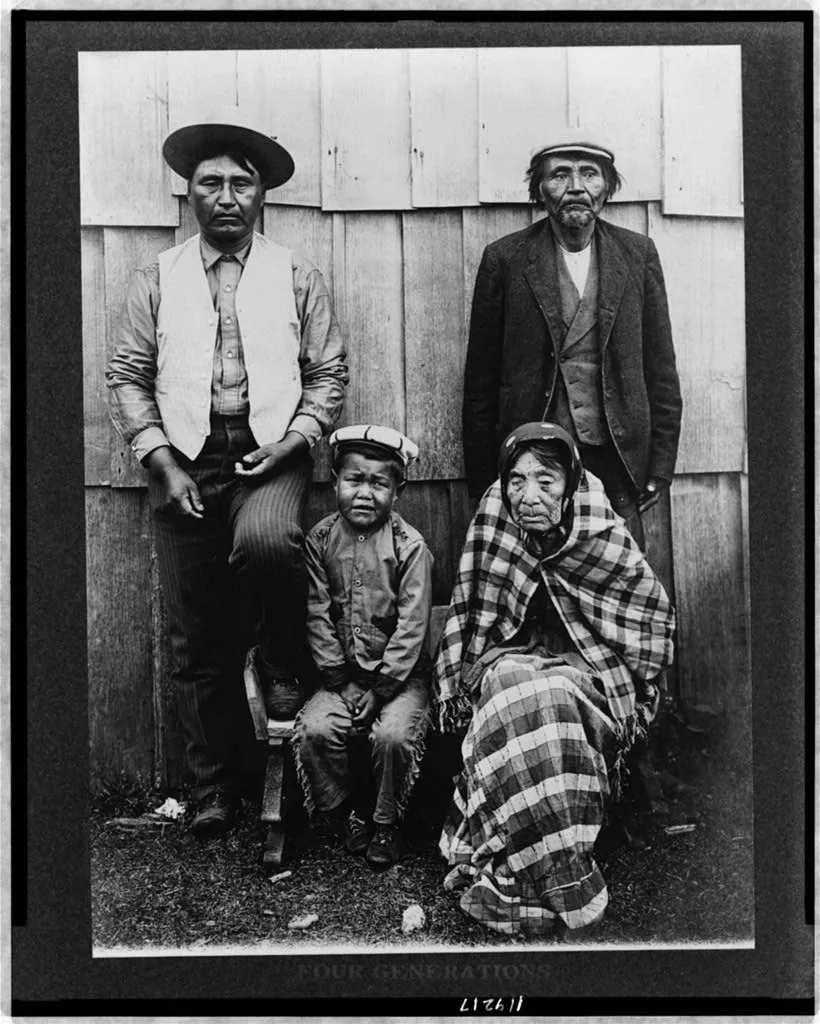
In 1906 someone took a photograph and gave it the plain title “Four generations”. A small boy sits on a stool. Around him are three older generations, ending with a very old woman in a plaid shawl. The Library of Congress holds the print today.
The title says something about the time. Four living generations in one frame was worth recording because it was unusual. Estimates cited by YaleGlobal suggest that in 1900 only about 20 per cent of thirty-year-olds in the United States had any living grandparent, compared with about 80 per cent by the end of the twentieth century. A great-grandparent was rarer still.
That has changed more than most families have noticed. If you are searching for questions to ask your great-grandparents, you are probably one of a growing number of people who can still ask them. This post explains why that opportunity is new, why it is so often wasted, and what to ask.
Why do more people now have a great-grandparent alive?
Two things moved in opposite directions. People live longer, and they have children later.
Longer lives are the obvious part. The less obvious part is that later parenthood stretches each generation, which should work against four generations overlapping. In Australia, the median age of mothers was 31.9 in 2023, according to the Australian Bureau of Statistics. Even so, the gain in years at the far end has been larger than the delay at the near end. One study, cited by YaleGlobal, projected that by 2030 more than 70 per cent of eight-year-olds in the United States would have a living great-grandparent. It is a projection, not a count, and I have not been able to trace the original, so treat the figure as indicative.
The older end of the picture is measured. An analysis of data from the US Health and Retirement Study found that about 11 per cent of people aged 60 to 64 were great-grandparents, rising to just over half of those aged 80 to 84 and about two-thirds of those aged 90 or older. A great-grandparent is no longer an exotic figure. For a large share of people in their eighties and nineties, it is simply who they are.
Why is this the conversation that never happens?
Most families treat a great-grandparent as someone to visit, not someone to interview. Three habits explain it.
The first is distance of age. A child of eight finds it hard to ask a 94-year-old anything, because the gap is too wide for the usual openings. The middle generations, who could bridge it, are busy.
The second is the assumption that someone else has already asked. Everyone in the family knows she was born on a farm, or that he came on a ship, and assumes that the details are written down somewhere. They almost never are. This is the same pattern I described in why we wait to ask.
The third is fragility. A very old person tires quickly, and relatives are reluctant to ask them to revisit the past. In my experience, and in the research on what psychologists call the life review, the reverse is often true: many older people want to be asked, and are waiting for someone to show interest.
The cost of delay is also higher with this relationship than with any other. A great-grandparent is usually the last living person who remembers the generation before theirs. When they go, that generation goes with them. I wrote about the arithmetic of this in you have 16 great-great-grandparents, can you name them: by the fourth generation back, the knowledge is gone for most families.
What should you ask a great-grandmother or great-grandfather?
Ask about their world before the family you know existed. The best questions are specific, sensory and about a time and place. Group them by the person you are really asking about.
Their own earliest years
- What is your earliest memory, and where were you?
- Describe the house you grew up in. Who lived there, and who slept where?
- What did a normal day look like when you were ten?
- What did you eat, and who cooked it?
- What jobs did you have to do as a child?
Their parents and grandparents
- What were your parents like? What would they say if I could ask them about you?
- What do you remember about your grandparents, and what did they do for a living?
- Which family stories were told again and again when you were young?
- Who in the family was known for being funny, strict or brave?
- Did anyone in the family come from somewhere else? Do you know how they got here?
The years that shaped them
- Where did you go to school, and what did you leave school to do?
- What was your first paid job, and what was your pay?
- Where were you during the major events of your lifetime, and who were you with?
- What did you want to be when you were twenty?
Love, family and loss
- How did you meet your husband or wife? What did you notice first?
- What was it like to become a parent?
- Who have you missed most, and what would you tell them now?
- What was the hardest period of your life, and what helped?
What they have seen
- What was the first piece of technology you remember seeing, and what did people say about it?
- What do you think people today worry about too much, and what too little?
- What would you like your great-grandchildren to know about you?
If someone in your family has reached a hundred, the extra points in questions to ask a 100-year-old apply. For general lists to pull from, see the questions to ask your grandparents.
How do you film it well?
Technique matters more with a very old person than with anyone else, because you may have few chances.
Keep it short. Thirty to forty-five minutes is enough. Two short sessions on different days beat one long one.
Pick their best time of day. Ask a carer or a relative when they are sharpest, and film then.
Sit close and face the light. Hearing is often reduced, and lip-reading helps. Put the camera beside you so that they look at you, not the lens.
Use photographs and objects. An old photograph is the best question there is. Ask, “Who is this?” and “What was happening that day?” and then stay quiet. Older relatives often name people nobody else in the family can identify.
Do not correct them. Dates and names can be checked with other relatives afterwards. A slightly wrong year in a vivid memory is worth more than a right year in a flat one.
Allow silence. There is often a long pause before something returns from eighty years ago. I describe why in how to interview older family members.
If memory is failing, the guidance changes, and questions to ask grandparents with dementia is the better starting point.
Why bring the grandparent into the room?
The most useful trick I know for this interview is to make it a three-generation conversation. Sit the great-grandparent beside their own child, your grandparent, and ask the grandparent to help.
There are three reasons it works. The grandparent often has the relationship and the trust that you lack. The great-grandparent will tell the story differently to a child than to a stranger or a distant descendant, with the sense of passing it on. And the grandparent will frequently hear things for the first time. It is common to discover, at seventy, that you did not know what your own mother did before she married.
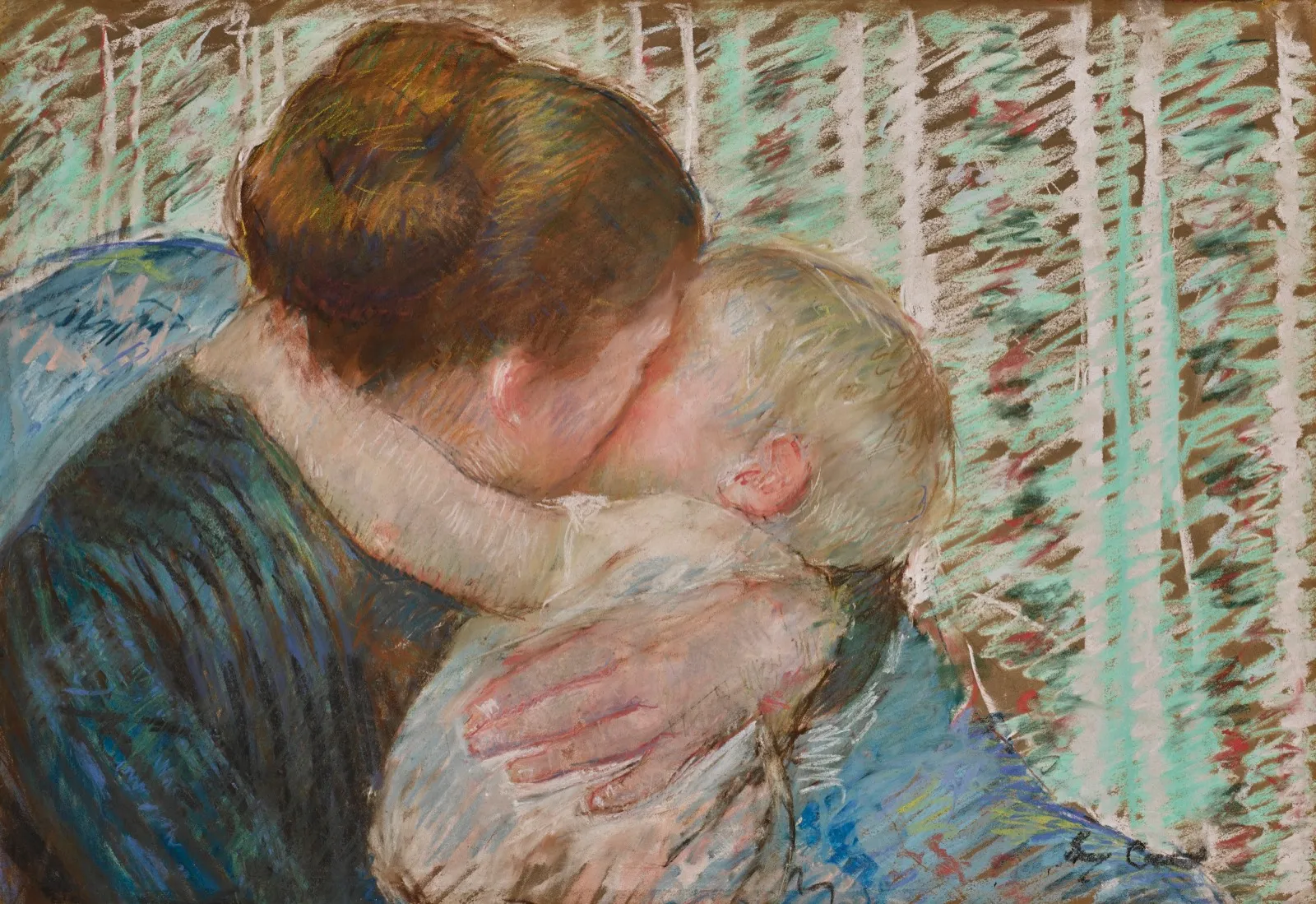
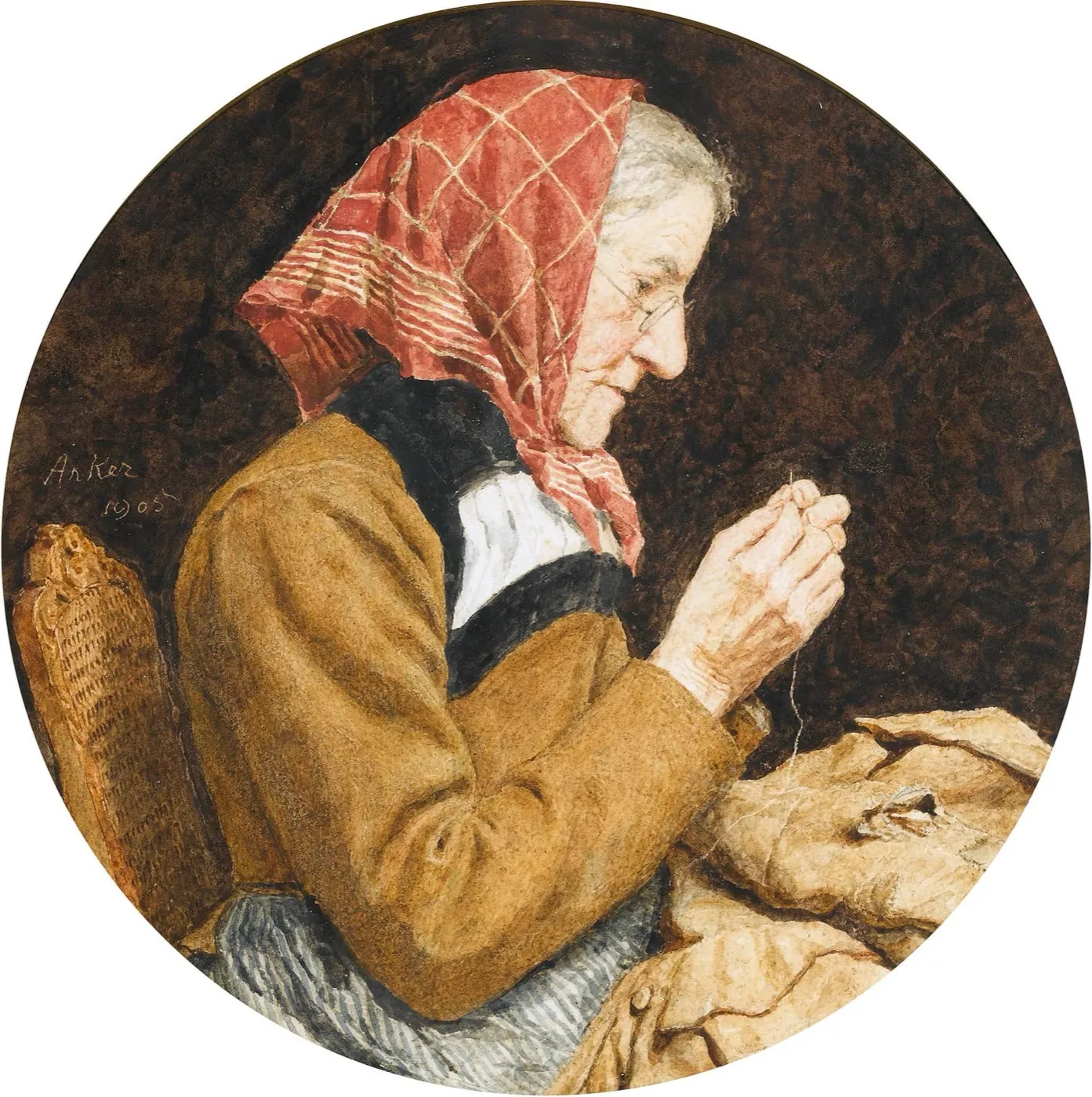 “Seated Grandmother Mending” by Albert Anker, 1905. Watercolour. Public domain.
It also gives you a second recording for free. Two people disagreeing about what happened is not a problem; it is the material. Ask “Is that how you remember it?” and the video becomes a conversation that no one could script.
Why film it, and not only write it down?
A written note records what a great-grandparent said. A video records how they said it: the accent from a village that no longer exists, the pause before a name, the hand that reaches for a photograph. Those are the details that make a person recognisable to someone who never met them.
There is a longer argument in record a life story on video, but the short version is that a person is more than their sentences. And the audience for the video is not only you. A great-grandchild born in thirty years may watch it to learn what their own family looked and sounded like, as I explain in your great-great-great-grandchildren could know you.
Since 2020 I have filmed more than a hundred life stories, and the thing I notice most is how much the oldest person in a family has been waiting to be asked.
Start with one question
The photograph at the top of this page survives because a family or a photographer decided that four generations in one place deserved a record. You may be in the same position now, with less effort. A phone propped against a pile of books is enough; the Everyone app can offer one question at a time and save each answer as a short video, but any camera will do.
Choose one question from the lists above, visit, and ask it. Then ask, “And what happened next?”