Questions to ask an elderly person, as a neighbour, not a nurse.
The best questions to ask an elderly person about their life, for carers, volunteers, students and family, and why being asked is genuinely good for them.
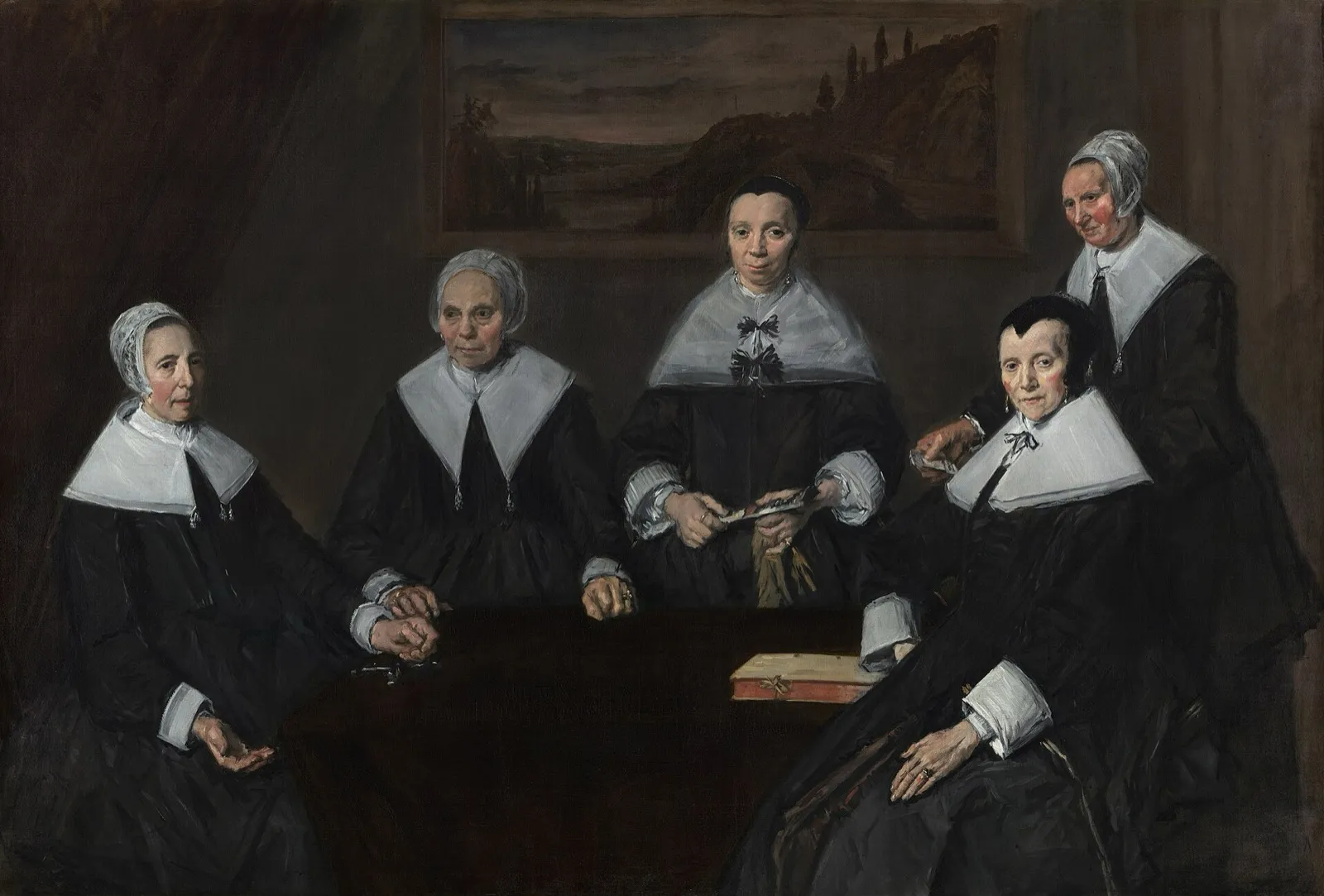
In about 1664, when he was roughly eighty years old, Frans Hals painted two group portraits for the old men’s almshouse in Haarlem. One shows the regents who governed it, the other the regentesses, four women in black with a servant behind them. They are among the finest portraits of old age ever made, and they still hang in the same building, which has been the Frans Hals Museum since 1913.
Look at what is missing. The paintings record the people who ran the home. Not one of the old men who lived there was painted, and we know nothing of what any of them would have said about his life. The people who cared for the elderly were remembered. The elderly were not.
That pattern is older than Hals and still common. Old people are talked about, assessed, helped and managed, and rarely asked about themselves. This post gives you the best questions to ask an elderly person about their life, whether you are a carer, a volunteer, a student with an assignment, a neighbour or a grandchild, and explains why asking matters more than it seems.
Why ask an elderly person about their life at all?
For a long time, an older person who talked about the past was often treated as drifting, or stuck in it. In 1963 the American psychiatrist Robert Butler, who later became the first director of the US National Institute on Aging, published a paper called “The Life Review” that argued the opposite. Reminiscence in old age, he wrote, is a normal and purposeful process: as people sense the end of life approaching, they return to their memories to make sense of them, settle old conflicts and see their life as a whole.
The research that followed has broadly supported him. A 2012 meta-analysis by Martin Pinquart and Simon Forstmeier pooled 128 studies of reminiscence and life-review programmes and found moderate improvements in what psychologists call ego-integrity (a sense that one’s life has been meaningful) and in symptoms of depression, most of which lasted beyond the end of the programme.
The implication is easy to miss. A good question about someone’s past is not small talk, and it is not only a favour to the person asking. It gives the person answering something that a meal, a medication round or a weather report cannot: the chance to tell their life to someone who wants to hear it.
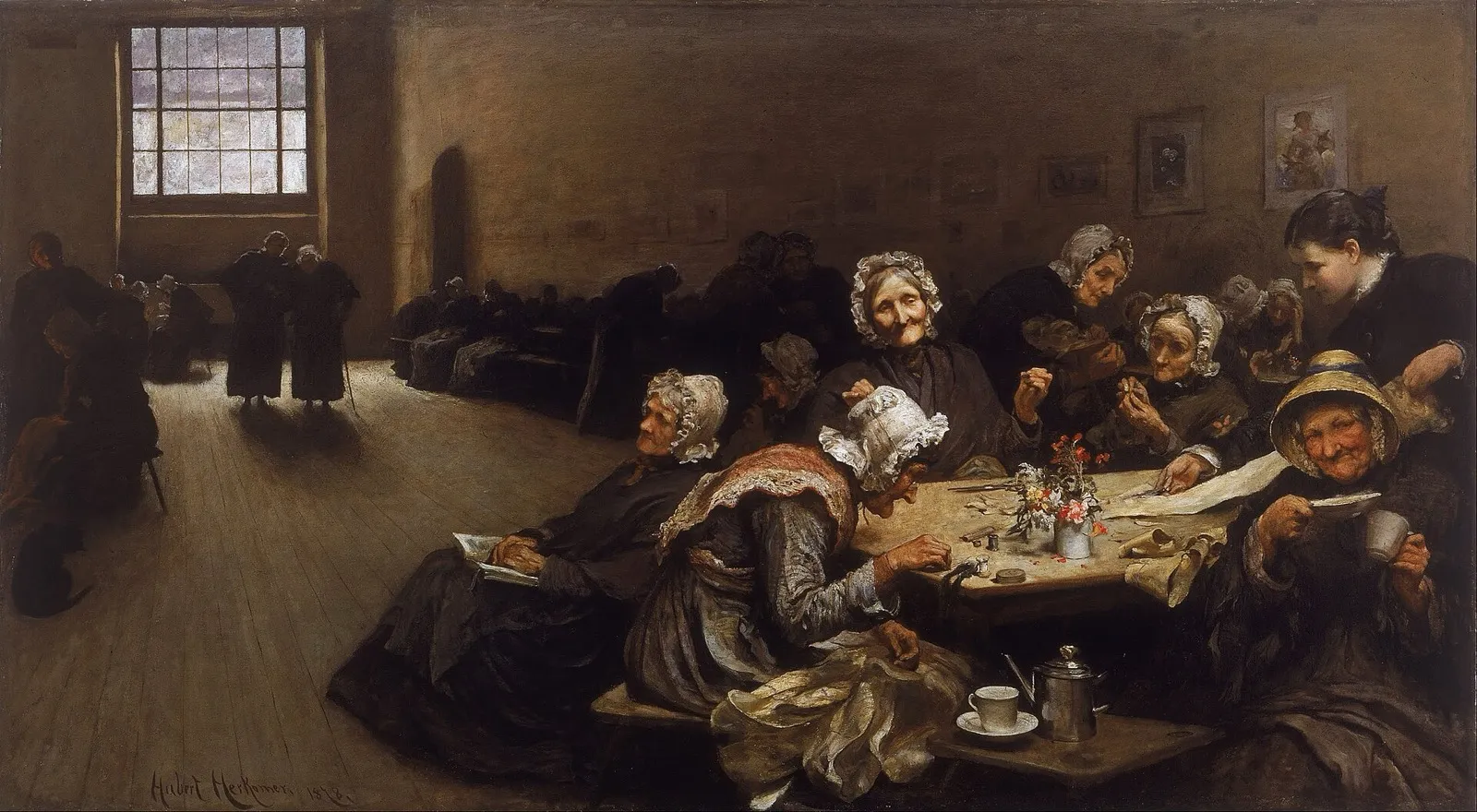 “Eventide: A Scene in the Westminster Union” by Hubert von Herkomer, 1878. Walker Art Gallery, Liverpool. Public domain.
Be a neighbour, not a nurse
Since 2012, the Humanitas care home in Deventer, in the Netherlands, has let a handful of university students live there without paying rent. The arrangement, widely reported from about 2015, asks them to spend 30 hours a month with the residents. The home’s director described the students’ role as “good neighbours”, not carers: they shared meals, taught people to use email and simply talked.
That distinction is the key to asking an older person about their life. A carer’s questions are about today: Did you sleep? Have you eaten? Are you in pain? They are necessary, and they turn the person into a patient. A neighbour’s questions are about the person: Where did you grow up? What was your first job? Who taught you to cook that? The best questions below are all neighbour’s questions.
What questions should you ask an elderly person about their life?
The rule behind every good interview applies: ask for scenes, not summaries. “Describe the kitchen in the house you grew up in” will always produce more than “What was your childhood like?” (The reason is explained in open vs closed questions.) The groups below run roughly in the order a life was lived, because remembering one period brings the next within reach.
Easy questions to start with
These work on a first meeting, with someone you do not know well.
- What is the story behind your name?
- Where were you born, and what was it like there?
- What was the first thing you remember buying with your own money?
- What is something you can do that most people today cannot?
- What did you do on a Saturday when you were young?
Childhood and home
- Describe the house you grew up in. Which room do you remember best?
- What did your parents do for work?
- What were you allowed to do as a child that children are not allowed to do now?
- Who was the adult you liked most when you were small, and why?
- What did your family eat on a special occasion?
Work and the world
- What was your first job, and how did you get it?
- What was the hardest work you ever did?
- What did you know how to do that nobody asks about any more?
- What changed most in your line of work over your lifetime?
A life across decades
An elderly person has lived through changes the rest of us read about. These questions turn that into stories rather than facts.
- What do you remember about the first time you saw a television, or used a telephone?
- What news event do you remember exactly where you were for?
- What did you think the future would look like when you were twenty?
- What is better now than when you were young, and what is worse?
People
Do not assume a marriage, children or a happy family. Let them tell you who mattered.
- Who were the most important people in your life?
- Who was your best friend when you were young, and what happened to them?
- Is there someone you have not spoken about in years who you think about often?
Looking back
Save these for later in a conversation, or a later visit. Butler’s point was that they matter most, and they need trust.
- What are you proudest of?
- What was the hardest time of your life, and what got you through it?
- What would you tell yourself at twenty?
- What do you want people to remember about you?
- Is there something nobody has ever asked you about?
If the person is your own grandparent, the questions to ask your grandparents post goes further into family. If they live with memory loss, questions to ask someone with dementia explains what changes.
What should you avoid asking?
Do not quiz. “Do you remember what year that was?” turns a conversation into a memory test, and a person who fails it will stop talking. Let a date be wrong. You are listening to a life, not checking it.
Do not lead with the hardest chapter. War, migration, the death of a child and illness are often the stories people most need to tell, but they decide when. Ask once, gently, and accept a no.
Do not only ask about health. For many people in care, almost every question they hear is about their body. A single question about their past may be the first in weeks that is about them.
Do not talk over them to whoever is with them. If a relative or carer is present, keep your questions and your eye contact with the person whose life it is.
How do you ask a stranger about their life?
If you are a volunteer, a carer or a student rather than family, the approach matters as much as the questions.
Say why you are asking. “I would love to hear about your life” is usually received as a compliment. Most people are rarely asked.
Ask permission, especially before recording. In a care home, check the home’s policy too. Offer the family a copy of anything you film.
Sit at their level and close. Many older people have some hearing loss. Face them in good light so they can see your lips, speak clearly rather than loudly, and turn off the television.
Keep it short and come back. Thirty to forty-five minutes is plenty. A second visit tells someone the first one mattered, and they will often have remembered something new in between. There is more on hearing, pace and tiredness in how to interview older family members.
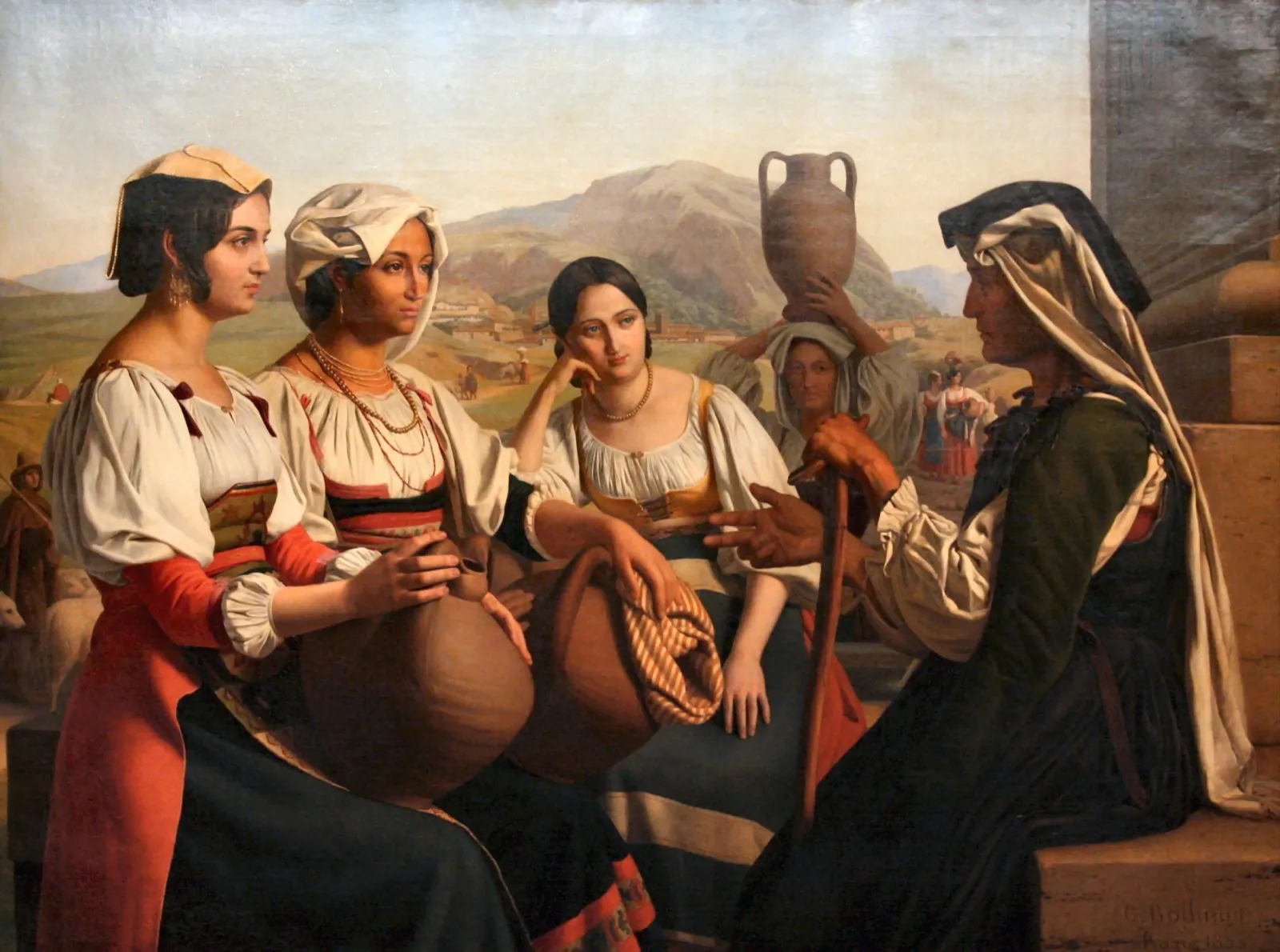 “Three Women at the Fountain Listening to an Old Woman” by Guillaume Bodinier, 1832. Public domain.
Why record the answers?
Since 2020 I have filmed more than a hundred life stories, including those of Holocaust survivors. Many of them began by saying they had nothing interesting to tell. Very few were right. The right person to ask is not always a relative, either: some things are easier to tell someone who is not part of the family.
That is the second reason to record. What an elderly person tells a visitor usually goes no further than the room. Recorded on video, with their permission, the same conversation becomes something their children and grandchildren can keep: their face, their voice, the pause before a name. A phone propped at eye level is enough. The Everyone app can help by offering one question at a time and keeping each answer as a short video, but any camera will do.
Start with one question
The old men of the Haarlem almshouse were probably asked many things: whether they were warm enough, whether they had eaten, whether they had behaved. If any of them was ever asked about his life, nobody wrote the answer down. Their governors are in the museum. They are not.
Next time you sit with an elderly person, whether a resident, a neighbour or your own grandmother, pick one question from this list and ask it. Then ask, “What happened next?”