Questions to ask your grandparents at Christmas, before the years blur.
Christmases blur together in memory, so asking what Christmas used to be like gets a vague answer. Better questions to ask your grandparents this Christmas.
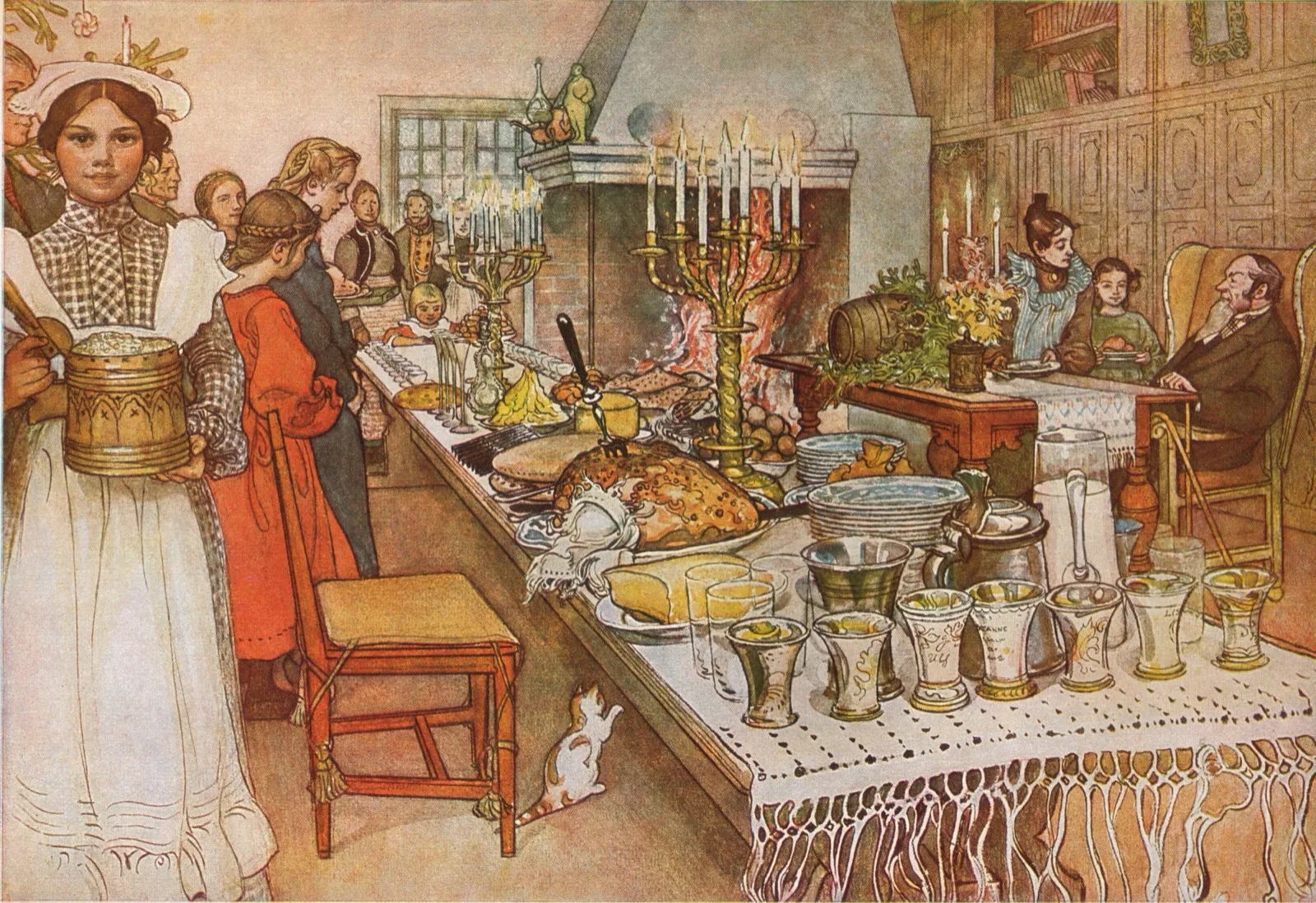
The most famous memoir of a childhood Christmas begins by admitting that its author cannot remember any particular Christmas at all. “One Christmas was so much like another,” Dylan Thomas wrote at the start of A Child’s Christmas in Wales, and he goes on to confess that he can never recall whether it snowed for six days and six nights when he was twelve, or for twelve days and twelve nights when he was six.
The piece grew out of earlier radio and magazine writing and was published in its familiar form in Harper’s Bazaar in December 1950. On 22 February 1952, in New York, Thomas read it aloud for a small new record label called Caedmon, reportedly suggesting the piece almost as an afterthought. That record is now in the Library of Congress’s National Recording Registry, which credits it with helping to launch the audiobook industry in the United States. What it preserves is not one Christmas but all of them, folded into a single dreamlike day.
Thomas was a poet, and the blur was his subject. For everyone else it is a problem. Ask a grandparent “What was Christmas like when you were young?” and you will usually get Thomas’s answer without his prose: a pleasant composite, a list of foods, a vague warmth. This piece is about why that happens, and which questions to ask your grandparents at Christmas to get past it.
Why do Christmases blur together in memory?
Because memory is built to compress repetition.
In 1981 the psychologist Ulric Neisser published a study of John Dean, the White House counsel whose Watergate testimony had been praised for its apparently remarkable recall. When the secret Oval Office tapes were released, Neisser could compare Dean’s memory with what had actually been said. Dean was frequently wrong about what had been said in individual conversations, yet broadly right about what had been going on. Neisser coined a word for this kind of memory: repisodic. A memory that feels like a single episode is often a blend of many similar ones.
Around the same time, the cognitive scientists Roger Schank and Robert Abelson argued, in Scripts, Plans, Goals and Understanding (1977), that people store routine events as scripts: generic sequences such as “going to a restaurant” in which the individual visits are no longer separately filed. Their work was about understanding, not autobiography, but the idea transfers neatly. Few events in a life are as scripted as Christmas. The same people, the same food, the same order of service, the same arguments, repeated every year for decades. It is close to an ideal recipe for a repisodic memory.
So the blur is not a sign that your grandmother has forgotten. It is a sign that she remembers Christmas the way the mind remembers anything that happened eighty times.
Which Christmases do people actually remember?
The ones that broke the script.
In 1933 the German psychologist Hedwig von Restorff showed that an item which differs from those around it, one number in a list of syllables, say, is remembered better than the rest. The isolation effect, as it came to be called, is one of the most reliable findings in memory research, and it has a direct application at the Christmas table. The memorable Christmases are the exceptions: the first one after a war, the first one in a new country, the year someone was missing, the year the oven failed, the Christmas spent in hospital, the first Christmas as a parent.
Those are the stories worth asking for, and they are also the ones a general question will never reach. “What was Christmas like?” retrieves the script. “Was there ever a Christmas that went completely wrong?” retrieves the exception.
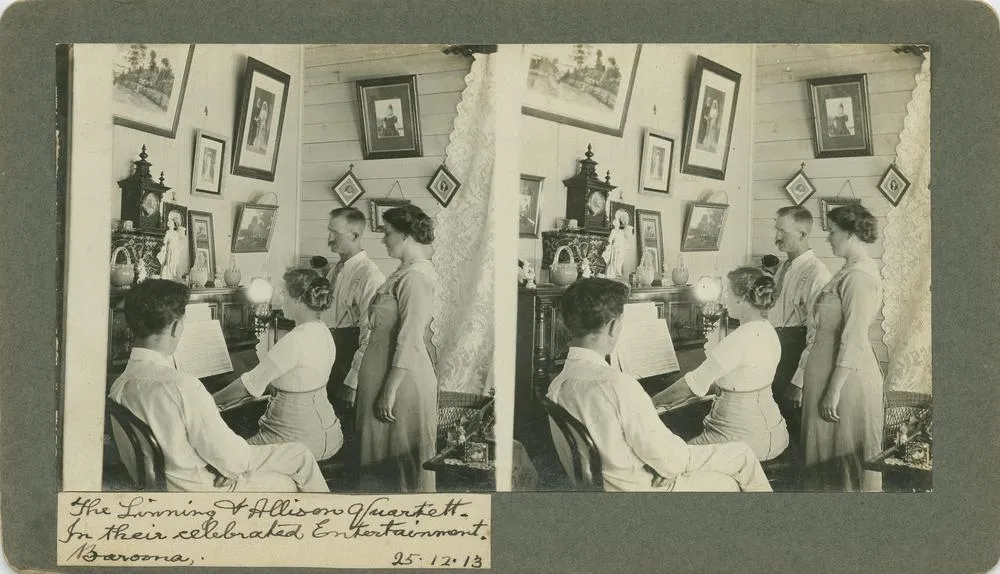 Singing around the piano at Christmas in a home in Baroona, Queensland, 25 December 1913. State Library of Queensland. Public domain.
Questions to ask your grandparents at Christmas
The list below is built on that principle. A few questions record the ordinary day, because the script itself is history too. Most aim at the exceptions, the people and the origins of traditions. Choose three or four, not twenty. (For a full life story list, see these questions to ask your grandparents.)
The ordinary day, as it used to be
- Walk me through Christmas Day when you were about ten, from when you woke up to when you went to bed.
- Where did everyone sit? Who sat at the head of the table?
- What did the house smell like on Christmas morning?
- What present did you most want as a child, and did you ever get it?
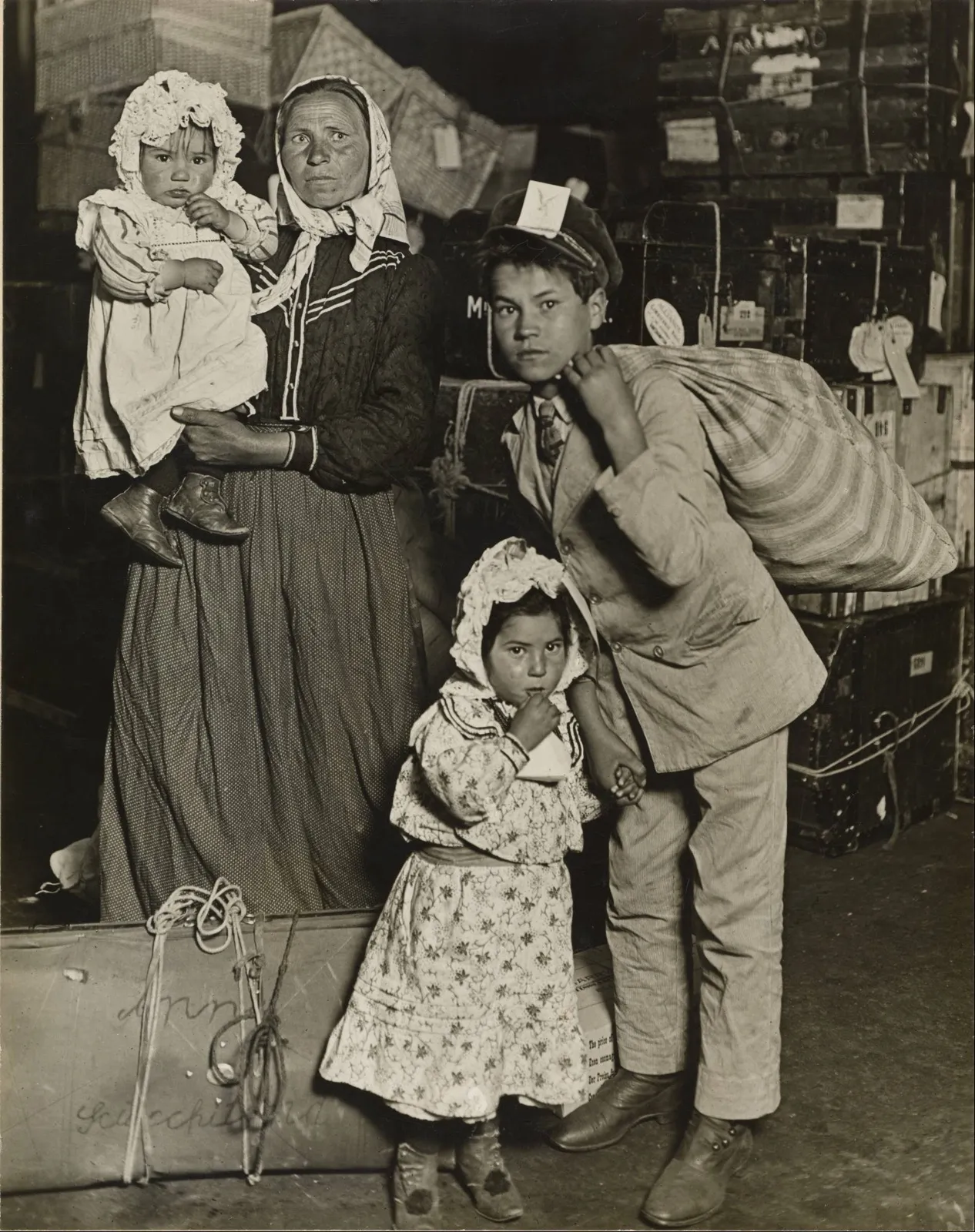
The Christmases that broke the pattern 5. Was there a Christmas that went completely wrong? What happened? 6. Tell me about the first Christmas after you left home. 7. Was there a Christmas when someone was missing, because of war, work, illness or a falling-out? 8. What was your first Christmas as a parent like? 9. If you came here from somewhere else, what was your first Christmas in this country like?
The people around the table 10. Who was the person who made Christmas happen in your family when you were young? What were they like in the kitchen? 11. Which relative were you most excited to see, and which one did everyone dread? 12. Who would you most like to have at the table this year who is no longer here?
Where our traditions came from 13. Which of the things we do every Christmas did you start, and which did you inherit? 14. Who first made this dish? Has the recipe changed? 15. Is there a tradition from your childhood that our family has lost?
Why ask where the traditions came from?
Because traditions survive far longer than the reasons for them.
Australia offers a clear example. For most of the nineteenth and twentieth centuries, families who had arrived from Britain and Ireland went on eating roast meat and boiled plum pudding in thirty-degree heat, because that was what Christmas was. The American-born cartoonist Livingston Hopkins, who drew for The Bulletin, mocked this around 1900 in a sequence called “The average Australian Christmas”: men in frock coats and top hats sweating through church and a hot dinner, all, as one caption puts it, because that is how it is done at home.
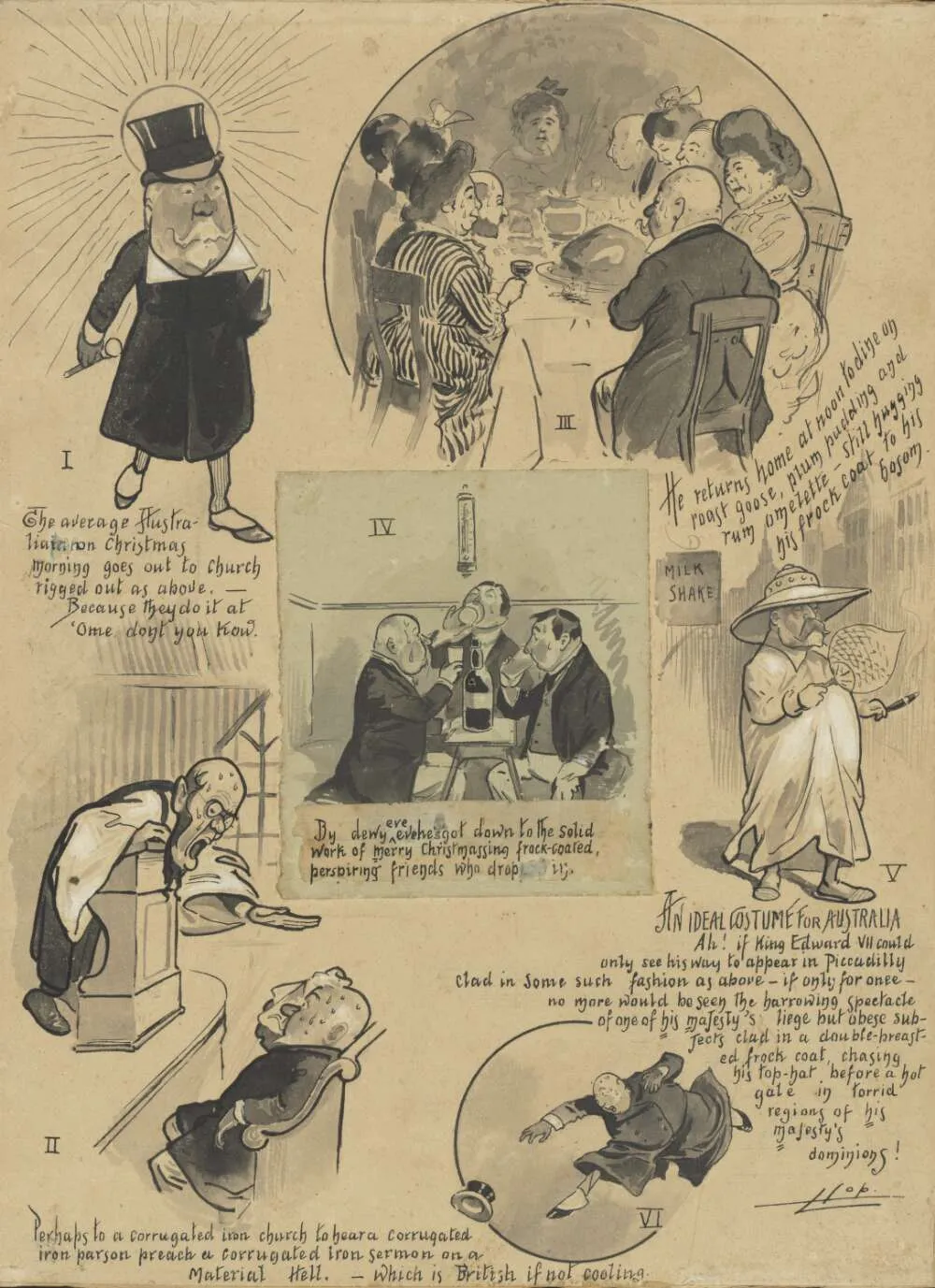 “The average Australian Christmas” by Livingston Hopkins (“Hop”), c. 1900. Public domain.
Every family carries habits like this. The particular biscuit, the carol that has to be sung before lunch, the decoration that always goes on the tree last. Each began as a decision somebody made, usually for a reason, and the reason is almost always held by the oldest person in the room. Once they are gone, the habit continues and the explanation does not. Asking “Who started this?” is one of the cheapest ways to recover a piece of family history, and the answer often leads to a grandparent’s own parents, a migration, or a hard year. (There is more on this in questions to ask about your family heritage.)
How do you ask without turning Christmas lunch into an interview?
A family meal has its own rhythm, and an interview imposed on it tends to fail. A few practices help.
- Use what is on the table. Ask about a dish, an ornament or a serving plate rather than about “the past”. Objects are memory cues, and they make the question feel like conversation rather than an assignment.
- Let the youngest ask. Grandparents will answer a grandchild’s question with a patience and detail they rarely offer adults. A printed card of three questions beside a child’s plate works well.
- Ask for one Christmas, not Christmas in general. “Tell me about the Christmas you were eight” is easier to answer than “What was Christmas like?”, for the reasons above.
- Follow the story they always tell. If a grandparent tells the same Christmas story every year, it is the one that matters most to them. There are good reasons why older people repeat the same stories, and the repeated story is usually the first one to record.
- Record later, somewhere quiet. In Australia Christmas Day is usually hot, loud and partly outdoors, which is the worst possible setting for sound. Find the best story at lunch, then ask the person to tell it again in a cool, quiet room in the afternoon, seated facing a window, with the phone propped at eye level. (The details are in how to film an interview at home.)
In the more than a hundred life stories I have filmed since 2020, the general questions almost always produced the general answers. The memorable material came from the specific ones, and especially from the follow-ups: Who else was there? What did your mother say? What happened next?
What will this Christmas become?
In twenty years, this Christmas will have merged with all the others in the memory of everyone at the table, including yours. That is not a failure of attention; it is how memory works. The exceptions will survive for a while, and the ordinary day, which is the part a great-grandchild would most like to see, will dissolve first.
The same is true of the people. I have four hours of my grandmother telling me about her life. She has since passed away. What I value most in that recording is not any single fact but the ordinary things that no one thinks to preserve: her voice, the way she laughed before the end of her own jokes, the pause before she decided to tell a harder story.
Thomas’s recording survives because a record label happened to ask him on a February afternoon. Most grandparents will never be asked by a record label. They can be asked by a grandchild. If you want a simple structure, Everyone, a free app, presents one question at a time and saves each answer as a short video for the whole family. A phone and one good question after lunch are enough to start. (If you are still looking for a present, recording their story is also the best of the sentimental Christmas gifts for grandparents.)