
Before you write a biography of yourself, ask who will read it.
Self-published memoirs pile up in secondhand bookshops. The problem is rarely the life. It is the format, and the audience. Here is what survives instead.
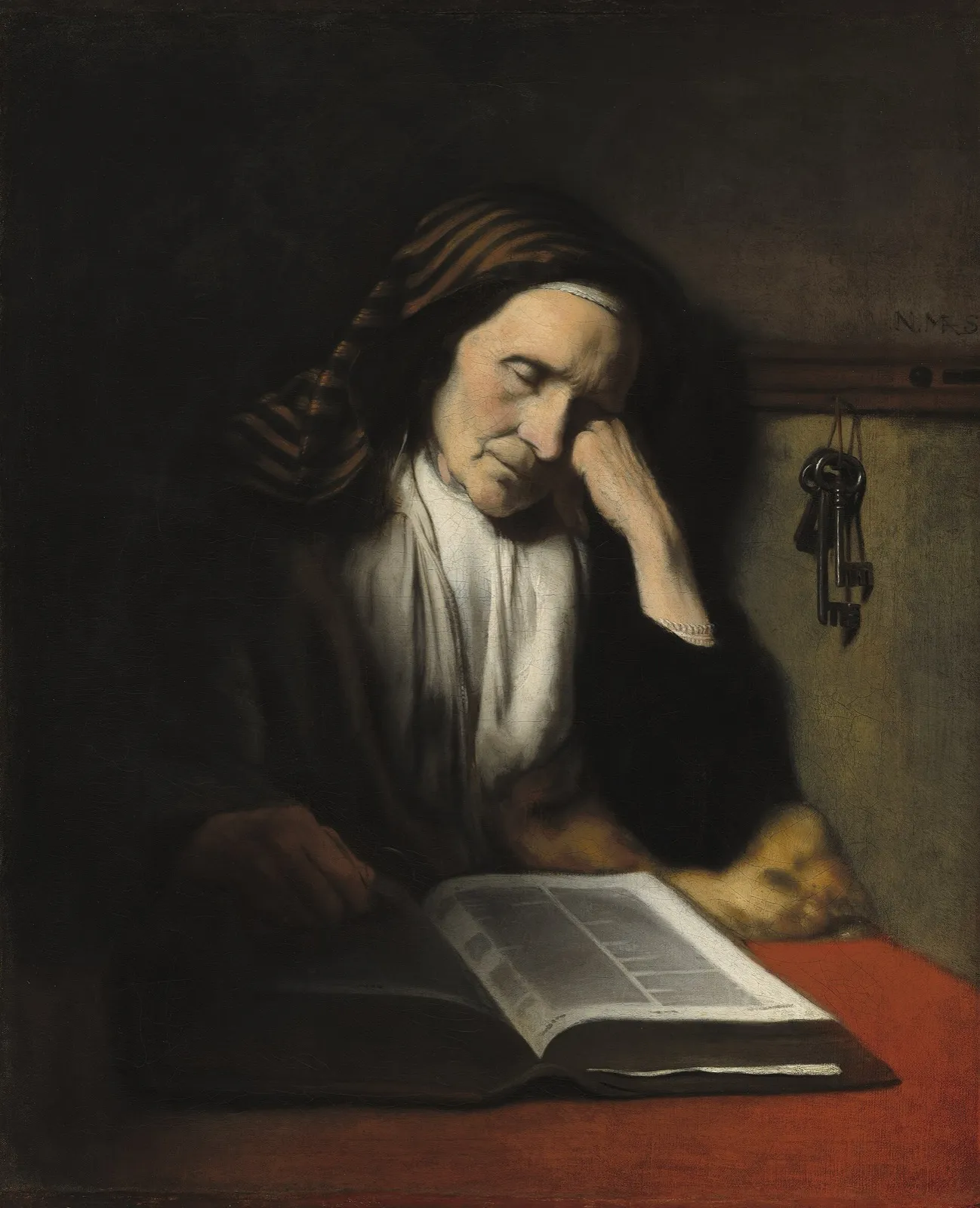
I worked in a secondhand bookshop when I was younger, and anyone who has spent time in one will know a particular kind of book. It has a plain cover, usually a photograph of the author in middle age or older, and a title that is a version of “My Life”. The publisher is a small printer you have never heard of, or no publisher at all. It was written by someone who wanted to be remembered, paid to have it printed, gave copies to the family, and has since died. The book is now on a shelf, priced at a few dollars, waiting for a stranger.
Almost everyone who thinks about writing a biography of themselves is trying to avoid that shelf. The impulse is a good one. The usual method defeats it, and the reasons are worth understanding before you spend two years on a manuscript.
How many people try to write a biography of themselves?
More than you might think. Bowker, the agency that issues ISBNs in the United States, reported that about 1.68 million self-published titles were registered there in 2018, up roughly 40 per cent on the year before. That count includes every kind of book, not only memoirs, and it leaves out titles that were never given an ISBN, so it cannot tell us how many are life stories. But it shows the scale of the change. Printing a book once required a publisher to take a risk on you. Now it requires a credit card.
When the cost of making a book falls to almost nothing, the number of books rises, and so does the number that nobody reads. The constraint was never printing. It was attention.
Why do most memoirs go unread?
The first reason is length. A book-length memoir runs to tens of thousands of words. Adults read non-fiction at roughly 240 words a minute, according to one large review of reading studies, so a memoir of 80,000 words asks for more than five hours of concentration. That is a large favour to ask of a grandchild, and an enormous one to ask of a stranger.
The second reason is audience. A published author writes for a reader who has chosen to buy the book. A memoirist writing for the family writes for people who will receive it as a gift, and a gift is read out of duty, if it is read at all. The reader opens it to the chapter about themselves, looks for their own name, and puts it down.
The third reason is the least comfortable. Most lives, as they appear in a first draft, are told in the order they happened. Born here, school there, first job, marriage, children, retirement. That is a chronology, not a story. A story needs a person who wants something, an obstacle and a change, and it needs the author to leave out most of what happened. Writers who do this for a living spend years learning how to cut. A retired engineer, however intelligent, usually cannot see which of his seventy years the reader will care about, because to him all of it is vivid.
None of this is a criticism of the people who write them. It is a description of a hard craft attempted without training or an editor, for an audience that was never asked.
What happens to the books afterwards?
The mechanism is simple. When someone dies, the household has to be cleared, and the people who clear it are rarely the people who wrote the book or wanted to read it. The copies the author kept are boxed with everything else. Some go to a charity shop. Some are kept by one grandchild for a decade and then lost in a move. A few go to a library, if the library will take them.
This is the part that makes the secondhand shelf an accurate picture rather than a sad one. The books are not there because the lives were dull. They are there because a book is a bad vehicle for an ordinary life: heavy, unindexed, unfinished and addressed to no one in particular.
What survives, then?
The record of an ordinary life that has survived best was usually written by someone who was not trying to write a book at all.
One of the best-known examples is Nella Last, a housewife in Barrow-in-Furness in the north of England. In 1939 she began keeping a diary for Mass Observation, a project founded in 1937 to record the everyday lives of ordinary British people. She kept it for decades, and it is among the largest in the archive, now held at the University of Sussex. Her wartime entries were edited down and published in 1981 as Nella Last’s War. They are read today because they are specific and unguarded: what she cooked, what she feared, how she felt about her husband and about the bombs. She was not writing a life. She was reporting a week.
Three things made that record last. It was short, in daily instalments. It was addressed to an actual reader, the project, who wanted exactly this. And it was deposited in an institution that kept it. Remove any of the three and it probably disappears.
That is a useful test for any attempt to record a life. It should be small enough to finish, written or spoken to someone who wants to hear it, and kept somewhere that outlasts a house clearance.
Is there a better way to record your own life?
I think there is, and it follows from the test above. The most reliable way to tell a story well is to tell it to a person. People who stall over a blank page will talk for an hour to someone who asks a good question, and the question does the work of the editor: it picks the scene, asks what happened next and refuses to let the speaker hurry past the interesting part. I set out why this works in how to interview older family members.
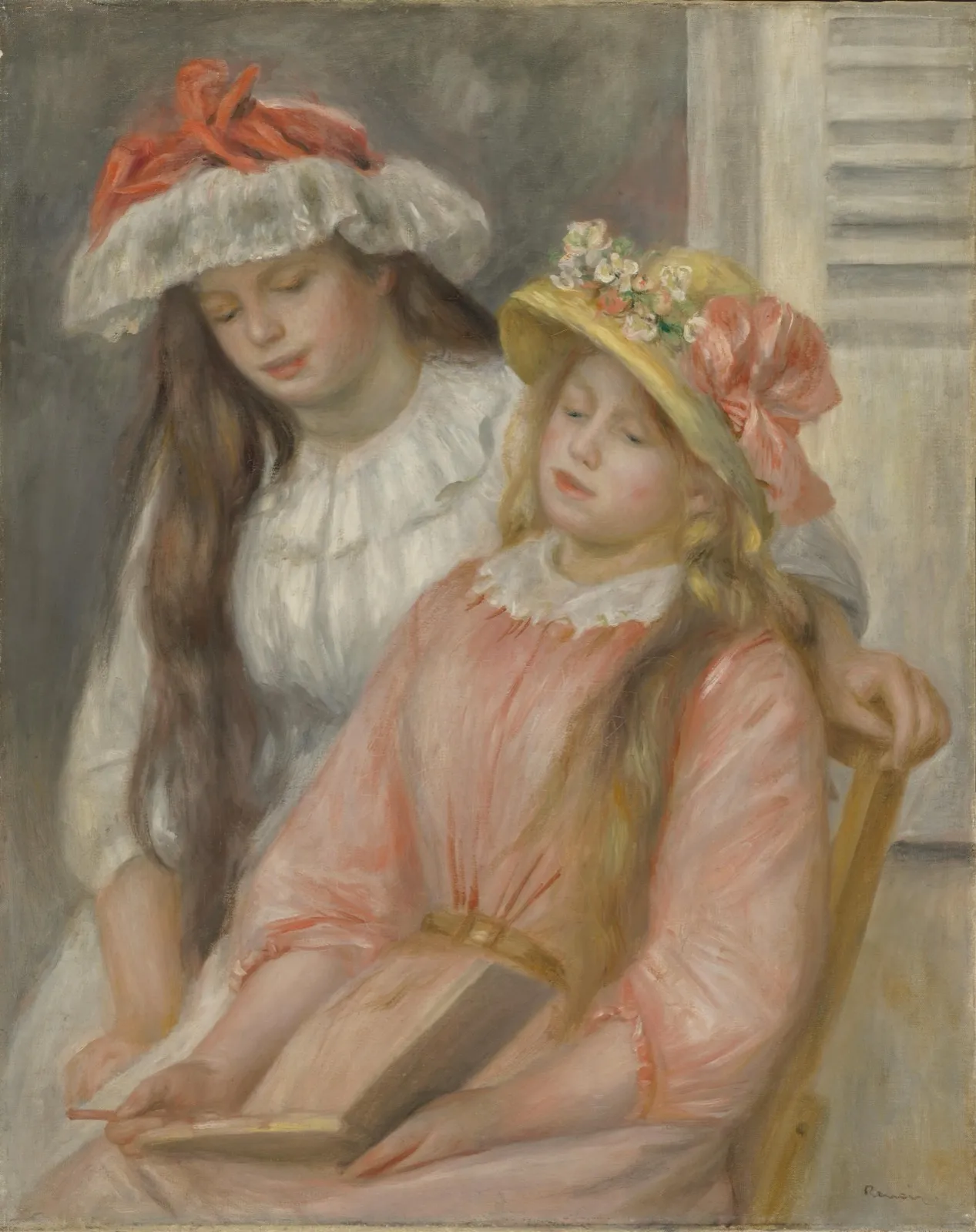 “Young Girls Looking at an Album” by Pierre-Auguste Renoir, c. 1892. Virginia Museum of Fine Arts. Public domain.
If that conversation is filmed, the result is better suited to what descendants actually do. They will not read 80,000 words. They will watch four minutes of their great-grandfather describing the day he arrived in a new country, because it is short, because they can see him, and because the effect is close to a visit. I compared the formats directly in why recording a life story on video beats writing.
None of this means you should not write. A written account is excellent for names, dates and the chain of events, and it is cheap to keep. The point is the order of the two. Film or talk first, in short pieces, and let the questions pick the stories. Write the facts down afterwards, as a companion. The reverse order is how people end up with a manuscript nobody asked for.
How do you keep a life story from ending up on the shelf?
A few habits make most of the difference.
- Keep it in pieces. One memory per recording or per page, with a title. A short item gets finished, and gets watched.
- Name the reader. Decide whether it is for a grandchild, a sibling or someone not yet born, and talk to that person. Specific audiences produce specific stories.
- Tell scenes, not summaries. “The day the bank closed” is a story. “The Depression years” is a topic.
- Make copies in more than one place. A single file on a single phone is as fragile as a single boxed copy. I looked at the practical side in what happens to your photos and videos when you die.
- Tell someone where it is. The books on the secondhand shelf were findable only by luck. Someone in the family should know what exists and how to open it.
What is the real aim of writing about yourself?
Underneath, the wish to write a biography of yourself is a wish to be known by people who will outlive you. That is among the oldest human wishes, and it is a reasonable one. The question is only whether the method serves it.
A printed book, left alone, serves it poorly. A short, specific, well-kept record of your voice and face, made in answer to someone’s questions, serves it much better. If it helps to start with the questions already chosen, the Everyone app asks one at a time and keeps each answer as its own short video. But a phone and a willing relative are enough. In the cases I have seen, the people who end up on the shelf were not forgotten because their lives were small. Their stories were in a form that no one was going to open.


