A voice can be restored. A face that was never filmed cannot.
An 1860 recording sat unheard for 148 years. What it teaches us about audio vs video recording, and why a voice alone is not a safe way to keep a life story.
On 9 April 1860, in Paris, someone sang a few lines of the French folk song “Au clair de la lune” into a machine called a phonautograph. The machine traced the sound waves as a wavy line in soot on a sheet of paper. Its inventor, Édouard-Léon Scott de Martinville, wanted to study the shape of sound. He never intended anyone to listen to it, and in his lifetime nobody could. There was no way to turn the line back into sound.
In 2008, a group of audio historians called First Sounds scanned the paper at high resolution and converted the tracing into audio. For the first time in 148 years, the recording was heard. It is now the oldest known recording of a recognisable human voice, and the singer is probably Scott himself, though nobody can be sure.
The story is usually told as a curiosity. I think it contains the most useful lesson there is about recording a life story, and about the choice between audio vs video recording in particular. The tools of the future will be able to do far more with a recording than the person who made it could imagine. But they can only work with what was captured. Scott’s soot preserved a voice. It could never have preserved a face.
What does “future-proof” actually mean for a recording?
When people ask whether a recording is future-proof, they usually mean one thing: will the file still open in fifty years? That is a real problem, but it is the smaller of two.
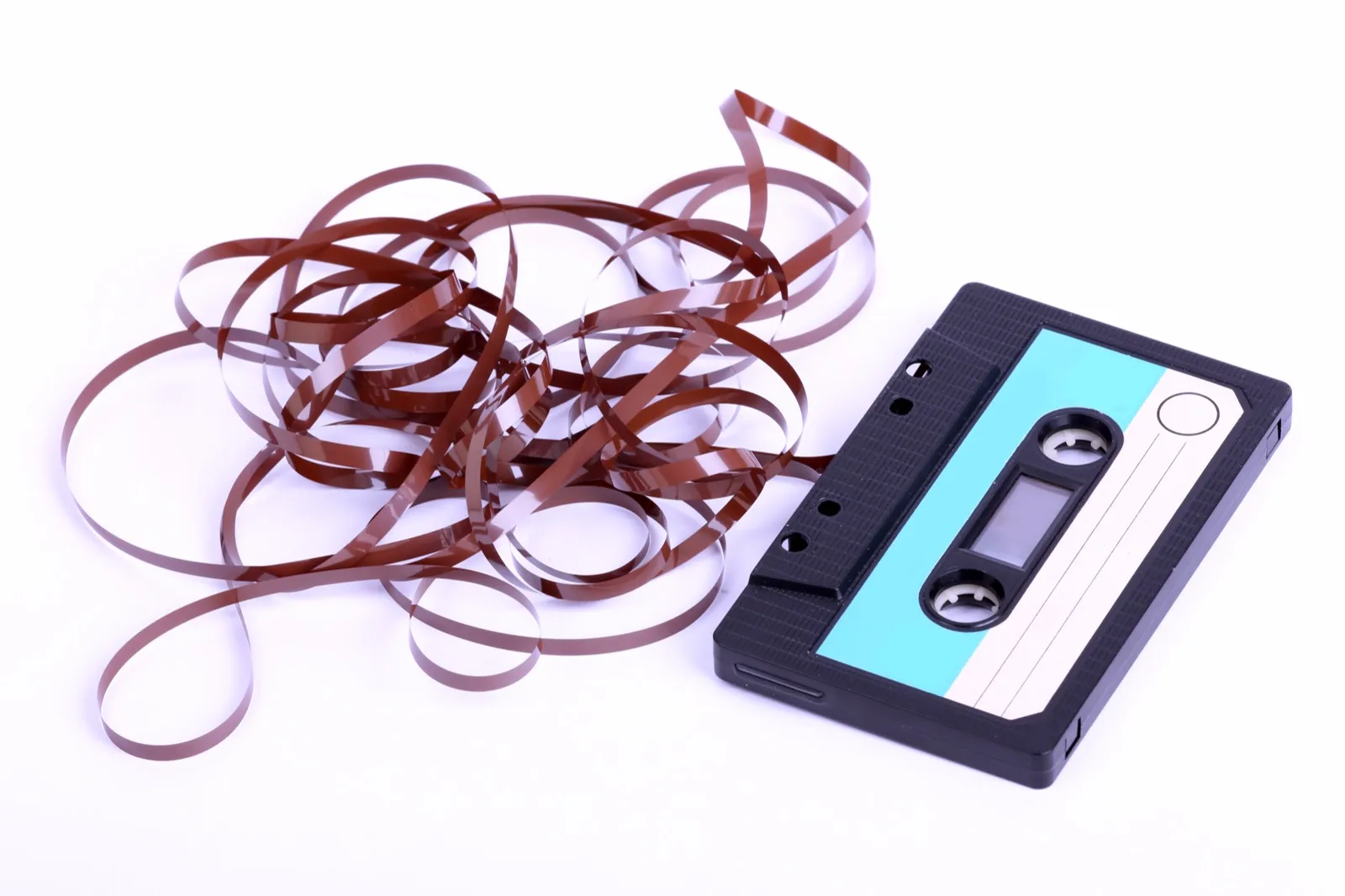
The first threat is to the carrier: the tape, the disc, the hard drive. Magnetic tape sheds its coating, cassettes stretch and snap, and the machines that play them stop being made. When Indiana University surveyed its audio and video collections in 2008 and 2009, it found more than half a million items on dozens of physical formats, and concluded that much of the rare and unique material was at risk of becoming unplayable within five to fifteen years. Mike Casey, who later led the university’s digitisation project, coined a word for the combined effect of physical decay and obsolete players: “degralescence”.
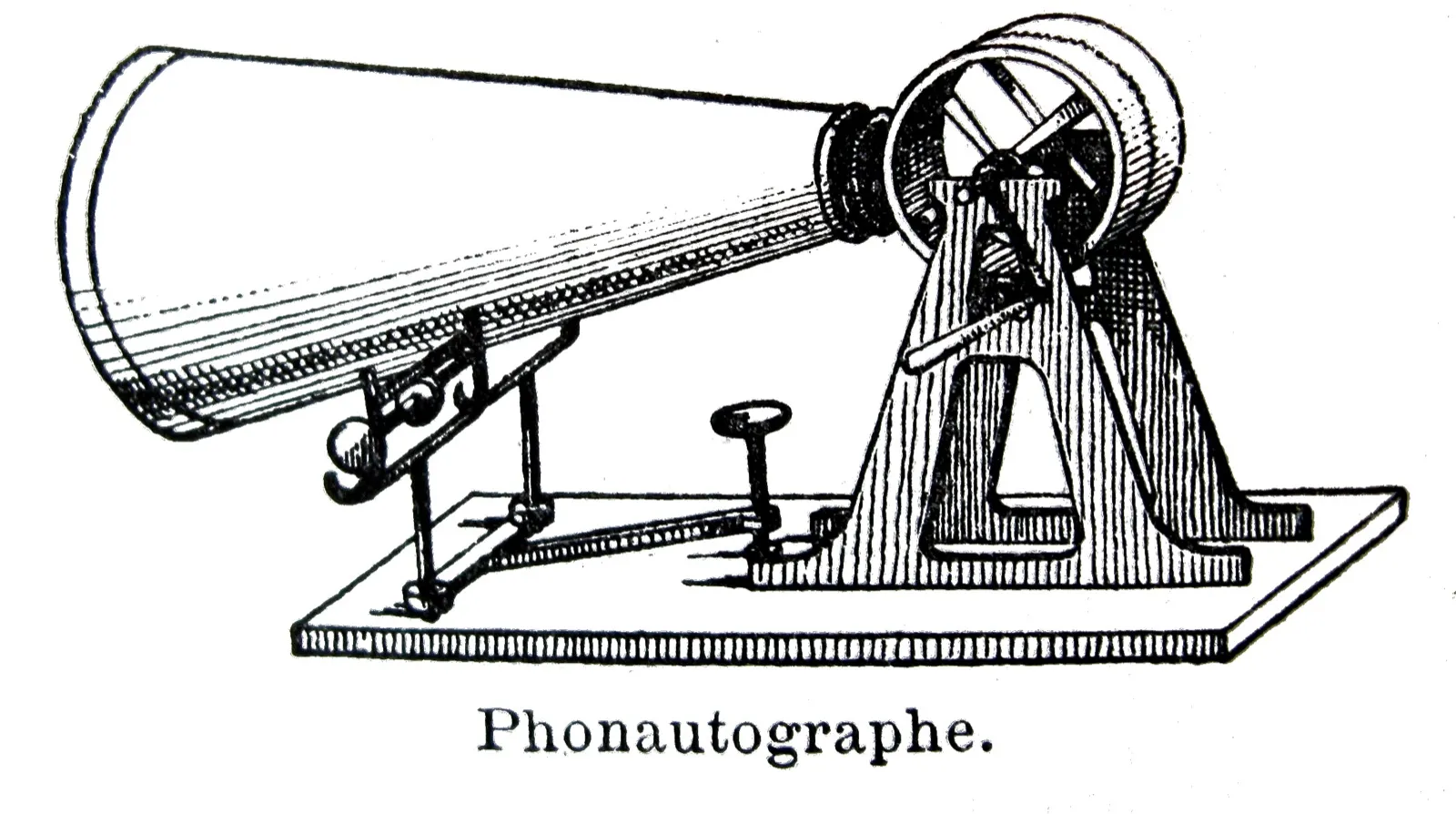 The phonautographe, Scott de Martinville’s sound-tracing machine, in a French engraving from 1877. Public domain.
Digital recording has made this problem much easier, though not trivial. A file can be copied endlessly without loss, as long as someone bothers to copy it. I wrote about what happens when nobody does in what happens to your photos and videos when you die.
The second threat is to the content: how much of the person the recording contains in the first place. This problem cannot be fixed later by any amount of copying. A perfectly preserved recording of a voice is still only a voice.
Why can a recording never be improved beyond what it captured?
There is an asymmetry between audio and video that is easy to overlook. A video file contains an audio recording. An audio file contains no video. You can always strip the sound from a film and keep it on its own; you can never go the other way.
Restoration technology has become remarkable, and it mostly works on sound. In 2023 the Beatles released “Now and Then”, built from a home demo that John Lennon had recorded on cassette in the late 1970s. The voice had been tangled up with a piano on the tape for more than forty years. Software developed by Peter Jackson’s team separated the two, which earlier engineers had tried and failed to do. The recording held more than anyone could get out of it at the time.
That is the hopeful half of the lesson. Future tools will clean up hiss, separate voices, sharpen blurred images and translate speech. The other half is less comfortable. Restoration recovers information that is buried in a recording. It cannot recover information that was never there. No future software will listen to a cassette of your grandfather and produce his face. At most it could generate a plausible face, which is to say an invented one. The same is true of colourised photographs: the colour in them is an educated guess, because the original film never registered it.
So the useful question about any format is not whether it will survive, but how much it gives the future to work with. On that measure, audio is a subset of video.
How did lip readers recover the words of silent soldiers?
The clearest demonstration of what faces hold came from an unlikely source. For his 2018 documentary They Shall Not Grow Old, Peter Jackson restored film shot on the Western Front between 1914 and 1918. The footage was silent; sound cameras did not yet exist. Yet in many shots, soldiers are plainly talking to each other and to the camera.
Jackson hired forensic lip readers to work out what they were saying. Actors, using accents from the regions the soldiers’ units came from, then voiced those lines. Words spoken a century earlier, never recorded as sound, were recovered because the faces had been filmed.
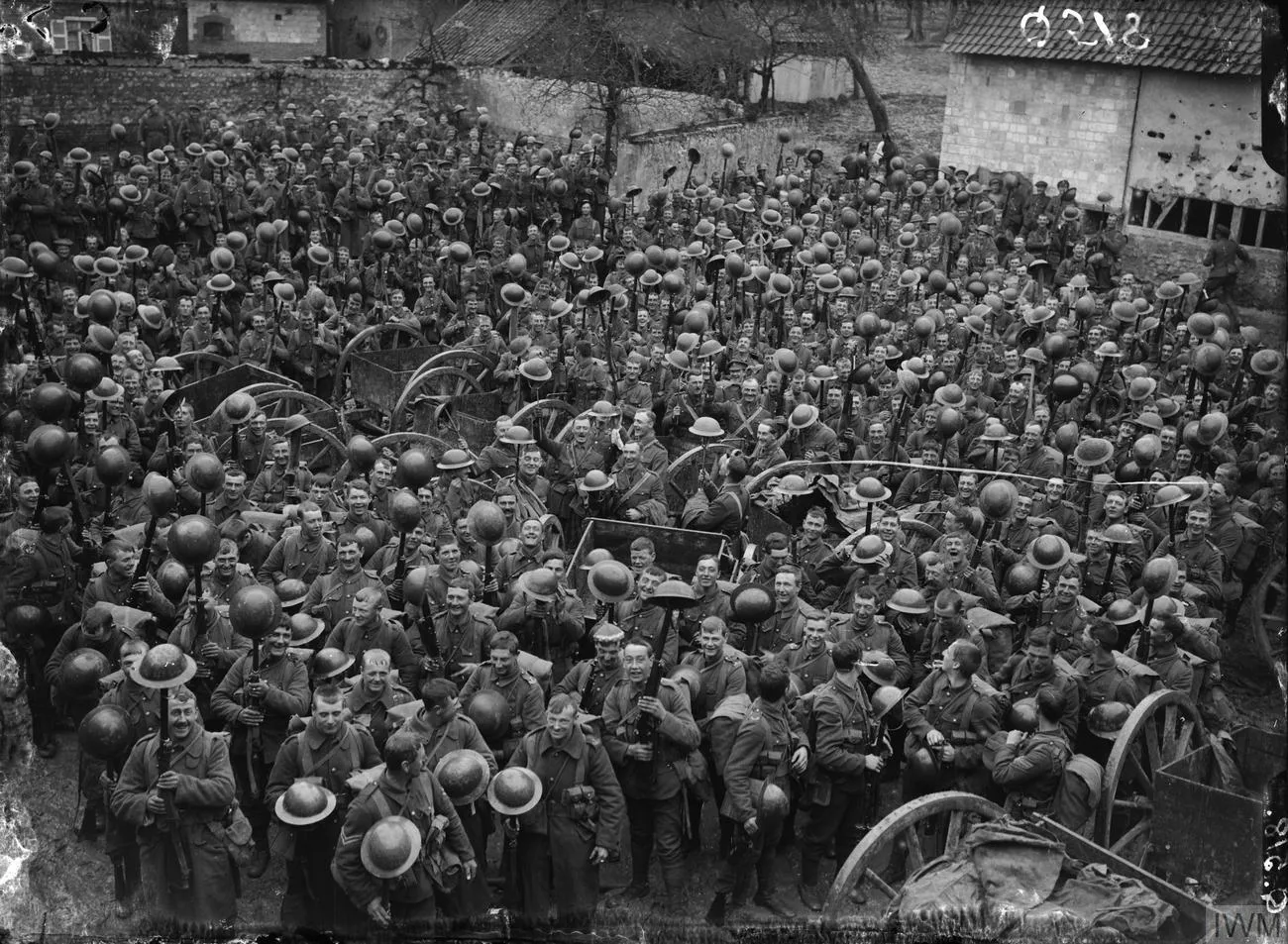 The Loyal North Lancashire Regiment, 55th Division, at Wailly, France, 17 April 1916. Photo by Ernest Brooks. Imperial War Museum Q 518. Public domain.
This points to something researchers have known for a long time. Speech is not only a sound; it is also a visible movement. In 1954 the psychologists William Sumby and Irwin Pollack showed that listeners understood speech in noise far better when they could see the speaker’s face. In 1976 Harry McGurk and John MacDonald published a paper in Nature titled “Hearing lips and seeing voices”, describing what is now called the McGurk effect: when people watch a face saying one syllable while hearing another, they often perceive a third. What we see changes what we hear.
The practical consequence is counterintuitive. A video is not just a better record of a person than audio. It is often a better record of their words. When the sound is poor, the accent unfamiliar or the speaker elderly and quiet, the moving mouth carries the speech a second time. A descendant listening a century from now, with an ear tuned to a different accent, will understand more of a filmed interview than of a taped one.
Is audio vs video recording a fair fight?
Not entirely, and audio deserves its due.
Audio is less intrusive. Some people speak more freely to a small recorder than to a lens, and a phone call can be recorded when a visit is impossible. Audio files are small, which mattered a great deal when storage was expensive. And audio recordings made decades ago remain priceless. The narration of They Shall Not Grow Old is drawn from interviews the BBC recorded with veterans in the 1960s, long before anyone thought of the film. Professional oral historians worked mainly on tape for much of the twentieth century, and their methods still shape good practice today (see how to conduct an oral history interview).
If a voice recording is all you can get, take it. A recording of any kind is infinitely better than none.
But the reasons for choosing audio over video have mostly disappeared. Storage is now close to free. The camera is already in everyone’s pocket. The self-consciousness a lens produces usually fades once a conversation gets going, especially when the person asking is family. What remains is a choice between recording a voice and recording a person, at the same cost.
What will people in the future expect to see?
There is a final reason to think audio is the weaker bet, and it concerns the audience rather than the technology.
Expectations follow what is normal. Children growing up now see their grandparents on video calls, not only hear them on the phone. To them, a person who exists only as a voice will seem oddly partial, much as a family that left only written letters seems partial to us. Once a richer medium becomes ordinary, the thinner one starts to feel like something is missing, because something is.
My grandmother’s interview runs to four hours on video. She has since passed away. When I watch it, the things I notice are not all in the sound: the way she looks away before a hard answer, the small shake of her head when she disagrees with her younger self, the moment she decides to tell a story she had kept back. A tape would have preserved her words. It would not have preserved her deciding.
What should you record, then?
The lesson of Scott’s soot tracing is to capture as much as you reasonably can, because you cannot know what later generations will be able to extract from it, and you can be certain they will not be able to add what is missing. In practice that means a few simple things:
- Film rather than only record sound. A phone propped at eye level, in soft light from a window, is enough. How to film an interview at home covers the details.
- Treat the sound as seriously as the picture. Choose a quiet room indoors, away from traffic and kitchens, and keep the phone close to the speaker. Clean sound is the part future software can improve least reliably.
- Keep copies in more than one place, and label them with names and dates. A file nobody can find is no better preserved than a cassette in a shed.
None of this requires expertise. For most of history, recording a person at all was the hard part. That has changed completely, and the argument for video over writing and tape is set out at more length in why you should record a life story on video. The Everyone app was built on the same reasoning: it asks one question at a time and keeps each answer as a short video, with the voice inside it.
Scott de Martinville made his recording in 1860 for reasons that had nothing to do with posterity, and it reached us anyway, because he happened to capture something future tools could use. We have the advantage of knowing that in advance. The question is only whether we capture the voice, or the person who owns it.