Fun questions to ask your grandparents, and why the light ones go deepest.
Light, funny questions often draw out better stories than serious ones. 40 fun questions to ask your grandparents, and what laughter research says about why.
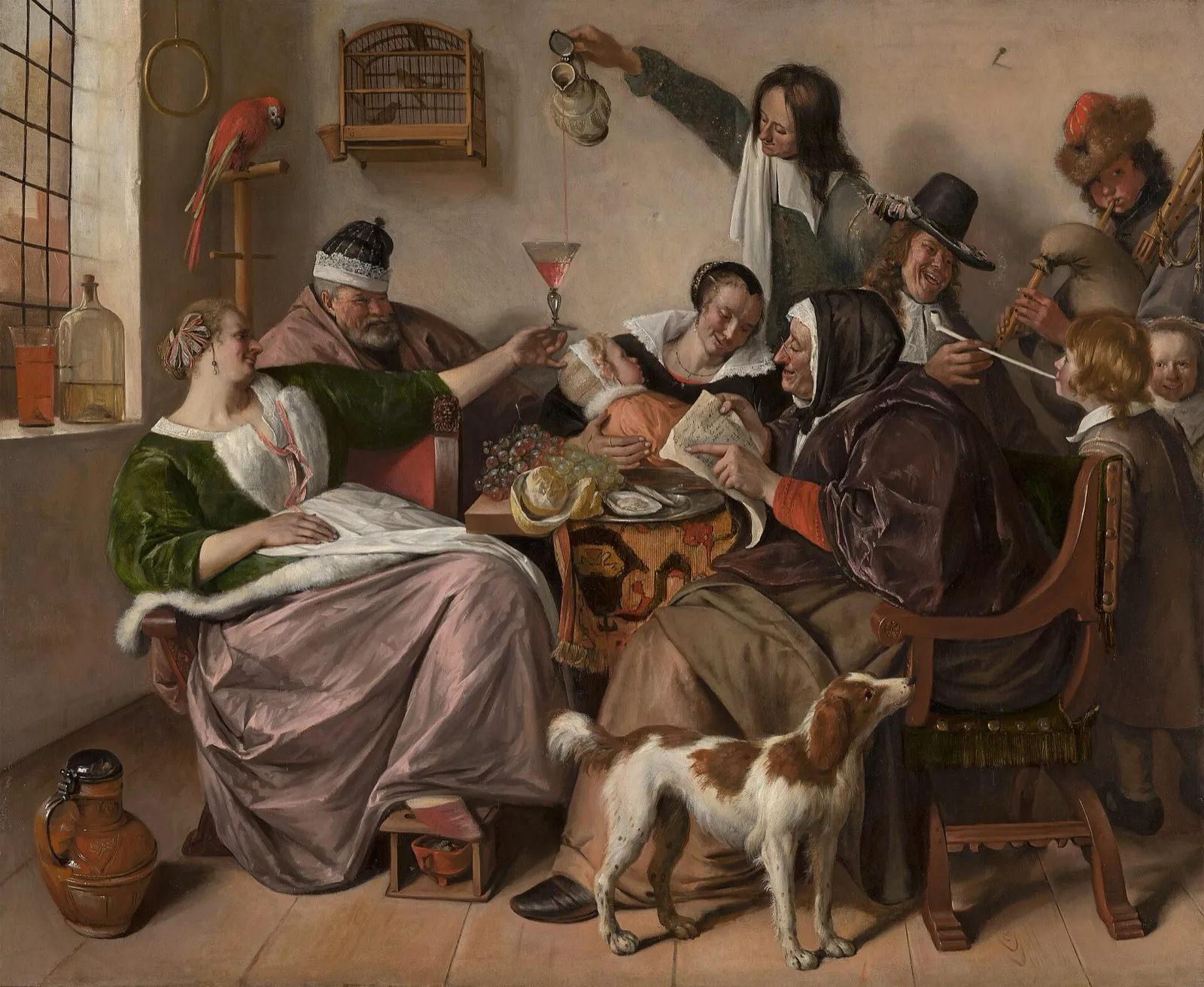
In the 1990s the neuroscientist Robert Provine and his students spent months eavesdropping on people laughing in shopping centres, on footpaths and in student unions. They wrote down what was said just before each laugh, in roughly 1,200 episodes. The result, described in his book Laughter: A Scientific Investigation (2000), surprised him. Most laughter did not follow anything resembling a joke. It followed ordinary remarks, the kind of thing people say when saying goodbye or asking a question. He also found that the person speaking laughed more than the person listening, by about 46 per cent, and that people were far more likely to laugh in company than alone.
Provine’s conclusion was that laughter is less about humour than about relationships. It is a signal, sent mostly by speakers, that says: we are at ease, nothing here is a threat, keep going.
That is the best argument I know for asking your grandparents fun questions. They can look like the lightweight cousin of the serious lists. In practice, the light questions often go deepest. This post explains why, gives 40 fun questions to ask your grandparents, and shows how to turn a funny answer into a story worth keeping.
Why do fun questions get better answers?
Consider two questions you might put to a grandfather. “What is your biggest regret?” and “What is the worst trouble you ever got into as a boy?”
The first asks him to survey eighty years, select one failure and present it to a grandchild. It usually gets a summary (“I suppose I should have travelled more”) or a polite deflection. The question is too large and too exposing.
The second asks for a single scene. It is small, specific and safe, because the person being judged is a boy who no longer exists. And it leads somewhere: to a strict father, a neighbour’s orchard, a brother who took the blame. Ask enough of these and the regrets often surface on their own, told sideways, which is how most people prefer to tell them.
This is the same principle that makes open questions work in any interview (see how to interview someone with open-ended questions): ask for a scene, not a verdict. Fun questions are simply the easiest scenes to ask for.
Laughter itself helps too. In 2012 Robin Dunbar and colleagues reported in Proceedings of the Royal Society B that people’s pain thresholds rose after laughing together, which they read as a sign of endorphin release and social bonding (endorphins were not measured directly). Whatever the mechanism, after the first real laugh an interview changes. The person relaxes, stops performing, and starts telling.
Why are grandparents the easiest people to joke with?
In 1940 the anthropologist A. R. Radcliffe-Brown published an essay called “On Joking Relationships”. He described a pattern found in many societies, particularly in Africa: between certain relatives, teasing, mock insults and horseplay were not merely tolerated but expected. Between others, such as parents-in-law, the expected behaviour was the opposite, formal respect or even avoidance. Grandparents and grandchildren, he and later anthropologists observed, were very often on the joking side of that line, while parents and children were on the side of respect and discipline.
The explanation is structural. Parents carry authority, and children push against it. Grandparents carry less of that weight, and grandchildren have less to prove, so the relationship has room for play. A question from a grandchild arrives with curiosity instead of grievance, which is one reason grandparents are often easier to interview than parents (more on that in questions to ask your grandparents before it’s too late). A fun question uses that licence deliberately.
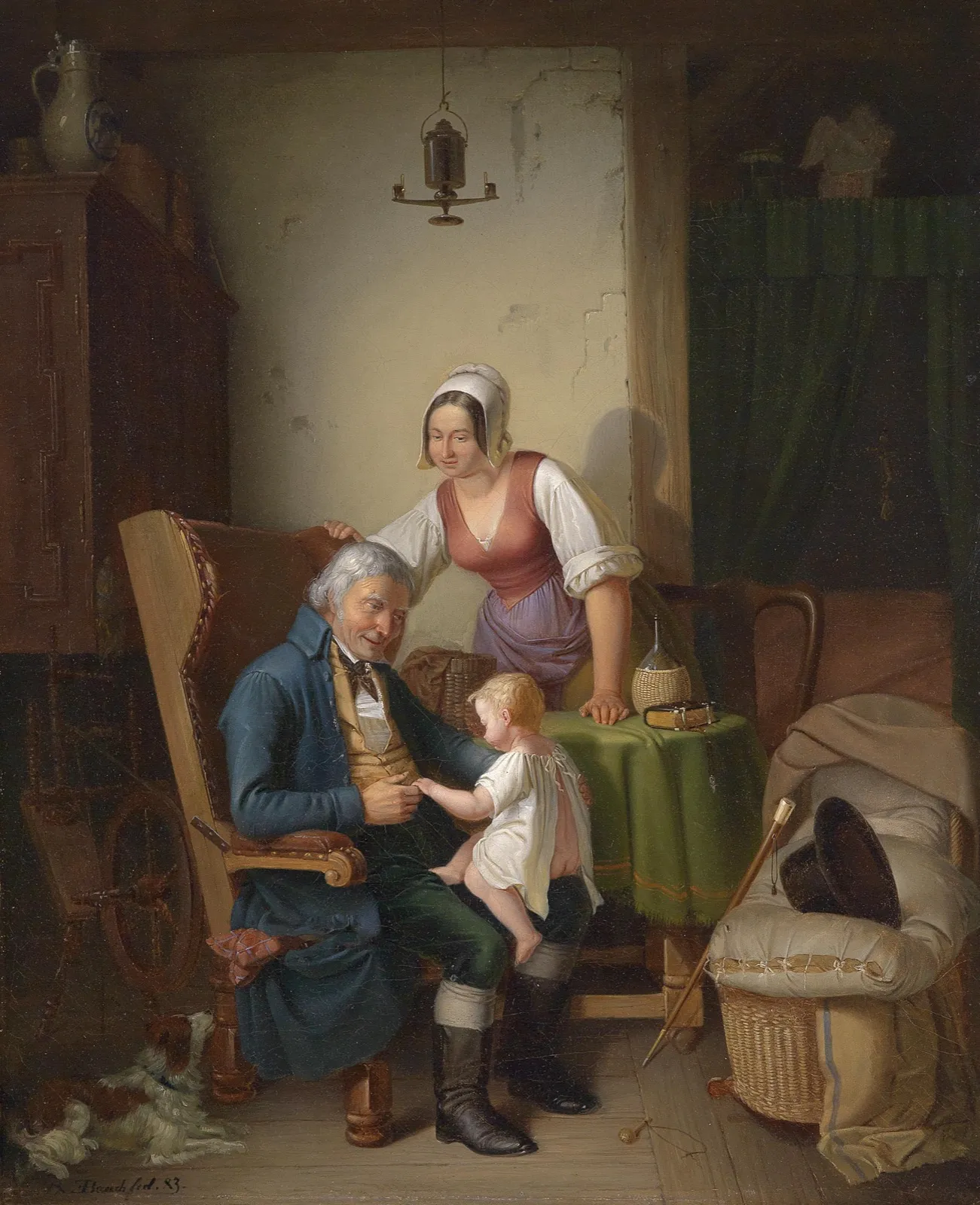 “Grandfather’s Joy” by Emil Bauch, 1883. Public domain.
40 fun questions to ask your grandparents
These are grouped by theme. Each one is designed to be easy to answer and hard to answer in a single word. Pick a handful, not all forty; a good conversation rarely gets through more than ten.
Mischief and trouble
- What is the naughtiest thing you did as a child that you never got caught for?
- What did you get in trouble for most often?
- Who was the strictest adult you knew as a child, and how did you get around them?
- Did you ever wag school? Where did you go?
- What was the most dangerous thing you did for fun?
Firsts
- What was the first thing you ever bought with your own money?
- What was your first job, and what was the strangest part of it?
- Do you remember the first time you saw a television, flew in a plane or used a telephone?
- What was the first film you saw at the pictures, and who did you go with?
- What was the first meal you ever cooked, and how did it turn out?
Then and now
- What did a loaf of bread, a bus fare or a trip to the pictures cost?
- What did you do on a Saturday when you were twelve?
- What was something everyone did then that would horrify people today?
- What invention do you most wish had existed when you were young?
- What slang did you use that nobody uses any more?
- What was the most fashionable thing you ever wore, and do you have a photo of it?
Games, music and fun
- What games did you play in the street or the schoolyard? Can you remember the rules?
- What song could you not stop singing at sixteen?
- Who were your heroes: sports stars, film stars, singers?
- What was the best birthday or holiday you had as a child?
- Did you have a pet? What was it called, and what did it get up to?
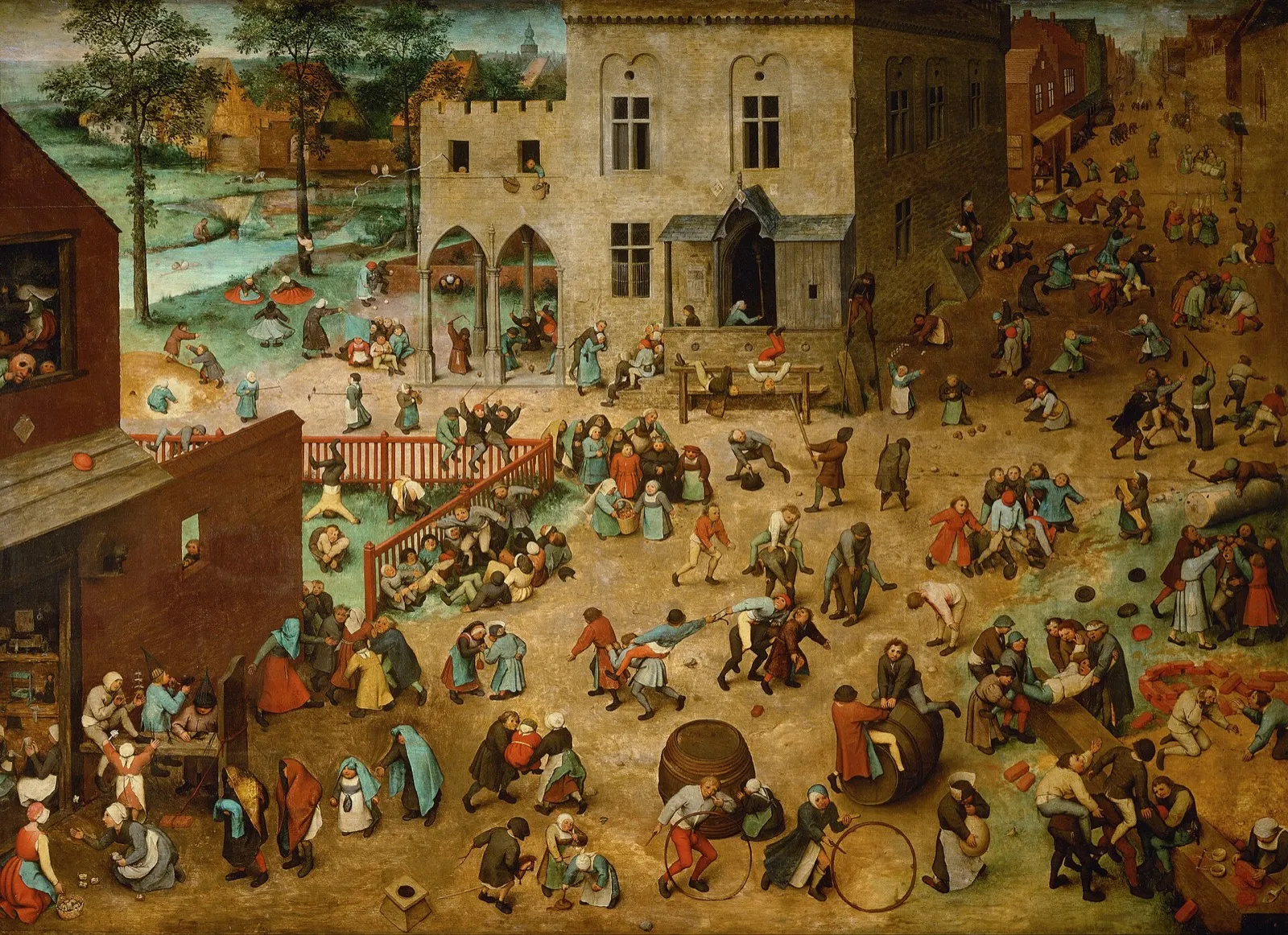 “Children’s Games” by Pieter Bruegel the Elder, 1560. Kunsthistorisches Museum, Vienna. Public domain. Many of the games in it would still have been played in schoolyards when today’s grandparents were children.
Love and friendship
- Who was your first crush, and did they ever find out?
- What was a date like when you were young? Where did people go?
- What is the most embarrassing thing that happened to you in front of someone you liked?
- Who was your best friend at school, and what did the two of you get up to?
My parents, as children
- What was my mum or dad like as a toddler?
- What is the funniest thing they did as a child?
- What did they get into trouble for that they would not want me to know?
- Is there a story about them that the family still tells?
Would you rather, and what if
- If you could go back and live one year of your life again, which would it be?
- If you could have dinner with any of your ancestors, who would you choose?
- Would you rather be young now, or young when you were?
- If you had been famous, what would it have been for?
- If you could tell your sixteen-year-old self one thing, what would it be?
Quick-fire
- What is the best advice you ever ignored?
- What is a family saying or joke that nobody outside the family understands?
- What is the best present you ever received?
- What is something you were sure about at twenty that turned out to be wrong?
- What is the funniest thing that ever happened at a family gathering?
- What is something about you that would surprise me?
For younger interviewers, there is a simpler list of interview questions for kids to ask their grandparents.
How do you turn a funny answer into a real story?
A fun question opens the door. The follow-up decides whether you walk through it. Three follow-ups do most of the work:
- “What happened next?” Funny stories are usually told in compressed form, because they have been told many times. Asking what happened next unpacks the version that has never been told.
- “Who else was there?” Every anecdote has a cast. Asking about the cast is how you meet great-aunts, schoolfriends and neighbours who appear nowhere else in the family record.
- “What did your mother say?” Or father, or teacher. The reaction of the adults in a childhood story reveals the values of the household better than any direct question about values.
To illustrate: a question about the worst trouble a grandmother got into might first produce a single line about being caught smoking behind the church hall. “Who else was there?” brings in the friend who supplied the cigarettes. “What did your mother say?” brings in a mother who said nothing at all, and an explanation of why. Within five minutes, a funny anecdote has become a portrait of a family. In my experience of filming more than a hundred life stories through The Archive since 2020, this is a common order of events: the laughter comes first, and the substance follows it. Your job is to be a good audience: react honestly, and do not rush to the next question.
Why should you film the funny stories?
Humour is the most fragile part of a person to preserve. Facts survive transcription; jokes do not. A funny story depends on timing, a raised eyebrow, a voice put on for a character. Written down, most family anecdotes lose the very thing that made them worth retelling.
I have four hours of my grandmother telling the story of her life, recorded before she died. A transcript of it would keep what she said. Only the video keeps the way she said it: the expression, the timing, the moment a memory amused her before she had finished telling it.
That is a reason to film fun conversations rather than treat them as warm-up. Prop a phone at eye level, sit somewhere quiet, and let it run (there are practical tips in how to film an interview at home). The Everyone app offers question packs that show one prompt at a time, which keeps your attention on the person rather than on a list, though any phone camera will do.
Start with the lightest question
Laughter is mostly a signal that two people are comfortable together, and grandparents and grandchildren are, in many cultures, the relatives most expected to laugh together. So begin with the lightest question you can think of. Ask about the naughtiest thing they never got caught for. Laugh at the answer. Then ask what happened next.
The serious stories are rarely told to someone who asks for them directly. They are told to someone who has already shown they are good company.