
“Questions I wish I had asked my parents”: why the questions arrive after the answers are gone.
More than half of us learn something about a parent only after they die. Why the questions we most want answered arrive too late, and how to ask them early.
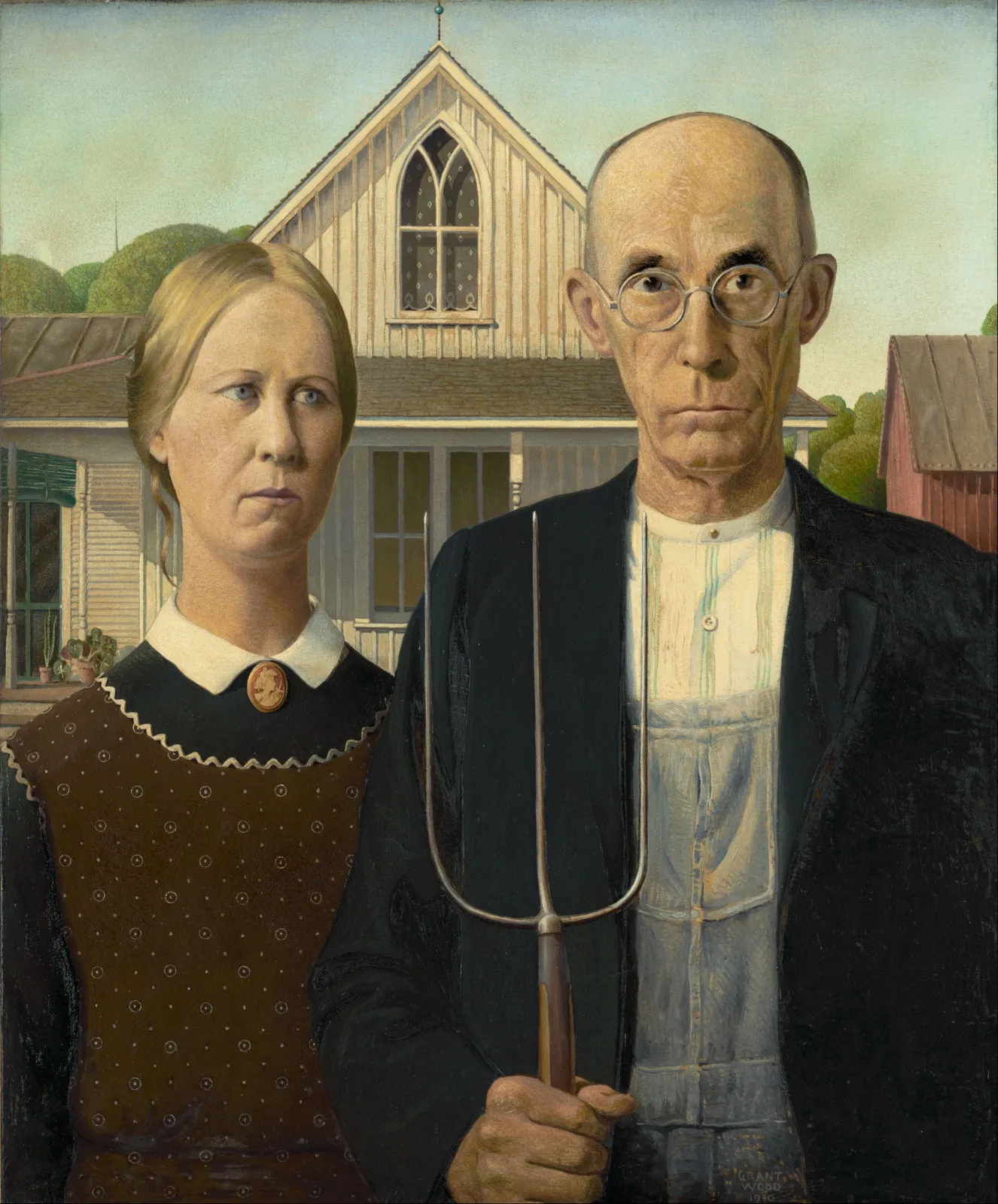
In 2022 the family history company Ancestry commissioned a poll of two thousand British adults. More than half of them, 53 per cent, said they had learnt something new about a family member after that person had died: a first marriage, a war record, a child given up, a job nobody had mentioned. Four in ten had made the discovery while clearing out the person’s house. Half of those who found something said it left them with more questions than before. There was no longer anyone to ask.
The phrase people type into search engines is some version of “questions I wish I had asked my parents”. It is almost always typed too late. The surveys, the bereavement research and my own experience filming more than a hundred life stories point to the same uncomfortable conclusion: the questions you will most want answered about your parents are questions you cannot yet think of, and by the time you can, there is a fair chance they will not be there to answer. This is not carelessness. It is built into the shape of a life, and understanding why makes it possible to do something about it.
What do people wish they had asked?
The polls give a first answer. In the Ancestry survey, the stories people most wanted were about war, love, childhood and work: how a grandfather survived the front line, how their parents met, what a grandmother did for a living. A separate poll for the armed forces charity SSAFA, published in 2021, found that 68 per cent of people regretted not talking more to a late grandparent about their life, and that one in five did not know either grandmother’s maiden name or where their grandparents had been born.
These are, for the most part, questions of fact, and facts are the part of a life that can often be recovered. Half the discoveries in the Ancestry poll came from other people who had known the relative when they were young. Records survive. Siblings remember. A maiden name is on a marriage certificate.
The questions I hear are different. When people learn what I do, they rarely ask about the filming. They tell me what they never asked. Was she happy? Why did he really leave Scotland? What was it like for Mum the year I was born? Did Dad ever want a different life? These are questions about the inside of a person, and only that person could have answered them. No record holds the answer to whether your father was afraid when he started his own business. When that person dies, those answers do not become harder to find. They cease to exist.
Bereavement researchers have a name for what is left behind. In a 2015 study published in Death Studies, a team including the grief researcher Robert Neimeyer asked 224 recently bereaved people whether anything felt unfinished, unsaid or unresolved with the person who had died. Forty-three per cent said yes. The largest category of what they described was not unresolved conflict or apologies never made. It was missed opportunities: connections not made, goodbyes not said, conversations that never happened. The sample was young and mostly grieving grandparents and friends rather than parents, so the figures are indicative. But the study also found that the more distress people felt about their unfinished business, the worse their grief tended to be. The unasked question is not a sentimental regret. It is one of the things that makes a loss harder to carry.
Why do the questions arrive after the answers are gone?
If the regret is this common, the cause must be structural rather than personal. I think there are four mechanisms, and they compound.
Your questions are generated by your life, not theirs. Nobody wonders how their mother coped with a newborn until they have a newborn. Nobody wants to know whether their father doubted his career until they begin to doubt their own. Questions about ageing, illness, marriage, money and loss arrive on a schedule set by your own life, usually in your thirties, forties and fifties. Your parents are by then in their sixties, seventies and eighties. The questions and the answers run on different clocks.
You met your parents halfway through the book. A child meets a parent as a finished adult, with the first thirty years already behind them. You know the second half of their story because you were in it, and the first half only as a handful of anecdotes. Psychologists have found that older adults draw a disproportionate share of their most vivid memories from roughly the ages of ten to thirty, a pattern known as the reminiscence bump. The richest part of your parents’ lives is precisely the part you were not there for and have the least prompting to ask about.
You do not know what you do not know. A question needs a hook. Without some outline of a story, there is nothing for a question to attach to. This is why so many discoveries happen while clearing out a house: the medal in the drawer, the letter in a language you cannot read, the photograph of a young woman nobody recognises. The object asks the question the family never did. The tragedy is in the timing. The objects were always in the drawer. They only speak once the person who could explain them has gone.
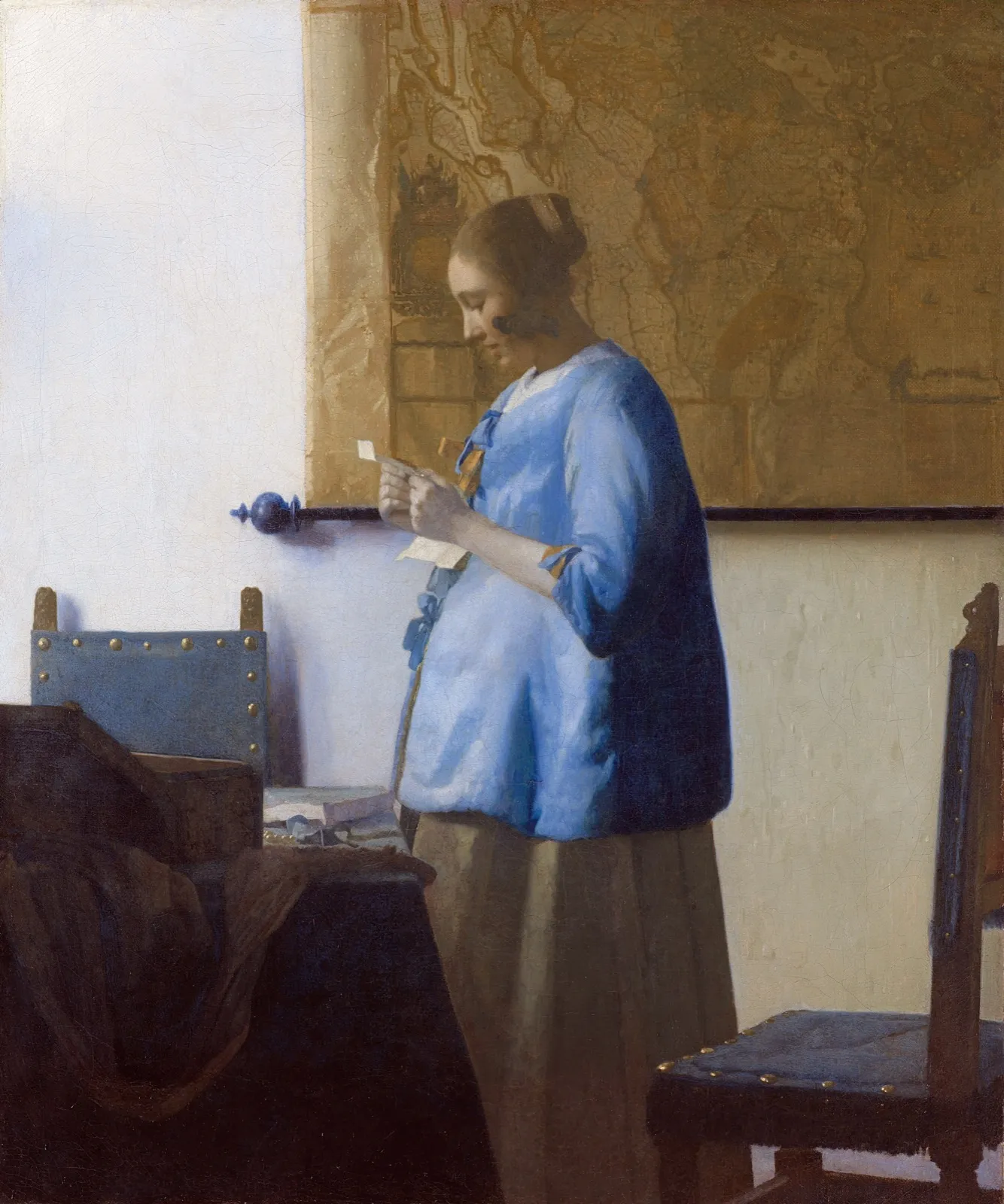 “Woman in Blue Reading a Letter” by Johannes Vermeer, about 1663. Rijksmuseum, Amsterdam. Public domain. A letter can be read for centuries, but it cannot be asked a question.
Availability feels permanent. Thomas Gilovich and Victoria Medvec showed in the 1990s that the regrets which grow over a lifetime are overwhelmingly regrets of inaction, and that we forget, in retrospect, why inaction once seemed sensible. (I wrote about their work in the regrets of the dying.) Asking a parent about their life is the purest case. “I can ask any time” is the exact condition under which people never ask.
Put these together and the outcome is almost arithmetical. The questions do not exist yet, the material is in a period you know nothing about, you have no hooks to generate questions from, and there is no deadline. Then there is.
Can you ask the questions before you have them?
Partly, and the Victorians found one of the better methods.
In the second half of the nineteenth century, families in Britain and France kept what were called confession albums: printed books with the same set of questions on every page, which the owner passed around to friends and relations to fill in. Your favourite virtue. Your chief characteristic. Your idea of happiness. Your idea of misery. The best-known example is the album of Antoinette Faure, in which her friend Marcel Proust wrote his answers around 1886, aged thirteen or fourteen. The format survives today as the Proust Questionnaire, still run in magazines. It survives because it works: a fixed set of questions about character, asked of everyone, produces answers that are read with fascination 140 years later. (It is a late chapter in the history of storytelling, and one of the first in which ordinary people were asked about themselves.)
The confession album solved the generation problem. The owner did not need to think of the right question for each person. Someone else had already imagined it, on behalf of a future reader. Oral historians use the same principle when they structure an interview around the course of a life rather than around the interviewer’s curiosity. A prepared list of questions to ask your parents about their life does the same job for a family.
Two further principles follow from the mechanisms above.
Ask for stories, not answers. A story is over-complete. If your mother describes the year you were born in detail, the recording contains the answer to “how did you cope?” whether or not you asked it. A specific question retrieves a specific answer; a story retrieves everything attached to it, including the answers to questions you will only think of in twenty years. I have four hours of my grandmother telling me about her life, filmed before she died. The questions I would ask her now are not the questions I asked then. Because she told stories rather than giving answers, some of them the recording answers anyway.
Ask the questions that every age wants answered. A few questions are robust to the schedule problem because they stay useful at every stage of your own life. What were you like at my age? What did you worry about when you had children? What would you do differently? What do you want me to know that I have never asked? The last one is a hedge against your own blindness.
The empty chair
Charles Dickens died at his home at Gad’s Hill in Kent on 9 June 1870, halfway through writing The Mystery of Edwin Drood. The young artist Luke Fildes, who was illustrating the novel, was asked by the family to stay on after the funeral. While he was in the house he painted Dickens’s study as it had been left: the desk by the window, the papers, and the empty chair.
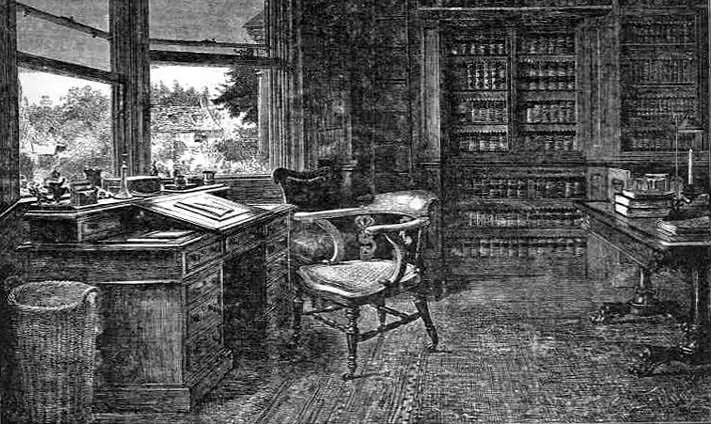 “The Empty Chair, Gad’s Hill, Ninth of June 1870”, engraving after Luke Fildes, published in The Graphic, 1870. Public domain.
The engraving ran in The Graphic and was reprinted around the world. Twelve years later a young Vincent van Gogh, who collected the magazine’s prints, wrote to his brother that he had acquired a copy and called it splendid. It is widely seen as an influence on his own painting of his chair in Arles, with his pipe on the seat, made in December 1888.
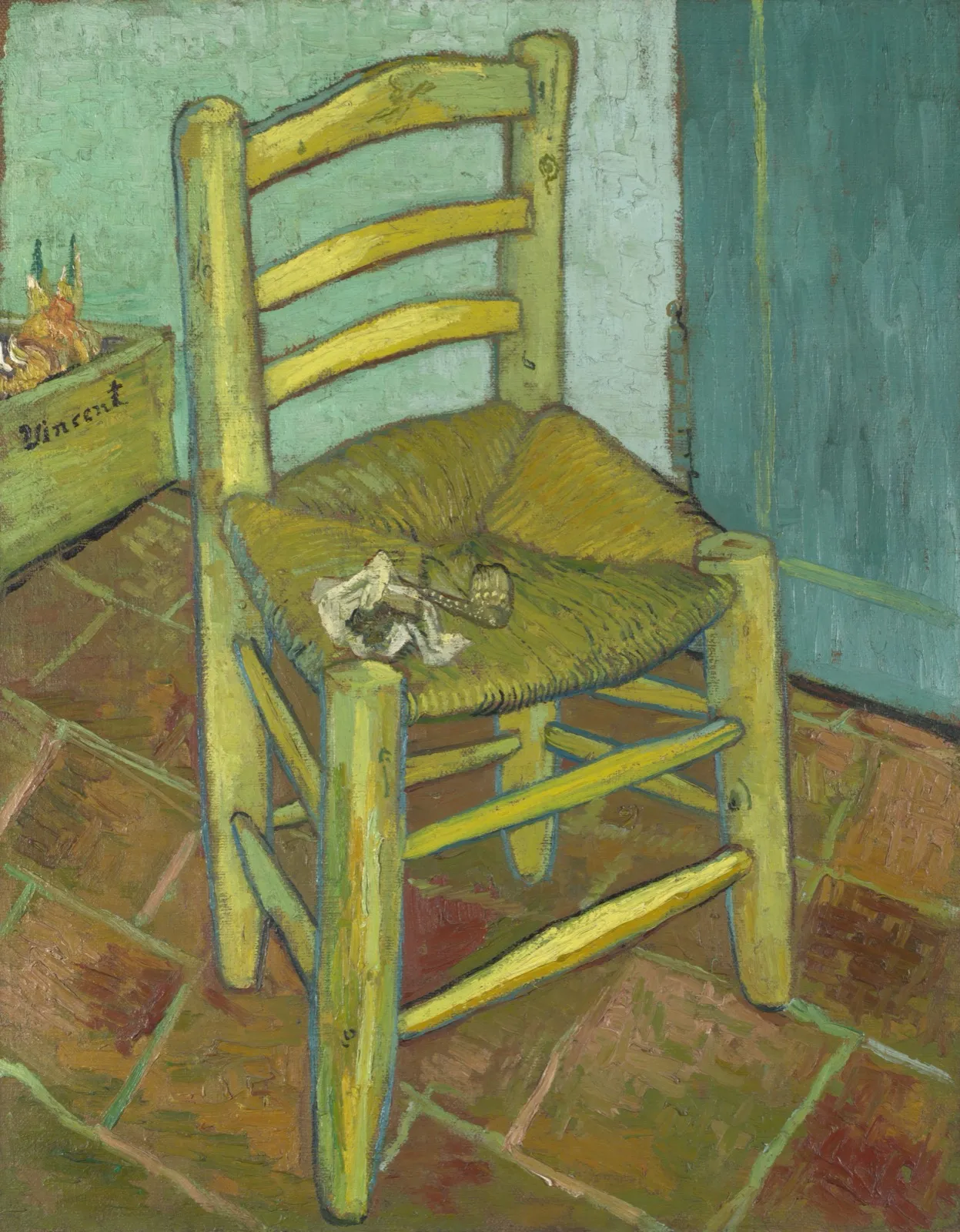 “Van Gogh’s Chair” by Vincent van Gogh, Arles, December 1888. National Gallery, London. Public domain.
The image resonated because everyone recognises it. The chair is where the person sat when they could have been asked. And Edwin Drood is the perfect emblem of what the chair leaves behind. Dickens died with the mystery unsolved. Readers have spent more than 150 years trying to work out whether Edwin was murdered and by whom, and no amount of ingenuity can settle it, because the only person who knew the answer took it with him.
Every family has an Edwin Drood: a question whose only answer died with the person. The research says this is predictable, and anything predictable can be prepared for. The questions you will want to ask your parents in twenty years are, for the most part, questions you can ask this weekend, provided you ask for stories rather than waiting for the questions to arrive. Prop a phone against a stack of books, sit them in a good light, and ask about the years before you existed. Everyone was built for exactly this, one question at a time, but the tool matters less than the timing. The phrase “questions I wish I had asked my parents” is searched by people for whom it is too late. This piece is for the people for whom it is not. If your mother is the one with most of the family’s stories, start with questions to ask your mum. If the person you want to ask keeps saying there is nothing to tell, see how to get a parent to talk about their past.


