
The regrets of the dying, and what they teach the living.
A carer’s list of deathbed regrets has been read by millions. The research behind it explains why we regret what we never did, and why that regret grows.
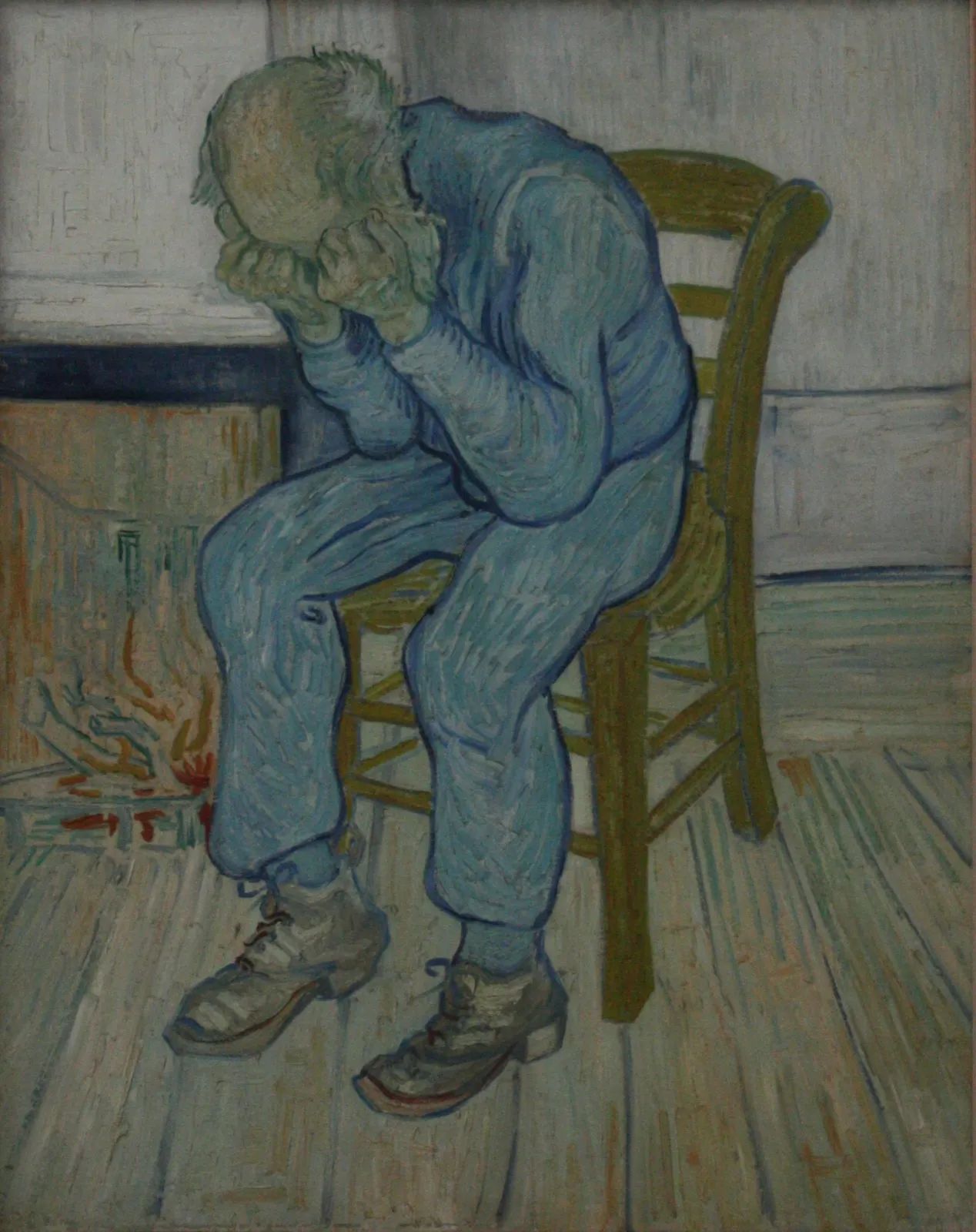
In November 2009, an Australian woman named Bronnie Ware published a short post on her blog, Inspiration and Chai. She had spent several years working in palliative care, looking after people in the last weeks of their lives, and she had noticed that when her patients talked about regret, they kept saying the same few things. She wrote them down under the title “Regrets of the Dying”.
The post spread far beyond anything a personal blog normally reaches. By 2012 it had been read by around eight million people, and the book that grew out of it, The Top Five Regrets of the Dying (2011), was eventually translated into 27 languages.
Most people who read the list remember one or two of the regrets. Fewer notice the pattern that runs through all five. None of them is about something the person did. Every one is about something they did not do. That pattern turns out to be one of the more robust findings in the psychology of regret, and once you understand why it happens, it stops being a sad observation about the dying and becomes a practical instruction for the living.
What are the top regrets of the dying?
In Ware’s account, the five regrets she heard most often were, in paraphrase:
- Not having the courage to live a life true to themselves, rather than the life others expected of them
- Working too hard, at the expense of time with the people they loved
- Not having the courage to express their feelings
- Losing touch with their friends
- Not letting themselves be happier
The first was the one she said she heard most. The second, she wrote, came from every male patient she nursed, men who had missed their children’s youth and their partner’s company in exchange for a career.
It is worth being clear about what this list is. It is not a study. It is one carer’s recollection of conversations with her patients, written up for a general audience. It would be easy to dismiss it as sentimental. The reason it deserves to be taken seriously is that researchers, working with very different methods, had already found something remarkably similar.
Do we regret what we did, or what we didn’t do?
In the 1990s the Cornell psychologist Thomas Gilovich and his colleague Victoria Husted Medvec set out to answer that question. Their findings, summarised in a 1995 paper in Psychological Review titled “The Experience of Regret: What, When, and Why”, depended almost entirely on time.
When people were asked about a regret from the past week, actions and inactions came up in roughly equal measure. When they were asked about the biggest regrets of their whole lives, the balance shifted sharply. When the researchers collected 213 life regrets from 77 people, ranging from students to retired professors and nursing-home residents, regrets about things people had failed to do outnumbered regrets about things they had done by roughly two to one: the education they did not pursue, the chance they did not take, the time they did not spend with family.
In other words, regret has a temporal shape. Regrets of action hurt sharply and then fade. Regrets of inaction start small and grow. By the end of a life, the second kind dominates, which is exactly what Ware observed at the bedside.
Why does the regret of inaction grow over time?
Gilovich and Medvec offered several explanations, and each one says something about how memory works.
We repair and rationalise our actions. When you do something you regret, you can apologise, undo it, or learn from it. You also tend, over time, to find the silver lining: the failed business taught you something, the bad relationship led to a better one. The mind is good at absorbing actions into a story about who you became. Inactions offer nothing to repair and no lesson to extract.
The consequences of an action are finite; the consequences of an inaction are not. If you took a job that went badly, you know roughly how badly. If you never took the job, the imagined alternative can expand indefinitely. What you missed is limited only by your imagination, and imagination improves with age.
We forget why inaction made sense at the time. When you decided not to call your father, or not to travel, or not to change careers, there were reasons: you were tired, busy, short of money, worried about how it would be received. Those reasons were vivid then. Decades later they have faded, while the missed opportunity has not. Looking back, the obstacles seem trivial and the decision inexplicable.
Unfinished business stays in the mind. Psychologists have long observed that incomplete tasks are remembered more readily than completed ones, an idea usually traced to the work of Bluma Zeigarnik in the 1920s. An action, even a bad one, is closed. An inaction remains open, and the mind keeps returning to it.
Put these together and the deathbed list becomes almost predictable. The dying do not regret their mistakes very much, because their mistakes have long since been digested. They regret the open loops.
Which regrets are about other people?
More recently, the writer Daniel Pink collected regrets from people around the world through what he called the World Regret Survey, which by the time his book The Power of Regret appeared in 2022 had gathered more than 16,000 responses from over 100 countries. He sorted them into four recurring categories: foundation regrets (not saving, not studying, not looking after your health), boldness regrets (not taking the chance), moral regrets (doing the wrong thing), and connection regrets.
 “Two Men Contemplating the Moon” by Caspar David Friedrich, 1819–20. Galerie Neue Meister, Dresden. Public domain.
Connection regrets map closely onto Ware’s fourth regret, and onto much of her second and third. They are about relationships that drifted: the friend you stopped calling, the sibling you never reconciled with, the parent you meant to know better. Pink observed that these relationships rarely end in a dramatic rupture. They fade, through a series of small decisions not to make contact, each of which felt reasonable at the time.
He also drew a useful distinction between a closed door and an open one. Some regrets can no longer be acted on, because the person has died or the opportunity has passed. Others can, but acting on them feels awkward. Most connection regrets, while both people are alive, are open doors.
What do the regrets of the dying miss?
There is one regret that does not appear on Ware’s list, because it does not belong to the dying. It belongs to the people they leave behind.
Since 2020 I have filmed more than a hundred life stories, including those of Holocaust survivors and members of my own family. When people hear what I do, the most common response is not a question. It is a confession: I wish I had asked my grandfather about the war, or I never found out how my mother came to this country, or I always meant to sit down with Dad and record him. It is almost always said in the past tense, and it has every feature Gilovich and Medvec describe. It is an inaction. The reasons for not doing it, mostly a vague sense that there would be time later, have faded. And what was missed seems, in retrospect, enormous: an entire life, told in the person’s own voice, now beyond reach.
This is a closed-door regret of the purest kind. Once the person has died, nothing can be repaired. You cannot apologise to an unrecorded story. (Why this particular regret is so predictable, and why the questions tend to arrive only after the answers are gone, is the subject of questions I wish I had asked my parents.) It is also the gap people feel most sharply when they sit down to write a eulogy and realise how much of the life they never asked about.
I filmed four hours of my grandmother telling me about her life before she died. I am conscious that I am in a minority, and also of how close I came to joining the majority. There was never a moment when filming her felt urgent. It only felt urgent afterwards.
How do you turn regret into a decision?
The useful thing about the regret of inaction is that it is predictable. If decades of research and a palliative carer’s notebook point in the same direction, you can anticipate what you are likely to regret and act before the door closes. A few principles follow from the psychology:
- Treat open loops as the priority. The conversations you have been meaning to have, with the people who are still here, are the regrets of the future in their earliest form.
- Notice when the reasons are small. The obstacles to calling a friend or asking a parent about their childhood feel substantial in the moment and look trivial from a distance. The distant view is usually the accurate one.
- Make the first step concrete. “I should spend more time with Mum” is a wish. “On Sunday I will ask her about the house she grew up in” is a plan. A good place to start is a list of questions to ask your parents about their life.
- Record it. A conversation remembered is valuable. A conversation filmed, where you can see a person’s face and hear their voice decades later, is something else entirely. The practical side is simpler than most people expect: see how to capture someone’s life story on video.
The lesson of the deathbed
Ware’s list resonated because it described something most readers recognised in themselves. Few of us are in danger of doing too much with the people we love. Most of us are in danger of doing too little, slowly, through a series of reasonable postponements.
The dying cannot act on their regrets. That is what makes theirs so painful to hear. The living still can, and the cost of acting has never been lower: the phone in your pocket can capture a parent’s story in an afternoon. That is why we built Everyone, an app that guides you through filming a life story one question at a time. But the tool matters much less than the decision. The regret you are most likely to carry is the conversation you meant to have, and the time to have it is while someone is still there to answer.


