How to write your grandparents’ life story, starting with their voice.
The best life stories written by someone else began as conversations. How to write your grandparents' life story, step by step, without losing their voice.
At first, Alex Haley could not get Malcolm X to talk about himself. Haley had been hired to help write Malcolm’s autobiography, and the interviews began in 1963, but Malcolm used them to talk about the Nation of Islam and its leader, Elijah Muhammad. The book was meant to be a life story, and the subject kept delivering speeches.
Two small things changed it. Haley noticed that Malcolm scribbled on paper napkins while he talked, so he began leaving fresh napkins beside his coffee and collecting them afterwards, and the scribbles told him what Malcolm was actually thinking about. Then, late one night, out of frustration, Haley asked a question that had nothing to do with politics. As he later recalled it: “Mr. Malcolm, could you tell me something about your mother?” Malcolm talked until nearly dawn. Much of what he said that night became the opening chapter of The Autobiography of Malcolm X, published in 1965, months after Malcolm was assassinated.
That is the whole method in miniature. If you want to write your grandparents’ life story, the writing is the second job. The first is getting them to tell it, in their own words, to someone who asks the right question. This piece explains why that order matters, how to do each step, and how to keep their voice from disappearing in the edit.
Why record before you write?
Because your grandparents are the only source, and talk is the form in which they can give it to you.
Very few people will write their own memoir, for reasons I set out in write a biography of yourself: it is long, lonely and addressed to no one in particular. Almost anyone will talk for an hour to a grandchild who is genuinely interested. Speech also runs at roughly 150 words a minute, so a single hour of conversation produces something like 9,000 words of raw material, more than most people could write in a month.
There is a second, less obvious reason. When you write from memory of a conversation, you write in your own voice. When you write from a recording, you can hear theirs: the phrases they repeat, the words they use for things, the way they build up to the end of a story. Those are what make a life story sound like a particular person rather than a summary of one. Boswell spent two decades writing Johnson’s talk down as it happened for exactly this reason. You can simply press record.
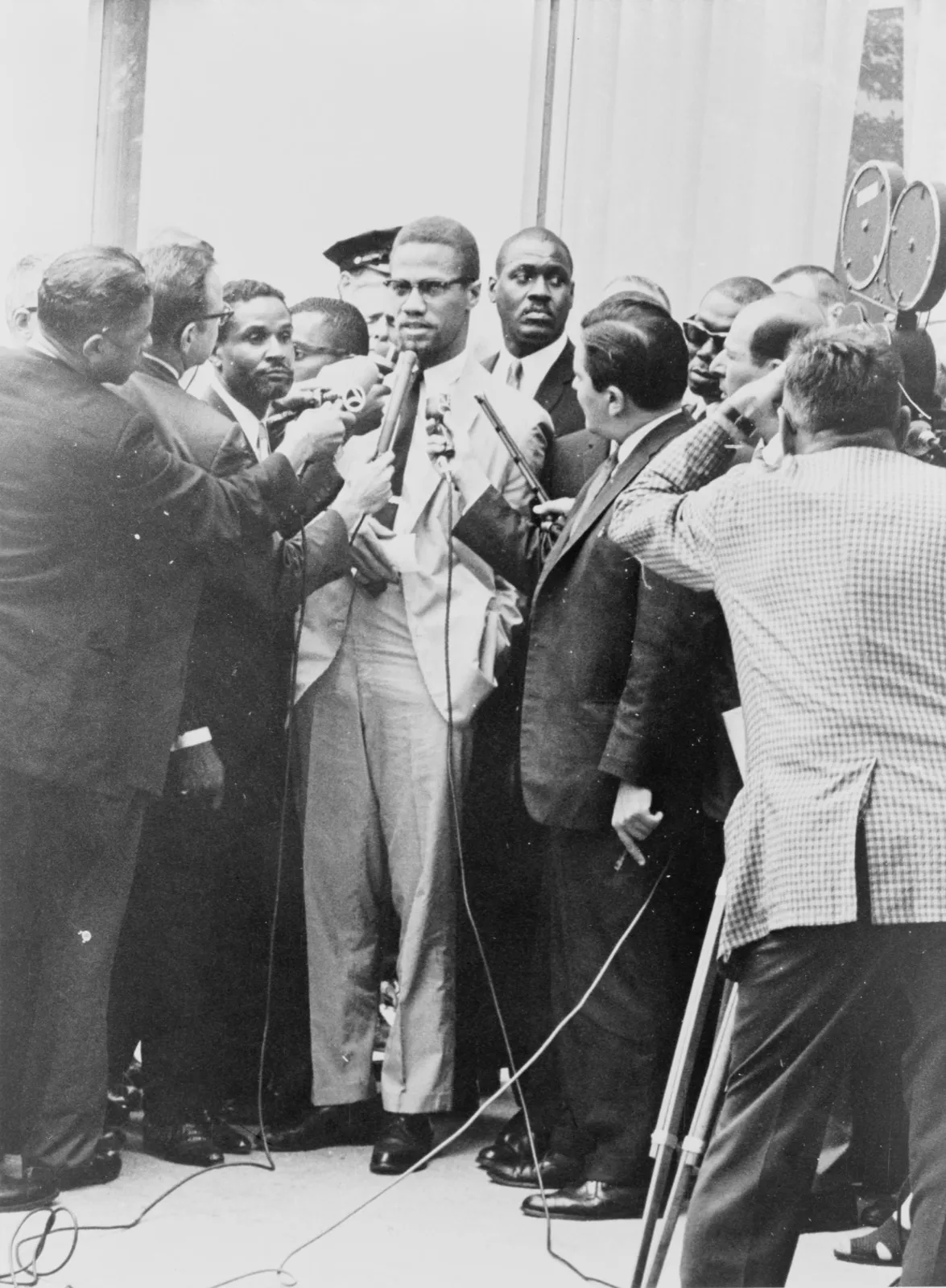 Malcolm X being interviewed by reporters in 1964, while his interviews with Alex Haley were still under way. Photograph by Herman Hiller, New York World-Telegram. Library of Congress. Public domain.
How to write your grandparents’ life story, step by step
- Record first, in short sessions. Thirty to forty-five minutes at a time, one period of life per session: childhood, leaving home, work, family, later life. Film it if you can, facing a window in a quiet room. (The practical side is in how to record your grandparents’ stories on your phone.)
- Ask for scenes, not summaries. “What was school like?” gets a verdict. “Describe the walk to school” gets a street, a weather, a friend. A list of good prompts is in these questions to ask your grandparents.
- Ask Haley’s kind of question. If they slide into opinions or a set piece, ask about a person instead: their mother, a teacher, a first employer. People often find it easier to talk about someone they loved than about themselves.
- Transcribe everything. Automatic transcription on a phone or computer is now good enough for a first pass. Correct names and places by hand, and mark anything you could not hear.
- Build a timeline. Put every dated event on a single page. Check what you can against records: certificates, ship lists, electoral rolls, old letters. Where the record and the memory disagree, keep both and note it.
- Choose the scenes. A life story is not a list of everything that happened. Pick the ten or fifteen moments where something changed, and let the rest be connecting sentences.
- Draft, then read it back to them. This is where errors and silences come out. It is also, in my experience, when people remember the most: hearing their own story read aloud reminds them of what is missing.
- Keep the recordings with the text. The written version is the map. The recordings are the territory. Store both together, in more than one place.
Whose voice should the story be told in?
There are two honest options, and one dishonest one.
The first is the “as told to” form Haley used: first person, in their words, edited for clarity and order. It reads like your grandmother speaking, because it largely is. It works best when you have long recordings and a grandparent with a strong way of telling things. The rule is to cut and rearrange freely, but to change wording as little as possible. Keep the dialect, the odd expressions, the sayings no one uses any more. They are the most perishable part of the record and the first thing a tidy edit removes.
The second is third person, written as a biographer: “She was born in 1938 in…”. This gives you room to add context the speaker would never think to explain: what a town was like, what a war meant, what a wage was worth. It also lets you include what other relatives remember. The cost is distance. Quote them directly and often, so the reader hears them between your paragraphs.
The dishonest option is the one most family histories drift into without meaning to: a first-person story written mainly by the grandchild, with invented dialogue and feelings attributed to someone who never expressed them. It reads smoothly and it is not theirs.
How much should you change?
This is the hardest question, and the most famous family collaboration in American publishing is a warning about it.
Around 1930, Laura Ingalls Wilder, then in her early sixties, wrote a memoir of her pioneer childhood called Pioneer Girl. It was written for adults and turned down by publishers. Her daughter, Rose Wilder Lane, an experienced professional writer, typed it up and reworked it, and over the following years mother and daughter turned the material into the Little House novels, beginning with Little House in the Big Woods in 1932. Lane also, without telling her mother, used parts of it for a novel of her own, Let the Hurricane Roar.
The novels are better constructed than the memoir. They are also different. Events were moved, softened or dropped: the family’s time in Burr Oak, Iowa, does not appear in the series, nor does the death of Laura’s baby brother. When the original manuscript was finally published in 2014, as Pioneer Girl: The Annotated Autobiography, edited by Pamela Smith Hill, it became a surprise bestseller, more than eighty years after it was written. Readers wanted the version in her own words.
The lesson is not that editing is wrong. Lane improved the books in ways that made them last. The lesson is that once the edited version exists, the original tends to vanish, unless someone keeps it. If you write your grandparents’ life story, you will make choices like Lane’s. Make them openly, and keep the unedited recordings, so that someone later can always go back to the source. It also helps to remember that memory itself is an editor; there is more on what it changes, and what it keeps, in is oral history reliable?
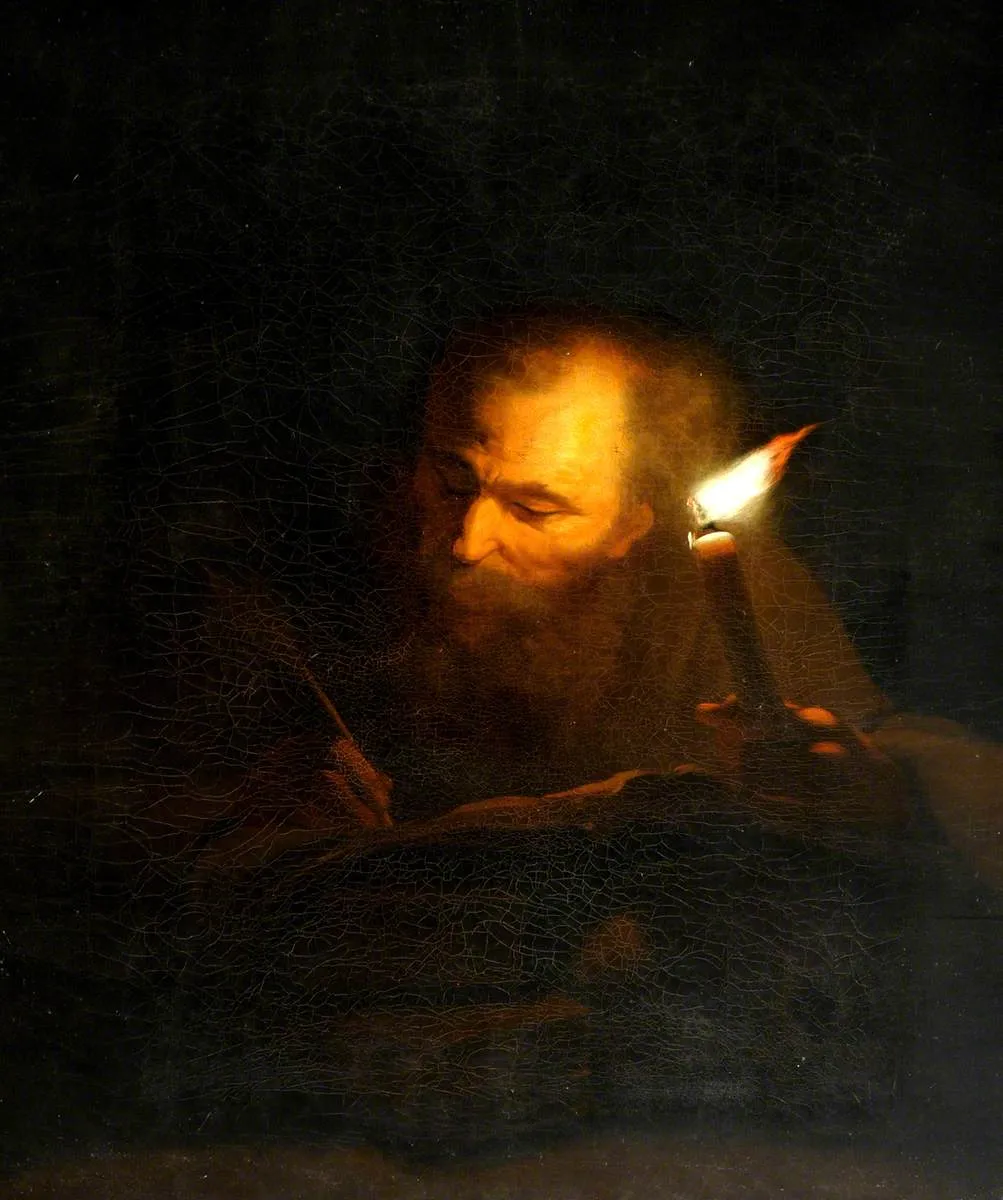 An Old Man Writing a Book by Candlelight, after Godfried Schalcken (1643–1706). National Trust, Calke Abbey. Public domain.
What should the finished life story include?
A useful written life story is usually shorter than people expect. Twenty to forty pages that a grandchild will actually read are worth more than three hundred that sit in a drawer. Aim for:
- A short opening that says who they are and why the story is being written now.
- The scenes, in roughly chronological order, each with a plain heading such as “The farm at Mildura” or “Leaving Budapest”.
- The people: parents, siblings, friends, with a line or two each, because these are the names that disappear first.
- Their own words on the big questions: what they are proud of, what they regret, what they want their great-grandchildren to know.
- A timeline and a family tree at the back, for the facts.
- Photographs with captions, written while someone is still alive to say who is in them.
- A note on sources: when and where the conversations were recorded, and where the recordings are kept.
Why keep the recordings?
Because the written story will always be your version of their life, however carefully you make it.
I have four hours of my grandmother talking about her life. She has since passed away. If I wrote her story now, I could get the facts right, and I could quote her accurately. I could not put on the page the way she paused before the harder parts, or the way she laughed before the end of her own jokes. Writing is good at events and order. It is poor at presence. In more than a hundred life stories I have filmed since 2020, the moments people go back to are rarely the facts. They are a voice, a face, a pause.
So write the book, if you want to. Families need the timeline, the names and the shape of a life, and a well-made written account can be read in an evening. But write it from recordings, and keep them beside it. If you want a simple way to gather the raw material, Everyone, a free app, asks one question at a time and saves each answer as a short video that the whole family can watch. The order is what matters: ask first, film it, then write.
Haley got the first chapter of one of the most influential autobiographies of the twentieth century from a single question about a mother. Your grandparents have their own first chapter. Someone just has to ask for it.