90th birthday ideas that give them an audience.
Someone turning 90 has outlived most witnesses to their youth. 90th (and 80th) birthday ideas for Grandma or Grandpa that give them an audience, not more stuff.
Anyone turning ninety this year was born in 1936. In September of that year, the last known thylacine died in the Beaumaris Zoo in Hobart. Edward VIII gave up the British throne in December. Regular television in Australia was still twenty years away.
When King George V began sending congratulatory messages to people who reached a hundred, in 1917, the number commonly cited for that first year is twenty-four. Reaching a great age used to be so rare that a monarch could personally acknowledge almost everyone who did it. Today ninetieth birthdays are common enough that “90th birthday ideas” is a steady search on Google, and most of the results are about cakes, banners and gifts.
Those things have their place. But there is something particular about a person turning ninety that most party advice misses, and it changes what the best ideas are. This piece explains what that is, then lists 90th birthday ideas (most of which work just as well for an 80th) in order of how much they give the person at the centre of it.
What does a 90-year-old actually want?
Ask most people in their nineties what they would like for their birthday and the answer is some version of “nothing, I have everything”. It is usually true. Ninety years is long enough to accumulate more possessions than anyone needs, and many people at that age are trying to give things away rather than receive more of them.
What they rarely have is an audience.
By ninety, a person has outlived most of the people who knew them when they were young: their parents, nearly always their older siblings, many of their friends, often a spouse. These were the people who shared their memories, who could say “do you remember the flood of ’52” and be answered. The guests at a ninetieth are mostly children, grandchildren and neighbours, who know the last thirty or forty years of the person and very little of the first fifty. The guest of honour is, in a quiet way, the only witness left to most of their own life.
Why do older people want to tell their story?
In 1963 the American psychiatrist Robert Butler published a short paper called “The Life Review: An Interpretation of Reminiscence in the Aged”. At the time, reminiscence in older people was widely treated as a symptom: a sign of decline, or of living in the past. Butler argued the opposite. He proposed that looking back over one’s life is a normal, near-universal process in old age, prompted by the sense that time is running out, and that it does useful work: making sense of what happened, settling old regrets, deciding what it all meant.
Butler’s paper started decades of research into reminiscence, and later studies have added nuance. Not all reminiscing is a deep life review; a good deal of it is simply telling stories, and some of it is rose-tinted. But the central observation has held up well. Older people are, as a rule, already thinking about their lives. What they lack is someone who wants to hear it.
There is a second finding worth knowing before planning a ninetieth. When older adults are asked to recall memories from across their lives, those memories cluster heavily in the years between roughly ten and thirty. Psychologists call this the reminiscence bump. For someone born in 1936, that is approximately 1946 to 1966: the end of the war, their school years, first jobs, courtship, the early years of raising children. That is the era a ninetieth birthday should draw from, because it is the era they remember most vividly and are least often asked about.
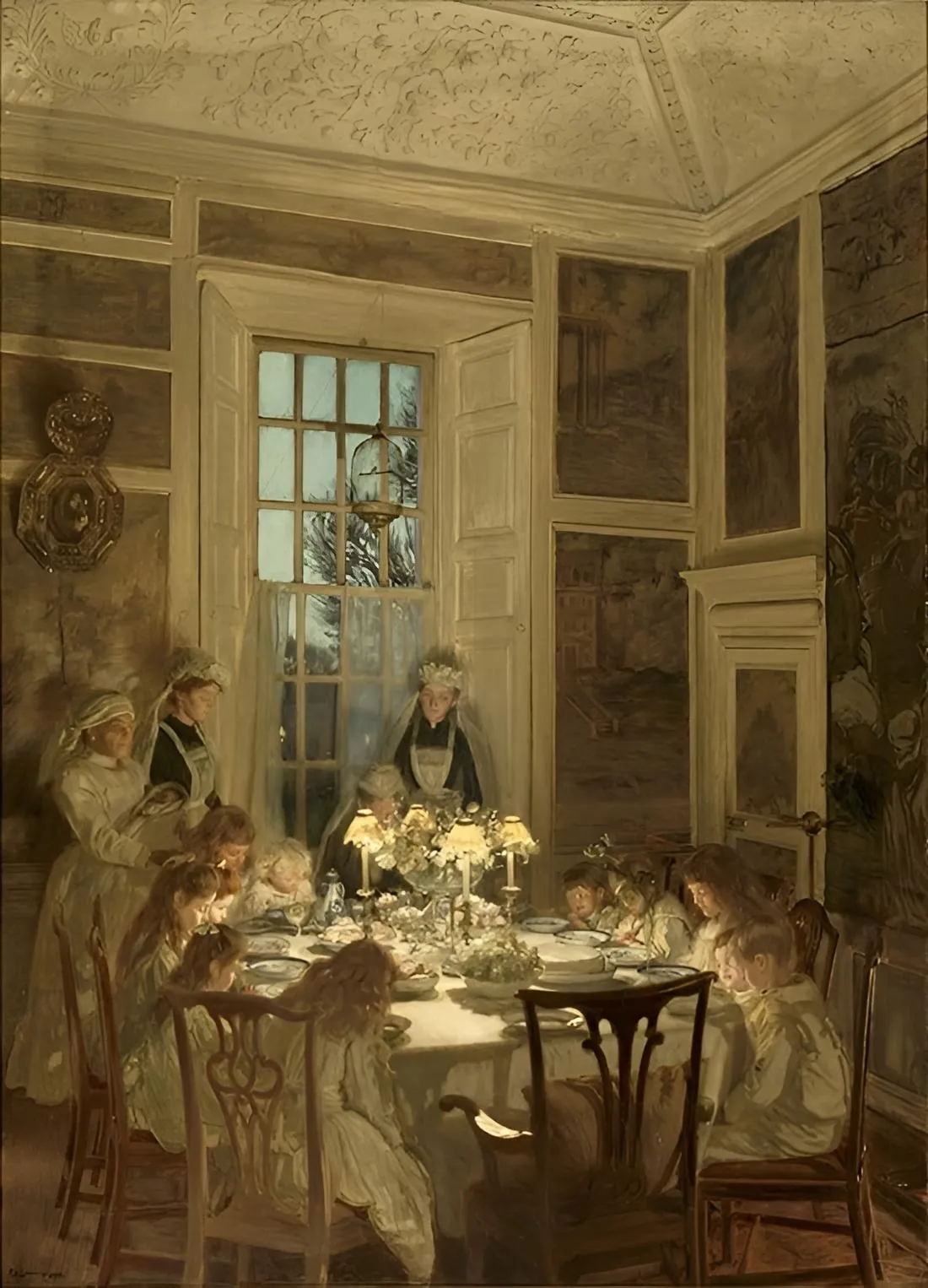 “Grandmother’s Birthday” by John Henry Lorimer, 1893. Public domain.
90th birthday ideas, from most to least lasting
These are ordered roughly by how much each one preserves of the person, not by how much it costs. The first is the one I would build the day around.
1. Record their life story as the gift. Before or after the party, sit down with them for an hour, with a phone on a small stand, and ask about their life, starting with childhood. Give them the recording, and copies to the family. For a person who “has everything”, being asked about their life by someone who genuinely wants to know is often the most valued gift of the day. (There is a list of prompts in questions to ask your grandparents before it’s too late, and a set grouped by stage of life in grandma memory book questions.)
2. A “This Is Your Life” afternoon. The television show began on NBC radio in 1948 under Ralph Edwards, moved to American television in 1952 and reached the BBC in 1955 with Eamonn Andrews as host. Its premise was simple: surprise a person, then bring on people from every chapter of their life to tell stories about them. A family version works well. Ask a few relatives, and any old friend still living, to tell one story each about the guest of honour, ideally from a different decade, and let them respond.
3. Music from their twenties. Make a playlist from the years the reminiscence bump predicts: for a 1936 birth, roughly the late 1940s to the mid-1960s. Play it during the party, and watch which songs they react to. Each reaction is the start of a story worth asking about.
4. A photo timeline they narrate. Lay out photographs in order, one or two per decade, and ask them to talk through each. Film it. The photographs exist already; the narration exists only in their head.
5. The year they were born. A newspaper front page from their birth date, prices from that year, the songs and events. It is a common idea, and its real value is as a prompt: “What do you remember your parents saying about that time?”
6. Ninety messages. Ask family, friends and former colleagues to send a short message or memory, and collect ninety of them in a book or a set of short videos. Messages that recall a specific moment (“the summer you taught me to swim”) are worth far more than general good wishes.
7. A visit to an old place. If they are able, take them back to the street, school, church or farm they grew up in, and ask them to describe what it was like. People remember far more when they are standing in the place itself, which is why the memory palace works.
8. A family recipe, cooked together. Ask them to teach one dish from their own mother’s kitchen, and record the lesson. Most family recipes were never written down, and the cook’s commentary is as valuable as the method.
9. A generations photograph. The guest of honour with their children, grandchildren and great-grandchildren. It costs nothing and becomes one of the most looked-at images a family owns.
10. Letting them speak. Most ninetieth parties include speeches about the person. Fewer give the person the floor. If they are willing, ask them to say a few words to the room, about anything they like, and record it.
For a grandparent in aged care or with limited energy, scale it down rather than skip it: a small visit, one or two of the ideas above, and twenty minutes of recorded conversation will mean more than a crowded room they cannot hear in. (Sentimental Christmas gifts for grandparents covers more ideas for those situations.)
How do you record their story at a 90th birthday?
Recording someone in their nineties is straightforward, but a few details decide whether it works. In my experience of filming more than a hundred life stories through The Archive since 2020, these matter most.
Do it on a different day from the party. A birthday party is loud and tiring. The best interviews happen in a quiet room on a calm morning, a few days before or after, when they are rested and not hosting anyone. (More on setting up in how to film an interview at home.)
Sit close, and face them. Hearing is often the limiting factor at ninety. Sit near, speak clearly, and keep background noise to a minimum.
Ask for scenes, not summaries. “Tell me about the house you grew up in” draws out far more than “Where did you grow up?”. Follow up with “What happened next?” and “Who else was there?”.
Keep it short and come back. Forty-five minutes to an hour is usually enough for one sitting. A second session a week later often goes better than the first, because they have spent the week remembering.
Bring an object. A photograph, a medal, an old letter. Objects unlock memories that direct questions do not.
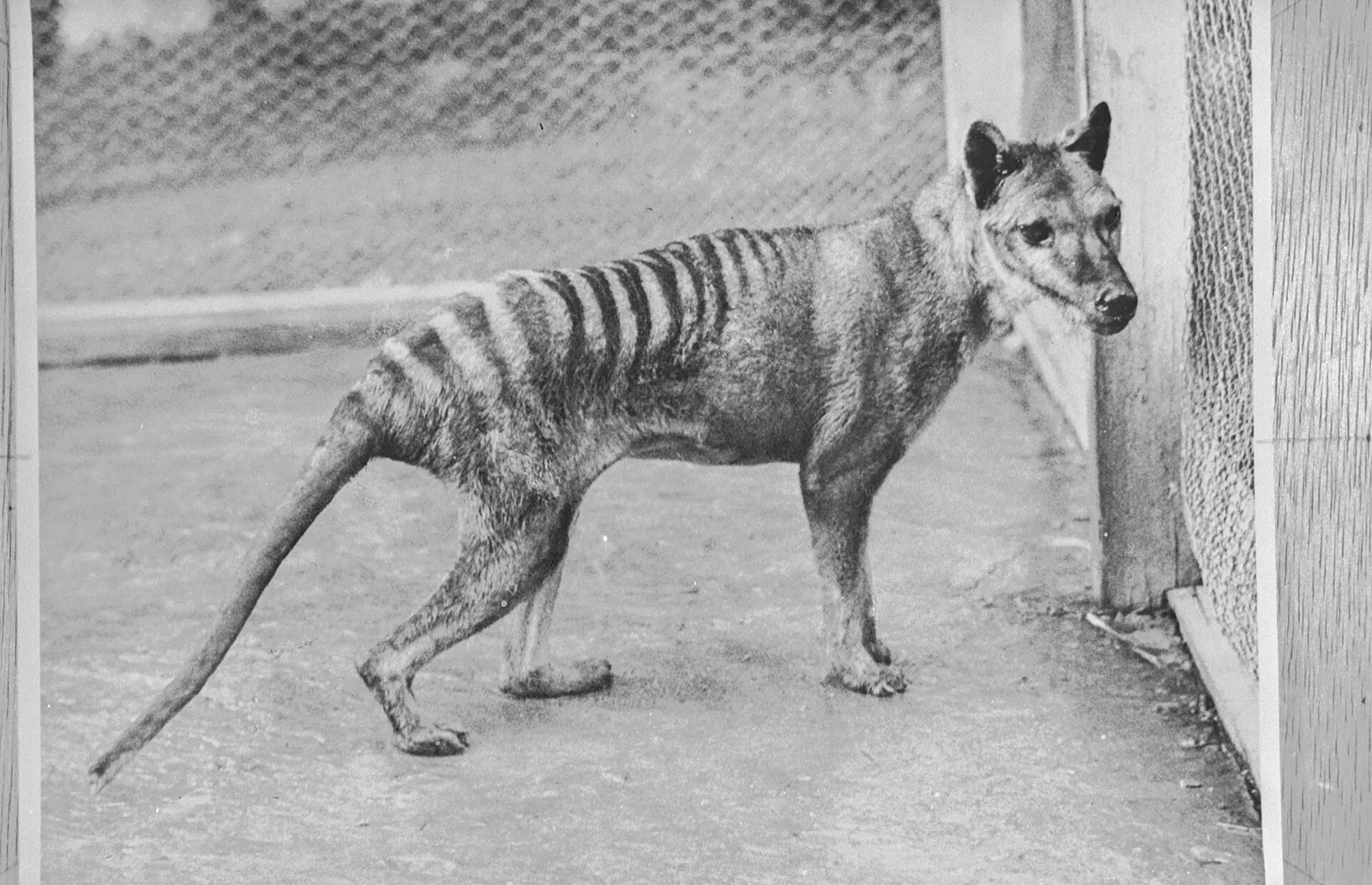 A thylacine at Beaumaris Zoo, Hobart, in 1936, the year the last known member of the species died there. Photo by Ben Sheppard. Tasmanian Archives (NS4371-1-1063). Public domain.
What will the family wish they had asked?
Someone born in 1936 lived through a world that will soon have no witnesses left: the end of the Depression, a wartime childhood, the arrival of television, the first jet airliners, the moon landing watched in a crowded lounge room. The thylacine above was photographed in its final year, and a handful of photographs and a few short pieces of film are almost all that remain of the species. While it was alive, there seemed no hurry to record it.
People are the same. I filmed four hours of my grandmother telling her life story before she died. Most families have nothing like that of anyone, not because it was difficult, but because nobody asked in time.
A ninetieth birthday is the one occasion when asking feels natural rather than morbid. The cake will be eaten and the banners thrown away. A recording of them telling their story, in their own face and voice, is the gift that lasts. The Everyone app was built for exactly this, offering one question at a time and keeping the family’s videos together, though any phone will do. What matters is that someone sits down with them before the candles are lit, and asks.