Grandma memory book questions, and why the answers belong on video.
The best grandma memory book questions, grouped by stage of life, plus why the blank lines in a guided journal hold so little, and how to get the full story.
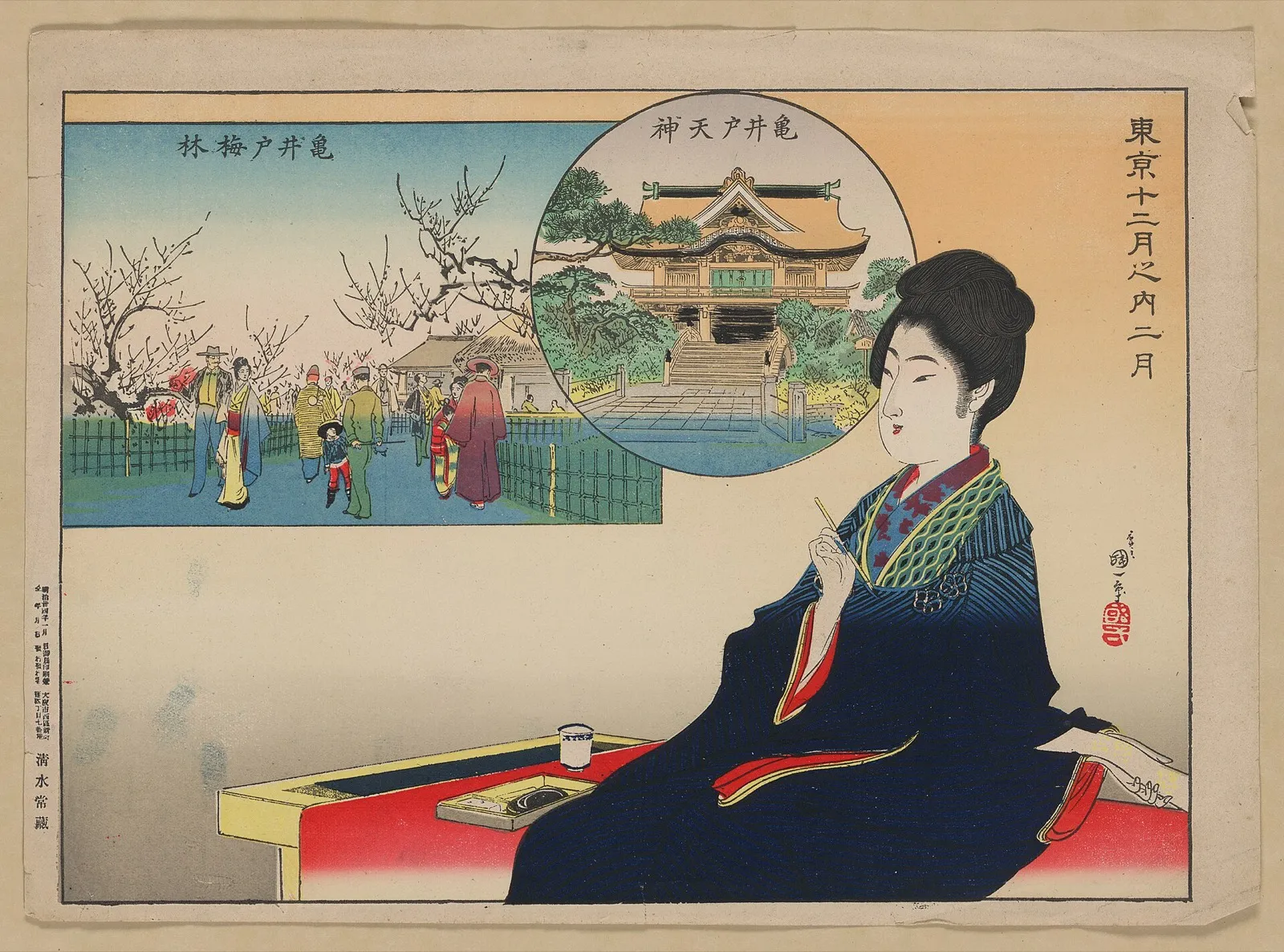
Sometime in the late 1880s, a French teenager filled in a page of a friend’s album. The album belonged to Antoinette Faure, whose father would later become President of France, and it was a kind of printed parlour game popular at the time: an English-style “confession album” with the same questions on every page, waiting for guests to answer. What is your favourite virtue? Your idea of misery? Where would you like to live?
The teenager was Marcel Proust. The album was rediscovered in 1924 by Antoinette’s son, published in a French literary journal, and in 2003 the manuscript sold at auction in Paris for more than €100,000. Its questions are now called the Proust Questionnaire, and magazines still put them to celebrities.
There are two lessons in that story for anyone buying a grandma memory book. The first is that a set of good questions, answered by the right person, can outlive everyone involved. The second is easier to miss: we remember Proust’s answers because of who he became, not because of what he wrote. His answers are short, witty and a little guarded. A page of blank lines gets a page of short answers. This post gives you the best grandma memory book questions, and then makes the case for recording the answers on video, where there is room for the whole story.
What is a grandma memory book?
A grandma memory book is a guided journal: a book of printed prompts (“Where were you born?”, “How did you meet Grandpa?”) with space beneath each one for a grandmother to write her answers by hand. It is usually given as a gift, filled in over months, and handed back to become a family heirloom.
The format is not new. One of the best known, Judith Levy’s Grandmother Remembers: A Written Heirloom for My Grandchild, was first published in 1983, and later editions are sold as having passed 1.6 million copies. Dozens of similar books now exist for grandmothers, grandfathers, mums and dads.
The appeal is obvious. Most grandmothers are rarely asked about their own lives, and a book of questions says, in a tangible way, that someone wants to know.
The best grandma memory book questions
Whether you buy a printed book or make your own, these are the questions worth asking. They are grouped in the order a life is lived, because memory is associative: recalling one period brings the neighbouring years within reach. Each is designed to ask for a scene rather than a summary.
Childhood
- What is your earliest memory?
- Describe the house you grew up in, room by room.
- What did your mother cook that you still think about?
- What were you afraid of as a child?
- Who was your best friend, and what did you get up to?
- What was a normal Saturday like when you were ten?
Growing up
- What were you like at sixteen?
- What music, films or fashions did you love?
- What was your first job, and what did it pay?
- When did you first feel like an adult?
- What did your parents hope you would become?
Love and family
- How did you meet the people who mattered most to you?
- What do you remember about the day your first child was born?
- What was the hardest part of raising a family?
- What was my parent like as a child?
- What family tradition do you hope we keep?
Work, places and change
- Where have you lived, and which place felt most like home?
- What is the biggest change you have seen in your lifetime?
- What did you have to give up, and was it worth it?
- What is something you did that took real courage?
Looking back
- What are you proudest of?
- What do you know now that you wish you had known at twenty?
- Which of your grandparents do you remember, and what were they like?
- What do you want your great-grandchildren to know about you?
- Is there a story you have never told anyone?
For grandmothers who would rather laugh than reflect, there are lighter openers in fun questions to ask your grandparents, a longer general list in questions to ask your grandparents before it’s too late, and questions about her own working life and ambitions in the best questions to ask your grandma.
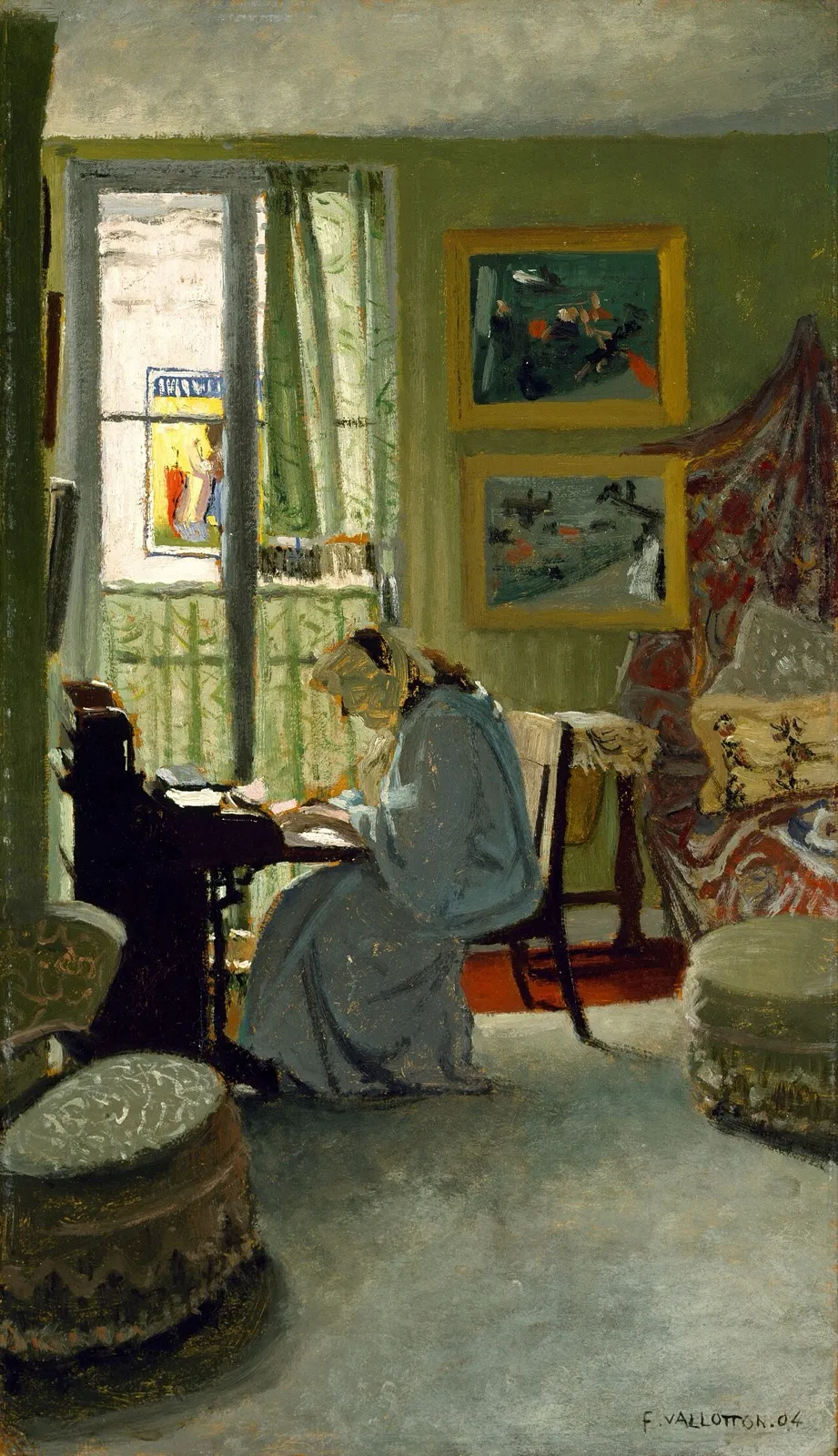 “Woman Writing in an Interior” by Félix Vallotton, 1904. Museum of Fine Arts, Houston. Public domain.
Why do memory books so often come back half-filled?
A familiar pattern goes like this. The book is received warmly. A few pages are filled in the first week. Then it goes on a shelf, and when it eventually comes back, the answers stop somewhere in the teenage years.
This is not a failure of love. It is a predictable result of the format, for three reasons.
Writing is slow. People speak at roughly 150 words a minute. Most adults handwrite at perhaps 20 to 30. A story that takes five minutes to tell would take the better part of an hour to write out by hand, so the written version gets cut down to its headline: “We met at a dance in 1958.”
Hands and eyes age. In the Framingham Study, researchers who examined people aged 71 to 100 found symptomatic osteoarthritis of the hand in about 26 per cent of women and 13 per cent of men (Zhang and colleagues, American Journal of Epidemiology, 2002), along with weaker grip and more difficulty with fine tasks. Add failing eyesight and a pen becomes a chore for exactly the people memory books are written for.
The lines set the length. A prompt followed by four ruled lines tells the writer how much is expected. It invites a sentence, not a scene. And many people become guarded when they write for posterity; the act of putting something in ink makes it feel permanent and judged, so they tidy it. Proust, writing in a friend’s album, gave clever answers rather than confessions.
The result is that the most valuable material, the digressions, the second story that the first one reminded her of, the thing she says after a pause, never reaches the page.
Why does video work better for memory book questions?
The questions in a memory book are good. The problem is the medium the answers are asked to fit into. Video removes each of the obstacles above.
Talking is fast, so a five-minute story stays five minutes long. It needs no grip strength and no reading glasses. There are no ruled lines, so the answer can be as long as the memory. And when a person talks to someone they love, rather than writing for an imagined future reader, they tend to relax and tell it the way they would at the kitchen table.
Video also keeps what writing cannot: her face, her voice, her accent, the way she laughs before reaching the punchline. I have four hours of my grandmother telling the story of her life, filmed before she died. A written book of her answers would have told me what happened to her. The video lets her great-grandchildren meet her. (There is a longer argument for this in record a life story on video.)
There is one thing a handwritten book keeps that video does not, and it deserves to be taken seriously: the handwriting itself. A grandmother’s script on a page is an object, and many families treasure it for that reason alone. The solution is not to choose. Ask her to write a few short answers by hand, perhaps a dedication on the first page and her full name and birthplace, and record the stories on video.
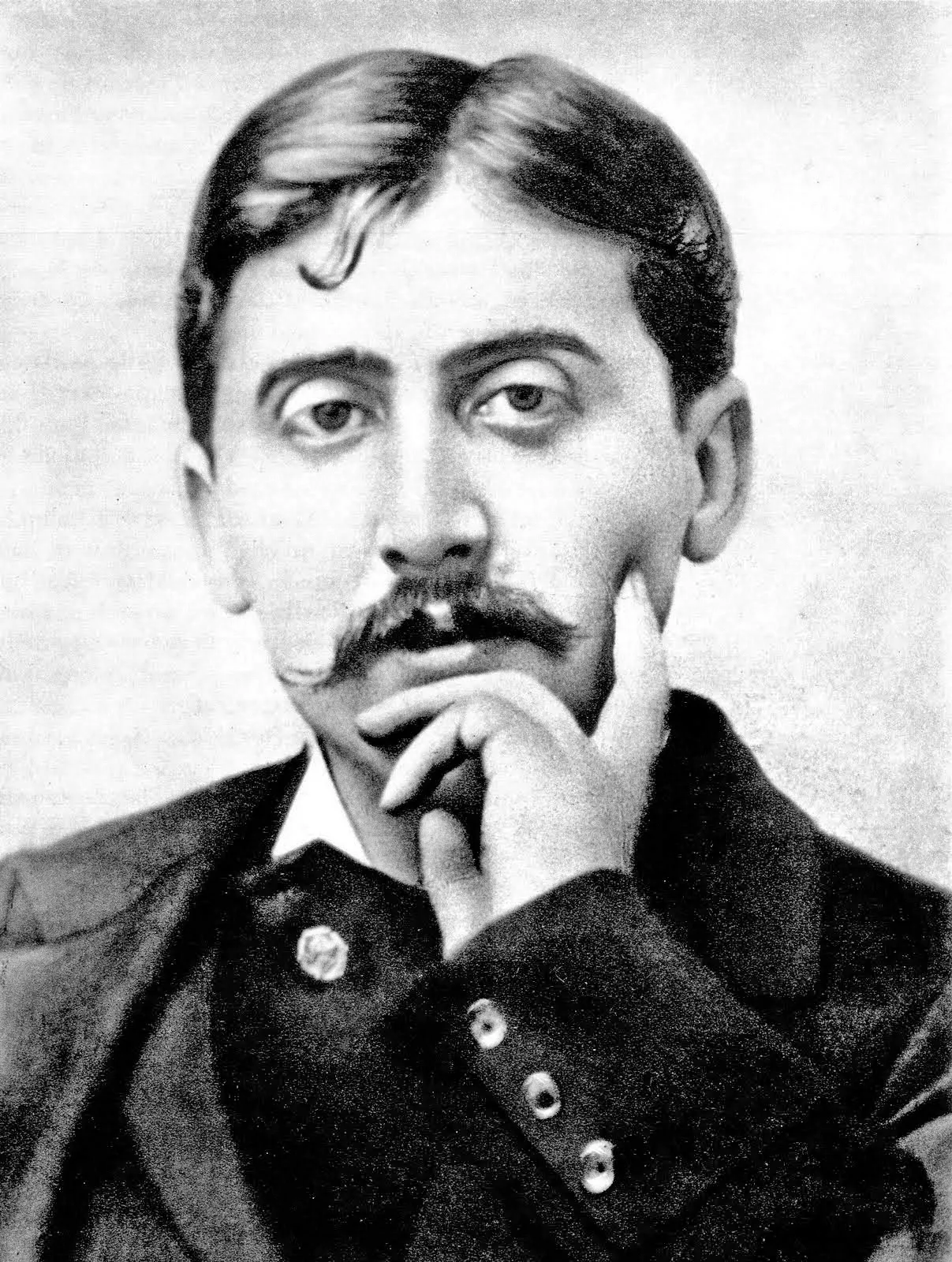 Marcel Proust, photographed by Otto Wegener in 1895, a few years after he answered the questions in Antoinette Faure’s album. Public domain.
How to turn a memory book into a recorded interview
If you already have a memory book, or have bought one as a gift, it can become the script for something much fuller.
- Use the book as your question list. Choose eight to ten prompts for one sitting. Fewer is better; the good answers take time.
- Sit with her and ask out loud. A question asked by a grandchild gets a different answer from one read off a page. Follow up with “What happened next?” and “Who else was there?”
- Film in short sessions. Thirty to forty minutes is plenty. Come back another week for the next chapter of her life.
- Bring photographs. An old photo will unlock memories that no printed prompt can reach. Hand it to her and ask, “Tell me about this.”
- Set up simply. Face her towards a window, prop the phone at eye level, and turn off the television. The details are in how to film an interview at home.
- Let her write the bits she wants to write. The book still becomes an heirloom, with the video as its companion.
If you are looking for a gift rather than an activity, the same idea underpins the suggestions in sentimental Christmas gifts for grandparents: the most valuable present is usually the time and attention to ask.
The questions are not the hard part
Proust’s page survived because someone kept the album for decades. Most family records are lost in the same way they are made: casually. A memory book half-filled on a shelf is still better than nothing, but it captures a fraction of what the person could have told you.
The questions above will work in any format. What matters is that someone asks them while the answers are still there to be given, and records the answers in a form that keeps the person, not only the facts. The Everyone app was built around that idea, presenting memory book style questions one at a time so a grandmother can answer on video, but a phone camera and an afternoon will do.
Most grandmothers have been waiting a long time for someone to ask. The blank lines were never going to be enough room.