The best questions to ask your grandma, about her, not just the family.
The best questions to ask your grandma about her life, from girlhood to work, and why the family’s memory-keeper is so rarely asked about herself.
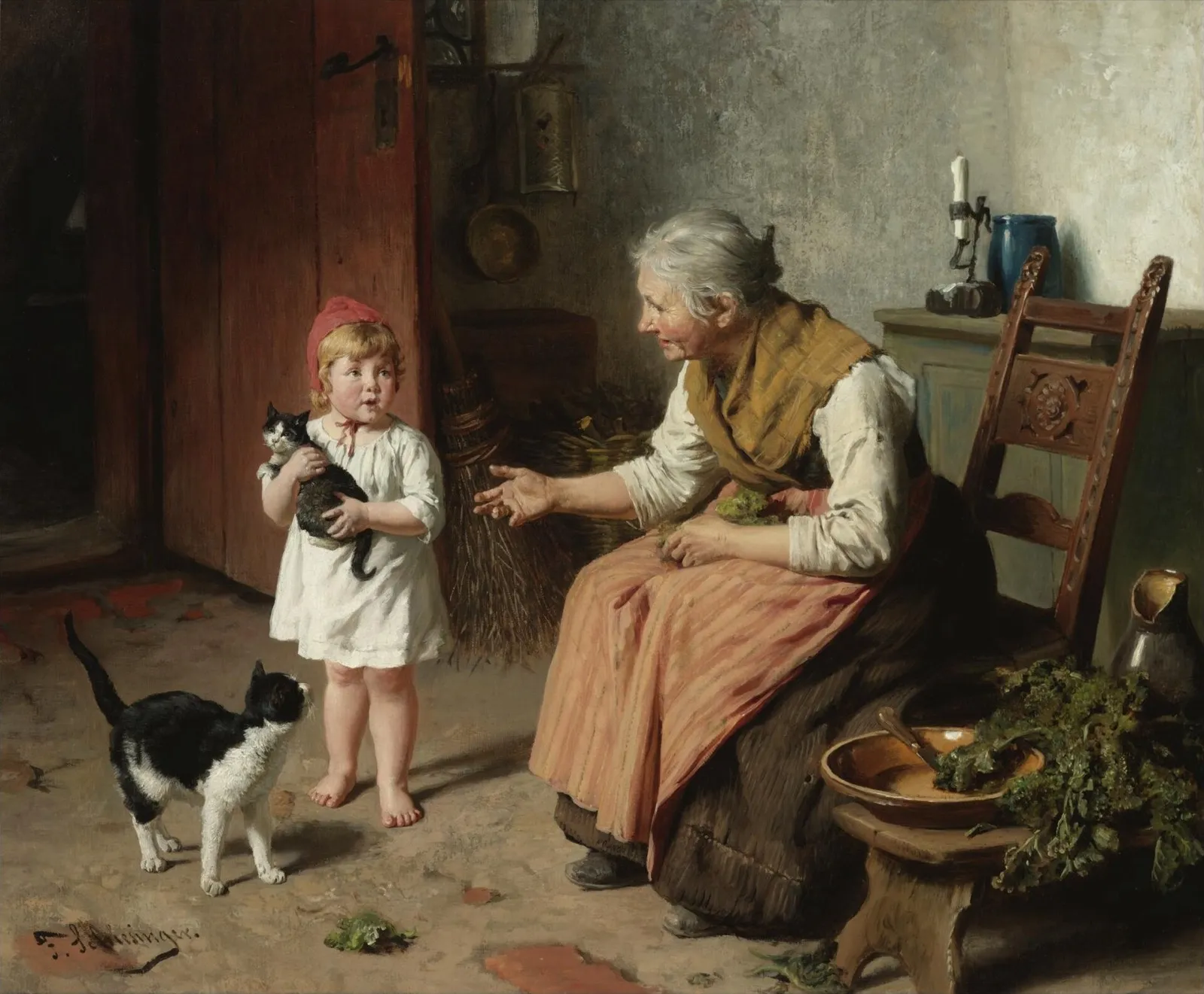
If your grandmother is your mother’s mother, part of you once lived inside her. A female foetus forms her entire supply of eggs before she is born; by around twenty weeks of pregnancy she has something like six or seven million of them. So while your mother was growing in your grandmother’s womb, the egg that would eventually become you was already forming inside your mother. For a few months, three generations of your family occupied one body.
It is a striking fact, and it points to a stranger one. Most of us are biologically closer to our grandmothers than we will ever be in knowledge. We know her as a grandmother: her kitchen, her cooking, the way she says our name. We know very little about the girl, the young woman and the worker she was for the half-century before we arrived.
This post gives you the best questions to ask your grandma about her life. But it starts with an argument about which questions matter most, because the ones people usually ask a grandmother are about everyone except her.
Why is your grandma the family’s memory?
In 1985 the Canadian sociologist Carolyn Rosenthal published a study in the Journal of Marriage and the Family with a name for a job that nobody is paid to do. She called it kinkeeping: the work of keeping a wider family in touch with itself. The kinkeeper remembers the birthdays, writes the cards, passes on the news, organises the gatherings and knows who has fallen out with whom. Rosenthal found that about half of the families she studied could name a person in this role, and that the person named was overwhelmingly a woman, most often a mother.
Kinkeepers age into grandmothers. By the time she is in her seventies or eighties, the woman who spent decades doing this work is usually the family’s best living index of itself: who married whom, which cousin moved where, what happened to the great-uncle no one mentions. Evolutionary psychologists have measured a related pattern. In a 1996 survey of adults in Germany, Harald Euler and Barbara Weitzel found that people rated their maternal grandmother as the grandparent who had cared for them most, ahead of both grandfathers and the paternal grandmother. Many of us spent more time in one grandmother’s company than with anyone else of her generation.
There is also a plainer reason. Women in Australia, as in most countries, live several years longer than men on average. In many families, a grandmother is the last grandparent alive, and therefore the last person who can be asked about a whole generation.
Why do we ask her about everyone but herself?
Here is the problem with the kinkeeper. Because she knows everyone’s story, she is asked for everyone’s story. Families ask her for the recipe, the family tree, the date of a wedding, the name of a cousin in a photograph. She becomes a reference library, and nobody thinks to ask the librarian about her own life.
For many women of her generation, that life was also shaped by limits that are now easy to forget. In Australia, a woman in the Commonwealth Public Service was required to give up her permanent job when she married. The marriage bar was not lifted until 18 November 1966, within the lifetime of most grandmothers alive today. Telephonists, typists, clerks and teachers in many workplaces faced the same expectation, written or unwritten. A great many grandmothers had a working life, an ambition or a talent that ended at the altar, and were rarely asked about it again.
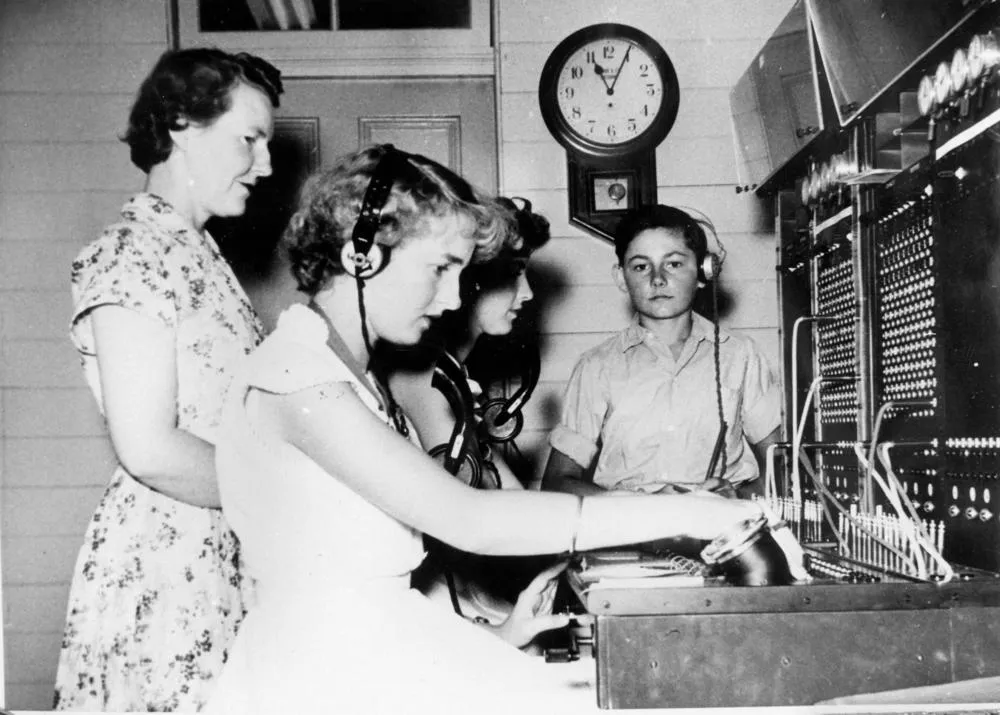 Telephonists Dorothy Watter and Noreen Ryan at the Kalbar telephone exchange, Queensland, 1954, with travelling supervisor Miss A. Boden. Photographer unidentified. State Library of Queensland. Public domain.
So the most valuable questions to ask your grandma are not the ones she is used to. They are the ones about her own choices, before she was anyone’s mother.
What questions should you ask your grandma?
The principle behind every good interview question applies here: ask for scenes, not summaries. “What was school like?” gets a sentence. “Describe your walk to school” gets a street, a neighbour and a dog. The list is in roughly the order a life is lived, because memories of one period bring the neighbouring years within reach.
Her as a girl
- Describe the house you grew up in. Where did you sleep, and who did you share with?
- What jobs were you expected to do at home that your brothers were not?
- What did you want to be when you grew up? Did anyone ask you?
- Who was your closest friend, and what did you get up to?
- What were you afraid of, and what got you into trouble?
Her mother and grandmother
These are questions only she can answer, because she is the last person who knew these women as people.
- What was your mother like when she was not being a mother?
- What did your mother or grandmother teach you that you still do?
- Was there a woman in the family everyone talked about, admired or warned you against?
- Did your mother ever tell you what she had wanted for her own life?
Her working life
- What was your first job, and how did you get it?
- What did you earn, and what did you spend it on?
- Did you have to stop working when you married or had children? How did you feel about it?
- What were you good at that most people in the family never saw?
Love and partnership
Do not assume a single marriage, a happy one, or any marriage at all. Let her tell you what mattered.
- Who were the people you loved when you were young?
- How did you meet the people who mattered most to you, and what was your first impression?
- What did people expect of a young woman in a relationship then, and what did you think of it?
For a fuller set on this theme, see these questions to ask your parents about how they met; most of them work just as well for a grandmother.
Becoming a mother, then a grandmother
- What do you remember about the day your first child was born?
- What was my mum or dad like as a child? What did they get into trouble for?
- What did you do differently from your own mother, on purpose?
- What did you feel the first time you held a grandchild?
Looking back
- What are you proudest of that has nothing to do with the family?
- What chance did you not take, and do you still think about it?
- What do you know now that you wish someone had told you at twenty?
- What do you want your great-granddaughters and great-grandsons to know about you?
- Is there anything nobody has ever asked you that you would like to talk about?
For more general questions that work for any grandparent, see questions to ask your grandparents before it’s too late. For her husband or your other grandfathers, there is a companion list of questions to ask your grandpa. If she enjoys a lighter start, fun questions to ask your grandparents often lead to the serious stories by a side door.
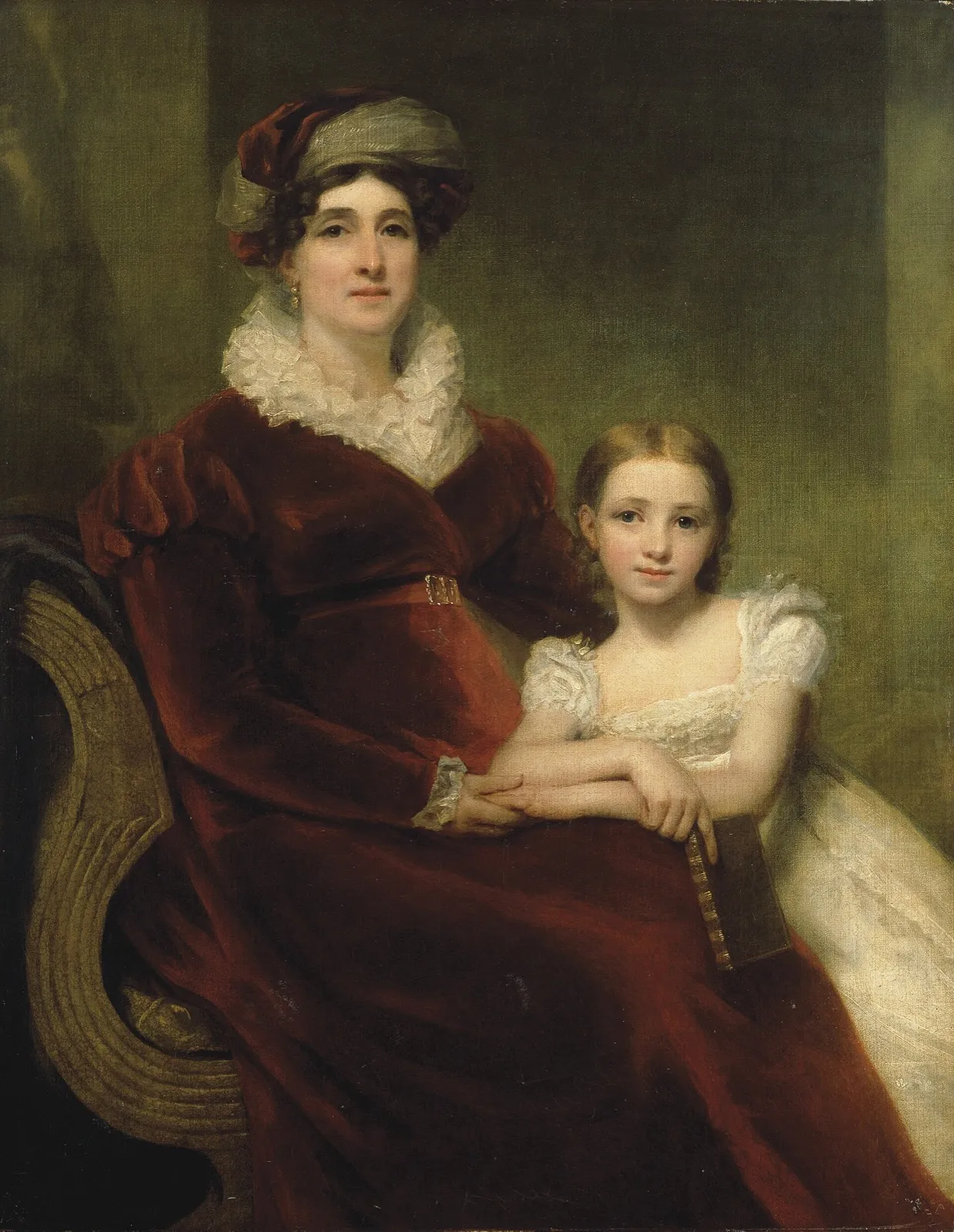 “Mrs Alexander Allan with her Granddaughter” by Sir Henry Raeburn, early 19th century. Public domain.
How do you ask your grandmother these questions before she dies?
People often search for questions to ask a grandmother “before she dies”, and the phrase captures the real difficulty. The urgency is accurate, and it is also what makes the conversation hard to start. Nobody wants to sit down with their grandmother and announce, in effect, that they are preparing for her death.
Three things make it easier.
Ask about her, not about posterity. “I realised I don’t know what you wanted to be when you were a girl” is true, specific and flattering. It mentions nothing about legacy.
Use her expertise as the door. Because she is the kinkeeper, she is comfortable talking about the family. Start there, with an old photograph or a family recipe, and then turn the question: “And what were you doing at that age?” The move from the family’s story to her own is usually smaller than it looks.
Keep it short and come back. Thirty to forty-five minutes is plenty, and a second visit tells her the first was not a formality. The practical details, including hearing, pace and time of day, are in how to interview older family members.
If she is unwell, the questions need to change shape. There is gentler guidance in questions to ask a dying parent, which applies equally to a grandparent, and in questions to ask grandparents with dementia.
Why film the answers?
I have four hours of my grandmother telling me the story of her life. She has since passed away. What I return to is not the dates. It is her face when she reached a part of the story she had decided to tell me after all, and the way she laughed before she reached the end of a joke. A written record would have kept the events and lost her.
There is a particular reason this matters with grandmothers. The kinkeeper’s knowledge has always been passed on by talking, and almost never written down, which is why so little of it survives from earlier generations. A guided journal helps a little, but as I argued in grandma memory book questions, a page of ruled lines invites a sentence rather than a story. A phone propped at eye level invites the whole story, in her own voice; here is how to record your grandparents’ stories on your phone.
The Everyone app was built for exactly this, presenting one question at a time so you can watch her rather than a list. But any phone and an afternoon will do.
Start with one question
Choose one question from the list, ideally “What did you want to be when you grew up?”, and ask it the next time you see her. Then ask what happened next.
Your grandmother has spent much of her life keeping the family’s stories. She is very likely the person in your family who has been asked about herself least. Ask her while she can still answer, and record the answer in a form that keeps her face and voice, so that the people who come after you can meet the woman, and not only the grandmother.