The best questions to ask your uncle, the family's little grandfather.
The best questions to ask your uncle about his life and your family, including good and funny ones, and why he often tells you what your parents never did.
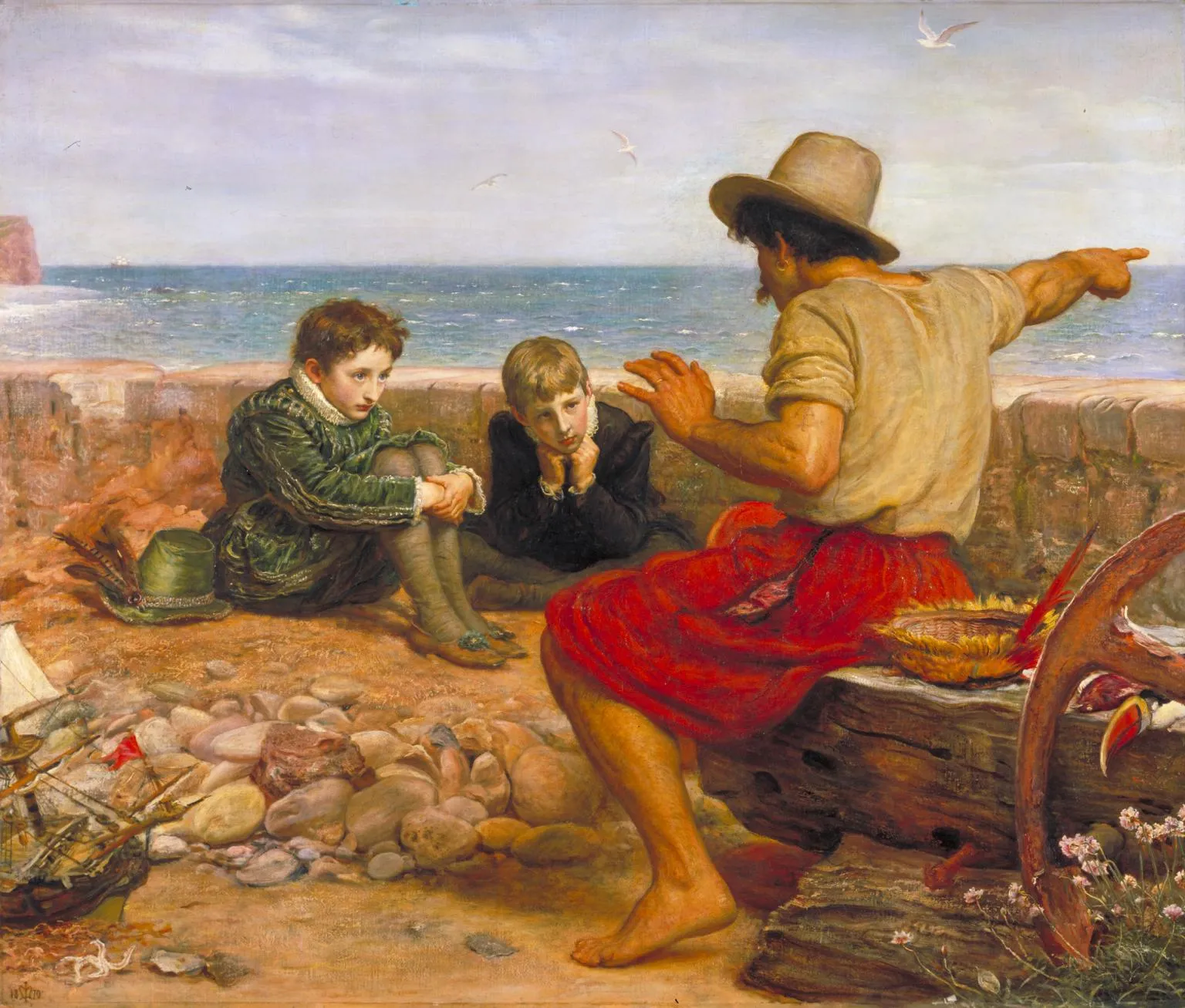
The Latin word for a mother’s brother was avunculus, which means “little grandfather”. Roman writers kept a separate word, patruus, for a father’s brother, but the one for the mother’s side carried the idea that this man stood a step behind the parents and a generation above the child, a kind of junior grandparent. English took the word through Old French as “uncle”, and the idea came with it.
The idea is older than Rome’s literature and more widespread than Rome. In his Germania, written around AD 98, Tacitus says that among the Germanic peoples a sister’s sons were held in as much esteem by their uncle as by their father, and that some regarded this bond as even closer and preferred it when taking hostages. Whatever the Germans actually did, a Roman writer thought it worth recording that an uncle could be trusted with a family’s children.
Today the uncle has almost no formal role, and that is the reason to ask him questions. If you are looking for good questions to ask your uncle, the starting point is that he is probably the only adult left who knew your parent as a child and has never been asked about it.
This post gives you the best questions to ask your uncle, including funny ones, grouped by what he can tell you that nobody else can.
Why ask your uncle about your family?
An uncle, whether he is your parent’s brother or married into the family, sits in a particular spot. Three things follow from it.
He saw your parent grow up from the side. If he is your mum’s or dad’s brother, he shared the house, the table and the arguments. He knows who got blamed, who got the good bedroom and what your father said the night he left home. Siblings remember a shared childhood differently, and the sibling’s version is the one you cannot get anywhere else. (The questions to ask your siblings post explains why the versions differ.)
He has a licence your parents do not. An uncle usually has the affection without the discipline. He did not have to raise you, so he can be the relative who told you something you were not supposed to hear, who let you stay up, who treated you as a small adult. That freedom carries over into what he will tell you now. Parents edit their past for their children. An uncle often will not.
He is often the keeper of the objects. The toolbox, the fishing rods, the photographs of your grandfather at work, the old car: in many families these go to the sons, and the sons’ brothers know the stories attached to them. If your uncle has something of your grandparents’ in a shed or a spare room, the object is a better opening than any question.
What kind of stories does an uncle tell?
Uncles tend to tell funny stories. This is useful and it needs care.
A funny story is a compressed one. It keeps the scene, the people and the punchline, and drops most of what was going on around them. Told at family gatherings for decades, it also wears smooth. The tale of how your grandfather drove into the creek in 1974 may be true in outline and altered in every detail. That does not make it worthless. The fact that the family chose to keep this story, and told it with affection, is itself information about your grandfather. But it means you should ask the questions the joke leaves out: what year it was, who else was in the car, what happened afterwards, and who told it first.
The other side is that humour is how many men, and many uncles, approach things that were hard. A story about the day the farm was sold will often arrive wrapped in a joke. When it does, the question to ask is a simple one: “What was that really like?” Said quietly, after the laugh, it often produces a different tone and a second, longer version.
What are the best questions to ask your uncle?
As in any interview, ask for scenes and examples rather than summaries. “Tell me about the worst job you ever had” will do better than “Did you work hard?”
About his own life
- What was your first job, and what did you spend your first pay on?
- What did you want to do when you left school, and what actually happened?
- Where have you lived, and which place felt most like home?
- What is the best decision you ever made, and what is the one you would change?
- Who taught you the most about how to be an adult?
- What did you do that your family did not expect?
About your parent as a child
- What was my mum (or dad) like when you were kids?
- What did you two fight about?
- What did they get away with that you did not?
- What is a story about them that I probably have not heard?
- When did you first realise they were going to be a parent?
About your grandparents
You may have known them only as grandparents. He knew them as parents.
- What were Mum and Dad like when you were small?
- What did they argue about, and what made them laugh?
- What was their worst year, and how did the family get through it?
- What did your father teach you that you still do?
- What do you wish I knew about them?
Funny and good questions
If the room is relaxed, light questions work as openings and often lead somewhere serious.
- What is the most trouble you ever got into as a boy?
- What was the worst haircut, car or outfit you ever had?
- What is the best practical joke played in this family?
- Who in the family would be the hardest to live with, and why?
- What is the story you tell at every wedding?
- What is a family story that is not quite true?
That last question is worth asking sincerely. Most families have one, and the uncle usually knows which one it is.
About the family’s history
- Where did our family come from, and who told you that?
- What did we have that we lost?
- Who in the family is hardly ever mentioned, and why?
- What traditions came from your parents, and which did you start yourself?
For a longer set, with advice on checking where each story came from, see family history interview questions.
About you
- What was I like as a child?
- What do you remember about the day I was born, or the first time you met me?
- What did you hope for me?
How do you ask your uncle without it feeling like an interview?
Do it side by side. Many men find it easier to talk when they are doing something than when they are being looked at. The questions to ask your grandpa post covers the research behind this. Ask while you are driving, cooking on the barbecue, fixing something or walking. Once he is talking, a phone propped nearby will capture it without making him sit for a portrait.
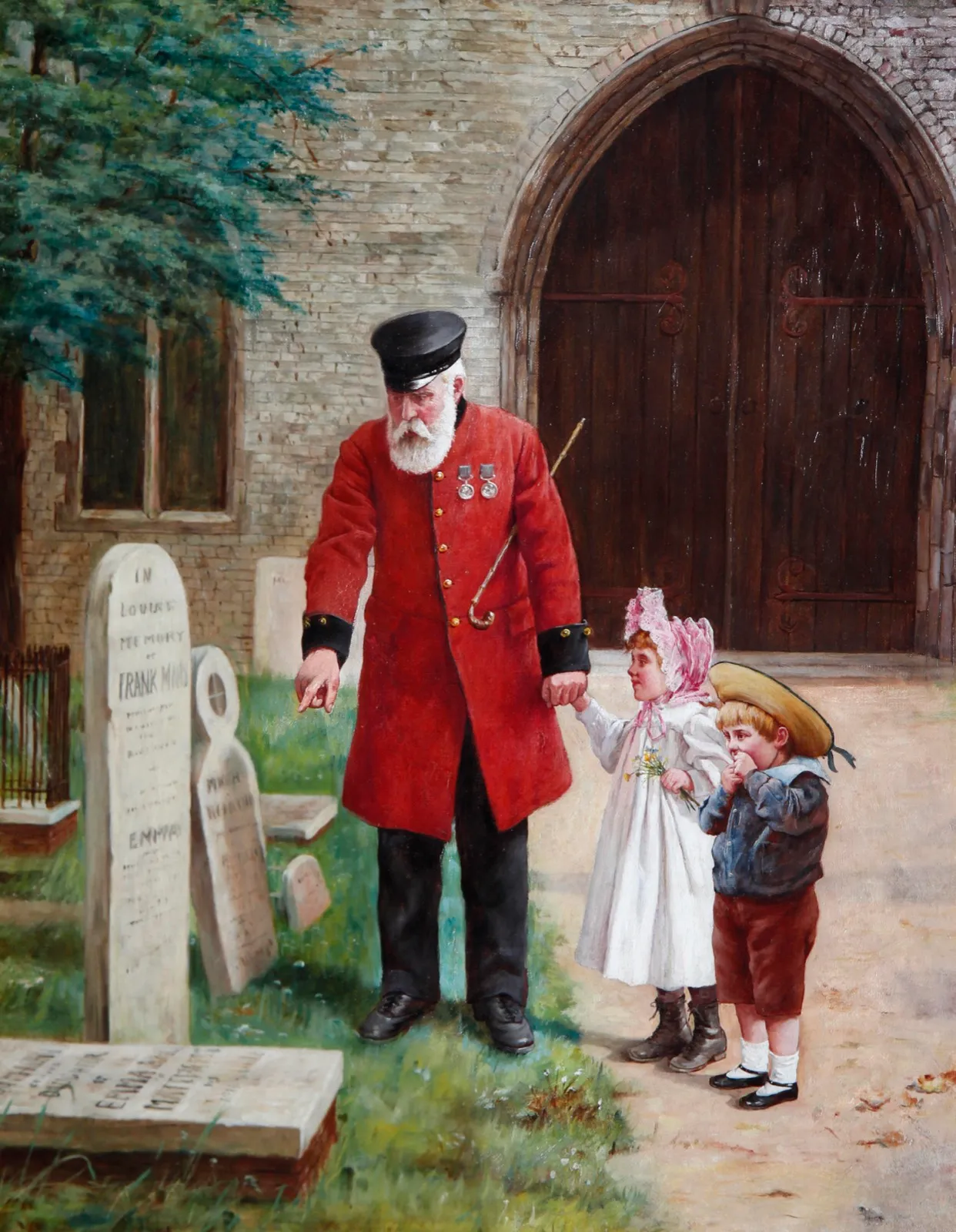 “A Walk with Grandpa” by Augustus Edwin Mulready, before 1904. Public domain.
Start with the object. Bring a photograph or ask about a tool or a trophy in his house. “Who is this?” is easier to answer than “What was your childhood like?”
Ask more than one person. An uncle’s account is one version. If you also ask your aunt or your parent the same question, the places where the stories differ are the most interesting parts.
Keep it short and return. Forty minutes is enough. If he is older or tires easily, the guidance in how to interview older family members applies to him as it would to a grandparent.
If the story is painful, let him set the pace, and tell him he does not have to answer.
Why film the answers?
Most of what makes an uncle’s story is not in the facts: the timing before the punchline, the way he lowers his voice, the pause before he says a name. A written note keeps the sentence and loses all of that. Video keeps it, and it is the thing a niece or nephew will want in thirty years.
There is also a practical point. An uncle is unlikely to write his memoir, and nobody else is likely to ask him. Since 2020 I have filmed more than a hundred life stories, and I have often seen that the relatives who say there is not much to tell are the ones who have been standing next to every family event for fifty years. Prop a phone on a stack of books, put a window beside you rather than behind you, and ask the first question. The Everyone app can offer one question at a time, but any phone will do.
Start with one question
You do not need the whole list. Pick one, perhaps “What was my mum like when you were kids?”, and ask it the next time you are in the same room as your uncle. Then ask, “What happened next?”
The Romans thought of the uncle as a little grandfather. He is the generation between the child and the oldest stories, and he is often the last person alive who can tell you what your parents were like before they were parents.