Family history interview questions, and the one most people forget.
45 family history interview questions about names, places, migration and family legends, and why the most useful question of all is “Who told you that?”
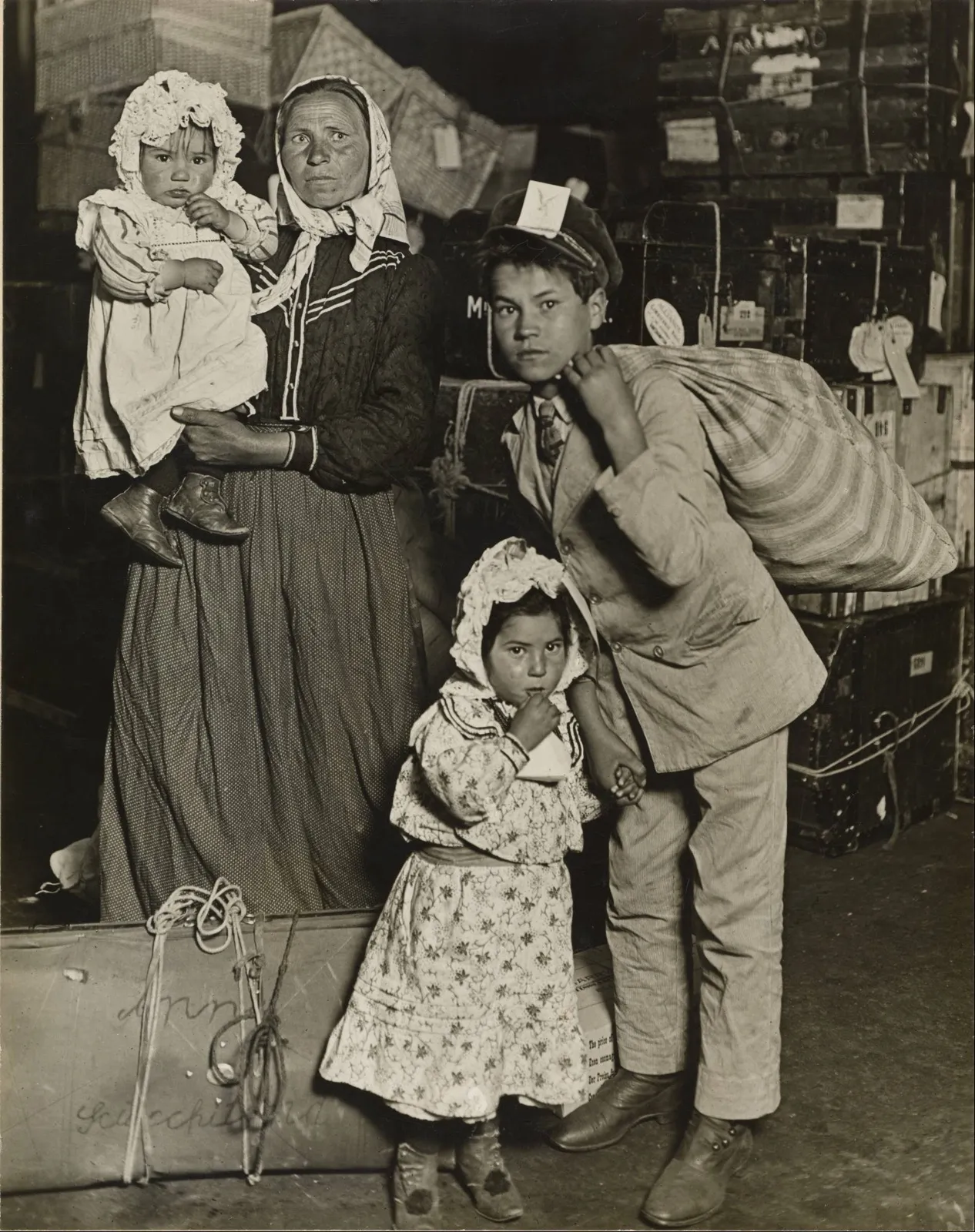
Ask an American family how they came by their surname and there is a fair chance someone will tell a version of the same story. The ancestor arrived at Ellis Island, an immigration officer could not spell the name, and wrote down something shorter and more English. The family has carried that name ever since.
It is one of the most widely repeated family stories in the English-speaking world, and it is almost certainly not what happened. The Statue of Liberty–Ellis Island Foundation, which looks after the island’s passenger records, lists it among the common myths about the place. Passenger lists were drawn up before the ship sailed, usually by the shipping company at the port of departure. Inspectors in New York worked from those lists, checking each arrival against a name that was already written down, often with interpreters on hand. Genealogists who have studied the records have found little evidence of names being changed at the island itself. Many names did change, but generally later, and generally by the immigrants or their children: at work, at school, or on naturalisation papers.
So the story is wrong about how, and right about the fact. The name really did change. What the retelling lost is who changed it and why, which is the most interesting part. A decision someone made has become something that happened to them.
This is the problem every family history interview runs into, and it shapes what you should ask. Below are 45 family history interview questions, grouped by theme. But the most useful question is not on any list about the past. It is the question you ask after a family story has been told: who told you that?
What are family history interview questions for?
A life story interview is about the person in front of you. A family history interview asks that person to act as a witness to other people: their parents, grandparents, great-aunts and uncles, people the interviewer never met and the archives barely saw.
The reach of one memory is longer than it seems. A grandmother born in 1945 may have known her own grandmother, born perhaps in the 1880s, who told her about a childhood in a village that no longer has the same name. One conversation can reach back nearly a century and a half. No other source does that for an ordinary family.
The questions therefore have three jobs:
- Collect what the records need. Full names, maiden names, places, rough dates. These are the keys that unlock birth, marriage, census and immigration records later (there is more on that order of work in how to start a family tree).
- Collect what the records lack. What people were like, why they moved, what they argued about, what they cooked, what they never spoke of.
- Record where each story came from. This is the job almost everyone skips.
Why ask “Who told you that?”
The historian Jan Vansina spent decades studying oral traditions in Central Africa. In Oral Tradition as History (1985) he described a pattern he called the “floating gap”. Communities remembered the recent past in rich detail, roughly the span of living memory, and they remembered their origins in vivid, often legendary form. Between the two was a period about which very little was said. As generations passed, the gap moved forward with them.
Families work in much the same way, on a smaller scale. Stories about people the teller knew are detailed and specific. Stories about people the teller only heard about are compressed into a few memorable lines, and those lines drift towards a familiar shape: the name changed by an official, the fortune lost in a card game, the ancestor descended from nobility. The drift is not usually dishonest. It is what happens to any story retold over decades by people who are not checking it.
None of this means family stories are worthless. The name did change. There was a reason the family left. Oral accounts are often more accurate about the substance than about the detail (I looked at the evidence in is oral history reliable?). But a story becomes far more useful once you know its chain of transmission. “My grandfather told me he saw it” is a different kind of evidence from “everyone in the family always said”. A good family history interview records both the story and its source, and does not correct either on the spot. Your job in the room is to capture what is believed. Checking it comes later.
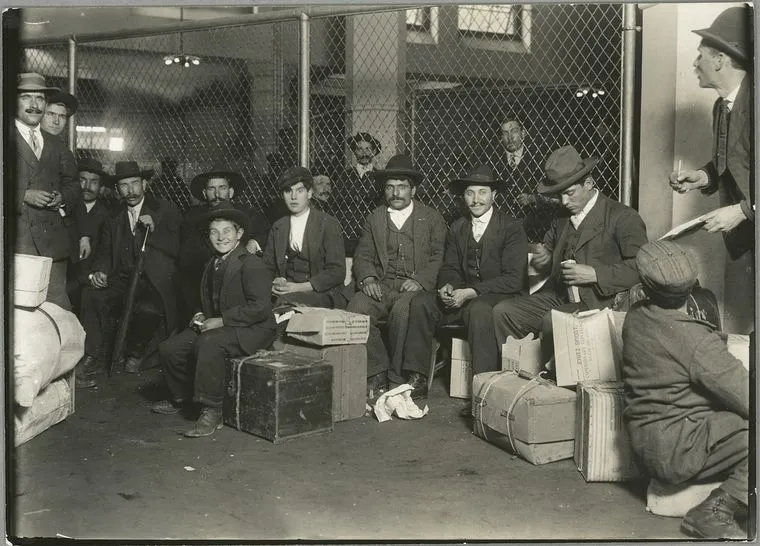 Group of Italian immigrants waiting at Ellis Island, by Lewis Hine, 1908. New York Public Library. Public domain.
45 family history interview questions
Choose ten or fifteen for a first conversation. Older people tire, and memory works by association, so a second session often brings out material the first one only stirred.
Names
- What is your full name, and who were you named after?
- Did anyone in the family have a different name in another language, or a nickname everyone used?
- What was your mother’s maiden name? Your grandmothers’ maiden names?
- Has our surname always been spelt this way? Did anyone change it, and when?
- How did your parents and grandparents pronounce the family names?
Parents
- Where and when were your parents born?
- How did your parents meet, if you know? Who told you the story?
- What work did your father and mother do?
- What was each of them like when they were angry, and when they were happy?
- What do you know about their childhoods?
Grandparents and beyond
- Did you know your grandparents? What do you remember about them?
- What did they tell you about their own parents?
- Which ancestor does the family tell the most stories about?
- Is there anyone in the family who was never talked about?
- Who is the oldest relative you can remember meeting?
Places
- Where did the family live before you were born?
- Can you describe the house you grew up in, room by room?
- What was the name of the town or village the family came from? Has the name or the country changed since?
- Is anyone buried somewhere the family no longer visits?
- Which place feels most like home to the family, even now?
Migration and moving
- Who was the first in the family to come to this country, and why did they leave?
- How did they travel, and who came with them?
- Who stayed behind? Did the family keep in touch with them?
- What did they bring with them? Does any of it survive?
- What was hardest for them in the first years?
Work, money and hard times
- What did the family do for a living, going back as far as you know?
- Was there ever a time the family was poor, or did well?
- How did the family get through the war, the Depression or other hard years?
- Who in the family was the most enterprising, or the most reckless?
Family legends
- What story does the family always tell at gatherings?
- Is there a story about where the family came from, or how it got its name?
- Who first told you that story? Who told them?
- Do you believe it? Has anyone ever doubted it?
- Is there a family secret that came out later?
Faith, language and tradition
- What religion did the family practise, and did that change?
- What languages did your parents and grandparents speak at home?
- Which family recipes came from another country or generation?
- What traditions did the family keep for birthdays, holidays, weddings or funerals?
- Is there a saying or phrase that has been passed down?
(For a fuller set on language, food, migration and why people left, see these questions to ask about your family heritage.)
Photographs, objects and papers
- Who are the people in this photograph? Where and when was it taken?
- Which object in the house has the longest story?
- Are there letters, certificates, a family Bible or other papers I could photograph?
- Is there anyone else I should talk to who knows more?
Closing
- What do you wish you had asked your own parents or grandparents?
- What do you want your great-grandchildren to know about this family?
If you want a broader set focused on one person’s own life, there are questions to ask your grandparents before it’s too late.
How do you check what you are told?
After the interview, sort what you heard into three piles: things the speaker witnessed, things they were told, and things they are unsure about. The first pile is the most reliable. The second needs its source noted. The third becomes a research list.
Then go to the records. A remembered town, an approximate year and a maiden name can narrow hundreds of possible matches to one. Where the documents disagree with the family story, keep both. A ship’s manifest that shows the original surname does not make the Ellis Island story useless; it tells you the change happened later, and the family story becomes a prompt for a better question: when did they start using the new name, and why?
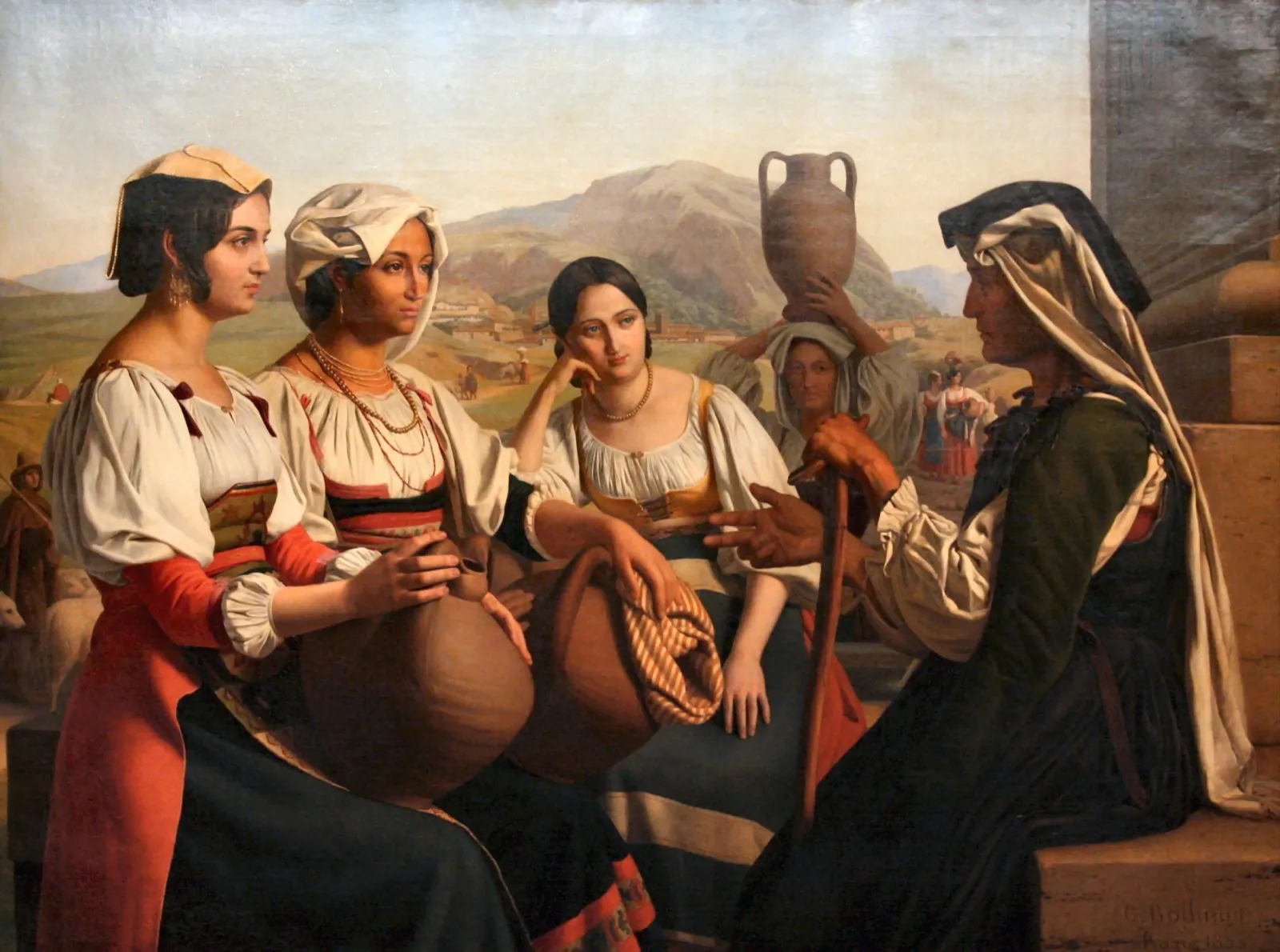 “Three Women at the Fountain Listening to an Old Woman” by Guillaume Bodinier, 1832. Public domain.
Why film a family history interview?
Records hold the spelling of a name. They do not hold its sound. Many families have ancestors whose names were in Yiddish, Italian, Greek, Polish, Cantonese or another language the grandchildren no longer speak, and the last people who can pronounce those names correctly are usually the oldest people in the family. A written note of “Great-grandmother Ruchel” keeps the letters. A recording keeps the voice of someone who said the name to her face.
The same applies to everything else in the interview. I have filmed more than a hundred life stories through The Archive since 2020, including my own grandmother, who has since passed away. I have four hours of her talking about her life and her family. What makes that recording valuable is not only the names and places in it, which would fit on a few pages, but the way her expression changed when she talked about particular people. That is information about them, too, and it exists nowhere else.
Filming does not need equipment beyond a phone at eye level and a quiet room (practical tips are in how to film an interview at home). The Everyone app is one free option: it shows one question at a time and keeps the videos together for the family. Once you have the recordings, how to preserve family stories covers keeping them safe for the next generation.
The question behind the questions
Every family tree contains stories like the Ellis Island name change: true in substance, wrong in detail, missing the part that mattered most. They become that way because no one asked the person who knew, while that person was still alive to answer.
A family history interview is a chance to stop the drift for one generation. Ask about the names, the places and the people. And when you hear a story that the family has always told, ask who told it first. The answer may be the only record of where the story came from.