Questions to ask your siblings about growing up.
Siblings remember the same childhood differently, and the difference is the story. Questions to ask your brothers and sisters, and why to record them.
In 2001 three psychologists, Mercedes Sheen, Simon Kemp and David Rubin, published a paper with an unusual title: “Twins dispute memory ownership”. They had asked adult twins to recall events from their childhood, and found that many of them held memories they were certain had happened to themselves, while their twin was equally certain the same events had happened to them. Think of the kind of thing families argue about: who fell out of the tree, who was bitten by the dog, who got lost at the beach. Both twins remembered the event as their own, and both could not be right. The disputed memories were not vaguer than the undisputed ones. If anything, the twins rated them as more vivid and more emotionally alive.
The study is about twins, but anyone who has sat at a table with a brother or sister and said “that was me, not you” will recognise the phenomenon. Siblings share a house, parents, holidays and a surname, and still come away with different childhoods. That is the best reason to sit down with them and ask. This piece offers questions to ask your siblings about growing up, and explains why the places where your answers disagree are often the most valuable part of the conversation.
Why do siblings remember the same childhood differently?
The obvious answer is that memory is unreliable, and that is part of it. But there is a deeper reason, and it comes from an unlikely field: behavioural genetics.
In 1987 Robert Plomin and Denise Daniels published a paper in Behavioral and Brain Sciences titled “Why are children in the same family so different from one another?” Their starting point was a puzzle in the data. Children raised in the same home, by the same parents, turned out remarkably unalike on most psychological traits. Adoptive siblings, who share a home but not genes, ended up barely more similar in personality than strangers. Plomin and Daniels argued that the environmental influences that matter most are not the ones siblings share, but the ones they do not: different friends, different teachers, different illnesses, different places in the family, and different treatment from the same parents. Later researchers have argued about how much of this can be pinned down, but the core observation has held. Growing up in the same family is not the same as growing up in the same environment.
In practice, an eldest child meets parents who are young, anxious and often short of money. A youngest child may meet the same two people fifteen years later, calmer, more prosperous, perhaps divorced, perhaps grieving a parent of their own. A move interstate is an adventure for a six-year-old and a catastrophe for a fifteen-year-old. A father’s illness is a fact for one child and a memory for another. Siblings did not grow up in one family. Each grew up in a slightly different version of it.
Popular culture blames birth order: the bossy eldest, the overlooked middle child, the spoilt baby. The evidence is weaker than its fame. In 2015 Julia Rohrer, Boris Egloff and Stefan Schmukle analysed data from more than 20,000 adults in Germany, the United States and Britain, comparing siblings within the same families. They found no meaningful effect of birth order on extraversion, emotional stability, agreeableness, conscientiousness or imagination, and only a very small effect on intellect. Birth order shapes which family you grew up in. It seems to do much less to fix who you become.
Questions to ask your siblings about growing up
These are grouped by theme. You will not need all of them. Choose a few that suit your family, and spend most of the time on the follow-up: What do you remember about that? How did it feel at the time?
The house and the everyday
- Describe the house we grew up in, as you remember it. Which room was yours, and what was in it?
- What did a normal weekday look like for you? Who woke you up?
- What was dinner like? Where did everyone sit?
- What were the house rules, and which ones did you break?
Mum and Dad, through your eyes
- What were our parents like when you were small? How do you think they changed by the time the youngest of us came along?
- Did you feel they treated us differently? In what way?
- What did you learn from Mum that I might not have? From Dad?
- Was there something about our family you only understood as an adult?
Us
- What is your earliest memory of me?
- What did you think of me when we were children? Did that change?
- When did we fight most, and what about?
- What did you envy about my place in the family, and what were you glad to avoid?
The big events
- What do you remember about the year we moved, the year someone was ill, or the year things changed?
- How old were you, and what did you understand about it at the time?
- Is there something that happened in our family that you think about more than the rest of us realise?
The disputed memories
- Tell me the story of the time we got lost, broke something, or got into trouble. Now let me tell you my version.
- Is there a family story you think everyone tells wrongly?
- Is there anything you have always remembered as happening to you that might have happened to me?
Looking back
- What do you most want to keep from how we were raised, and what did you deliberately do differently?
- What do you think our parents got right that they never got credit for?
- What would you want your own children, or mine, to understand about how we grew up?
For questions about the generation above you, see questions to ask your parents about their life. If the conversation turns to grandparents, great-grandparents and where the family came from, family history interview questions picks up from there. And if a brother or sister has married, their partner’s family has a childhood of its own worth asking about (see questions to ask your in-laws).
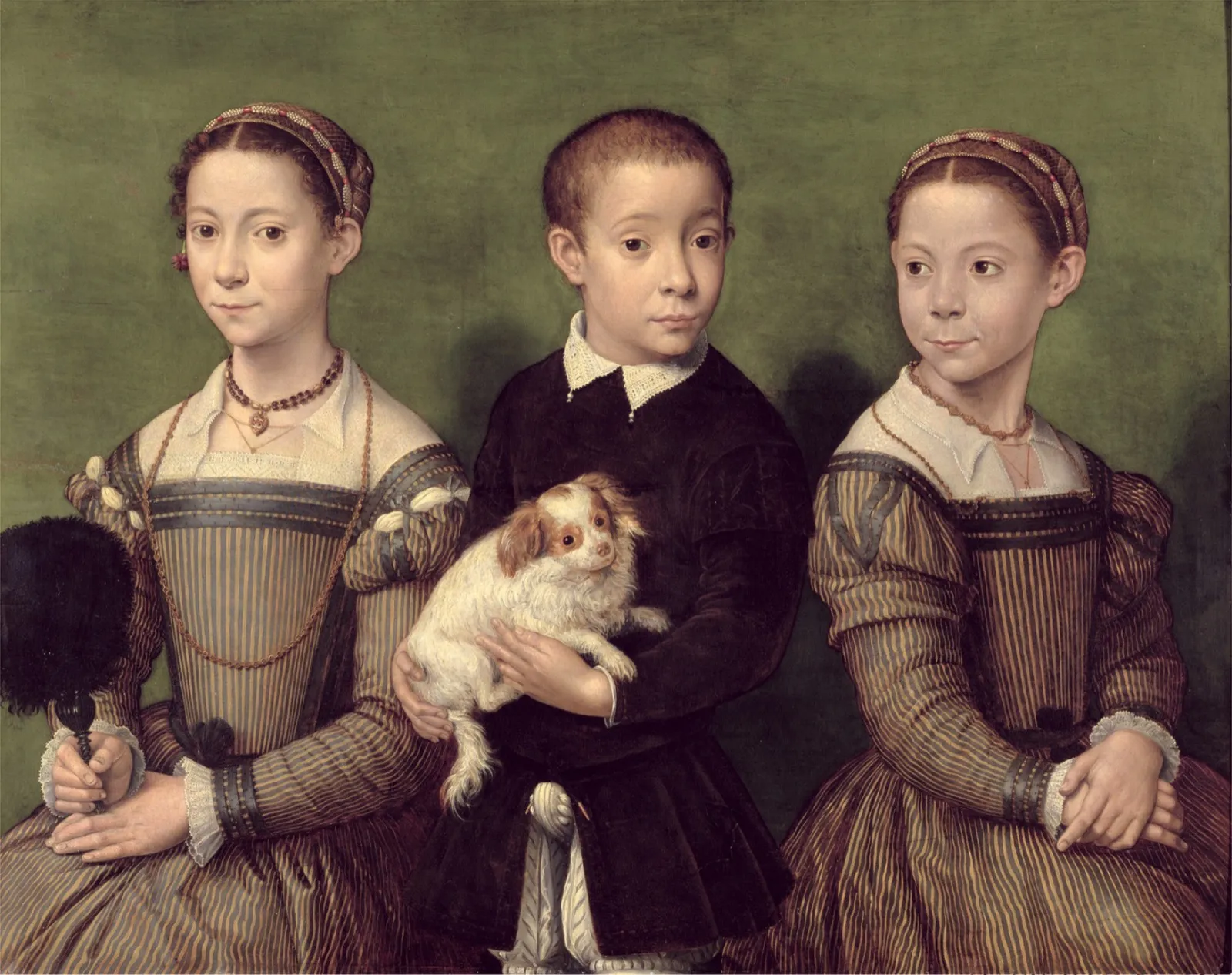
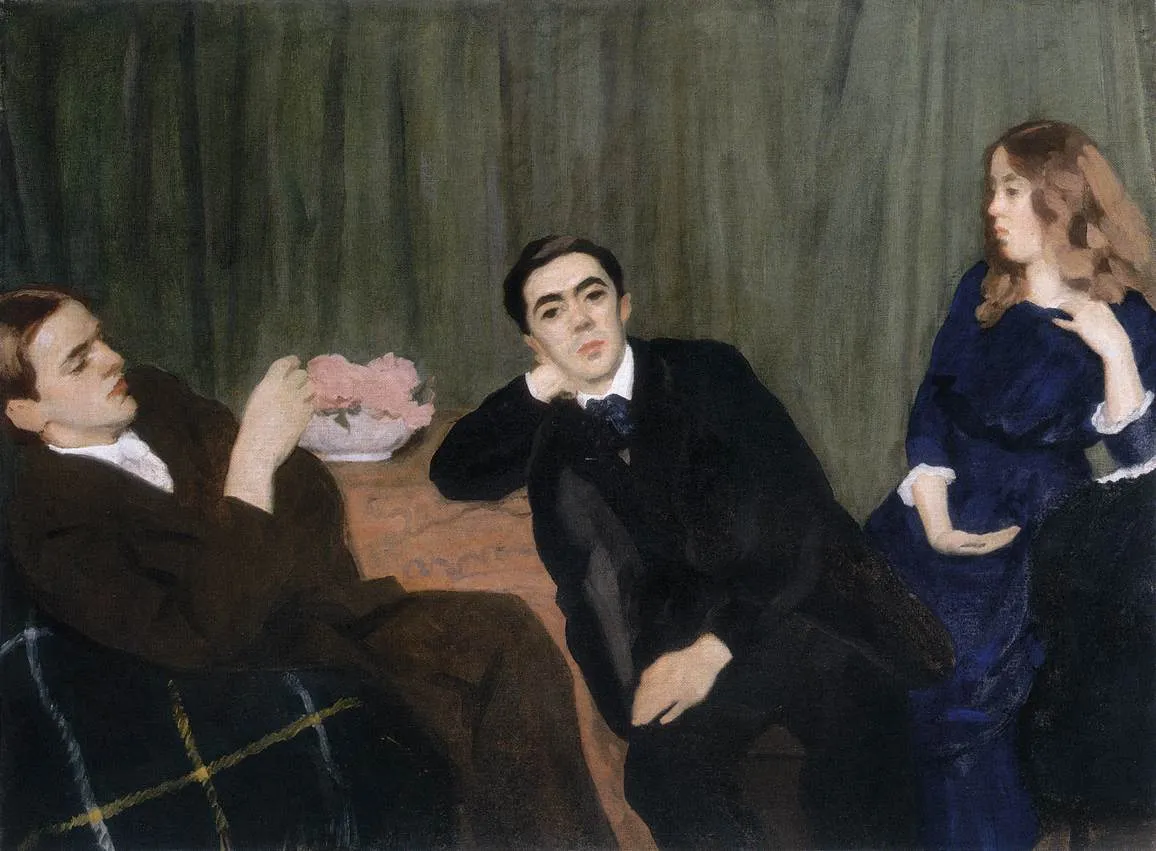 “Triple Portrait (Sister and Brothers)” by Károly Ferenczy, 1911, showing the artist’s children. Public domain.
Why do the disagreements matter more than the agreements?
In 2006 Sheen, Kemp and Rubin returned to their disputed memories and looked at what kinds of events were being fought over. Most of the 77 disputed memories they examined were negative: accidents, punishments, embarrassments. And the disputes tended to be self-serving. Each twin’s version usually cast them in the more sympathetic role.
It would be easy to treat this as a reason to distrust what siblings say. I think it points in the other direction. When two people remember the same evening differently, the gap between their accounts is not simply an error. It records what each of them needed that evening to mean. Imagine a sister who remembers the night her father lost his job as the night she was sent to her room for no reason, and a brother, three years older, who remembers the same night as the first time he heard their father cry. Neither memory is the full story. Together they come much closer.
The painting above makes the point without words. Károly Ferenczy painted his three adult children in 1911: Valér, the eldest, and the twins Béni and Noémi. All three became artists, and all three are in the same room. Yet each one is looking somewhere different, and none of them is looking at the others. That is a reasonably accurate picture of most siblings recalling their childhood: present at the same scenes, facing different directions.
Oral historians say much the same about memory in general: weak on dates, strong on meaning (see is oral history reliable?). Siblings offer something rare: several witnesses to the same private events.
How should you ask your siblings?
Start small and concrete. “What was in your bedroom?” is easier than “What was our childhood like?” Scenes bring back other scenes; big summaries produce the family’s official version.
Ask separately before you ask together. Each sibling’s private account is different from the one they will tell in front of the others, especially if there is an older sibling whose version has always dominated. Then bring the versions together and see where they diverge.
Do not referee. The aim is not to establish who was right about the broken window. If you correct each other, the conversation turns into an argument about facts, and the material about feelings disappears. Old photos and home movies are good prompts for the same reason: use them to start stories, not to settle disputes.
Expect older wounds. Questions about favourites or a difficult parent can reopen things closed for decades. Let people skip a question, and do not push for reconciliation mid-interview.
Choose an occasion. Siblings who live in different cities often only share a room at weddings, funerals and holidays. A family reunion or a parent’s birthday is a natural moment to set a phone up in a quiet corner and ask.
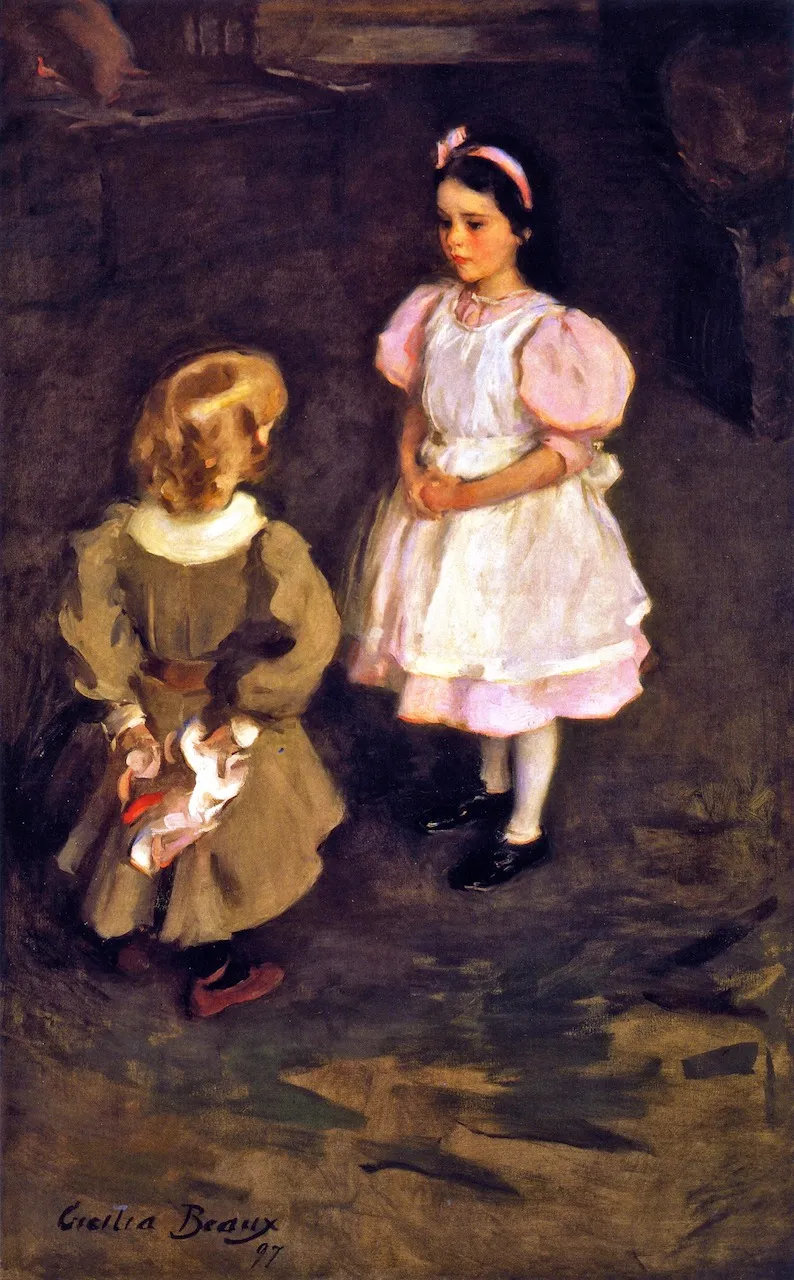 “Sister and Brother” by Cecilia Beaux, 1897. Public domain.
Why record it?
Siblings are usually the people who knew us longest. Parents arrive before us and, in the normal course of things, leave before us. Partners and friends arrive later. A brother or sister is often the only other person alive who remembers the kitchen, the car trips, the family jokes and the bad years from the inside. When the last parent dies, siblings become the family’s archive, whether or not anyone has asked them to.
That archive is fragile, because it is split across several heads and most of it has never been said aloud. Families often record a grandparent’s life story and never think to ask the brothers and sisters the same questions. The result is that each sibling holds one version of the childhood, and the versions are never put side by side. I have filmed more than a hundred life stories since 2020, and each one is, inevitably, a single point of view. A conversation between siblings is the closest thing a family has to a second camera angle.
Recording the conversation does something a written note cannot. It keeps the overlapping voices, the interruptions, the moment one sibling says “no, that was you” and the other starts laughing. Those exchanges say more about a family than any list of facts. If you want a simple structure, the Everyone app lets you film one question at a time on a phone, so a conversation between siblings can be built up over several visits rather than in one long sitting. Any camera will do the job.
Your aunts and uncles hold yet another version of the family; the questions to ask your aunt cover what they saw from the side, and the questions to ask your uncle do the same for his.
Your children will one day want to know what your childhood was like. They will ask you, and you will give them one version. It would be better if they could hear all of them.