How to preserve family stories before they are lost.
Archivists know the real enemy is the single copy. How to preserve family stories and family history: what to record, which format lasts, and where to keep it.
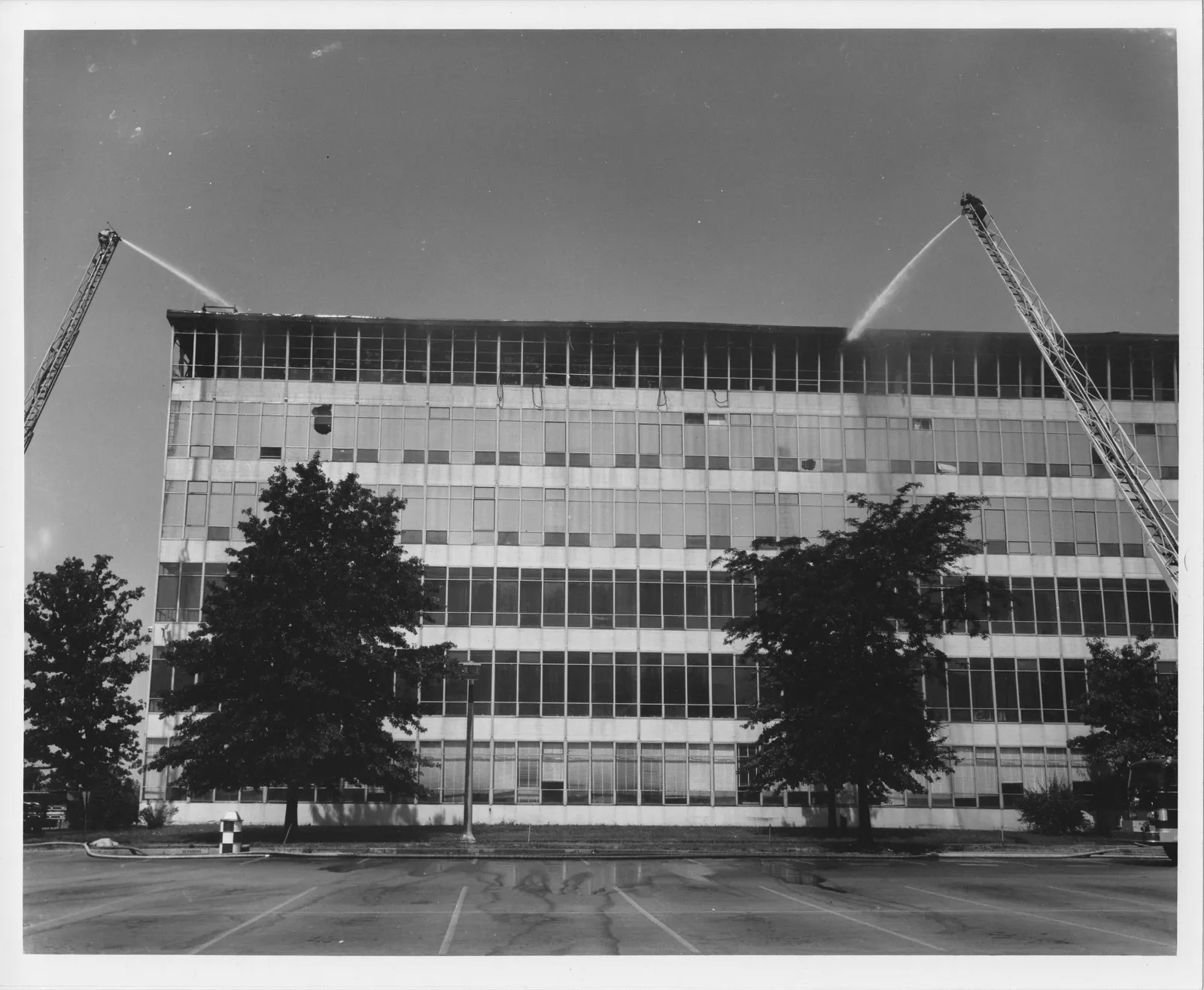
Just after midnight on 12 July 1973, a fire started on the sixth floor of the National Personnel Records Center outside St. Louis, the building that held the service files of American veterans. It burned for days. When it was out, the National Archives estimated that between 16 and 18 million files had been lost, including roughly 80 per cent of the records of Army personnel discharged between 1912 and 1960. There were no duplicates and no index, so to this day nobody knows exactly which files were destroyed. Veterans and their families still ask for files that no longer exist, and staff rebuild what they can from other sources.
Fifty-two years earlier, on 10 January 1921, a fire in the basement of the Commerce Building in Washington did the same thing to the 1890 United States census. Close to 63 million people had been counted. The fire and the water used to fight it badly damaged the schedules, and the remains were later disposed of. Records for about 6,160 people survive.
Both disasters have the same cause, and it is not fire. It is the single copy. Anyone asking how to preserve family stories, or how to preserve family history more broadly, should start there, because most family stories are stored in exactly the way the 1890 census was: one copy, in one place, with no backup. The place is a person’s memory, and unlike a records building, it has a known expiry date.
What does it mean to preserve a family story?
Most advice about preserving family history is about objects: acid-free boxes, scanning, keeping photographs out of the attic. That advice is sound, and I will come to it. But it skips the step where most family history is actually lost.
A family story has to survive two separate threats. The first is never being recorded at all: it lives in your grandfather’s head and leaves with him. The second is being recorded and then lost: the cassette that no one can play, the notebook that went in a skip, the video on a phone that was never backed up.
Archivists focus on the second problem because, for an archive, the material has already arrived. For families it is the other way round. Most family stories are lost to the first threat: never written down, never recorded, never told to anyone young enough to remember them. Preservation starts with capture.
Why is memory the most fragile archive?
A person’s memory is a remarkable store of family history. It holds names that appear on no document, the reason the family left one country for another, what a great-grandmother was like to live with, which stories are true and which were embellished at Christmas. It also has every weakness an archivist fears.
It exists in one copy. It cannot be indexed or searched by anyone else. It degrades with age and illness. And it is lost entirely, all at once, at a moment no one chooses.
Since 2020 I have filmed more than a hundred life stories, including those of Holocaust survivors, and a recurring experience is hearing a story that the person’s own children have never heard. Not because it was secret, but because nobody ever asked the right question at the right time. That is what a single copy looks like.
How to preserve family stories: the formats compared
Once you decide to capture the stories, the next question is the format. Each has strengths, and each fails in a characteristic way.
Writing. A written account is cheap to keep, easy to copy and readable without any technology. Paper in a dry cupboard can last centuries. Its weakness is at the point of capture: very few people will sit down and write their life story, and those who do tend to write a tidier, shorter, more guarded version than they would tell. Writing preserves the facts well and the person poorly.
Audio. Recording someone talking is far easier than asking them to write, and it keeps the voice, which families treasure. But a voice without a face loses a great deal of what we read in other people, and audio formats have a poor history of survival: wire, reel-to-reel, cassette, minidisc. There is a longer discussion of this in audio vs video recording.
Video. Video keeps the face, the voice, the gestures and the pauses together. It is the closest thing to the person in the room. It also takes the least effort from the storyteller, who only has to talk. Its weakness is not durability, since modern video files are among the most widely supported formats in the world, but neglect: footage left on a single phone or a single cloud account is a single copy again.
Scanning and photographing objects. Scanning photographs, letters and documents protects them from loss and lets you share them. A common recommendation for prints is to scan at 600 dots per inch or more, and to save a master file in a standard format such as TIFF or high-quality JPEG. But a scanned photograph is still an image without its story. Who is in it, where it was taken and why it was kept are things only a living person can tell you.
The formats are not rivals. The strongest approach uses them together: film the person, scan the objects, and then film the person holding the objects and talking about them.
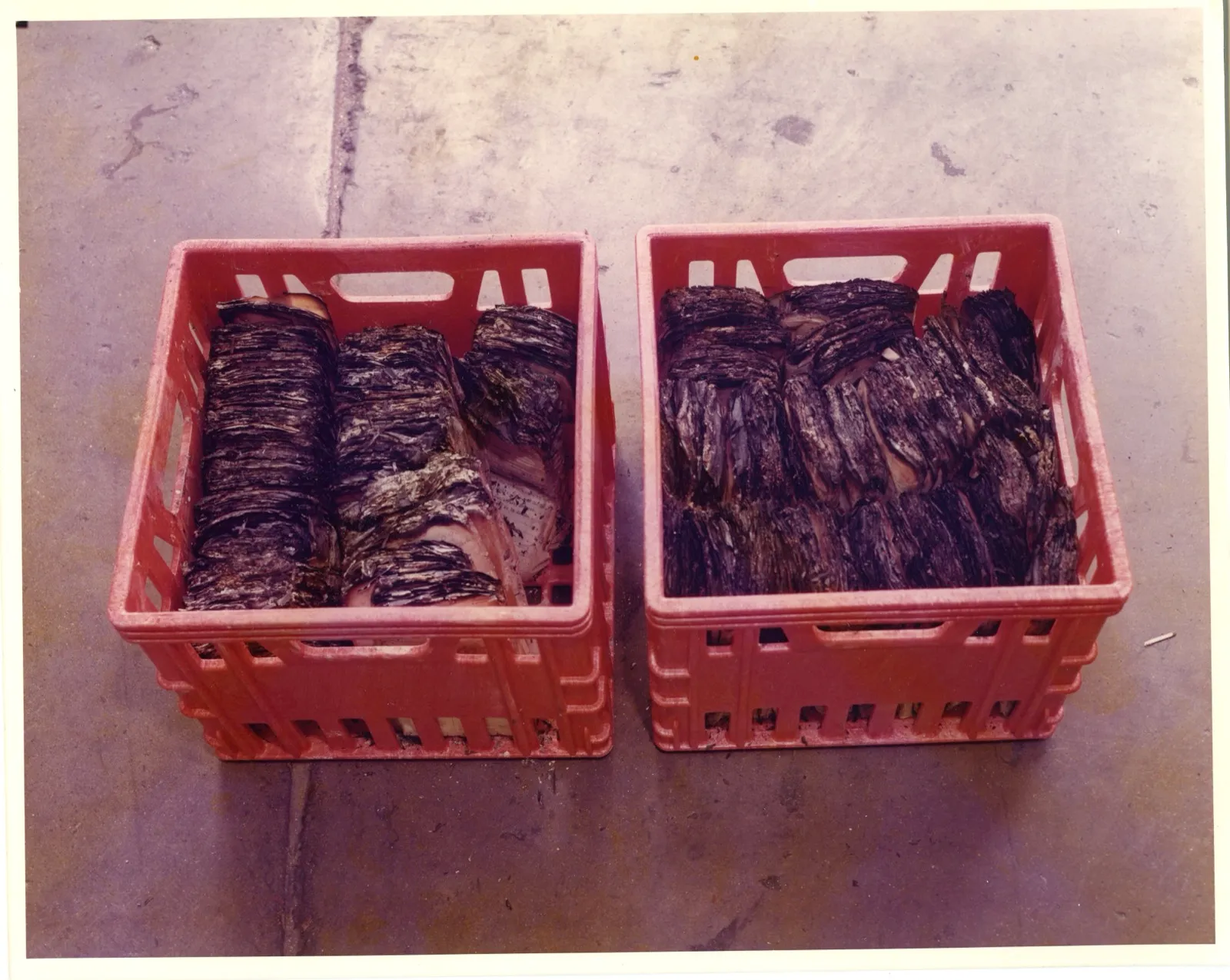 Burned personnel files drying in milk crates after the 1973 fire at the National Personnel Records Center, St. Louis. US National Archives. Public domain.
Step 1: Record the people before the paperwork
If you can only do one thing this year, record the oldest person in your family talking about their life. Papers will wait in a box. People will not.
Start with their childhood and move forward, because one memory tends to bring the next within reach. Ask for scenes rather than summaries: “Describe the house you grew up in” works better than “Where did you live?” For the family history in particular, ask about names, migration and the people they knew who you never met, and always ask “Who told you that?”, because it tells you how far a story has travelled. There is a full list in family history interview questions.
Keep sessions to thirty or forty minutes, set the phone at eye level, face the person towards a window and turn off the television. The details are in how to film an interview at home.
Step 2: Put the caption back on everything
The second most valuable thing you can do is attach stories to the objects that already exist. Sit with a parent or grandparent and an album, a box of letters or a reel of old film, and record them going through it. Their commentary is the caption that will otherwise die with them. The same idea applies to old home movies: the footage often survives; the person who can say who is in it does not.
When you scan a photograph, write the names, place and approximate date into the file name or a simple text file kept in the same folder. Nobody will remember in thirty years.
Step 3: Make three copies, in more than one place
The lesson of St. Louis and the 1890 census is the one digital archivists summarise as the 3-2-1 rule, popularised by the photographer Peter Krogh: keep at least three copies, on at least two different kinds of storage, with at least one copy somewhere other than your house. In practice that might be the original on a computer, a copy on an external drive, and a copy in a cloud service.
My grandmother’s four hours of interview live in several places for exactly this reason. She has since passed away, and those recordings cannot be made again.
Step 4: Give copies to the family
The most robust copy is one held by someone else. Share the recordings and scans with siblings, cousins and children. Oral tradition preserved stories for millennia by spreading them across many tellers; in most modern families they are told rarely, to a few people, and the distributed copy has become a single copy. Sharing files restores it. A house fire or a forgotten password can destroy one family member’s archive; it is very unlikely to destroy five.
Step 5: Check them every few years
Digital files survive through maintenance, not neglect. Every few years, open the files, make sure they still play, and move them onto whatever storage is current. Set up the legacy or inactive-account settings on the accounts that hold them, so someone can reach them after you die. What happens to your photos and videos when you die explains why this matters more than most people realise.
What should you store, and where?
For physical material, the basic rules from archivists are simple. Store papers and photographs somewhere cool, dry and stable, which in most homes means a cupboard in a lived-in room rather than the attic, garage or basement. Use acid-free folders and boxes for anything precious. Do not laminate originals, and remove rusting staples and rubber bands. Handle old photographs by the edges.
For digital material, prefer ordinary, widely used formats: MP4 for video, JPEG or TIFF for images, PDF or plain text for documents. Avoid anything that only opens in one company’s software.
 “Three Women at the Fountain Listening to an Old Woman” by Guillaume Bodinier, 1832. Public domain.
The single copy is the risk
The records lost in St. Louis were kept in a purpose-built federal building, by professionals, under government protection. They still disappeared, because there was only one of each. Families have far fewer protections than that, and the stories they hold are far less likely to have been written down in the first place.
The good news is that the hardest part of preserving family stories is no longer technical. Recording an hour of a grandparent talking costs nothing, and copying it to five relatives takes minutes. The bottleneck is asking. The Everyone app was built to make that part easier, with questions presented one at a time so a parent or grandparent can answer on video, and the stories kept for the family. But a phone and an afternoon are enough to begin.
Every family has a building like the one in St. Louis. It is usually somebody’s grandmother, and the best time to make a second copy is while she can still tell you the stories herself. If you are unsure where to begin, start with these questions to ask your grandparents.