Thanksgiving questions to ask your family, before the table changes.
The first Thanksgiving survives in one paragraph of one letter. Questions to ask your family this year, and why the table is the best place to ask them.
Everything we know first-hand about the meal Americans call the first Thanksgiving fits into a single paragraph. It appears in a letter the Plymouth colonist Edward Winslow wrote to a friend in England in December 1621, later printed in London in a pamphlet now known as Mourt’s Relation:
Our harvest being gotten in, our governor sent four men on fowling, that so we might after a special manner rejoice together after we had gathered the fruit of our labours. They four in one day killed as much fowl as, with a little help beside, served the company almost a week. At which time, amongst other recreations, we exercised our arms, many of the Indians coming amongst us, and among the rest their greatest king Massasoit, with some ninety men, whom for three days we entertained and feasted, and they went out and killed five deer, which they brought to the plantation and bestowed on our governor, and upon the captain and others.
That is the whole eyewitness record. No menu beyond fowl and venison, no mention of what anyone said, no hint of how people felt. Roughly half of the Mayflower’s passengers had died the previous winter, so the colonists at that table had recently buried husbands, wives, parents and children. Winslow does not mention them. The Wampanoag men who made up most of the guests left no written account at all.
The most famous meal in American history is, as a record, almost empty. Every year since, families have sat down to its descendant, talked for hours, told the old stories, and recorded none of it. What follows are Thanksgiving questions to ask your family, and an argument for why the Thanksgiving table is the best place most families will ever have to ask them.
How much do we actually know about the first Thanksgiving?
Less than the paintings suggest. There are only two primary sources for the 1621 harvest celebration. The first is Winslow’s paragraph. The second is William Bradford’s history, Of Plymouth Plantation, which describes the autumn harvest and the abundance of wild fowl, including turkeys, but does not describe the feast itself. Bradford’s manuscript was not even published until 1856.
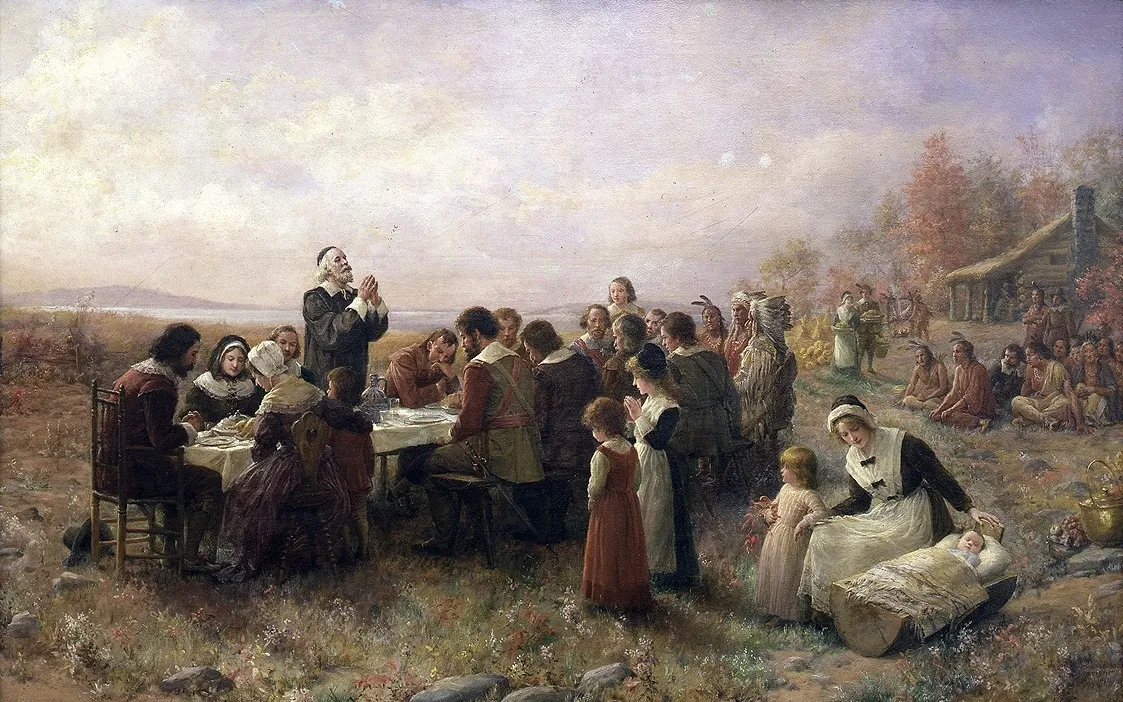
Into that gap, later generations poured imagination. The painting at the top of this page was made by Jennie Augusta Brownscombe in 1914, nearly three hundred years after the event. It gives the Wampanoag guests the feathered war bonnets of the Great Plains, more than a thousand miles away; she later painted a version without them. Neither was a record of anything. Both supplied what the record lacked: faces, gestures, a mood.
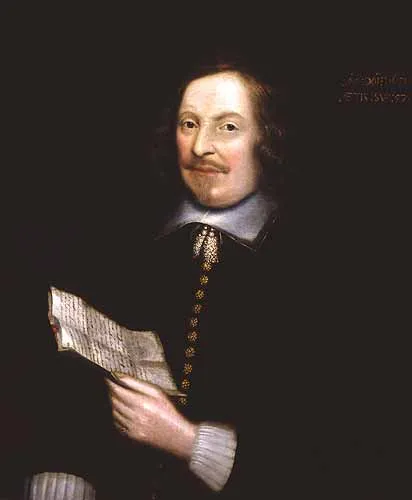 Edward Winslow, painted in London in 1651 by an unknown artist of the school of Robert Walker. Pilgrim Hall Museum. Public domain.
There is one exception. Winslow himself was painted from life in London in 1651, and his is generally described as the only authenticated portrait of any Mayflower passenger. He is holding a letter. Of everyone who sat at that table in 1621, the only person whose face we know is the person who wrote it down.
That is not a coincidence. It is the rule of the historical record in miniature: the people we remember are disproportionately the people who left a record of themselves.
Who decided Thanksgiving was worth remembering?
For more than two centuries after 1621, a day of thanksgiving was a local affair, proclaimed by individual colonies and states on different dates. The person most responsible for turning it into a fixed national holiday was a magazine editor named Sarah Josepha Hale.
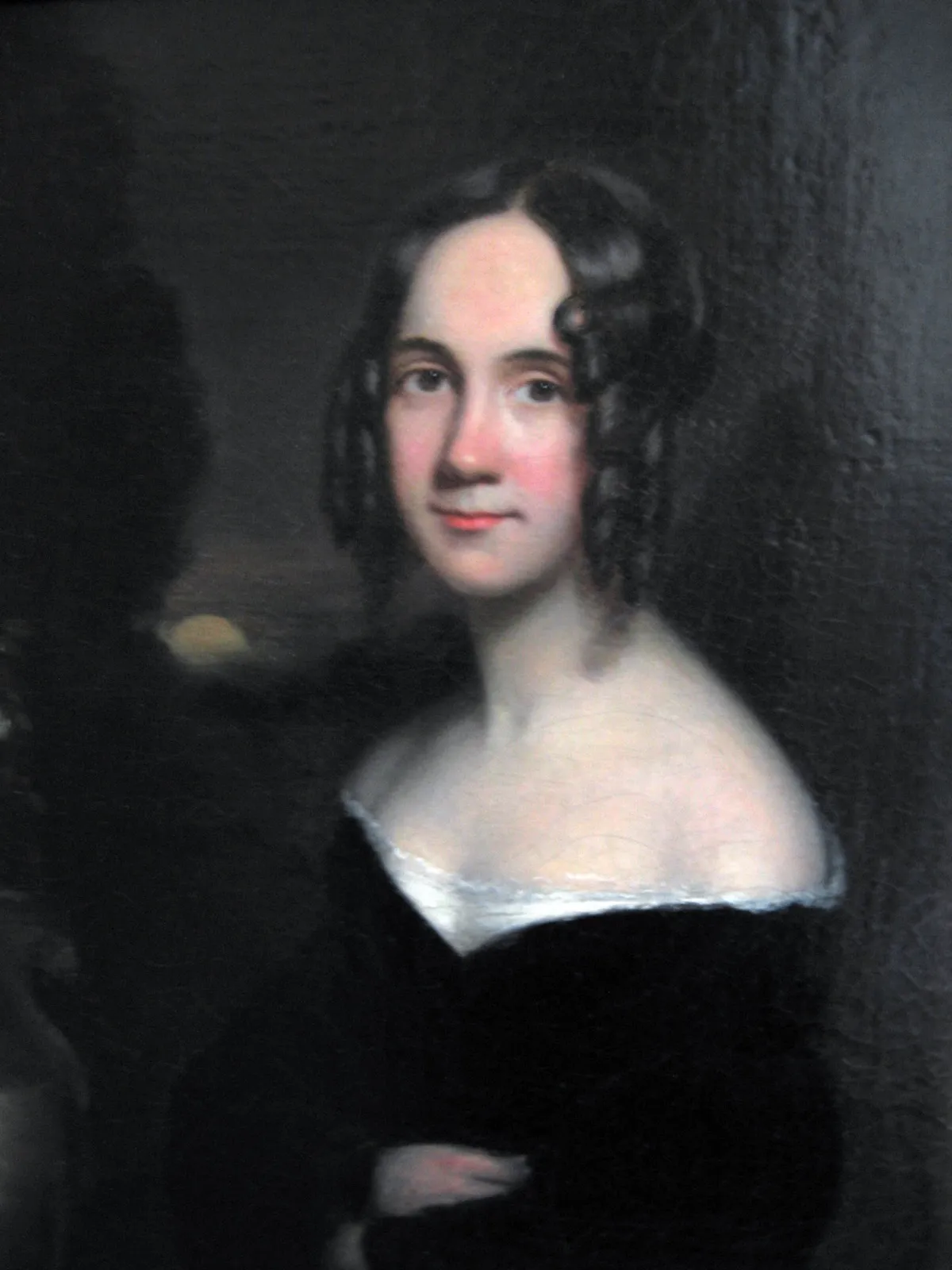 Sarah Josepha Hale, painted by James Reid Lambdin around 1831. Richards Free Library, Newport, New Hampshire. Public domain.
Hale began writing about Thanksgiving in the 1820s, and from the 1840s she wrote year after year to governors and presidents asking them to fix a single national day. On 28 September 1863, in the middle of the Civil War, she wrote to Abraham Lincoln. Five days later, on 3 October, Lincoln issued a proclamation setting apart the last Thursday of November as a national day of thanksgiving. Every president since has issued one.
The point is not that Thanksgiving is an invention. It is that remembering is a choice somebody has to make, and the version of the past that survives is the version someone bothered to record.
Whose stories were left out?
The clearest illustration is what happened in 1970, at the 350th anniversary of the Pilgrims’ landing. Wamsutta Frank James, an Aquinnah Wampanoag leader, was invited to speak at an official commemoration. When organisers read his draft, which described what the colonists’ arrival had meant for his people, they judged it too inflammatory and offered him a rewritten version. He declined it, and instead delivered his own words on Cole’s Hill in Plymouth, overlooking the harbour. That gathering became the National Day of Mourning, held in Plymouth on Thanksgiving Day every year since.
The Wampanoag had their own memory of 1621, carried in oral tradition rather than print, and for three and a half centuries almost nobody outside their communities asked to hear it. A story can survive among the people who lived it and still be absent from the record, simply because no one with a pen or a microphone was listening. The same thing happens in every family: ordinary people’s stories vanish not because they were unimportant, but because nobody asked.
Why is Thanksgiving the best day to ask?
In 2015, StoryCorps, the American oral history organisation founded by Dave Isay in 2003, tried an experiment. It asked high school students to use a free smartphone app to interview a grandparent or another elder over the Thanksgiving weekend. It called the project the Great Thanksgiving Listen. By its own account, StoryCorps collected more interviews over that one holiday than it had in the previous twelve years combined; reports at the time put the total at more than 50,000 recordings, archived at the Library of Congress.
The reasons are mostly logistical. Life story interviews are hard to arrange: the generations must be in one room, with time to spare, and with a pretext that makes the request feel natural rather than morbid. Thanksgiving supplies all three. The elders are there, the afternoon is long, and the occasion is about gratitude and the past, so “What was Thanksgiving like when you were a child?” does not sound like a prelude to a funeral.
The table also supplies prompts no interviewer could prepare. A dish someone has made for fifty years is a story; so is a missing chair or a serving bowl inherited from a grandmother. Memory is associative, and a room full of familiar food, faces and objects is the richest set of cues most people meet all year.
Thanksgiving questions to ask your family
Ask for scenes and stories rather than facts. “Describe” and “tell me about” work better than “when” and “where” (there is research behind this; see open vs closed questions). Choose a handful, not the whole list.
About Thanksgivings and holidays past
- What is the earliest holiday meal you can remember? Who was at the table?
- Who did the cooking when you were a child, and what did the kitchen look like that day?
- Which dish on this table has the longest history in our family? Who made it first?
- Tell me about a holiday that did not go to plan.
About the people who are missing 5. Who would you most like to have at this table who is no longer here? What would they be doing right now? 6. What did your grandparents call each other? What did they argue about? 7. Tell me about someone in our family who would be forgotten if you did not mention them.
About their own life 8. What were you most grateful for when you were twenty? And now? 9. Tell me about a year when things were hard. What got the family through it? 10. What has changed most between your childhood and your grandchildren’s?
For the youngest at the table to ask 11. What games did you play when you were my age? 12. What did you get in trouble for?
For longer lists by person, see the questions to ask your grandparents and questions to ask your parents about their life. For the December holidays, there are separate questions to ask your grandparents at Christmas.
How do you ask without derailing the meal?
A family dinner is not an interview, and treating it as one makes everyone uncomfortable. A few principles help.
- One question per course. Put a single good question to the table and let the conversation run. If it goes somewhere unexpected, follow it.
- Use the meal as the prompt. “Who taught you to make this?” is easier to answer than “Tell me about your childhood”, and often leads to the same place.
- Film afterwards, not during. The table is for finding the stories; the quiet half-hour after the meal is for recording them. Take the person who told the best story into a quieter room, seat them facing a window, prop the phone at eye level, and ask them to tell it again. (There is more detail in how to film an interview at home.)
- Let them repeat themselves. If a grandparent tells the same story every year, that is the one to record first. It is the story they have decided matters.
In the more than a hundred life stories I have filmed since 2020, the best material almost never came from the first question. It came from the follow-up: What happened next? Why do you think she did that? The table is good at producing first answers. The follow-ups usually need a quieter room and a few minutes alone.
What will survive of this year’s table?
Four hundred years from now, if anyone wonders what your family’s Thanksgiving was like, they will be in roughly Winslow’s position, or worse. There may be a photograph of the table. There will almost certainly be no record of who said what, which stories were told, or how the oldest person in the room laughed when she told them.
That used to be unavoidable. It no longer is. The phone in your pocket can capture, in an afternoon, more of one relative than the entire historical record holds about everyone at the 1621 feast.
The bottleneck is no longer technology. It is asking. Everyone, the free app I built for this purpose, presents one question at a time so that a single story after dinner can become the first chapter of a longer one. But any phone will do. The point is to come away from this year’s table with something more than leftovers.